Architectural Record
search
cart
facebook twitter linkedin youtube
  • Sign In
  • Subscribe
  • Sign Out
  • My Account
Architectural Record
  • NEWS
    • Latest News
    • Awards
    • Interviews
    • Obituaries
    • Podcasts
      • Design:Ed Podcast
      • Sponsored Podcasts
  • OPINION
    • Book Reviews / Excerpts
    • Exhibition Reviews
    • Forum
  • EXCLUSIVES
    • Videos
    • Design Vanguard
    • Top 300 Firms
    • Sponsored Content
    • Sponsored eBooks
    • From the Archives
  • CONTINUING ED
    • Editorial Continuing Ed
    • CE Center
    • CE Academies
  • PROJECTS
    • Buildings By Type
    • Reuse & Renovation
    • Museums & Arts Centers
    • Colleges & Universities
    • Multifamily Housing
    • Interiors
    • Lighting
    • Kitchen & Bath
  • HOUSES
    • Record Houses
    • House of the Month
    • Featured Houses
  • PRODUCTS
    • Products by Category
    • Record Products of the Year
    • Latest Products
  • EVENTS
    • Dates & Events
    • Record on the Road
    • Innovation Conference
    • Sustainability in Practice
    • Women In Architecture
    • Webinars
    • Ad Excellence Awards
    • Submit an Event
  • CONNECT
    • Ask RECORD AI
    • Newsletters
    • Contact
    • Advertise
    • Editorial Calendar
    • Store
    • Customer Service
  • SUBMIT
    • Submission Guidelines
    • RECORD Competitions
  • MAGAZINE
    • Subscribe
    • My Account
    • Digital Edition
    • Current Issue
    • Firm Pass
    • Historic Archive
Architecture NewsInterviews

Newsmaker: Adam Reed Tucker
By Dante A. Ciampaglia
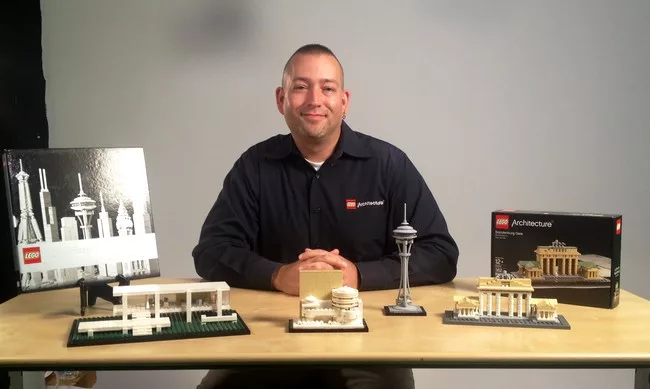
Adam Reed Tucker, a Chicago-based architect, conceived the concept for Lego Architecture, an elegant series of building sets celebrated in <em>Lego Architecture: The Visual Guide</em>, published last
Newsmaker: Adam Reed Tucker
Adam Reed Tucker, a Chicago-based architect, conceived the concept for Lego Architecture, an elegant series of building sets celebrated in Lego Architecture: The Visual Guide, published last month.
Photo courtesy DK Publishing
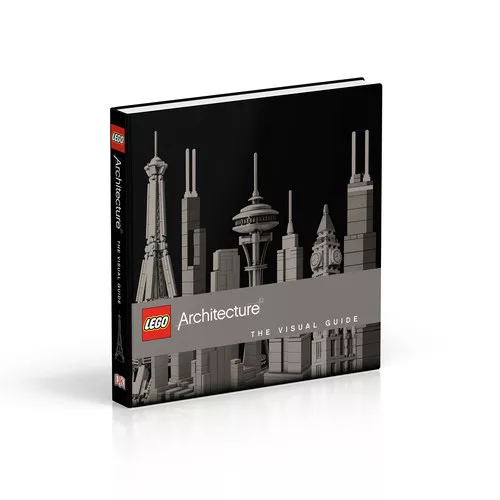
<em>LEGO Architecture: The Visual Guide</em>, by Philip Wilkinson, DK Publishing, 2014.
Newsmaker: Adam Reed Tucker
LEGO Architecture: The Visual Guide, by Philip Wilkinson, DK Publishing, 2014.
Image courtesy DK Publishing
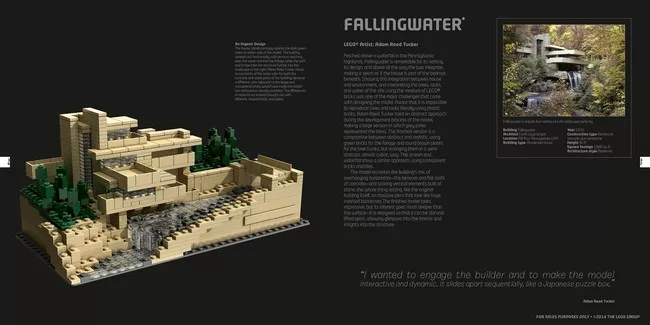
A page from <em>LEGO Architecture: The Visual Guide </em>about the Fallingwater kit.<em><br /></em><div id='_mcePaste'>&#65279;&#65279;
Newsmaker: Adam Reed Tucker
A page from LEGO Architecture: The Visual Guide about the Fallingwater kit.

Image courtesy DK Publishing
Adam Reed Tucker, a Chicago-based architect, conceived the concept for Lego Architecture, an elegant series of building sets celebrated in <em>Lego Architecture: The Visual Guide</em>, published last
<em>LEGO Architecture: The Visual Guide</em>, by Philip Wilkinson, DK Publishing, 2014.
A page from <em>LEGO Architecture: The Visual Guide </em>about the Fallingwater kit.<em><br /></em><div id='_mcePaste'>&#65279;&#65279;
October 15, 2014

Adam Reed Tucker, a Chicago-based architect, conceived the concept for Lego Architecture, an elegant series of building sets celebrated in Lego Architecture: The Visual Guide, published last month.

The relationship between Lego and architecture began in 1962 with the company’s Scale Model Series. It only lasted until 1965, but its impact was massive thanks to the introduction of the Lego plate. One-third the size of a traditional Lego brick, the plate added an element of stability that opened up a world of building possibility for kids and adults alike. But few took to the potential quite like architects. Moshe Safdie, for example, built a model of Habitat 67 when he was designing the Montreal housing project, while others created scale models of famous landmarks that towered over store-bought sets.

One such builder was Adam Reed Tucker, a Chicago-based architect who conceived the concept for Lego Architecture, an elegant series of building sets celebrated in Lego Architecture: The Visual Guide, published by DK last month. Written by Philip Wilkinson in collaboration with Tucker, the 232-page book documents each of the 22 kits in the Architecture series through photos of the models from various vantages (top, front, sides), product history, background on the real-life building and its architects, and beautiful exploded axonometrics that highlight crucial design elements of the sets.

Lego Architecture launched in 2008 with Willis Tower and John Hancock Center building sets. Six years later, the line includes brick representations of United Nations Headquarters and the Trevi Fountain, landmarks like the Empire State Building and Eiffel Tower, and nine kits in an architect-focused subseries (which includes Fallingwater and the Farnsworth House). As Tucker conceived it, the series is a way to celebrate an art people encounter everyday (architecture) in a form most know how to handle (the Lego brick).

There’s a mention in the book that when you got the idea to build architectural pieces out of Lego bricks, you went to a toy store and loaded up 11 carts full of sets. Were you looking for anything in specific or just pulling sets at random?

I grabbed one of every set so I could get reacquainted with the brick as an adult.

Was there anything that surprised you about how Lego has developed, or not, since you last played with the bricks?

Nothing stands out other than, would I have been more creative with more colors and elements? Or would I have been less creative? That's always an interesting question. When I grew up there were only five colors and maybe a hundred different elements. Now there are 5,000 elements and 40 different colors.

There’s a glossary of pieces used in Lego Architecture kits in the book, and it includes things taken from other sets like Technics. Are all the architecture sets built from components taken from other lines, or did you have to pioneer new elements yourselves?

The only new piece that was ever created for the entire Lego Architecture line was one of the roof pieces on the Robie House that Lego did not make previous.

That's pretty impressive, that you could create such a diverse amount of structures with existing pieces.

Well, it's capturing the essence of a structure. It's not being completely literal.

What’s your process like in developing these kits, and how has it changed from when you started? Earlier examples, like the Willis Tower and Empire State Building, seem very sleek and minimal compared to later ones, which feel more ornate.

That's because those were test-marketed to see how they would do before we would increase the amount of pieces. I think the largest set, which has 2,300 pieces, is the Robie House. Now I think a lot of the sets now are falling in the range of 300 pieces and roughly six-by-four inches. There are a lot of criteria involved: some political, some economical, some design, some logistical.

But to answer your question, the simplicity of the Sears Tower, the Empire State Building, a lot of that had to do with the height of the model. A lot of the other models, like Sydney Opera House, Brandenburg Gate, Trevi Fountain, they're not very high. They're not tall architectural pieces to begin with. The scale needs to be a little bit bigger on those models to make them relevant to being produced. Whereas with the Burj Khalifa or the Sears Tower, those ones that you say are minimal, the problem is that even at a five- or six-inch height, they're starting to get a little outside of the frame of the scale that the Lego Architecture team was envisioning. So, unfortunately, that's why those things are so sleek and minimal and only 50 pieces or 60 or 70 pieces, because they're more vertical than they are area-wise, or footprint-wise. If you think about it, the ones that you're relating to are truly skyscrapers. All of the other ones are not skyscrapers. So it's one of those things where it's just a consequence of practicality, I guess. If you were to make a Sears Tower that had 2,300 pieces, it would be four-feet tall and it would probably weigh 15 pounds and it would probably cost $150. You've got to think about, how many of those can you fit on the shelf in a souvenir shop? And how many people who are visiting Chicago are going to buy one as a souvenir and tuck it in their suitcase? The smaller ones are a little bit more feasible.

Who did you envision these sets would be for? Architects or people who wanted to learn about architecture or...

Yeah, yeah. This was all about celebrating architecture and just using plastic, interlocking bricks as my medium. It wasn't about Lego; it was about architecture. I could use popsicle sticks or toothpicks or metal. I could've used Lincoln Logs, Erector Sets, pasta, whatever. Carved wood, ceramics. But Lego was the easiest three-dimensional medium to use because it doesn't require gluing or cutting, it's self contained, interlocking, and everyone knows how to snap them together. So that's why I chose the Lego brick.

But in terms of the end product, who did you think would be the primary audience?

It was wide open. I was not restricting myself. Ages from 6-60. Men and women. I didn't want to eliminate anyone. Here's the thing: We live in a built environment. A Lego set for SpongeBob doesn't appeal to a 55-year-old woman because it's not the focus in her daily life. But architecture is. So, that's why it should—and we wanted it to—appeal to everybody.

Share This Story

Looking for a reprint of this article?
From high-res PDFs to custom plaques, order your copy today!

Dante ciampaglia

Dante A. Ciampaglia has two decades experience editing print and digital magazines, including at Newsweek, Sports Illustrated, and Time. He has been a contributor to Architectural Record for more than 10 years, writing about the intersection of architecture, film, and the visual arts. His work has also been published by the Washington Post, Paris Review, Wired, Los Angeles Review of Books, Metropolis, and the Brooklyn Rail, among others.

Post a comment to this article

Report Abusive Comment

Subscription Center
  • Create an Account
  • Start a Subscription
  • Manage My Account
  • Sign Up for Newsletters
  • Visit Customer Service
  • Update Preferences

More Videos

Sponsored Content

Sponsored Content is a special paid section where industry companies provide high quality, objective, non-commercial content around topics of interest to the Architectural Record audience. All Sponsored Content is supplied by the advertising company and any opinions expressed in this article are those of the author and not necessarily reflect the views of Architectural Record or its parent company, BNP Media. Interested in participating in our Sponsored Content section? Contact your local rep!

close
  • TAMLYN XtremeTrim Exterior Trim
    Sponsored byTamlyn

    Designing Cleaner Panel Facades: Why Exterior Trim Details Matter

  • Building with Vapor Barriers
    Sponsored byReef Industries, Inc.

    Vapor Barriers Help Control Moisture in Tighter Building Designs

  • Duct Interior with Prodeq System
    Sponsored byHenry, a Carlisle Company

    Designing Resilient Water Containment Systems

DESIGN:ED Podcast
Listen to Architectural Record’s DESIGN:ED Podcast

Events

June 16, 2026

Focus on the Façade: Exploring Steel, Timber & Fire-Rated Curtain Walls and Channel Glass Systems

Credits: 1 AIA LU/HSW; 1 AIBD P-CE; 0.1 ICC CEU

Explore modern façade and glazing systems that enhance daylighting, fire safety, and thermal performance while expanding architectural design possibilities.

June 18, 2026

Rebooting the Aging Office Building

Credits: 1 AIA LU/HSW; 1 AIBD P-CE; 0.1 ICC CEU; 1 PDH

Explore façade retrofit strategies and award-winning design concepts that can transform aging office buildings into healthier, higher-performing workplaces for today’s hybrid workforce.

View All Submit An Event

Products

2026 Architect's Square Foot Costbook

2026 Architect's Square Foot Costbook

See More Products

Popular Stories

Coronado Bridge

The Architect’s Guide to San Diego

SanDiegoAirport

Top 300 Architecture Firms of 2026

Crane Cove, ONO

Design Vanguard 2026 Winners

House on a Hill

Design Vanguard 2026: Forma

House A on a Hill

Design Vanguard 2026: Santiago Valdivieso

Focus on the Facade - Free Webinar - June 16, 2026

Related Articles

  • Andy Warhol's Empire Turns 50

    See More
  • Breuer1.jpg

    Marcel Breuer’s Whitney Museum Building and Lower-Level Interior are Designated Landmarks

    See More
  • Columbus Film Review

    In 'Columbus,' Filmmaker Kogonada Begins a New Conversation About Modernism

    See More
×

The latest news and information

#1 Source for Architectural Design, News and Products

SUBSCRIBE
  • RESOURCES
    • Advertise
    • Contact Us
    • Submit
    • Store
  • ACCOUNT CENTER
    • Create an Account
    • Start a Subscription
    • Manage My Account
    • Sign Up for Newsletters
    • Visit Customer Service
    • Update Preferences
  • PRIVACY
    • PRIVACY POLICY
    • TERMS & CONDITIONS
    • DO NOT SELL MY PERSONAL INFORMATION
    • PRIVACY REQUEST
    • ACCESSIBILITY
  • SERVICES
    • Marketing Services
    • Reprints
    • Market Research
    • List Rental
    • Survey/Respondent Access
  • STAY CONNECTED
    • Linkedin
    • Facebook
    • Instagram
    • YouTube
    • X (Twitter)

Copyright ©2026. All Rights Reserved BNP Media, Inc. and BNP Media II, LLC.

Design, CMS, Hosting & Web Development :: ePublishing