Architectural Record
search
cart
facebook twitter linkedin youtube
  • Sign In
  • Subscribe
  • Sign Out
  • My Account
Architectural Record
  • NEWS
    • Latest News
    • Awards
    • Interviews
    • Obituaries
    • Podcasts
      • Design:Ed Podcast
      • Sponsored Podcasts
  • OPINION
    • Book Reviews / Excerpts
    • Exhibition Reviews
    • Forum
  • EXCLUSIVES
    • Videos
    • Design Vanguard
    • Top 300 Firms
    • Sponsored Content
    • Sponsored eBooks
    • From the Archives
  • CONTINUING ED
    • Editorial Continuing Ed
    • CE Center
    • CE Academies
  • PROJECTS
    • Buildings By Type
    • Reuse & Renovation
    • Museums & Arts Centers
    • Colleges & Universities
    • Multifamily Housing
    • Interiors
    • Lighting
    • Kitchen & Bath
  • HOUSES
    • Record Houses
    • House of the Month
    • Featured Houses
  • PRODUCTS
    • Products by Category
    • Record Products of the Year
    • Latest Products
  • EVENTS
    • Dates & Events
    • Record on the Road
    • Innovation Conference
    • Sustainability in Practice
    • Women In Architecture
    • Webinars
    • Ad Excellence Awards
    • AIA 2026 Videos
    • Submit an Event
  • CONNECT
    • Ask RECORD AI
    • Newsletters
    • Contact
    • Advertise
    • Editorial Calendar
    • Store
    • Customer Service
  • SUBMIT
    • Submission Guidelines
    • RECORD Competitions
  • MAGAZINE
    • Subscribe
    • My Account
    • Digital Edition
    • Current Issue
    • Firm Pass
    • Historic Archive
Architecture News

Bleak Results From Equity in Architecture Survey Fuel Desire for Change

By Yuki Bowman
October 23, 2014
Equity by Design
Photo © Daniel Wang
Equity by Design symposium attendees in San Francisco.
 
A talented colleague of mine went to work for a male starchitect upon graduating from the same Master of Architecture program I attended—a place where women easily comprised 50 percent of any studio. Though the top of her class in school, she was passed over for promotions in her professional life, where less competent male co-workers were readily given “technical” roles as a matter of course. Relegated to working on interiors or presentations, she became pigeonholed while her “technically adept” cohorts advanced into bigger, and better-paying, projects and positions.
 
This is how it happens. Anecdotes like these snowball into a persistent, and striking, gender inequity within architectural practice, where women comprise only 15-18 percent of AIA members, licensed architects, and senior firm leadership. In 2012 and 2013, recognition of this equity gap fueled two symposiums sponsored by the AIA San Francisco (AIASF). The momentum from both events spurred the creation in 2013 of the Missing 32% Project, a committee spearheaded by Rosa Sheng, senior associate at Bohlin Cywinski Jackson and an AIA San Francisco board member, along with Lilian Asperin-Clyman of WRNS, Saskia Dennis-van Dijl of Cameron MacAllister Group, Helen Wong of AIASF, and Annelise Pitts of Bohlin Cywinski Jackson.
 
Under Sheng’s leadership, one of the committee’s largest undertakings has been the Equity in Architecture Survey. With 2,289 respondents, it is the largest known grassroots architectural survey to date. Sheng harnessed Mills College Associate Professor of Economics Eirik Evenhouse to lead the data analysis, with help from students Ruohnan Hu and Jesseca Reddell. The results, and the challenges they raise, were the focus of the sold-out Equity by Design Symposium on October 18 in San Francisco.
 
With more than 250 attendees and eight back-to-back presentations and work sessions, it was a day of solidarity and dedication. Shared stories revealed unsung heroes such as Pamela Tang, who left the profession to raise four children before returning in 2012 as her youngest left for college. MIT-trained in architecture and engineering, Tang virtually started over, learning Autocad and Revit while completing her licensing exams. Elizabeth Chu Richter shares a similar story, returning after a 12-year leave to complete her IDP, ARE, and licensure process. She is now the 2015 AIA National President Elect.
 
Unfortunately, Tang and Richter are the exception rather than the rule, as the survey suggests. The overall question it begs is why more women don’t remain, and advance, in architectural practice? While the highest percentage of male survey respondents were principals or partners, the highest percentage of female respondents were designers or interns. When broken down by years of professional experience, the percentage of men and women in leadership and principal positions is relatively equal—until a dramatic gap emerges around the 10-15-year mark. This points to a life cycle “pinch point” for women during the child-rearing years. It’s also when the gap between male and female salaries widens to about $15,000 (in favor of men). These statistics paint a disheartening picture, not only for women but also for the profession at large: just when female practitioners are becoming seasoned with experience and expertise, the profession becomes unable to adequately retain and remunerate them.
 
Symposium workshops addressed possible solutions to this trend, including flexible work modes, ARE reform, and sole proprietorships. In the end, attendees, poignantly addressed as the “surviving” 18%, were encouraged to advocate for change. What might this look like, in concrete terms? The first step, according to Arup’s Aidan Hughes, is to confront, and name, implicit bias in the workplace. Though this creates discomfort in an era where the taboo of flagrant discrimination leads to reticence and false consciousness, it’s a place where firm leadership can effectively set a tone of forthrightness and accountability. Another step might be to carry the Missing 32% Project from San Francisco to other parts of the country, establishing local resources for firms seeking guidance.
 
The most important, and perhaps most difficult, step is to acknowledge that many of the challenges—long, inflexible hours, underpayment, and an arduous licensure process—remain endemic to the profession. Women are affected more dramatically, but regardless of gender we’re all trained and encouraged in school to practice extreme self-deprivation. And while the studio years might be a unique time to embrace this creative insanity, this culture hardly dies after graduation, whereupon bosses and clients replace critics, and lack of compensation replaces lack of sleep. Survey says: no one is happy about this state of affairs, given that a bleak 28 percent of female and 41 percent of male survey respondents are currently satisfied with their work and are not looking for other opportunities. Quantifying this, and worrying about it, is a start. But the profession’s long-term cultural relevance demands that equity, achieved through attraction and retention of diverse talent, is not only a matter of fairness but of necessary evolution.
 
Yuki Bowman practices architecture in San Francisco, and is a design writer, editor, and co-founder of tracesf.com.
KEYWORDS: Equity by Design women in architecture

Share This Story

Looking for a reprint of this article?
From high-res PDFs to custom plaques, order your copy today!

Post a comment to this article

Report Abusive Comment

Subscription Center
  • Create an Account
  • Start a Subscription
  • Manage My Account
  • Sign Up for Newsletters
  • Visit Customer Service
  • Update Preferences

More Videos

Sponsored Content

Sponsored Content is a special paid section where industry companies provide high quality, objective, non-commercial content around topics of interest to the Architectural Record audience. All Sponsored Content is supplied by the advertising company and any opinions expressed in this article are those of the author and not necessarily reflect the views of Architectural Record or its parent company, BNP Media. Interested in participating in our Sponsored Content section? Contact your local rep!

close
  • 3D configurator
    Sponsored byDoorBird

    How DoorBird’s 3D Configurator Is Redefining Customization Across Residential and Commercial Design

  • interior of modern office
    Sponsored byCurrent

    The Downlight's Second Life: Why Below-Ceiling Serviceability Is the Specification Detail That Matters Most

  • cold storage facility
    Sponsored byCarlisle SynTec Systems

    How Architects Can Design More Continuous Cold Storage Envelopes

DESIGN:ED Podcast
Listen to Architectural Record’s DESIGN:ED Podcast

Events

July 29, 2026

Adaptive Reuse Reimagined: Designing Multifamily Housing from Existing Buildings

Credits: 1 AIA LU/HSW; 1 AIBD P-CE; 0.1 ICC CEU; 1 IIBEC CEH

Examine adaptive reuse envelope strategies that improve energy performance, preserve architectural character, and transform existing buildings into high-performing multifamily housing.

July 30, 2026

Constructing Exterior Walls to Avoid Moisture Issues

Credits: 1 AIA LU/HSW; 1 AIBD P-CE; 0.1 ICC CEU

Examine exterior wall and air barrier system strategies that improve moisture control, energy efficiency, durability, and indoor environmental quality.

View All Submit An Event

Products

Architectural Detailing: Function, Constructibility, Aesthetics, 4th Edition

Architectural Detailing: Function, Constructibility, Aesthetics, 4th Edition

See More Products

Popular Stories

Goldring Woldenberg Park

Continuing Education: Postindustrial Waterfronts

House of the Month - Casa BL

In Chile, Alejandro Beals and Loreto Lyon Revive a 1960s House Designed by a Le Corbusier Disciple

Kaya, San Diego

With San Diego’s Kaya, Jeff Svitak Melds Housing Density with Community

Nieuw Bergen, Eindhoven

MVRDV’s Nieuw Bergen Brings ‘Mountainous’ Housing to a Low-Rise District in the Dutch City of Eindhoven

Temple-Emanu-El, San Francisco

AIA California Announces 2026 Design Award Recipients

Adaptive Reuse Reimagined: Designing Multifamily Housing from Existing Buildings - Free Webinar - July 29, 2026

Related Articles

  • AIA Diversity Survey Yields Bleak Results

    AIA Diversity Survey Yields Bleak Results

    See More
  • Bracing for Change

    See More
  • Sunrise building collapse

    Champlain Towers Collapse Prompts Call for Change

    See More

Related Products

See More Products
  • ribbonarch.jpg

    Ribbon Architecture: Light, Shadow, and Reflection in Architecture

  • 3dthinking.jpg

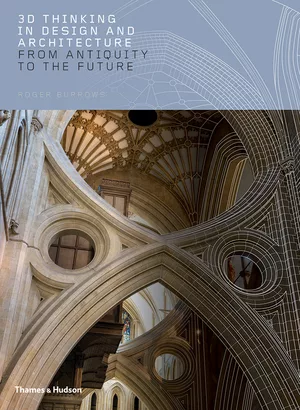
    3D Thinking in Design and Architecture: From Antiquity to the Future

See More Products
×

The latest news and information

#1 Source for Architectural Design, News and Products

SUBSCRIBE
  • RESOURCES
    • Advertise
    • Contact Us
    • Submit
    • Store
  • ACCOUNT CENTER
    • Create an Account
    • Start a Subscription
    • Manage My Account
    • Sign Up for Newsletters
    • Visit Customer Service
    • Update Preferences
  • PRIVACY
    • PRIVACY POLICY
    • TERMS & CONDITIONS
    • DO NOT SELL MY PERSONAL INFORMATION
    • PRIVACY REQUEST
    • ACCESSIBILITY
  • SERVICES
    • Marketing Services
    • Reprints
    • Market Research
    • List Rental
    • Survey/Respondent Access
  • STAY CONNECTED
    • Linkedin
    • Facebook
    • Instagram
    • YouTube
    • X (Twitter)

Copyright ©2026. All Rights Reserved BNP Media, Inc. and BNP Media II, LLC.

Design, CMS, Hosting & Web Development :: ePublishing