Architectural Record
search
cart
facebook twitter linkedin youtube
  • Sign In
  • Subscribe
  • Sign Out
  • My Account
Architectural Record
  • NEWS
    • Latest News
    • Awards
    • Interviews
    • Obituaries
    • Podcasts
      • Design:Ed Podcast
      • Sponsored Podcasts
  • OPINION
    • Book Reviews / Excerpts
    • Exhibition Reviews
    • Forum
  • EXCLUSIVES
    • Videos
    • Design Vanguard
    • Top 300 Firms
    • Sponsored Content
    • Sponsored eBooks
    • From the Archives
  • CONTINUING ED
    • Editorial Continuing Ed
    • CE Center
    • CE Academies
  • PROJECTS
    • Buildings By Type
    • Reuse & Renovation
    • Museums & Arts Centers
    • Colleges & Universities
    • Multifamily Housing
    • Interiors
    • Lighting
    • Kitchen & Bath
  • HOUSES
    • Record Houses
    • House of the Month
    • Featured Houses
  • PRODUCTS
    • Products by Category
    • Record Products of the Year
    • Latest Products
  • EVENTS
    • Dates & Events
    • Record on the Road
    • Innovation Conference
    • Sustainability in Practice
    • Women In Architecture
    • Webinars
    • Ad Excellence Awards
    • Submit an Event
  • CONNECT
    • Ask RECORD AI
    • Newsletters
    • Contact
    • Advertise
    • Editorial Calendar
    • Store
    • Customer Service
  • SUBMIT
    • Submission Guidelines
    • RECORD Competitions
  • MAGAZINE
    • Subscribe
    • My Account
    • Digital Edition
    • Current Issue
    • Firm Pass
    • Historic Archive
Architecture News

Aging Moderns Still Prove Controversial

By Lucy Bullivant
June 14, 2007
Paul Rudolph’s 1960 Blue Cross/ Blue Shield Building in Boston broke aesthetic and technical ground while respecting the scale of a historic streetscape. But the developer of a proposed new skyscraper has sketched it out of the picture, and the building’s fate is now uncertain. In Cleveland, meanwhile, county commissioners approved plans this spring to demolish Marcel Breuer’s 1971 Cleveland Trust Tower.

Although these buildings have their admirers, they challenge entrenched notions of historic preservation and highlight an ongoing debate about saving Modern buildings. They also serve as reminders of lingering hostility toward much postwar architecture. “It’s difficult for people to understand that a building built in their lifetime is historic,” says Christine Madrid French, president of the Recent Past Preservation Network. And Modernist architecture starts with a couple of strikes against it, given its anti-historicism, use of industrial processes, and rigid geometries. It’s also frequently associated with controversial and often disruptive urban-renewal schemes. “A lot of these buildings were built on ashes of other buildings,” observes Jeanne Lambin, a National Trust for Historic Preservation field services coordinator in Wisconsin. “Some people will never be interested in the preservation of Modern architecture.”

But when buildings reach 50 years old, they become eligible for the National Register of Historic Places, qualifying for tax credits as well as other incentives and protections. An estimated 70 percent of buildings in the U.S. were constructed following World War II. Many are poised to hit the magic age. And many younger buildings are also considered worthy of protection. This leads some preservationists to argue for new selection criteria: lowering the age limit, for instance, or allowing exceptions.

This sentiment, though, is not universally shared. “There’s a danger that if we start saying so much of this is history, we will invite skepticism,” says Donovan Rypkema, principal of the consulting firm Place Economics. A better argument for preservation can be made with the principles of sustainability, he says. Destroying an existing building and constructing a new one expends far more energy than renovation. The sustainability rationale argues for placing less emphasis on maintaining the architectural design and details. But federal standards established by the Secretary of the Interior, which determine eligibility for tax credits, emphasize saving original materials, retaining significant changes made over time, and distinguishing interventions from an existing structure. Postwar buildings often present a challenge.

“So much of what so many Modern buildings do is get an idea across about material, form, and social conditions,” says David Fixler, head of Docomomo New England. “It has less to do in most cases with the importance of materials.” He adds that restoring or duplicating original materials can be problematic since many buildings contained short-lived, experimental technologies.

Fittingly, the experimental energy that sparked Modernism can be applied to the handling of these buildings now. “It’s an architecture that broke with tradition,” says Theo Prudon, head of Docomomo U.S. “Why shouldn’t its preservation break with tradition?”

Preservationists Find Common Cause in Modernism

For most of its history, the National Trust, founded in 1949, did not embrace Modern architecture, which many in its ranks considered antithetical to preservation. It didn’t help that Modern buildings often rose on the rubble of significant older structures. While the Trust has experienced a glasnost of sorts, having recently assumed stewardship of Mies van der Rohe’s Farnsworth House and Philip Johnson’s Glass House, several other organizations have sprung up or stepped in to make the case for preserving Modernism.

The Recent Past Preservation Network (RPPN), founded in 2000, is proving among the more active groups. It is suing the U.S. Department of the Interior, the National Park Service—which administers the National Register of Historic Places—and others in a last gasp effort to save Richard Neutra’s 1961 Cyclorama Building, at the Gettysburg National Military Park, which is slated for demolition to make way for a new visitor center. The plaintiffs, including Neutra’s son, Dion, allege that the Park Service is selectively interpreting its own preservation standards and showing an anti-Modern bias.

Park Service officials declined comment for this story. But the sides are negotiating with each other. RPPN vice president Devin Colman says that they will meet with the D.C. district court judge handling the case in late July. Preservationists are hoping to convince the Park Service to move the cyclorama elsewhere within the park.

Other groups are attempting to establish new frameworks for preservation. The World Monuments Fund, which just placed a number of Modern buildings—including Louis I. Kahn’s Salk Institute and Frank Lloyd Wright’s Florida Southern University campus—on its biennial list of the 100 Most Endangered Places, has started a program to develop strategies for the reuse of these structures. The initiative combines advocacy and public education with the development of preservation techniques appropriate to Modern materials.

Some observers would like to see the various preservation groups combine their efforts—and indeed the groups are already beginning to collaborate. The managers of the National Trust’s Philip Johnson Glass House, in New Canaan, Connecticut, are working with Docomomo—a 17-year-old international preservation group dedicated to Modernism—and the local historical society to survey Modern houses in the area. The property’s executive director Christy MacLear adds that to improve coordination among various preservationists groups, the museum initiated a monthly conference call with the Park Service, the Cultural Landscape Foundation, the National Trust, and Docomomo.

While the public’s lingering ambivalence toward Modernism may have made it harder to respond to the development pressures that threaten mid-century buildings, the loose network of preservation groups concerned with this period is beginning to form a safety net.


KEYWORDS: Docomomo

Share This Story

Looking for a reprint of this article?
From high-res PDFs to custom plaques, order your copy today!

Post a comment to this article

Report Abusive Comment

Subscription Center
  • Create an Account
  • Start a Subscription
  • Manage My Account
  • Sign Up for Newsletters
  • Visit Customer Service
  • Update Preferences

More Videos

Sponsored Content

Sponsored Content is a special paid section where industry companies provide high quality, objective, non-commercial content around topics of interest to the Architectural Record audience. All Sponsored Content is supplied by the advertising company and any opinions expressed in this article are those of the author and not necessarily reflect the views of Architectural Record or its parent company, BNP Media. Interested in participating in our Sponsored Content section? Contact your local rep!

close
  • TAMLYN XtremeTrim Exterior Trim
    Sponsored byTamlyn

    Designing Cleaner Panel Facades: Why Exterior Trim Details Matter

  • Building with Vapor Barriers
    Sponsored byReef Industries, Inc.

    Vapor Barriers Help Control Moisture in Tighter Building Designs

  • Duct Interior with Prodeq System
    Sponsored byHenry, a Carlisle Company

    Designing Resilient Water Containment Systems

DESIGN:ED Podcast
Listen to Architectural Record’s DESIGN:ED Podcast

Events

June 10, 2026

Rethinking Stormwater – The Power of Porous Paving

Credits: 1 AIA LU/HSW; 1 AIBD P-CE; 0.1 ICC CEU

Learn how porous paving systems support stormwater management, reduce heat island effects, and enhance sustainable site design performance.

June 11, 2026

Very Early Warning Fire Detection for Mission-Critical Facilities

Credits: 1 AIA LU/HSW; 1 AIBD P-CE; 0.1 ICC CEU

Examine advanced fire detection strategies that support uptime and enhance safety in data centers and other mission-critical facilities.

View All Submit An Event

Products

2026 Architect's Square Foot Costbook

2026 Architect's Square Foot Costbook

See More Products

Popular Stories

Coronado Bridge

The Architect’s Guide to San Diego

Practice Matters illustration

What’s in a (Firm’s) Name? Thinking About Succession and Legacy

Practice Matters illustration

By the Numbers: Counting America's Architects

Inward House

Inward House by VeeV Design Studio

Riverdale House by Studio Lau

Riverdale House by Studio Lau

Broader Sustainability of CMU - Free Webinar - May 21, 2026

Related Articles

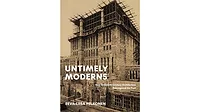
  • Untimely Moderns

    Eeva-Liisa Pelkonen Investigates the 'Untimely Moderns' of 20th-Century Architecture

    See More
  • Can A New Architecture School Revive An Aging City?

    See More
  • palm court and pei dorms at new college of florida

    Design Competition Aims to Breathe New Life into Aging I.M. Pei Dorms at New College of Florida

    See More

Related Products

See More Products
  • Architectural Record - May 2026

    Architectural Record May 2026 Issue

See More Products

Events

View AllSubmit An Event
  • June 18, 2026

    Rebooting the Aging Office Building

    Credits: 1 AIA LU/HSW; 1 AIBD P-CE; 0.1 ICC CEU; 1 PDHExplore façade retrofit strategies and award-winning design concepts that can transform aging office buildings into healthier, higher-performing workplaces for today’s hybrid workforce.
View AllSubmit An Event
×

The latest news and information

#1 Source for Architectural Design, News and Products

SUBSCRIBE
  • RESOURCES
    • Advertise
    • Contact Us
    • Submit
    • Store
  • ACCOUNT CENTER
    • Create an Account
    • Start a Subscription
    • Manage My Account
    • Sign Up for Newsletters
    • Visit Customer Service
    • Update Preferences
  • PRIVACY
    • PRIVACY POLICY
    • TERMS & CONDITIONS
    • DO NOT SELL MY PERSONAL INFORMATION
    • PRIVACY REQUEST
    • ACCESSIBILITY
  • SERVICES
    • Marketing Services
    • Reprints
    • Market Research
    • List Rental
    • Survey/Respondent Access
  • STAY CONNECTED
    • Linkedin
    • Facebook
    • Instagram
    • YouTube
    • X (Twitter)

Copyright ©2026. All Rights Reserved BNP Media, Inc. and BNP Media II, LLC.

Design, CMS, Hosting & Web Development :: ePublishing