Architectural Record
search
cart
facebook twitter linkedin youtube
  • Sign In
  • Subscribe
  • Sign Out
  • My Account
Architectural Record
  • NEWS
    • Latest News
    • Awards
    • Interviews
    • Obituaries
    • Podcasts
      • Design:Ed Podcast
      • Sponsored Podcasts
  • OPINION
    • Book Reviews / Excerpts
    • Exhibition Reviews
    • Forum
  • EXCLUSIVES
    • Videos
    • Design Vanguard
    • Top 300 Firms
    • Sponsored Content
    • Sponsored eBooks
    • From the Archives
  • CONTINUING ED
    • Editorial Continuing Ed
    • CE Center
    • CE Academies
  • PROJECTS
    • Buildings By Type
    • Reuse & Renovation
    • Museums & Arts Centers
    • Colleges & Universities
    • Multifamily Housing
    • Interiors
    • Lighting
    • Kitchen & Bath
  • HOUSES
    • Record Houses
    • House of the Month
    • Featured Houses
  • PRODUCTS
    • Products by Category
    • Record Products of the Year
    • Latest Products
  • EVENTS
    • Dates & Events
    • Record on the Road
    • Innovation Conference
    • Sustainability in Practice
    • Women In Architecture
    • Webinars
    • Ad Excellence Awards
    • AIA 2026 Videos
    • Submit an Event
  • CONNECT
    • Ask RECORD AI
    • Newsletters
    • Contact
    • Advertise
    • Editorial Calendar
    • Store
    • Customer Service
  • SUBMIT
    • Submission Guidelines
    • RECORD Competitions
  • MAGAZINE
    • Subscribe
    • My Account
    • Digital Edition
    • Current Issue
    • Firm Pass
    • Historic Archive
Architecture News

Rome's Gas Stations Get High-Octane Makeover

By Albert Warson
August 7, 2007

Rome’s tiny gas stations will soon pump a lot more than petroleum into the city’s transportation system. The Unione Petrolifica, an organization representing the interests of oil companies including Erg, Agip, and Total, has turned to local architects Marco Bevilaqua and Bianca Patroni-Griffi to transform the approximately 30 pit stops into centers that dispense bus tickets, listings and tickets for nearby cultural events, snacks—and, yes, gas.
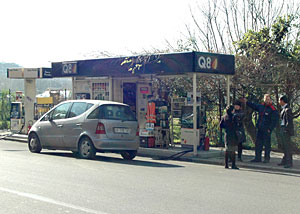
Images Courtesy Marco Bevilaqua / Bianca Patroni-Griffi

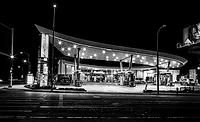
The union of gas station owners in Rome is rebuilding these tiny pit stops, many of which were hastily constructed in the 1970s (top). Architects Marco Bevilaqua and Bianca Patroni-Griffi have been commissioned to design a new standardized station (middle). The new station’s design contains information displays (above). The stations can be customized to blend in with the character of different neighborhoods, like this one planned for the Piazza dell'Esquilino (right).

The high concentration of gas stations on premium real estate is a problem unique to Rome. Built hastily and with ambiguous legality during the country’s rush of sudden wealth and traffic in the 1970s, their design was meant to downplay any interference with urban infrastructure. They are little more than pit stops into which motorists swerve, re-fuel, and exit right back into traffic: open areas defined by a pumps and erratically placed advertising in the narrow space between street and sidewalk.

The location and footprint of existing stations will remain intact, but their structure and function is being brought up to speed. Bevilacqua and Patroni-Griffi have designed a uniform system of stations outfitted with vending machines and LED screens that display traffic conditions and information about cultural events. Rather than catering just to motorists, Bevilacqua says, the new units will “give modern urban citizens access to the city’s entire transportation network.”

Each new center represents an amalgam of three components: a base, a main section supplying the streetside wall and protective overhang, and a pedestrian-side support wall. An LED screen will be sandwiched between the two walls. The size and shape of individual components will vary to accommodate site restrictions, such as trees and lampposts.

Although most centers will be fabricated in the custom colors of each gas company, some of the building materials will make special reference to Rome’s natural landscape and imperial past. Travertine, used in the base, is a sedimentary rock from nearby Tivoli that ancient builders used to clad the Coliseum and other structures. Stations close to these ancient monuments—and therefore subject to strict zoning laws—will sport a middle section made of copper, like many statues throughout the city, or lead, like the cupolas of most Roman churches.

The first 10 centers will be erected by Archigia, the construction company that builds most of Italy’s gas stations, in early 2008. Each costs roughly $53,400 and takes one month to assemble.

Share This Story

Looking for a reprint of this article?
From high-res PDFs to custom plaques, order your copy today!
Post a comment to this article

Report Abusive Comment

Subscription Center
  • Create an Account
  • Start a Subscription
  • Manage My Account
  • Sign Up for Newsletters
  • Visit Customer Service
  • Update Preferences

More Videos

Sponsored Content

Sponsored Content is a special paid section where industry companies provide high quality, objective, non-commercial content around topics of interest to the Architectural Record audience. All Sponsored Content is supplied by the advertising company and any opinions expressed in this article are those of the author and not necessarily reflect the views of Architectural Record or its parent company, BNP Media. Interested in participating in our Sponsored Content section? Contact your local rep!

close
  • 3D configurator
    Sponsored byDoorBird

    How DoorBird’s 3D Configurator Is Redefining Customization Across Residential and Commercial Design

  • interior of modern office
    Sponsored byCurrent

    The Downlight's Second Life: Why Below-Ceiling Serviceability Is the Specification Detail That Matters Most

  • cold storage facility
    Sponsored byCarlisle SynTec Systems

    How Architects Can Design More Continuous Cold Storage Envelopes

DESIGN:ED Podcast
Listen to Architectural Record’s DESIGN:ED Podcast

Events

July 22, 2026

Water Containment Waterproofing: Best Practices and System Selection

Credits: 1 AIA LU/HSW; 1 AIBD P-CE; 0.1 ICC CEU

Examine waterproofing strategies for water containment structures that enhance durability, prevent failures, and support long-term building performance.

July 29, 2026

Adaptive Reuse Reimagined: Designing Multifamily Housing from Existing Buildings

Credits: 1 AIA LU/HSW; 1 AIBD P-CE; 0.1 ICC CEU; 1 IIBEC CEH

Examine adaptive reuse envelope strategies that improve energy performance, preserve architectural character, and transform existing buildings into high-performing multifamily housing.

View All Submit An Event

Products

Architectural Detailing: Function, Constructibility, Aesthetics, 4th Edition

Architectural Detailing: Function, Constructibility, Aesthetics, 4th Edition

See More Products

Popular Stories

7480 N Delaware

A Portland Apartment Building by Daniel Toole Architecture Stands as a Study in Adaptation

Goldring Woldenberg Park

Continuing Education: Postindustrial Waterfronts

Kaya, San Diego

With San Diego’s Kaya, Jeff Svitak Melds Housing Density with Community

Chacarita Alta Housing

In Paraguay’s Capital, MOS and Adamo-Faiden Rethink Public Housing for Residents of Informal Settlements

Nieuw Bergen, Eindhoven

MVRDV’s Nieuw Bergen Brings ‘Mountainous’ Housing to a Low-Rise District in the Dutch City of Eindhoven

Water Containment Waterproofing: Best Practices and System Selection - Free Webinar - July 22, 2026

Related Articles

  • A new iteration of the classic filling station (2009), in Los Angeles, by Kanner Architect.

    Pump or Plug: Electric Cars and the Future of Gas Stations

    See More
  • Gas Stations Go Green, from Fuel to Finishes

    See More
  • Another Makeover for NYC's South Street Seaport?

    See More

Related Products

See More Products
  • facade.jpg

    Sustainable Facades: Design Methods for High-Performance Building Envelopes

See More Products

Events

View AllSubmit An Event
  • March 26, 2025

    Adaptive Reuse Transformations: Train Stations, Towers, and Hockey Arenas

    NOW ON DEMANDCredits: 1 AIA LU/HSW; 1 AIBD P-CE; 0.1 ICC CEU; 0.1 IACET CEUSpeakers will walk through a diverse set of adaptive reuse projects and highlight key lessons for students and educators.
View AllSubmit An Event
×

The latest news and information

#1 Source for Architectural Design, News and Products

SUBSCRIBE
  • RESOURCES
    • Advertise
    • Contact Us
    • Submit
    • Store
  • ACCOUNT CENTER
    • Create an Account
    • Start a Subscription
    • Manage My Account
    • Sign Up for Newsletters
    • Visit Customer Service
    • Update Preferences
  • PRIVACY
    • PRIVACY POLICY
    • TERMS & CONDITIONS
    • DO NOT SELL MY PERSONAL INFORMATION
    • PRIVACY REQUEST
    • ACCESSIBILITY
  • SERVICES
    • Marketing Services
    • Reprints
    • Market Research
    • List Rental
    • Survey/Respondent Access
  • STAY CONNECTED
    • Linkedin
    • Facebook
    • Instagram
    • YouTube
    • X (Twitter)

Copyright ©2026. All Rights Reserved BNP Media, Inc. and BNP Media II, LLC.

Design, CMS, Hosting & Web Development :: ePublishing