Architectural Record
search
cart
facebook twitter linkedin youtube
  • Sign In
  • Subscribe
  • Sign Out
  • My Account
Architectural Record
  • NEWS
    • Latest News
    • Awards
    • Interviews
    • Obituaries
    • Podcasts
      • Design:Ed Podcast
      • Sponsored Podcasts
  • OPINION
    • Book Reviews / Excerpts
    • Exhibition Reviews
    • Forum
  • EXCLUSIVES
    • Videos
    • Design Vanguard
    • Top 300 Firms
    • Sponsored Content
    • Sponsored eBooks
    • From the Archives
  • CONTINUING ED
    • Editorial Continuing Ed
    • CE Center
    • CE Academies
  • PROJECTS
    • Buildings By Type
    • Reuse & Renovation
    • Museums & Arts Centers
    • Colleges & Universities
    • Multifamily Housing
    • Interiors
    • Lighting
    • Kitchen & Bath
  • HOUSES
    • Record Houses
    • House of the Month
    • Featured Houses
  • PRODUCTS
    • Products by Category
    • Record Products of the Year
    • Latest Products
  • EVENTS
    • Dates & Events
    • Record on the Road
    • Innovation Conference
    • Sustainability in Practice
    • Women In Architecture
    • Webinars
    • Ad Excellence Awards
    • Submit an Event
  • CONNECT
    • Ask RECORD AI
    • Newsletters
    • Contact
    • Advertise
    • Editorial Calendar
    • Store
    • Customer Service
  • SUBMIT
    • Submission Guidelines
    • RECORD Competitions
  • MAGAZINE
    • Subscribe
    • My Account
    • Digital Edition
    • Current Issue
    • Firm Pass
    • Historic Archive
Architecture News

London Zooming Toward 2012 Summer Olympics

By David Sokol
February 22, 2010

As Vancouverites enjoy the wealth of new venues realized for the 2010 Olympic Winter Games, Londoners are beginning to see a host of sporting venues, transit links, and other facilities spring up for the 2012 Summer Games.

Click on the slide show icon to see additional photos.

Related Links:
London Revs Up for 2012 Olympics London's 2012 Olympics Stadium Panned Vancouver's Olympic Village Aims High on Sustainability Scale National Stadium in Beijing

Unlike the halting, delayed construction that characterized Athens’s preparation for the 2004 event, London’s £8 billion Olympics building program is moving along at a humming pace. “We are right on track and budget,” says Jerome Frost, head of design of the Olympic Development Authority (ODA), “and the skyline of east London is already changing.”

Since mid-December, for example, commuters on Britain’s Southeastern rail line have been alighting at the glassy Stratford International in east London. There they are getting one of their first tastes of the 2012 event: The train station will serve as the terminus of the seven-minute-long Javelin shuttle transporting sports fans between downtown and the Olympic Park, located five miles northeast of the City of London.

Stratford International looks upon the Lower Lea Valley, where the 608-acre Olympic Park is quickly taking shape behind a winding great wall of plywood sheets painted cobalt and grass green. Within days of the train station’s December 14 opening, the cable-net roof of the Olympic Stadium was lifted into place; Populous’s scheme for partly covering that armature in fabric will come to fruition this spring. The double-curved roof and concrete diving pool of the Zaha Hadid–designed Aquatics Centre are already complete, and the 17,500-seat facility should be ready for test events in 2011. The curved wafer topping Hopkins Architects’ velodrome building, which expresses the geometry of the bicycle track, also is nearing realization.

Moreover, the first apartment block in the Olympic Village—comprising 300 units and designed by development manager Lend Lease’s in-house architect panel—is structurally complete. Ultimately the village will house 23,000 athletes and officials in 11 buildings, and those dormitory units will be converted to 2,800 homes after the Games.

The primary electrical substation was the first building entirely completed, in late October, and it is now supplying power to the site, while the totemic Energy Centre by John McAslan + Partners—which, among other things, will warm Olympic Park venues using biomass boilers as well as heat recaptured from electricity production—is under way. And currently more than 300,000 wetlands plants and semi-mature trees are being cultivated off-site for inclusion in the landscape design, for which LDA Design and Hargreaves Associates was selected in spring 2008.

The project also will bequeath numerous building improvements and other changes outside both the park and city limits, and the ODA is consistently meeting those construction deadlines, too. Expansion of the Weymouth and Portland National Sailing Academy and Portland Marina, which will host the Olympic and Paralympic sailing events, has been complete since November 2008. More recently, crews finished driving foundation piles for the whitewater canoe facility in Broxbourne located an hour’s drive north of London. 

The ODA has stressed efficiency over spectacle, opting for buildings that not only meet today’s timelines but also promise to last for the long haul. “Seventy-five pence of every pound of the ODA’s budget is being spent on long-term improvements in the area, whether this is for brand-new sports facilities, new roads and bridges, new utilities, new transport links, or new housing,” Frost says of the Olympic Park. “The project is already acting as a catalyst for change on a huge scale in the Lower Lea Valley.”

As a result, the organization has forced repeated cutbacks on the Aquatics Centre, which was selected by competition in 2005. “London, it seems, is taking no chances,” Guardian architecture critic Jonathan Glancey wrote in 2007, upon the unveiling of the “safe, sensible and pragmatic” Olympic Stadium design.

Frost has said, “You have to be very, very rigorous to make sure that you are not building something you can’t afford,” and he has called Herzog & de Meuron’s Bird’s Nest for the Beijing Olympics “inappropriate” for the British economy. London’s cautious attitude toward its Olympic venues echoes the design decisions made in Vancouver, and foreshadows the investments that will be made in Rio de Janeiro for the 2016 Olympic Sumemr Games, where more than half of the sporting facilities are preexisting — suggesting, too, that Beijing’s wonders may have marked the tail end of an architectural comet.

Share This Story

Looking for a reprint of this article?
From high-res PDFs to custom plaques, order your copy today!
David Sokol is a contributing editor to Architectural Record. 

Post a comment to this article

Report Abusive Comment

Subscription Center
  • Create an Account
  • Start a Subscription
  • Manage My Account
  • Sign Up for Newsletters
  • Visit Customer Service
  • Update Preferences

More Videos

Sponsored Content

Sponsored Content is a special paid section where industry companies provide high quality, objective, non-commercial content around topics of interest to the Architectural Record audience. All Sponsored Content is supplied by the advertising company and any opinions expressed in this article are those of the author and not necessarily reflect the views of Architectural Record or its parent company, BNP Media. Interested in participating in our Sponsored Content section? Contact your local rep!

close
  • TAMLYN XtremeTrim Exterior Trim
    Sponsored byTamlyn

    Designing Cleaner Panel Facades: Why Exterior Trim Details Matter

  • Building with Vapor Barriers
    Sponsored byReef Industries, Inc.

    Vapor Barriers Help Control Moisture in Tighter Building Designs

  • Duct Interior with Prodeq System
    Sponsored byHenry, a Carlisle Company

    Designing Resilient Water Containment Systems

DESIGN:ED Podcast
Listen to Architectural Record’s DESIGN:ED Podcast

Events

June 10, 2026

Rethinking Stormwater – The Power of Porous Paving

Credits: 1 AIA LU/HSW; 1 AIBD P-CE; 0.1 ICC CEU

Learn how porous paving systems support stormwater management, reduce heat island effects, and enhance sustainable site design performance.

June 11, 2026

Very Early Warning Fire Detection for Mission-Critical Facilities

Credits: 1 AIA LU/HSW; 1 AIBD P-CE; 0.1 ICC CEU

Examine advanced fire detection strategies that support uptime and enhance safety in data centers and other mission-critical facilities.

View All Submit An Event

Products

2026 Architect's Square Foot Costbook

2026 Architect's Square Foot Costbook

See More Products

Popular Stories

Practice Matters illustration

What’s in a (Firm’s) Name? Thinking About Succession and Legacy

Coronado Bridge

The Architect’s Guide to San Diego

Practice Matters illustration

By the Numbers: Counting America's Architects

Riverdale House by Studio Lau

Riverdale House by Studio Lau

House on a Hill

Design Vanguard 2026: Forma

Broader Sustainability of CMU - Free Webinar - May 21, 2026

Related Articles

  • London Revs Up for 2012 Summer Olympics

    See More
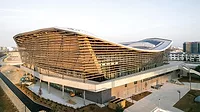
  • Paris Aquatics Center

    Paris Prepares for the 2024 Summer Olympics With a Strategic Mix of New Construction and Renovation

    See More
  • Cuningham Group Scores, Belatedly, as South Korea Wins Olympics Bid

    See More

Related Products

See More Products
  • Architectural Record - February 2026

    Architectural Record February 2026 Issue

See More Products
×

The latest news and information

#1 Source for Architectural Design, News and Products

SUBSCRIBE
  • RESOURCES
    • Advertise
    • Contact Us
    • Submit
    • Store
  • ACCOUNT CENTER
    • Create an Account
    • Start a Subscription
    • Manage My Account
    • Sign Up for Newsletters
    • Visit Customer Service
    • Update Preferences
  • PRIVACY
    • PRIVACY POLICY
    • TERMS & CONDITIONS
    • DO NOT SELL MY PERSONAL INFORMATION
    • PRIVACY REQUEST
    • ACCESSIBILITY
  • SERVICES
    • Marketing Services
    • Reprints
    • Market Research
    • List Rental
    • Survey/Respondent Access
  • STAY CONNECTED
    • Linkedin
    • Facebook
    • Instagram
    • YouTube
    • X (Twitter)

Copyright ©2026. All Rights Reserved BNP Media, Inc. and BNP Media II, LLC.

Design, CMS, Hosting & Web Development :: ePublishing