America's Top Architecture Schools 2013
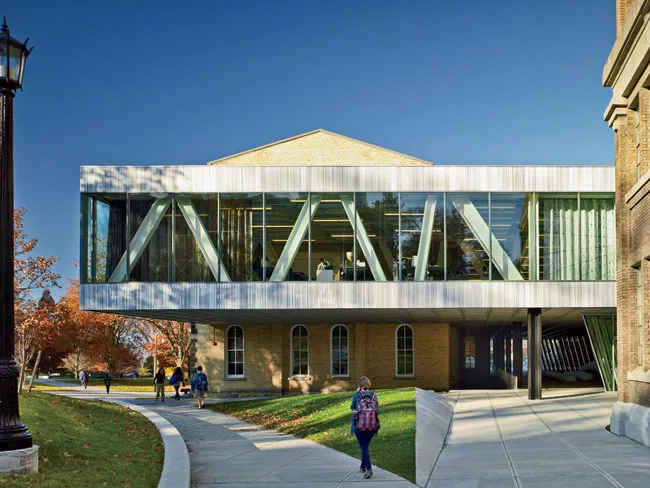
At the undergraduate level, Cornell University again scores in top place. Students now work in the new Milstein Hall (2011), designed by Rem Koolhaas/OMA .
Photo © Brad Feinkopf
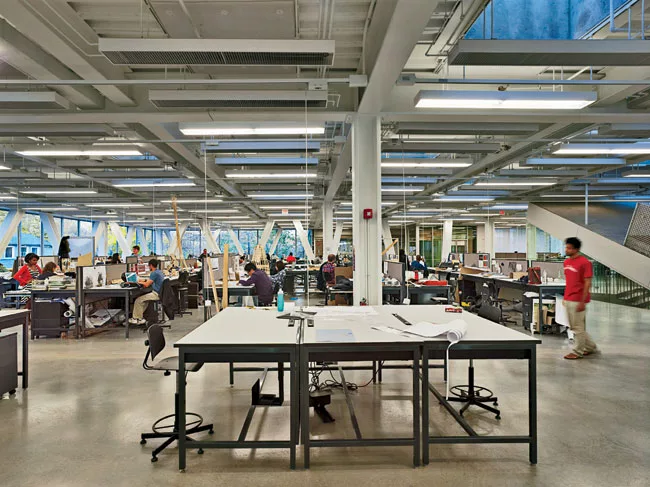
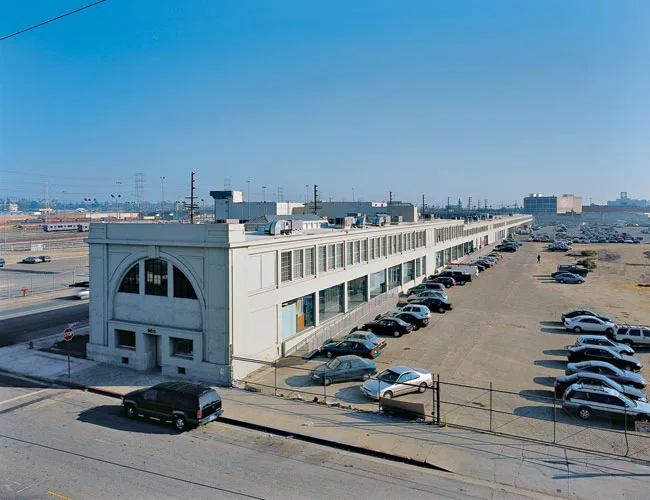
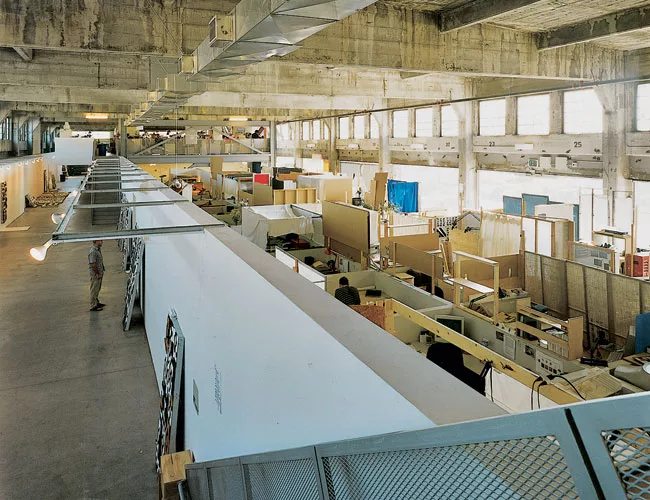
Sci-Arc’s Kappe Library (named for the school’s founder Ray Kappe) occupies the north end of the second floor of a former freight depot in downtown Los Angeles.
Photo © Brad Feinkopf
Cost of Education
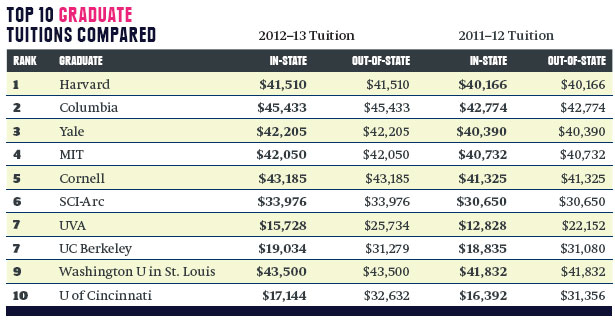
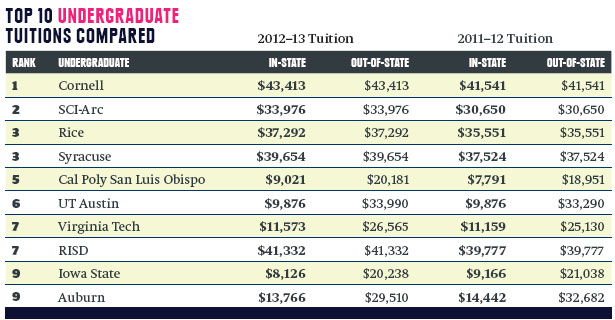
Architecture-school tuitions are high, especially considering the likely compensation upon graduation. Data from the “Architecture School Tuition & Fee Report 2011–2012” and the “2012 Compensation, Bonus & Benefits Survey” by DesignIntelligence offer interesting comparisons. For example, the average tuition and fees for B.Arch. programs, where public and private tuitions are combined, go from $19,791 a year (in which in-state schools are included) to $26,252 a year (where out-of-state tuition for public schools is counted). M.Arch. degree programs have very similar tuition and fee statistics. Private schools are somewhat more expensive as a group, averaging in the low $30,000s.
Overall, costs have increased about 4.2 percent in the past year. While the average starting annual salaries for a B.Arch. ($40,122) and an M.Arch. ($43,645) seem low— depending on the region—the average debt of the architecture graduate is $38,175, total. After three years of entry-level salaries, emerging architects start to see a noticeable increase, depending on the level of responsibility. Over the course of a career in architecture, the average base compensation will be $108,859 annually, and the total compensation from internship to retirement will be approximately $4,508,985.
An architecture education may be expensive, but the cost is well justified in the long run. — J. P. C.
 |
 |
 |
Looking for a reprint of this article?
From high-res PDFs to custom plaques, order your copy today!