Architectural Record
search
cart
facebook twitter linkedin youtube
  • Sign In
  • Subscribe
  • Sign Out
  • My Account
Architectural Record
  • NEWS
    • Latest News
    • Awards
    • Interviews
    • Obituaries
    • Podcasts
      • Design:Ed Podcast
      • Sponsored Podcasts
  • OPINION
    • Book Reviews / Excerpts
    • Exhibition Reviews
    • Forum
  • EXCLUSIVES
    • Videos
    • Design Vanguard
    • Top 300 Firms
    • Sponsored Content
    • Sponsored eBooks
    • From the Archives
  • CONTINUING ED
    • Editorial Continuing Ed
    • CE Center
    • CE Academies
  • PROJECTS
    • Buildings By Type
    • Reuse & Renovation
    • Museums & Arts Centers
    • Colleges & Universities
    • Multifamily Housing
    • Interiors
    • Lighting
    • Kitchen & Bath
  • HOUSES
    • Record Houses
    • House of the Month
    • Featured Houses
  • PRODUCTS
    • Products by Category
    • Record Products of the Year
    • Latest Products
  • EVENTS
    • Dates & Events
    • Record on the Road
    • Innovation Conference
    • Sustainability in Practice
    • Women In Architecture
    • Webinars
    • Ad Excellence Awards
    • Submit an Event
  • CONNECT
    • Ask RECORD AI
    • Newsletters
    • Contact
    • Advertise
    • Editorial Calendar
    • Store
    • Customer Service
  • SUBMIT
    • Submission Guidelines
    • RECORD Competitions
  • MAGAZINE
    • Subscribe
    • My Account
    • Digital Edition
    • Current Issue
    • Firm Pass
    • Historic Archive
Commentary & Criticism

Some free advice to President-elect Obama

By Robert Campbell, FAIA
January 16, 2009

President-elect Obama, we’re informed, intends to create an Office of Urban Policy. Obama is a lawyer, and I’m sure he’s thinking more about social issues than about architecture or urban design. But at this writing (in early December), nobody knows who will occupy the new office, or what its brief will be. Maybe architects will begin to have some influence on public architecture? It doesn’t happen often. Architects aren’t known for their political skills. My friend Dick Swett, who used to be a United States Representative from New Hampshire, believes he was the only architect to serve in Congress in the 20th century.
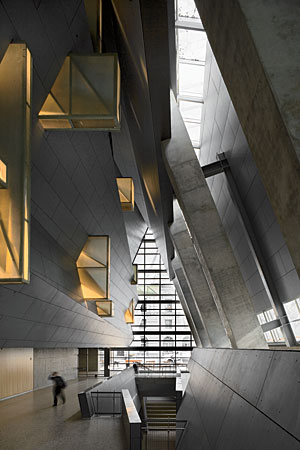
The Federal Building in San Francisco, designed by Morphosis
Photo ' Nic Lehoux

The Federal Building in San Francisco, designed by Morphosis, was developed as part of the GSA's Design Excellence program.

Not so long ago, though, the State Department maintained an active panel of architectural advisers, many of them distinguished architects. And the Public Buildings Service of the General Services Administration (GSA) ran its superb Design Excellence Program, based on Daniel Patrick Moynihan’s famous 1962 memo, “Guiding Principles for Federal Architecture.” Wrote Moynihan, memorably: “The policy shall be to provide requisite and adequate facilities in an architectural style and form which is distinguished and which will reflect the dignity, enterprise, vigor, and stability of the American national Government … Design must flow from the architectural profession to the Government, and not vice versa …” Under Design Excellence, the GSA recruited a “National Register of Peer Professionals” to help it select architects and monitor their designs. (Disclosure: I was one of the first batch of 26 peers, back in 1994).

Fear versus dignity But those admirable efforts were dissipated under the current administration. The State Department retreated to cookie-cutter, standardized designs for its embassies — designs (and sitings) that say more about our fear of terrorists than about our dignity or enterprise. And the GSA, while it still maintains its roster of peers, is far less active than in the years when it was building its fine string of federal courthouses.

For starters, we can ask Obama (hey, what else does he have to worry about?) to restore the active presence of the architectural profession in these two key federal functions.

My other suggestions are a little weirder. But nobody says I have to make them politically feasible.

Raise the gas tax through the roof. I remember hearing the economist John Kenneth Galbraith propose this at least 15 years ago. It’s obvious common sense. Gas is incredibly cheap. You pay $20 for a gallon of paint today, but a gallon of gasoline — which has to be extracted, refined, shipped maybe halfway around the world, and delivered to your pump (with the source, perhaps, protected by expensive warfare) — comes, as I write, to less than $2. Back in the early 1950s, when I was a kid, my Dad paid about 30 cents a gallon, which means that the price has been dropping, in real value, all my life. Thirty cents in the early ‘50s would be worth at least $2.50 today.

Exxon says

My newspaper recently carried a full-page ad from Exxon Mobil, informing us that only about a fourth of the world’s oil reserves have been extracted to date, but that (hooray!) Exxon is busy inventing new technologies to extract the rest — in order, says the ad, to lower the cost to the consumer. This from the company that last year posted the largest profit in corporate history.

It’s madness. It’s as if Exxon were telling us to save and use our old slide rules and typewriters and forget about computers. That’s how backward-looking its energy policy is. Exxon should be finding new energy sources, not looking for new ways to carbonize the world’s atmosphere.

A stiff gas tax, like those in Europe, could pay for the improvement of our disastrous national infrastructure — our failing roads, sewers, bridges, tunnels, all that. It would make alternative sources of energy more competitive. And people would again collect into walkable, bikeable communities, which could be efficiently served by public transportation. That gain in density might do wonders, too, for the social health of cities, towns, and villages. I’m not as appalled by our scattered car-culture suburbs, as, say, Jim Kunstler, who writes: “The suburbs have three destinies, none of them exclusive: as materials salvage, as slums, and as ruins.” Infilling them, surely, is a fourth possible destiny. But I agree that a lot of Americans in those thinned-out suburban worlds are feeling the lack of what used to be called togetherness. Not being members of a genuine, close-knit society, they create surrogates. They watch and discuss the lives of media celebrities as if they were friends or relatives. Or they join one of the fantastically successful so-called megachurches. Those, too, are surrogates: they supply, seven days a week, many of the social qualities that used to be supplied by actual communities.

Share This Story

Looking for a reprint of this article?
From high-res PDFs to custom plaques, order your copy today!


Robert Campbell, FAIA, was architecture critic for the Boston Globe and a longtime RECORD contributor.

Post a comment to this article

Report Abusive Comment

Subscription Center
  • Create an Account
  • Start a Subscription
  • Manage My Account
  • Sign Up for Newsletters
  • Visit Customer Service
  • Update Preferences

More Videos

Sponsored Content

Sponsored Content is a special paid section where industry companies provide high quality, objective, non-commercial content around topics of interest to the Architectural Record audience. All Sponsored Content is supplied by the advertising company and any opinions expressed in this article are those of the author and not necessarily reflect the views of Architectural Record or its parent company, BNP Media. Interested in participating in our Sponsored Content section? Contact your local rep!

close
  • TAMLYN XtremeTrim Exterior Trim
    Sponsored byTamlyn

    Designing Cleaner Panel Facades: Why Exterior Trim Details Matter

  • Building with Vapor Barriers
    Sponsored byReef Industries, Inc.

    Vapor Barriers Help Control Moisture in Tighter Building Designs

  • Duct Interior with Prodeq System
    Sponsored byHenry, a Carlisle Company

    Designing Resilient Water Containment Systems

DESIGN:ED Podcast
Listen to Architectural Record’s DESIGN:ED Podcast

Events

June 10, 2026

Rethinking Stormwater – The Power of Porous Paving

Credits: 1 AIA LU/HSW; 1 AIBD P-CE; 0.1 ICC CEU

Learn how porous paving systems support stormwater management, reduce heat island effects, and enhance sustainable site design performance.

June 11, 2026

Very Early Warning Fire Detection for Mission-Critical Facilities

Credits: 1 AIA LU/HSW; 1 AIBD P-CE; 0.1 ICC CEU

Examine advanced fire detection strategies that support uptime and enhance safety in data centers and other mission-critical facilities.

View All Submit An Event

Products

2026 Architect's Square Foot Costbook

2026 Architect's Square Foot Costbook

See More Products

Popular Stories

Practice Matters illustration

What’s in a (Firm’s) Name? Thinking About Succession and Legacy

Coronado Bridge

The Architect’s Guide to San Diego

Practice Matters illustration

By the Numbers: Counting America's Architects

Riverdale House by Studio Lau

Riverdale House by Studio Lau

House on a Hill

Design Vanguard 2026: Forma

Broader Sustainability of CMU - Free Webinar - May 21, 2026

Related Articles

  • Some free advice to President-elect Obama

    See More
  • AIA on President-Elect Donald Trump

    AIA 'Committed to Working with President-Elect Trump'

    See More
  • USGBC Pushes Obama to Act on Green Promises

    See More

Related Products

See More Products
  • GlobalData_logo_blue_header.png

    Construction in the US - Key Trends and Opportunities to 2023

  • 9 ways.jpg

    9 Ways To Make Housing for People

See More Products
×

The latest news and information

#1 Source for Architectural Design, News and Products

SUBSCRIBE
  • RESOURCES
    • Advertise
    • Contact Us
    • Submit
    • Store
  • ACCOUNT CENTER
    • Create an Account
    • Start a Subscription
    • Manage My Account
    • Sign Up for Newsletters
    • Visit Customer Service
    • Update Preferences
  • PRIVACY
    • PRIVACY POLICY
    • TERMS & CONDITIONS
    • DO NOT SELL MY PERSONAL INFORMATION
    • PRIVACY REQUEST
    • ACCESSIBILITY
  • SERVICES
    • Marketing Services
    • Reprints
    • Market Research
    • List Rental
    • Survey/Respondent Access
  • STAY CONNECTED
    • Linkedin
    • Facebook
    • Instagram
    • YouTube
    • X (Twitter)

Copyright ©2026. All Rights Reserved BNP Media, Inc. and BNP Media II, LLC.

Design, CMS, Hosting & Web Development :: ePublishing