Architectural Record
search
cart
facebook twitter linkedin youtube
  • Sign In
  • Subscribe
  • Sign Out
  • My Account
Architectural Record
  • NEWS
    • Latest News
    • Awards
    • Interviews
    • Obituaries
    • Podcasts
      • Design:Ed Podcast
      • Sponsored Podcasts
  • OPINION
    • Book Reviews / Excerpts
    • Exhibition Reviews
    • Forum
  • EXCLUSIVES
    • Videos
    • Design Vanguard
    • Top 300 Firms
    • Sponsored Content
    • Sponsored eBooks
    • From the Archives
  • CONTINUING ED
    • Editorial Continuing Ed
    • CE Center
    • CE Academies
  • PROJECTS
    • Buildings By Type
    • Reuse & Renovation
    • Museums & Arts Centers
    • Colleges & Universities
    • Multifamily Housing
    • Interiors
    • Lighting
    • Kitchen & Bath
  • HOUSES
    • Record Houses
    • House of the Month
    • Featured Houses
  • PRODUCTS
    • Products by Category
    • Record Products of the Year
    • Latest Products
  • EVENTS
    • Dates & Events
    • Record on the Road
    • Innovation Conference
    • Sustainability in Practice
    • Women In Architecture
    • Webinars
    • Ad Excellence Awards
    • Submit an Event
  • CONNECT
    • Ask RECORD AI
    • Newsletters
    • Contact
    • Advertise
    • Editorial Calendar
    • Store
    • Customer Service
  • SUBMIT
    • Submission Guidelines
    • RECORD Competitions
  • MAGAZINE
    • Subscribe
    • My Account
    • Digital Edition
    • Current Issue
    • Firm Pass
    • Historic Archive

Teaching by Example

By David Sokol
October 16, 2008

Design-build educators talk pedagogy and real politick.

AR: Deciding whether students should participate in design-build earlier or later in their academic careers makes me wonder, more generally, Do any of you consciously try to differentiate your design-build studio from one of your colleague’s?

Lewis: We respond not to other design-build programs but to local conditions—the constraints, obligations, possibilities, and opportunities that exist. Inevitably you learn from the other programs to find out what works and what hasn’t. But the internal logistics of, say, trying to build in New York City helps shape the identity of the program. Geography and institution proclaim the condition more than the comparative method.

Uganda
Uganda
Sustainable Prototype in Greensburg, Kansas
Photos courtesy DesignBuildBLUFF (top and middle); Studio 804 (above).
Last year, DesignBuildBLUFF also went far afield, doing work in Uganda (top and middle). Studio 804 deployed prefabrication to erect its so-called Sustainable Prototype in Greensburg, Kansas (above).

Hopfner: I would agree very much with that. To build in New York or to build in the City of New Haven is much different from building in Hale County. And a lot of that is what shapes the program. I certainly am not savvy enough to identify my niche and separate it from other programs.

In Yale’s case, another constraint is that the program is required of all M.Arch students in their first year. We’re dealing with 60 students, they then leave and I lose all my labor.

Badanes: There is probably an issue there, too, with people who are not interested in participating. Especially when your design is not chosen to be built.

Hopfner: That’s certainly the case. We help them self-divide into six teams of 10. One team’s design is chosen to be built. So when five-sixths of the class lose, how do you reinvigorate them? Once the scheme is chosen, we say, That’s the parti and now we’ll really design the thing. We define issues that need to be addressed and have the whole team sink their teeth into the design.

Dutton: Our program got started in a rather interesting way. I was teaching a fourth-year studio and there were three students who didn’t want to do a standard studio thing, who wanted to build something. They pushed me to make contact with my nonprofit connections in the Over-the-Rhine neighborhood. We chose an old apartment to renovate, which didn’t require too much work, and the students took it over, even the fundraising. Everybody was really impressed.

The Miami University is about 50 minutes by car from downtown Cincinnati, so when we started this we would leave Miami at 1 o’clock on Friday afternoon, drive down there, try to get three good hours of building in, and come back. It was the stupidest way of going about it. Again it was the students who said, Tom we’re learning plenty about design-build but we’re really not learning anything about this community. That led to the establishment of the Center for Community Engagement in 2002 and that led to the residency program there, which started fall 2006. Every fall since then we have had students in residence. What we’ve learned from guys like Dan and Andrew is to have architecture students working on these projects full-time.

Louis: It started out here with the computer screen. I was practicing in the mid-’90s and everybody was showing me their fun-with-form-Z portfolios. I couldn’t tell what was going on. That’s when I visited the Rural Studio and Steve—and I tried visiting you, too, Dan—and pieced together a proposal to the University of Utah. The first couple of years I banged my head against the wall: We also began by trying to build something during studio hours, and I proved to school leaders that taking five semesters to build a house really wasn’t going to work. Then they allowed us to go down to the town of Bluff.

Badanes: We build in the standard studio format, but just work smaller in an urban environment—it may not even require a permit, though it’s probably a little easier to do this in Seattle than in New Haven. Maybe that’s where the under-the-radar idea came from. I think it’s possible to provide students with meaningful construction experiences despite the small scale.

AR: Hank Louis organized a project in Africa, and David Lewis has led Parsons students to create a park pavilion in the Catskills town Margaretville. If geography and institution shape your design-build programs, does that identity shift when you work outside your typical places?

Louis: The reason we went to Uganda is that a Ugandan coalition came to see our work and asked us to build a clinic there. Last year we didn’t have a social component to our work, because we had to build more student housing on our little campus in Bluff. I thought Uganda would be a great way to incorporate the social aspect that year. I think we’ll continue to do that, maybe with another professor. It worked out great, because like I said earlier it’s so remarkable to watch the students fall in love with the people they’re helping.

Badanes: All these programs are rooted in a place. I’ve been to India, Cuba, Mexico, Vermont, doing this kind of stuff: You do a project and you raise expectations and then you disappear. So we stopped doing it. I think this idea of thinking globally and acting locally is at the heart of what we do. You don’t see any of these programs going to New Orleans. 

Hopfner: That’s exactly how we feel about New Haven. It’s a really depleted housing stock. Certain communities are really underserved. We feel we can do the most good at home.

Rockhill: This year we left home and went to Greensburg, Kansas. It could have been Uganda. The town had been wiped out by tornado.

Share This Story

Looking for a reprint of this article?
From high-res PDFs to custom plaques, order your copy today!
David Sokol is a contributing editor to Architectural Record. 

Post a comment to this article

Report Abusive Comment

Subscription Center
  • Create an Account
  • Start a Subscription
  • Manage My Account
  • Sign Up for Newsletters
  • Visit Customer Service
  • Update Preferences

More Videos

Sponsored Content

Sponsored Content is a special paid section where industry companies provide high quality, objective, non-commercial content around topics of interest to the Architectural Record audience. All Sponsored Content is supplied by the advertising company and any opinions expressed in this article are those of the author and not necessarily reflect the views of Architectural Record or its parent company, BNP Media. Interested in participating in our Sponsored Content section? Contact your local rep!

close
  • TAMLYN XtremeTrim Exterior Trim
    Sponsored byTamlyn

    Designing Cleaner Panel Facades: Why Exterior Trim Details Matter

  • Building with Vapor Barriers
    Sponsored byReef Industries, Inc.

    Vapor Barriers Help Control Moisture in Tighter Building Designs

  • Duct Interior with Prodeq System
    Sponsored byHenry, a Carlisle Company

    Designing Resilient Water Containment Systems

DESIGN:ED Podcast
Listen to Architectural Record’s DESIGN:ED Podcast

Events

June 10, 2026

Rethinking Stormwater – The Power of Porous Paving

Credits: 1 AIA LU/HSW; 1 AIBD P-CE; 0.1 ICC CEU

Learn how porous paving systems support stormwater management, reduce heat island effects, and enhance sustainable site design performance.

June 11, 2026

Very Early Warning Fire Detection for Mission-Critical Facilities

Credits: 1 AIA LU/HSW; 1 AIBD P-CE; 0.1 ICC CEU

Examine advanced fire detection strategies that support uptime and enhance safety in data centers and other mission-critical facilities.

View All Submit An Event

Products

2026 Architect's Square Foot Costbook

2026 Architect's Square Foot Costbook

See More Products

Popular Stories

Practice Matters illustration

What’s in a (Firm’s) Name? Thinking About Succession and Legacy

Practice Matters illustration

By the Numbers: Counting America's Architects

House on a Hill

Design Vanguard 2026: Forma

Crane Cove, ONO

Design Vanguard 2026 Winners

KRESA by DLR

In Kalamazoo, DLR Group Completes a Mass-Timber Hub for Career and Technical Education Programs

Broader Sustainability of CMU - Free Webinar - May 21, 2026

Related Articles

  • Teaching by Example

    See More
  • Teaching by Example

    See More
  • Teaching by Example

    See More

Related Products

See More Products
  • 3dthinking.jpg

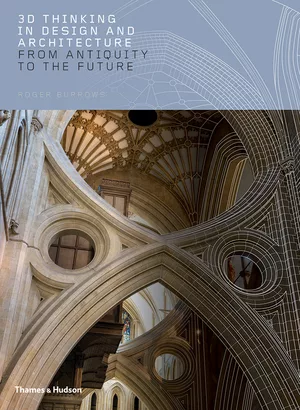
    3D Thinking in Design and Architecture: From Antiquity to the Future

  • american arch.jpg

    American Architecture: An Illustrated Encyclopedia

See More Products

Events

View AllSubmit An Event
  • April 22, 2026

    One Foot In, One Foot Out—The Balancing Act of Teaching and Practicing Architecture

    NOW ON DEMANDCredits: 1 AIA LU/Elective; 1 AIBD P-CE;  0.1 ICC CEU; 0.1 IACET CEUJoin Architectural Record for a discussion with three leading firms on the future of the academic–practice hybrid model and its impact on the next generation of architects.
View AllSubmit An Event
×

The latest news and information

#1 Source for Architectural Design, News and Products

SUBSCRIBE
  • RESOURCES
    • Advertise
    • Contact Us
    • Submit
    • Store
  • ACCOUNT CENTER
    • Create an Account
    • Start a Subscription
    • Manage My Account
    • Sign Up for Newsletters
    • Visit Customer Service
    • Update Preferences
  • PRIVACY
    • PRIVACY POLICY
    • TERMS & CONDITIONS
    • DO NOT SELL MY PERSONAL INFORMATION
    • PRIVACY REQUEST
    • ACCESSIBILITY
  • SERVICES
    • Marketing Services
    • Reprints
    • Market Research
    • List Rental
    • Survey/Respondent Access
  • STAY CONNECTED
    • Linkedin
    • Facebook
    • Instagram
    • YouTube
    • X (Twitter)

Copyright ©2026. All Rights Reserved BNP Media, Inc. and BNP Media II, LLC.

Design, CMS, Hosting & Web Development :: ePublishing