Architectural Record
search
cart
facebook twitter linkedin youtube
  • Sign In
  • Subscribe
  • Sign Out
  • My Account
Architectural Record
  • NEWS
    • Latest News
    • Awards
    • Interviews
    • Obituaries
    • Podcasts
      • Design:Ed Podcast
      • Sponsored Podcasts
  • OPINION
    • Book Reviews / Excerpts
    • Exhibition Reviews
    • Forum
  • EXCLUSIVES
    • Videos
    • Design Vanguard
    • Top 300 Firms
    • Sponsored Content
    • Sponsored eBooks
    • From the Archives
  • CONTINUING ED
    • Editorial Continuing Ed
    • CE Center
    • CE Academies
  • PROJECTS
    • Buildings By Type
    • Reuse & Renovation
    • Museums & Arts Centers
    • Colleges & Universities
    • Multifamily Housing
    • Interiors
    • Lighting
    • Kitchen & Bath
  • HOUSES
    • Record Houses
    • House of the Month
    • Featured Houses
  • PRODUCTS
    • Products by Category
    • Record Products of the Year
    • Latest Products
  • EVENTS
    • Dates & Events
    • Record on the Road
    • Innovation Conference
    • Sustainability in Practice
    • Women In Architecture
    • Webinars
    • Ad Excellence Awards
    • Submit an Event
  • CONNECT
    • Ask RECORD AI
    • Newsletters
    • Contact
    • Advertise
    • Editorial Calendar
    • Store
    • Customer Service
  • SUBMIT
    • Submission Guidelines
    • RECORD Competitions
  • MAGAZINE
    • Subscribe
    • My Account
    • Digital Edition
    • Current Issue
    • Firm Pass
    • Historic Archive
Projects

Judd Home and Studio by Architecture Research Office

New York City
By Clifford A. Pearson
Judd Home and Studio by Architecture Research Office
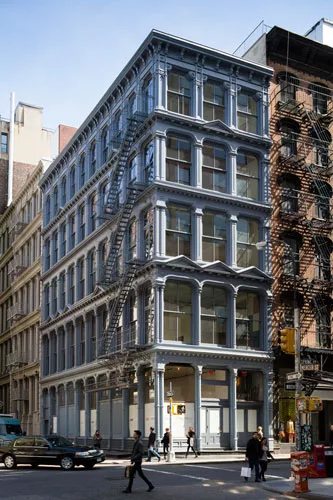
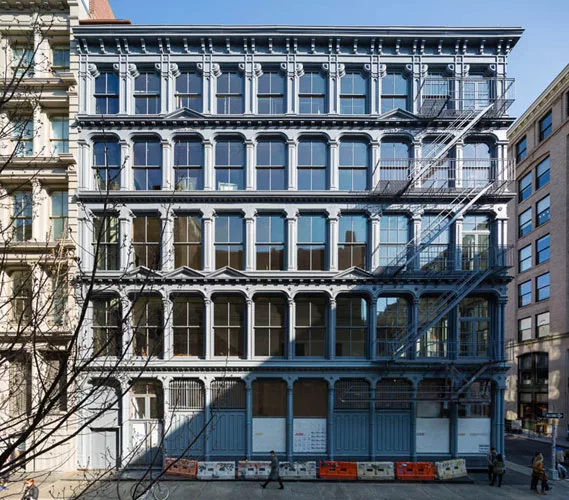
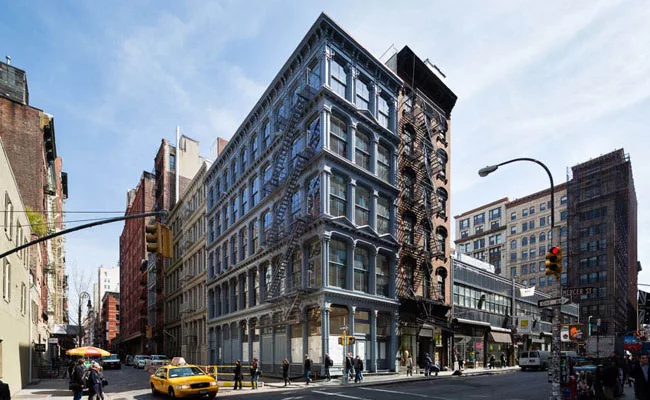
Corner of Spring and Mercer streets.
 
Photo © James Ewing
Judd Home and Studio by Architecture Research Office
The 1870 building by Nicholas Whyte was first used for manufacturing on the upper floors and retail on the ground. Restoring it took eight years and involved repairing 1,300 pieces of cast iron, including 320 that were recast.
 
Photo © James Ewing
Judd Home and Studio by Architecture Research Office
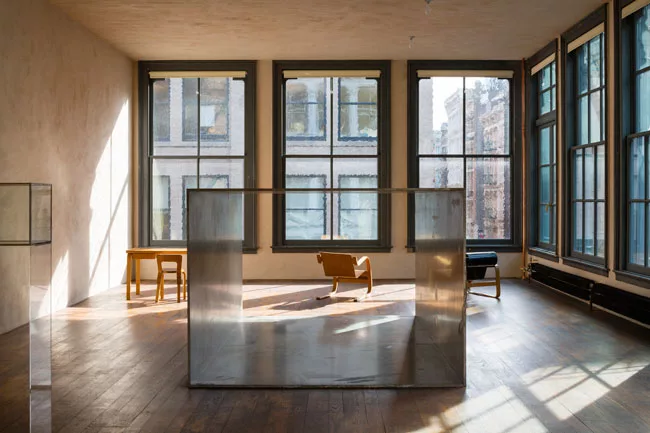
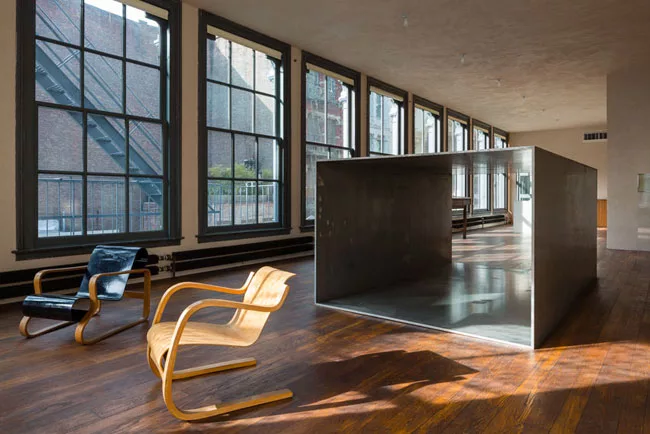
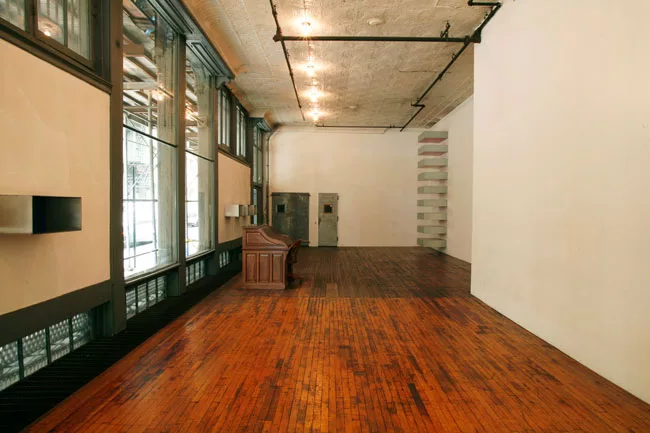
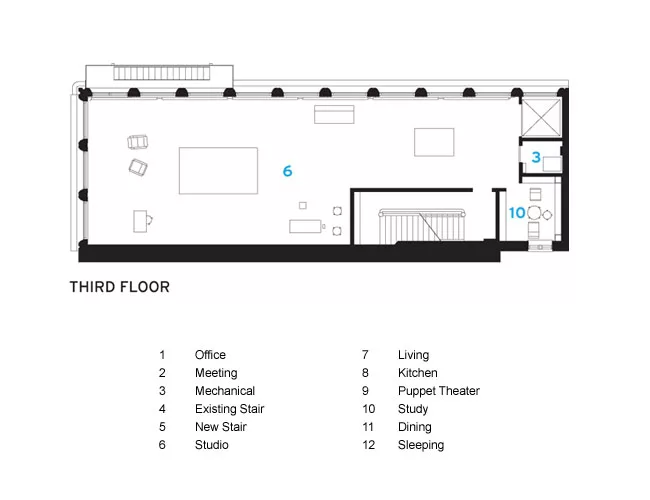
The third-floor studio looks the same as it did in Judd's day, but now has double-glazed windows and new insulation.
 
Photo © James Ewing
Judd Home and Studio by Architecture Research Office
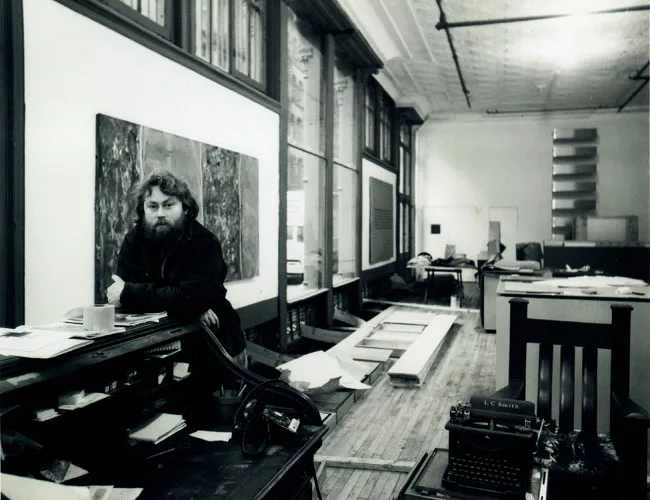
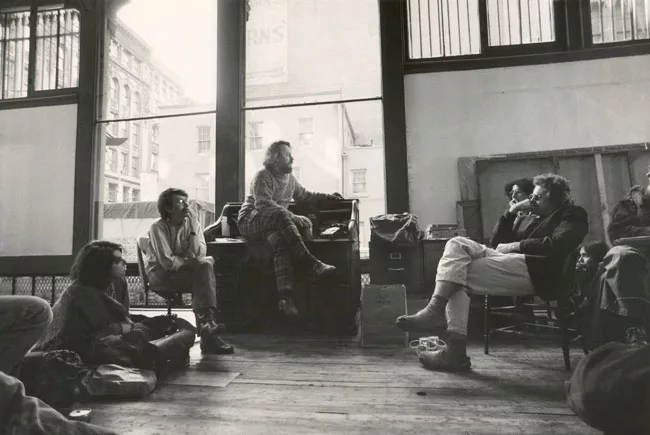
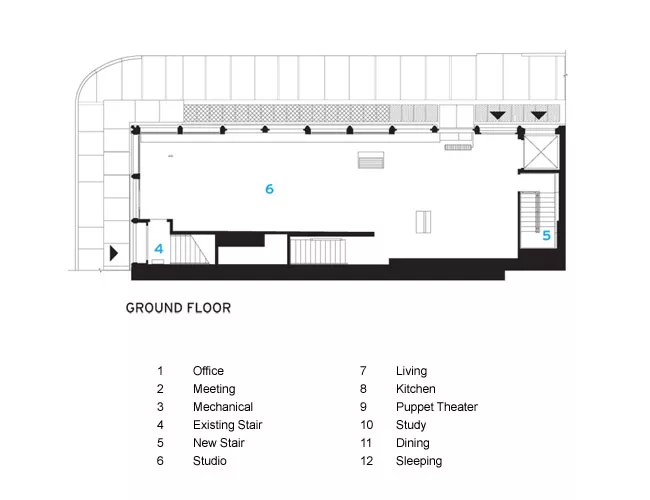
Donald Judd in the first-floor studio in the 1970s.
 
Photo © James Ewing
Judd Home and Studio by Architecture Research Office
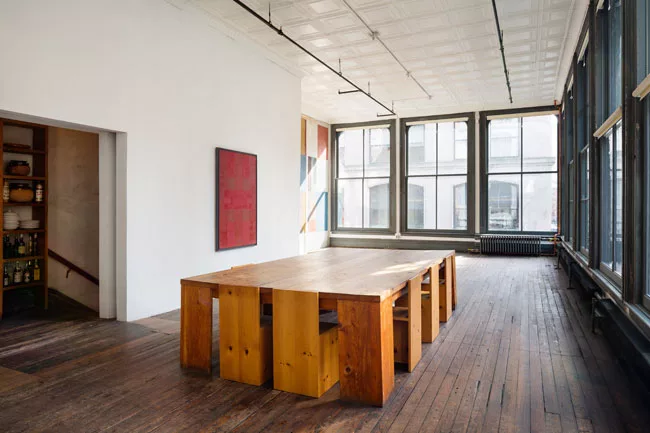
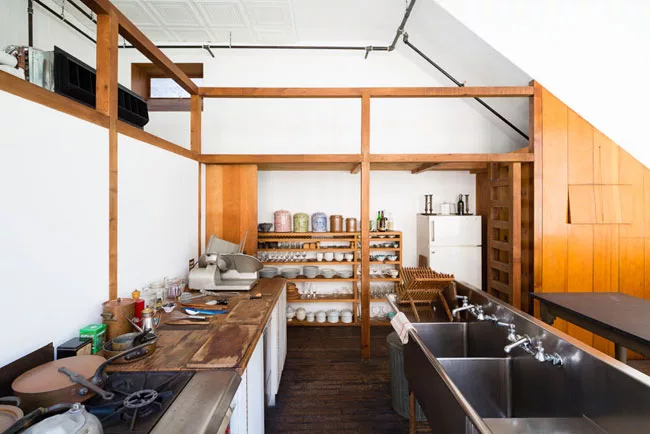
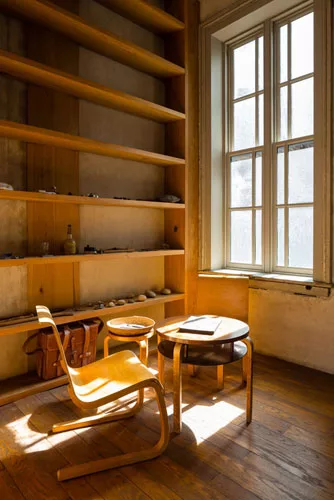
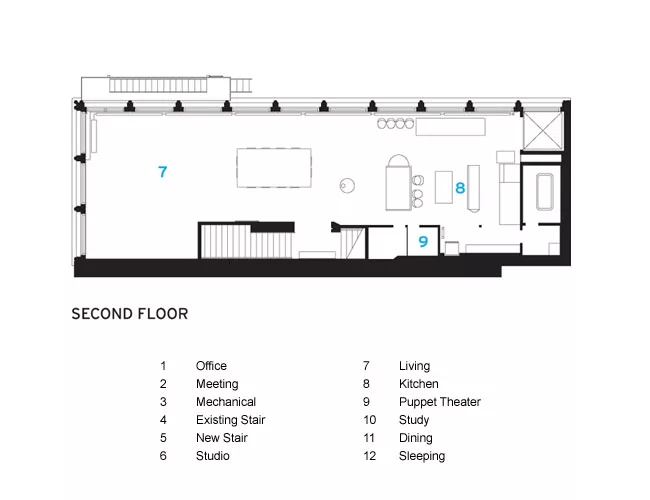
Judd made the table and chairs on the second floor, which was used for cooking, dining, and socializing. An Ad Reinhardt painting hangs near the table and a mural by David Novros occupies the wall by the south-facing windows.
 
Photo © James Ewing
Judd Home and Studio by Architecture Research Office
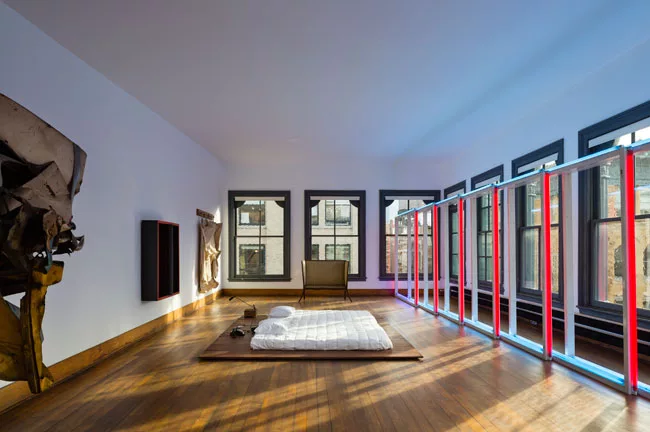
After Judd's son was born in 1968, Dan Flavin created a light piece that still runs along much of the fifth floor. On the opposite wall, pieces by John Chamberlain, Judd, and Claes Oldenburg are back where they had been in the 1970s.
 
Photo © James Ewing
Judd Home and Studio by Architecture Research Office
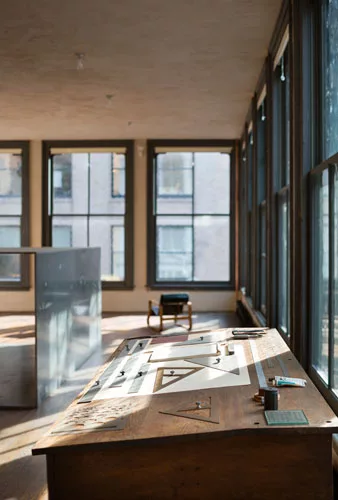
Judd's drawing instruments still grace his desk on the third floor
 
Photo © James Ewing
Judd Home and Studio by Architecture Research Office
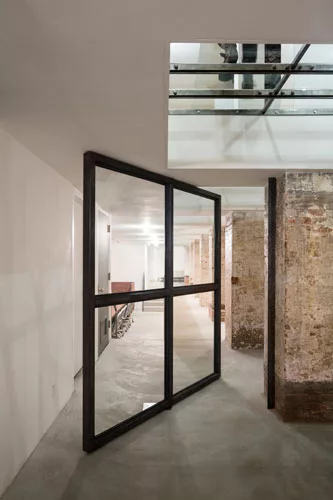
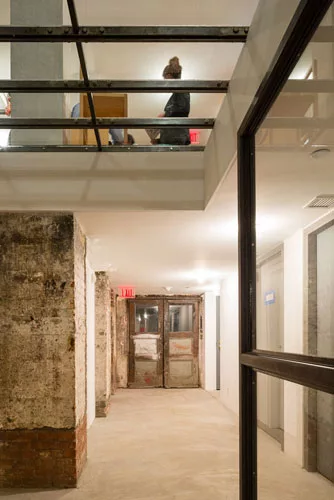
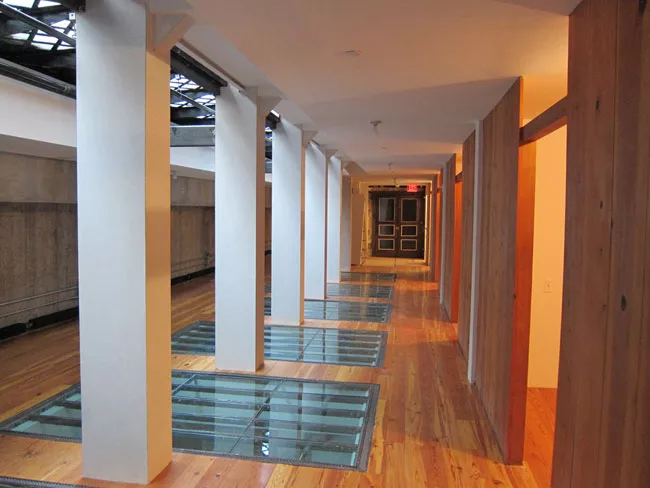
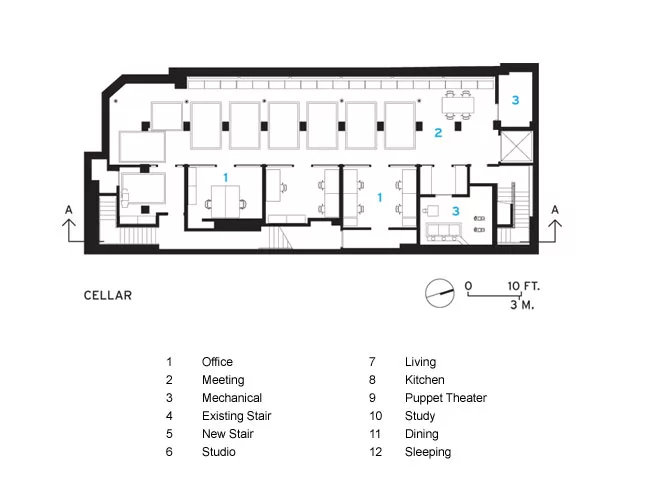
ARO created offices for the Judd Foundation in the cellar and sub-cellar, using a pivoting glass-and-steel door and glass floor panels to bring daylight inside.
 
Photo © James Ewing
Judd Home and Studio by Architecture Research Office
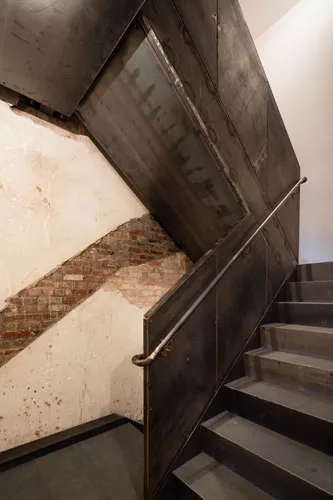
The firm also installed a new steel-plate stair to access the lower levels.
 
Photo © James Ewing
Mercer Street fa'ade
 
Photo © James Ewing
Third-floor studio
Third-floor studio
 
Photo © James Ewing
Kitchen on second floor
 
Photo © James Ewing
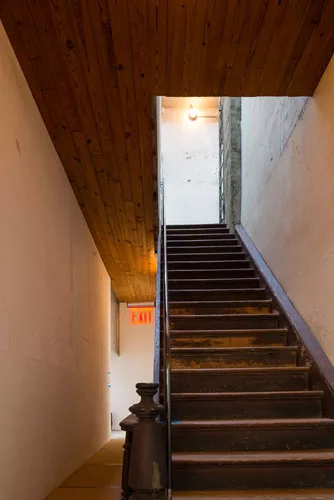
Renovated old stair
Renovated old stair
 
Photo © James Ewing
Study
Study
 
Photo © James Ewing
Judd Foundation offices in cellar
 
Photo © James Ewing
Cellar offices with sidewalk lites restored
 
Photo courtesy of ARO
Donald Judd in 1974 with artists Julian Schnabel and Ron Clark
 
Photo courtesy of Judd Foundation
First-floor studio before renovation
 
Photo © Mauricio Alejo/Judd Foundation Archives
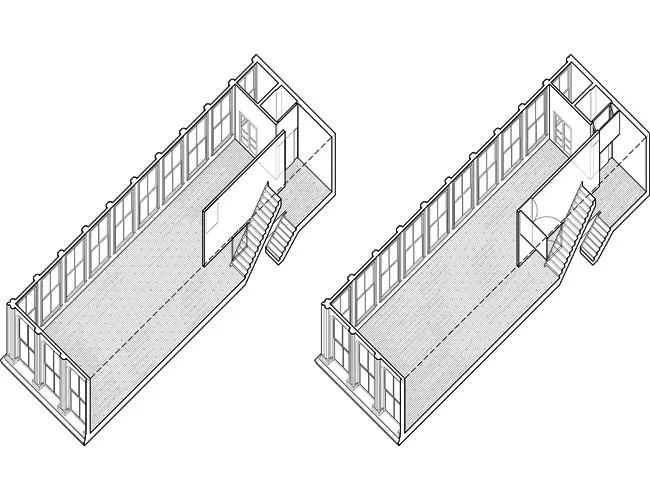
Diagrams of smoke baffles on fourth floor
 
Image courtesy of ARO
Judd Home and Studio
Image courtesy of ARO
Judd Home and Studio
Image courtesy of ARO
Judd Home and Studio
Image courtesy of ARO
Judd Home and Studio
Image courtesy of ARO
Judd Home and Studio
Image courtesy of ARO
Judd Home and Studio
Image courtesy of ARO
Judd Home and Studio
Image courtesy of ARO
Judd Home and Studio by Architecture Research Office
Mercer Street fa'ade
Third-floor studio
Kitchen on second floor
Renovated old stair
Study
Judd Foundation offices in cellar
Cellar offices with sidewalk lites restored
Donald Judd in 1974 with artists Julian Schnabel and Ron Clark
First-floor studio before renovation
Diagrams of smoke baffles on fourth floor
Judd Home and Studio
May 16, 2013

Architects & Firms

Architecture Research Office

While he was redefining the boundaries of art in the 1960s, ’70s, and ’80s, Donald Judd reconfigured 101 Spring Street, his New York City home and studio, into a supersized piece of sculpture. Judd, who bought the 1870 cast-iron building in SoHo in 1968 for $68,000, transformed the industrial relic into an architectural version of his iconic boxes. He treated it as a five-story laboratory for displaying art, both his own and that of friends such as Dan Flavin, Frank Stella, and John Chamberlain. In the process, it became a vibrant hub of the art scene that blossomed in SoHo in that era. But as the area changed in recent years from art center to upscale shopping mall, 101 Spring stood suspended in time, a somewhat forlorn reminder of the days before Prada, Banana Republic, and Uniqlo changed the neighborhood.
Additional Content:
Jump to credits & specifications

In 2005 the Judd Foundation—including the artist’s son, Flavin Judd, and daughter, Rainer Judd—decided to restore 101 Spring, which remained a repository of the artist’s work after his death in 1994, and open it to the public for the first time. The project posed complex challenges in terms of bringing the building up to code and accommodating visitors. “We wanted to retain the character of a house and studio,” says Michele Saliola, director of programs for the foundation. “We didn’t want it to feel like a museum.”

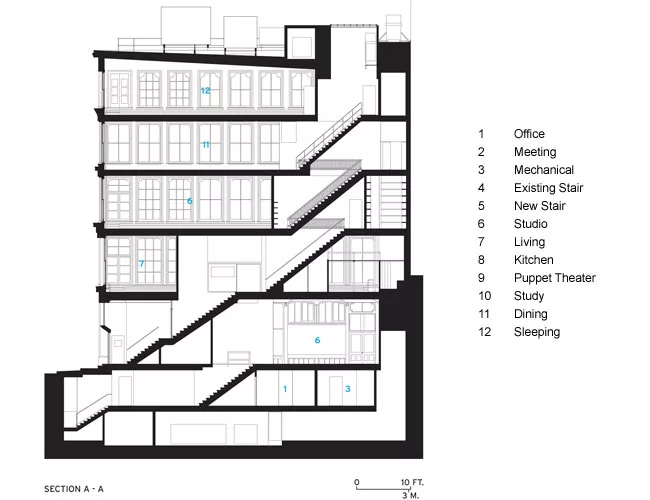
The project’s scope encompassed both major work on the building’s exterior and radical surgery on its interiors. Adding all the new mechanical systems meant “essentially inserting a new building inside the existing one, while making everything invisible,” explains Adam Yarinsky, the principal in charge of the project for Architecture Research Office (ARO), the firm overseeing the renovation. 

Working with Walter B. Melvin Architects (exterior restoration) and Robert Silman Associates (structural engineering), ARO restored the building to the look of its 1970s glory days as a hotbed of artistic creation, not its original 1870s sweatshop mode—a decision approved by New York’s Landmarks Preservation Commission. They repainted it the color Judd used (battleship gray), not the cream tone from the 19th century. Inside, they kept the fluid, open areas Judd created for his work and family. They even restored a secret cupboard-like space tucked under the building’s main stair on the second floor, which Rainer revealed to this writer on a recent visit and explained was used by her and her brother to put on puppet shows. ARO inserted restrooms and offices for the Judd Foundation in the cellar and meeting rooms in the subcellar, with restored glass blocks in the sidewalk bringing daylight to both lower levels. A new steel-plate stair at the north end of the building provides access to the two floors below the street.

On the exterior, Robert Bates of Walter B. Melvin Archi­tects oversaw the work of stripping and restoring in place the cast-iron columns, removing and restoring all window frames and spandrel panels, and recasting 320 pieces of architectural ironwork such as broken capitals and cornices. He replaced all the glass above the first floor with insulated double glazing, using restoration glass that imitates the original on the inside and low-iron glass on the outside.

To accommodate a new air-handling system, sprinkler pipes, electrical conduit, and security and fire alarms, ARO waged a stealth architectural insurgency on the original building envelope—finding ingenious ways of weaving new mechanical equipment behind walls and in small spaces stolen from old uses. Some of that space was liberated by placing major mechanical equipment on the roof, which had to be rebuilt with new steel structural elements to support the weight.

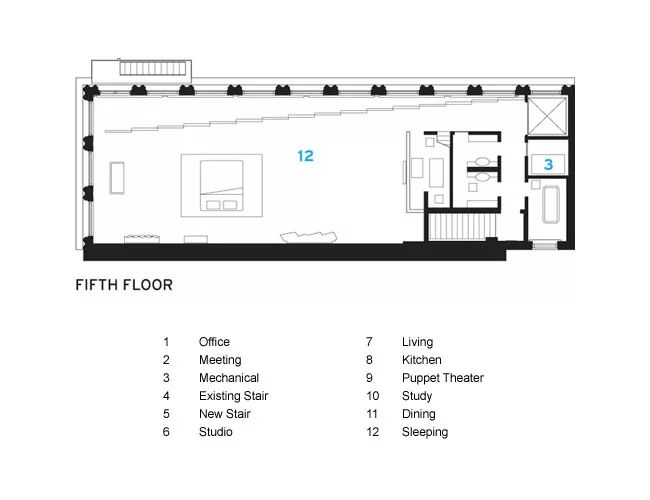
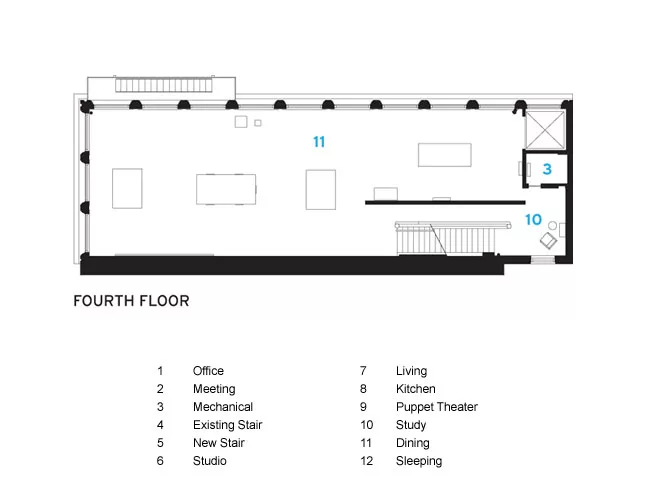
Walking through the building now, you feel Judd’s presence everywhere—from the wood dining table and chairs he made himself to the drawing tools still spread out on his desk. It’s a little creepy, but in the same way that any house museum is. Judd believed that each floor should have a singular function, so you find cooking/eating facilities on the second floor, his studio on the third, a big space for socializing on the fourth, and places for sleeping on the fifth. The first floor, which the artist often used for meeting with students, will now host talks, parties, and other events—the only floor that will have a flexible role.

Judd saw history as something to be engaged, not treated as an artifact, says Yarinsky. ARO took a similar approach in renovating 101 Spring, preserving the worn treads of the wood stair running along the east edge of the building, for example, while inserting a new pivoting glass-and-steel door in the below-grade offices. On the fourth floor, the firm faced a tricky problem of maintaining the flowing space around the stair landing where Judd had removed partitions. To keep the area open while meeting fire codes, ARO devised a pair of smoke baffles set into existing walls, elements that swing or spring into action only if there’s a fire. As with so much of what the firm did on this project, Yarinsky hopes no one will notice the architects’ clever solution.

Surrounded by the frenetic shopping culture of today’s SoHo, 101 Spring will not magically return the area to its heyday as an arts mecca. But with the Judd Foundation now in its cellar and the public allowed inside, it will stand as an active lesson about a key moment in modern art.

Completion Date: June 2013

Gross square footage: 14,500 square feet (including below grade levels)

Total construction cost: Withheld


Credits

Owner:

Judd Foundation
Project Leadership: Flavin Judd, Robert Beyer, Rainer Judd, Michele Saliola

Project Team: Carolyn Carson, Ben Cheah, Barbara Hunt McLanahan, Christopher Longfellow
www.juddfoundation.org


Architect:

Architecture Research Office
170 Varick St.
NY NY 10013
Phone: (212) 675 1870
Fax: (212) 675 1645
www.aro.net

Personnel in architect's firm who should receive special credit:
Project Team:
Adam Yarinsky, FAIA (principal-in-charge)
Jeff Hong, RA (project architect)
Jejon Yeung
James Henry
Zac Stevens
Katy Barkan
Jeff Jordon
Matt Azen


Engineer(s):

Structural: Robert Silman Associates (Edward Meade [Principal], Ben Rosenberg)
MEP, Fire and Life Safety: Arup (Raymond Quinn [Principal], Gordon Carrie)
Civil: Langan Engineering & Environmental Services


Consultant(s):

Lighting: Richard J. Shaver Architectural Lighting

Acoustical: Arup

Exterior Restoration:
Architect: Walter B. Melvin Architects (Robert Bates [Principal-in-Charge], Sergio De Orbeta)
Scaffold and Shoring: Plan B Engineering
Building Envelope: Building Science Corporation
Expeditor / Code Consultant    William Dailey Building and Zoning
Legal Counsel: Kramer Levin Naftalis & Frankel
DOT Consultant: Sam Schwartz Engineering
Graphic Design: Poulin + Morris
Specifications: Construction Specifications, Inc.
Property Survey: Lovell & Belcher
Elevator: VDA
Fire Consulting: Marrion Fire & Risk Consulting


Owner’s Representative:

Levien & Company


Construction Manager:

F. J. Sciame Construction Co, Inc. (Robert Ware [Project Executive], Jay Gorman, John Crocco [Project Managers], Robert Werner [Site Superintendant])


Specifications

Structural system

Façade Cast Iron: Robinson Iron Corporation

Structural Steel: Maspeth Welding

Vault Lite Cast Iron: Antique Cast Iron


Exterior cladding

Masonry & Concrete: Baroco Contracting; Long Island Concrete


Roofing

Universal Services Group


Windows

Wood frame:  Artistic Windows and Doors

Window Treatment:     
Lutron (motorized shade manufacturer)
International Blinds (installer)
Dizz Designs (shade fabric)


Glazing

Glass: Competition Metals

Skylights: Universal Services Group


Doors

Wood doors: Artistic Windows and Doors

Fire-control doors, security grilles: McKeon Door Company


Hardware

Finish Hardware: Nanz


Interior finishes

Architectural Woodwork: Bauerschmidt and Sons

Millwork: Humboldt Woodworking

Painting (Exterior and Interior) and Decorative Plaster: Creative Finishes

Floor and wall tile: Daltile (restrooms)


Conveyance

Elevators: Metropolitan Elevator


Other unique products that contribute to sustainability:

101 Spring Street is a historic structure that is exempt from the energy code.  Also, the scope of the project, historic preservation with very limited interior work, made it an inappropriate candidate for LEED.

Notwithstanding these limitations, the project entailed a significant improvement to the exterior envelope, including added insulation to the roof and walls, new insulated window glass (with Low-E coating) and new tighter-fitting windows.  Also, the original oil-fired boiler and steam heating were completely replaced with a new heating system using high-efficiency natural gas boilers, hot water heating and modern temperature controls.  These measures reduce energy consumption.


Add any additional building components or special equipment that made a significant contribution to this project:

Carpentry:  Cord Contracting
Electrical and Fire Alarm:  Striano Electric
Mechanical and Steamfitting: Donnelly Mechanical
Plumbing and Fire Protection: Pace Plumbing and Fire Protection
Art Protection and Storage: Trans-Con
Caulking and Sealing: A&B Caulking
Scaffolding: All-Safe
Deployable Smoke Baffles: Electro-Kinetics
Demolition: Rite-Way

 
KEYWORDS: New York City

Share This Story

Looking for a reprint of this article?
From high-res PDFs to custom plaques, order your copy today!

Cliff portrait 2 0t5a1761 0031

Contributing editor Clifford Pearson is the co-author, with A. Eugene Kohn, of The World By Design, and writes about architecture and urbanism.

Post a comment to this article

Report Abusive Comment

Subscription Center
  • Create an Account
  • Start a Subscription
  • Manage My Account
  • Sign Up for Newsletters
  • Visit Customer Service
  • Update Preferences

More Videos

Sponsored Content

Sponsored Content is a special paid section where industry companies provide high quality, objective, non-commercial content around topics of interest to the Architectural Record audience. All Sponsored Content is supplied by the advertising company and any opinions expressed in this article are those of the author and not necessarily reflect the views of Architectural Record or its parent company, BNP Media. Interested in participating in our Sponsored Content section? Contact your local rep!

close
  • cold storage facility
    Sponsored byCarlisle SynTec Systems

    How Architects Can Design More Continuous Cold Storage Envelopes

  • TAMLYN XtremeTrim Exterior Trim
    Sponsored byTamlyn

    Designing Cleaner Panel Facades: Why Exterior Trim Details Matter

  • Building with Vapor Barriers
    Sponsored byReef Industries, Inc.

    Vapor Barriers Help Control Moisture in Tighter Building Designs

DESIGN:ED Podcast
Listen to Architectural Record’s DESIGN:ED Podcast

Events

June 18, 2026

Rebooting the Aging Office Building

Credits: 1 AIA LU/HSW; 1 AIBD P-CE; 0.1 ICC CEU; 1 PDH

Explore façade retrofit strategies and award-winning design concepts that can transform aging office buildings into healthier, higher-performing workplaces for today’s hybrid workforce.

June 23, 2026

Enhancing Fire Resistance with Advanced PVC Solutions

Credits: 1 AIA LU/HSW; 1 AIBD P-CE; 0.1 ICC CEU; 1 IIBEC CEH

Evaluate advanced PVC solutions that improve fire resistance, support WUI compliance, and enhance resilience in residential and commercial building design.

View All Submit An Event

Products

2026 Architect's Square Foot Costbook

2026 Architect's Square Foot Costbook

See More Products

Popular Stories

SanDiegoAirport

Top 300 Architecture Firms of 2026

Coronado Bridge

The Architect’s Guide to San Diego

Lorcan O' Herilhy

California Architect Lorcan O’Herlihy Has Died, Age 66

CCA, Studio Gang

The Winners of the AIA’s 2026 Architecture Award Range from Collegiate Rowing Hubs to Housing for the Homeless

Dusk House

Design Vanguard 2026: ONO

Rebooting the Aging Office Building - Free Webinar - June 18, 2026

Related Articles

  • On the Boards: Schools

    Happy Trailers at Riverdale County School by Architecture Research Office

    See More
  • Brooklyn Bridge Boathouse by Architecture Research Office

    Brooklyn Bridge Park Boathouse by Architecture Research Office

    See More
  • Riverdale Country School

    Riverdale Country School by Architecture Research Office

    See More

Related Products

See More Products
  • 2025-BNi_HOME BUILDERS-CV.jpg

    BNi Building News Home Builders Costbook 2025 (Print Edition)

  • 3dthinking.jpg

    3D Thinking in Design and Architecture: From Antiquity to the Future

See More Products
×

The latest news and information

#1 Source for Architectural Design, News and Products

SUBSCRIBE
  • RESOURCES
    • Advertise
    • Contact Us
    • Submit
    • Store
  • ACCOUNT CENTER
    • Create an Account
    • Start a Subscription
    • Manage My Account
    • Sign Up for Newsletters
    • Visit Customer Service
    • Update Preferences
  • PRIVACY
    • PRIVACY POLICY
    • TERMS & CONDITIONS
    • DO NOT SELL MY PERSONAL INFORMATION
    • PRIVACY REQUEST
    • ACCESSIBILITY
  • SERVICES
    • Marketing Services
    • Reprints
    • Market Research
    • List Rental
    • Survey/Respondent Access
  • STAY CONNECTED
    • Linkedin
    • Facebook
    • Instagram
    • YouTube
    • X (Twitter)

Copyright ©2026. All Rights Reserved BNP Media, Inc. and BNP Media II, LLC.

Design, CMS, Hosting & Web Development :: ePublishing