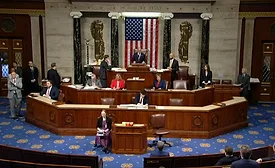
The new order, titled Promoting Beautiful Federal Civic Architecture, encourages the use of classical architecture for new Federal buildings. Read the AIA's response.
In a recent RFQ for the lead design architect of a federal courthouse in Florida, the General Services Administration stated that "Classical architectural is the preferred style." The AIA has condemned this mandate.
One of the most sweeping pieces of civil rights legislation in the country’s history, the Americans with Disabilities Act has changed the way we work, learn, and move through space.
The AIA has issued a statement in strong support of the legislation, which responds to a draft executive order that RECORD first reported on earlier this year.
The National Trust for Historic Preservation and allied groups have appealed to House and Senate leadership to include non-profit preservation and cultural resources in future pandemic relief funding.
President Trump signed into law the Coronavirus Aid, Relief, and Economic Security (CARES) Act on March 27, 2020. The first day companies could apply for a small business loan was April 3.