This website requires certain cookies to work and uses other cookies to help you have the best experience. By visiting this website, certain cookies have already been set, which you may delete and block. By closing this message or continuing to use our site, you agree to the use of cookies. Visit our updated privacy and cookie policy to learn more.
This Website Uses Cookies By closing this message or continuing to use our site, you agree to our cookie policy. Learn MoreThis website requires certain cookies to work and uses other cookies to help you have the best experience. By visiting this website, certain cookies have already been set, which you may delete and block. By closing this message or continuing to use our site, you agree to the use of cookies. Visit our updated privacy and cookie policy to learn more.
In this special section, we look at many and various points where art and architecture overlap—but not without some friction. What follows is a short history of artists as architecture’s antagonists, a survey of new architectural projects in the service of art, and a look at the practices of contemporary artists and designers who borrow the tools and concepts of each others’ disciplines.

It’s rare that an artist, or an architect, manages to group their affinities into a body of work so that each piece or design contains their combined fascinations.
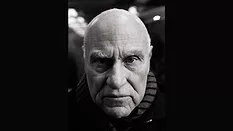
This past spring, the sculptor Richard Serra was honored with the President's Medal from the venerable Architectural League of New York, which cited his evolution as an artist from the “concerns of matter and materiality to more spatial preoccupations.”
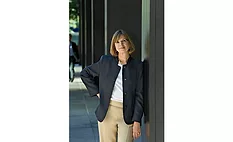
Annabelle Selldorf was an obvious choice to renovate the venerated museum of the Sterling and Francine Clark Art Institute in Williamstown, Massachusetts, home to a stellar collection of European and American paintings.
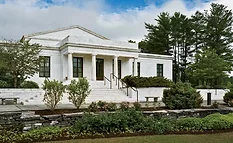
Lasting Impression: Since it opened in 1955, the Sterling and Francine Clark Art Institute has drawn 200,000 visitors annually to see its French Impressionist paintings among 9,000 works of art.
Last month the Clark completed a $145 million campus expansion on its 140-acre site in the Berkshire mountains of Massachsetts. Included is a new visitor center by Tadao Ando Architect & Associates and a renovation of the existing museum by Selldorf Architects.
Delfina Entrecanales is an unusual cultural philanthropist, her Delfina Foundation in London is an unusual place, and the architectural concept underlying it was born of an unusual international collaboration.
The artist toiling in solitude has long been a romantic ideal. But it rarely holds in reality, especially for those who work at the civic scale, making pieces that straddle the blurry boundary between art and architecture. These artists rarely work alone, typically relying on a host of collaborators to realize their visions, including studio assistants, fabricators, and even city officials.
Alex Schweder practices what he calls “performance architecture,” installation and event-based work that explores how people comprehend the built environment and how that perception shapes their bodies, social relationships, and desires.
Allyson Vieira builds monuments—but she uses unexpectedly humble material. Take her 2013–14 exhibition The Plural Present. There, the New York–based artist filled a gallery with Classical ruins: The City Wall, 2013, delimited the space with a colonnade that framed Beauty, Mirth, and Abundance, 2013, three figures striking acontrapposto that echoes the famed Greek statue of the three graces at the Metropolitan Museum of Art.