Architectural Record
search
cart
facebook twitter linkedin youtube
  • Sign In
  • Subscribe
  • Sign Out
  • My Account
Architectural Record
  • NEWS
    • Latest News
    • Awards
    • Interviews
    • Obituaries
    • Podcasts
      • Design:Ed Podcast
      • Sponsored Podcasts
  • OPINION
    • Book Reviews / Excerpts
    • Exhibition Reviews
    • Forum
  • EXCLUSIVES
    • Videos
    • Design Vanguard
    • Top 300 Firms
    • Sponsored Content
    • Sponsored eBooks
    • From the Archives
  • CONTINUING ED
    • Editorial Continuing Ed
    • CE Center
    • CE Academies
  • PROJECTS
    • Buildings By Type
    • Reuse & Renovation
    • Museums & Arts Centers
    • Colleges & Universities
    • Multifamily Housing
    • Interiors
    • Lighting
    • Kitchen & Bath
  • HOUSES
    • Record Houses
    • House of the Month
    • Featured Houses
  • PRODUCTS
    • Products by Category
    • Record Products of the Year
    • Latest Products
  • EVENTS
    • Dates & Events
    • Record on the Road
    • Innovation Conference
    • Sustainability in Practice
    • Women In Architecture
    • Webinars
    • Ad Excellence Awards
    • Submit an Event
  • CONNECT
    • Ask RECORD AI
    • Newsletters
    • Contact
    • Advertise
    • Editorial Calendar
    • Store
    • Customer Service
  • SUBMIT
    • Submission Guidelines
    • RECORD Competitions
  • MAGAZINE
    • Subscribe
    • My Account
    • Digital Edition
    • Current Issue
    • Firm Pass
    • Historic Archive
Architecture NewsProjectsInterviews

Newsmaker: David Hutchinson

By Joel Silverstein
David Hutchinson
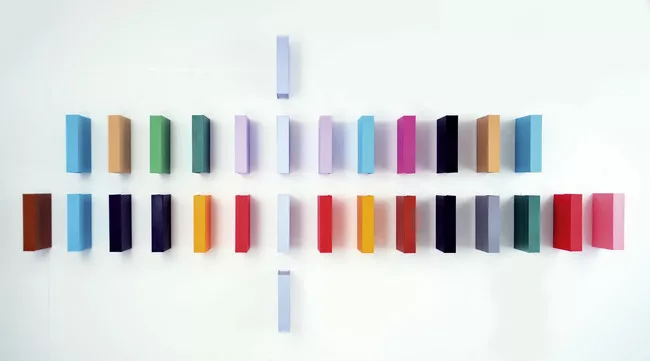
Hutchinson's Animal / Angel // Savior / Predator (2014), a sculpture made of fabric, archival binder's board, wood, acrylic, and glue.
 
Image © David Hutchinson
David Hutchinson
David Hutchinson, JG on Rembrandt #1 (2000), paint marker on paper
 
Image © David Hutchinson
David Hutchinson
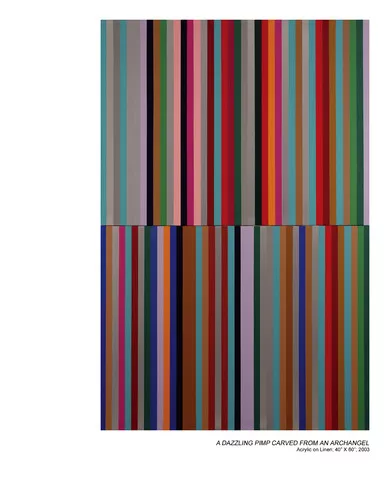
A Dazzling Pimp Carved From an Archangel (2003)
 
Image © David Hutchinson
David Hutchinson
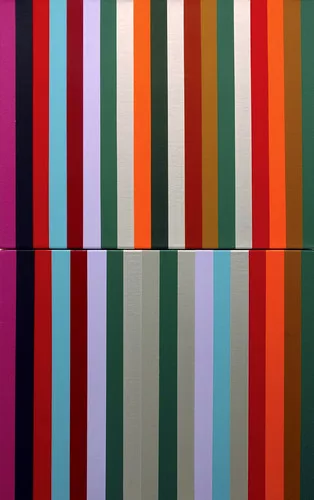
Miracle of the Rose (2004)
 
Image © David Hutchinson
David Hutchinson
Balcony (2000)
 
Image © David Hutchinson
David Hutchinson
JG on Rembrandt 2 (2000)
 
Image © David Hutchinson
David Hutchinson
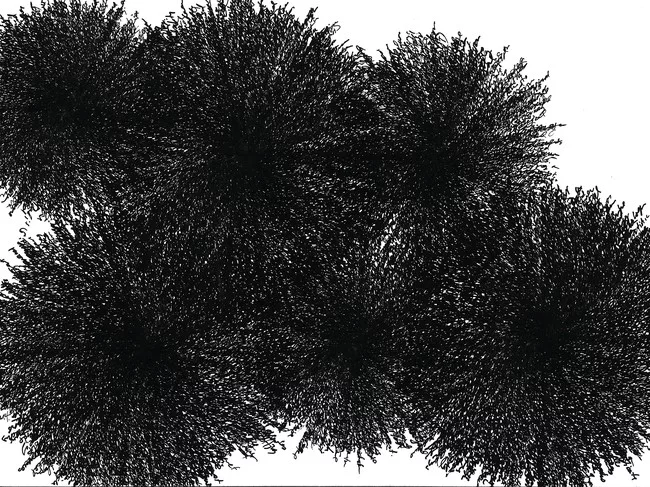
JG NY Times Obit 8Xs (2014)
 
Image © David Hutchinson
David Hutchinson
Photo courtesy The Lionheart Gallery
David Hutchinson
David Hutchinson
David Hutchinson
David Hutchinson
David Hutchinson
David Hutchinson
David Hutchinson
David Hutchinson
August 27, 2014
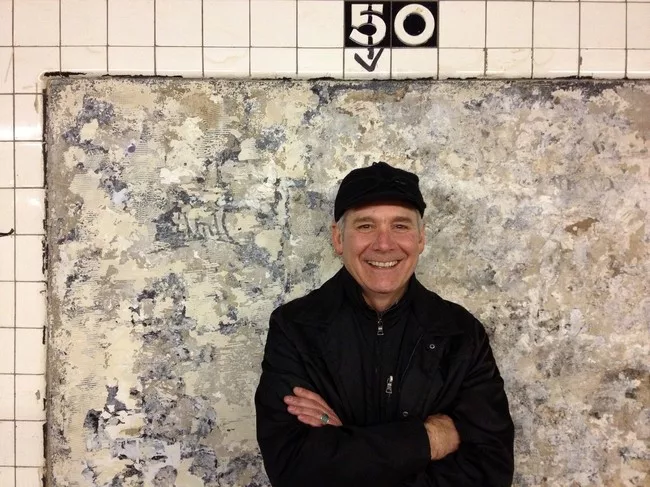
It’s rare that an artist, or an architect, manages to group their affinities into a body of work so that each piece or design contains their combined fascinations. Recently, David Hutchinson, an artist and architect, managed to combine his obsession with embedding coding in art together with a De Stijl-inspired aesthetic and his love of French author Jean Genet’s writings for Purging Genet, an exhibition of his work at The Lionheart Gallery in Pound Ridge, New York, a portion of which is still on display through December.
 
The show features vertical line paintings and sculptures that represent the graphic imaging of texts by Genet, along with transcriptions of writings by or about Genet by Jacques Derrida and others. As an architect with Perkins Eastman in Stamford, Connecticut, for the past 16 years, Hutchinson has specialized in designing higher education and healthcare facilities, while incorporating his knowledge of color theory into his interiors, creating therapeutic effects through the perception of color. Hutchinson spoke to RECORD about how his art and architecture practices support each other.

Architectural Record: Of your architectural focuses, does one allow for more creativity and consideration of color theory than others?

David Hutchinson: Higher education allows for more creative flexibility because health care is more code-oriented and government-regulated. At the same time, health care is changing dramatically and the projects that are closest to my heart are health care projects, where I know my work affects people’s lives. For example, I did a child study center for NYU Langone Medical Center. I knew that our schemes and our observations were affecting the outcomes of the therapy. The way we approach the therapy rooms, the way we approach the organization – that did affect them dramatically and favorably.

Another health care project was the Elizabeth Seton Pediatric Center [in Yonkers, New York], which is a skilled nursing facility for 137 kids. This is where I was able to apply color theory. The children are severely hampered by multiple diagnoses. Many of the kids are non-communicative and are moved around in various kinds of custom wheelchairs. So, we focused there on their perception. How do you reach people that you have difficulty communicating with? The color theory came in when we looked at the psychological development of perception, and we looked at how colors are perceived according to age groups.

How did your focus on the relationship between form and content lead you to create a chromatic language for translating written words?

In the Purging Genet exhibition, I use simple geometric moves to form a framework of coded content. To make it seductively accessible, the organizational framework of each piece is simple, but the colored bars are actually stand-ins for letters of the alphabet. A=aquamarine, B=blue, C=crimson, etc. The color choices are based on the common English names of colors. The canvases are comprised of two panels, the lower panel "spells out" the original French phrase, and the upper panel "spells out" the printed translation of the same phrase. The visual juxtaposition of the upper and lower panel is meant to illustrate the complexities of communication across societies and communication in general.

Genet and Derrida inspired the work in Purging Genet. How does your study of philosophy inform your architectural designs?

Philosophy school is very much like architecture school. Both are incredibly good life training experiences. They both teach you to go deep into a problem and come out of the process with fresh ideas that resonate. With my art I can be much more immediate to philosophical exploration than with my architectural practice. Art is much more personal and the intended audience and focus is different. And while there is definitely a poetic and philosophical approach in architecture, the amount of responsibilities, money, and people involved direct it more to practicalities. Having lived through the period of deconstructivist architecture, I think that this has been absorbed and resurfaces when I pick apart program and look to create new spatial arrangements. However, I find that the pessimism inherent in a lot of deconstructivist and post-structuralist work to be tiresome and tedious. I choose to be more positive and constructive nowadays.

How do your interests in art and architecture support each other?

The practices of art and architecture have obvious crossover, but I have found them to be quite distinct, like two spheres that have familial overlap. My overall interests in the topics of formalism, systems, color theory, perception, and psychology are integral to my working in both art and architecture alike. Through my involvement in both, I have grown to understand that the thoughts, directions, processes, and goals for each have a different emphasis and endgame.

And where do the lines blur?

I worked with someone who said that architects make bad artists and artists make bad architects. Having had success in both fields, I definitely disagree with him, but I understand what he was trying to say. It’s that, if you try to make your art your architecture or your architecture your art, you’re going to fail; you’re going to water down one to favor the other. You see Theo van Doesburg, for example, who was mostly a painter, who had a great influence on the Bauhaus, and in 1923 when he visited there, he wasn’t invited to join the faculty because they thought he was too much of a hot head and too much of a pushy propagandist. But he had something to say. He only did a couple pieces of architecture; one is the Café Aubette in Strasbourg, and that is a phenomenal interior, but it deals heavily with applied artwork and less with straightforward architecture. So, I got the guy’s meaning, but I try to keep some distance between the two, only because I personally bridged that in my life.

Share This Story

Looking for a reprint of this article?
From high-res PDFs to custom plaques, order your copy today!

Post a comment to this article

Report Abusive Comment

Subscription Center
  • Create an Account
  • Start a Subscription
  • Manage My Account
  • Sign Up for Newsletters
  • Visit Customer Service
  • Update Preferences

More Videos

Sponsored Content

Sponsored Content is a special paid section where industry companies provide high quality, objective, non-commercial content around topics of interest to the Architectural Record audience. All Sponsored Content is supplied by the advertising company and any opinions expressed in this article are those of the author and not necessarily reflect the views of Architectural Record or its parent company, BNP Media. Interested in participating in our Sponsored Content section? Contact your local rep!

close
  • TAMLYN XtremeTrim Exterior Trim
    Sponsored byTamlyn

    Designing Cleaner Panel Facades: Why Exterior Trim Details Matter

  • Building with Vapor Barriers
    Sponsored byReef Industries, Inc.

    Vapor Barriers Help Control Moisture in Tighter Building Designs

  • Duct Interior with Prodeq System
    Sponsored byHenry, a Carlisle Company

    Designing Resilient Water Containment Systems

DESIGN:ED Podcast
Listen to Architectural Record’s DESIGN:ED Podcast

Events

June 16, 2026

Focus on the Façade: Exploring Steel, Timber & Fire-Rated Curtain Walls and Channel Glass Systems

Credits: 1 AIA LU/HSW; 1 AIBD P-CE; 0.1 ICC CEU

Explore modern façade and glazing systems that enhance daylighting, fire safety, and thermal performance while expanding architectural design possibilities.

June 18, 2026

Rebooting the Aging Office Building

Credits: 1 AIA LU/HSW; 1 AIBD P-CE; 0.1 ICC CEU; 1 PDH

Explore façade retrofit strategies and award-winning design concepts that can transform aging office buildings into healthier, higher-performing workplaces for today’s hybrid workforce.

View All Submit An Event

Products

2026 Architect's Square Foot Costbook

2026 Architect's Square Foot Costbook

See More Products

Popular Stories

SanDiegoAirport

Top 300 Architecture Firms of 2026

Coronado Bridge

The Architect’s Guide to San Diego

Lorcan O' Herilhy

California Architect Lorcan O’Herlihy Has Died, Age 66

CCA, Studio Gang

The Winners of the AIA’s 2026 Architecture Award Range from Collegiate Rowing Hubs to Housing for the Homeless

Dusk House

Design Vanguard 2026: ONO

Focus on the Facade - Free Webinar - June 16, 2026

Related Articles

  • Newsmaker: David van der Leer

    See More
  • Newsmaker: David Mohney, Acting Dean of the Michael Graves School of Architecture

    See More
  • Newsmaker: David Dillard of Project Sleepover

    See More
×

The latest news and information

#1 Source for Architectural Design, News and Products

SUBSCRIBE
  • RESOURCES
    • Advertise
    • Contact Us
    • Submit
    • Store
  • ACCOUNT CENTER
    • Create an Account
    • Start a Subscription
    • Manage My Account
    • Sign Up for Newsletters
    • Visit Customer Service
    • Update Preferences
  • PRIVACY
    • PRIVACY POLICY
    • TERMS & CONDITIONS
    • DO NOT SELL MY PERSONAL INFORMATION
    • PRIVACY REQUEST
    • ACCESSIBILITY
  • SERVICES
    • Marketing Services
    • Reprints
    • Market Research
    • List Rental
    • Survey/Respondent Access
  • STAY CONNECTED
    • Linkedin
    • Facebook
    • Instagram
    • YouTube
    • X (Twitter)

Copyright ©2026. All Rights Reserved BNP Media, Inc. and BNP Media II, LLC.

Design, CMS, Hosting & Web Development :: ePublishing