Architectural Record
search
cart
facebook twitter linkedin youtube
  • Sign In
  • Subscribe
  • Sign Out
  • My Account
Architectural Record
  • NEWS
    • Latest News
    • Awards
    • Interviews
    • Obituaries
    • Podcasts
      • Design:Ed Podcast
      • Sponsored Podcasts
  • OPINION
    • Book Reviews / Excerpts
    • Exhibition Reviews
    • Forum
  • EXCLUSIVES
    • Videos
    • Design Vanguard
    • Top 300 Firms
    • Sponsored Content
    • Sponsored eBooks
    • From the Archives
  • CONTINUING ED
    • Editorial Continuing Ed
    • CE Center
    • CE Academies
  • PROJECTS
    • Buildings By Type
    • Reuse & Renovation
    • Museums & Arts Centers
    • Colleges & Universities
    • Multifamily Housing
    • Interiors
    • Lighting
    • Kitchen & Bath
  • HOUSES
    • Record Houses
    • House of the Month
    • Featured Houses
  • PRODUCTS
    • Products by Category
    • Record Products of the Year
    • Latest Products
  • EVENTS
    • Dates & Events
    • Record on the Road
    • Innovation Conference
    • Sustainability in Practice
    • Women In Architecture
    • Webinars
    • Ad Excellence Awards
    • Submit an Event
  • CONNECT
    • Ask RECORD AI
    • Newsletters
    • Contact
    • Advertise
    • Editorial Calendar
    • Store
    • Customer Service
  • SUBMIT
    • Submission Guidelines
    • RECORD Competitions
  • MAGAZINE
    • Subscribe
    • My Account
    • Digital Edition
    • Current Issue
    • Firm Pass
    • Historic Archive
Opinion

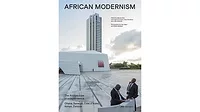
African Modernism: The Architecture of Independence — Ghana, Senegal, Ivory Coast, Kenya, Zambia
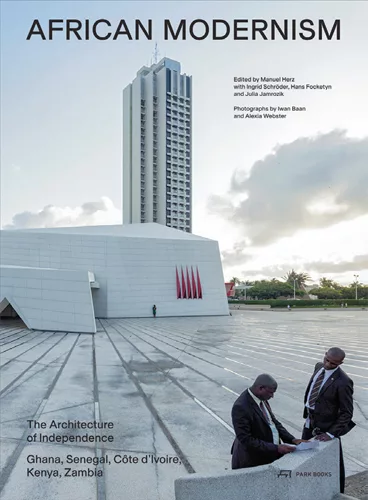

African Modernism: The Architecture of Independence
The book's cover shows the Hotel Ivoire in Abidjan, Ivory Coast.
 
Photo © Iwan Baan
African Modernism: The Architecture of Independence
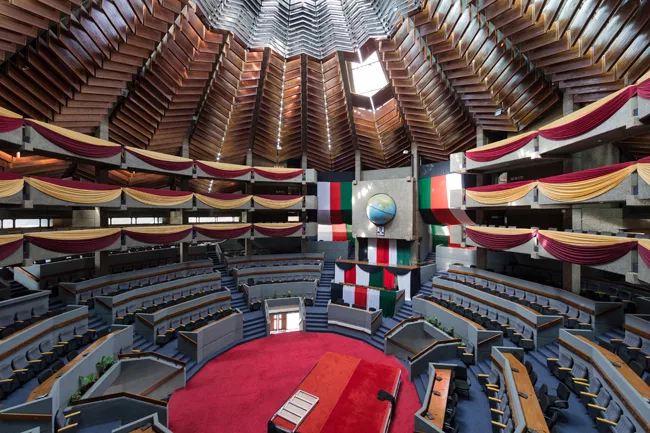
Karl Henrik Nostvik's 1973 Kenyatta International Conference Center in Nairobi.
 
Photo © Iwan Baan
African Modernism: The Architecture of Independence
Kenyatta International Conference Centre, Nairobi (Kenya), by Karl Henrik Nostvik, 1967-1973.
 
Photo © Iwan Baan
African Modernism: The Architecture of Independence
James Cubitt's 1956 School of Engineering at KNUT in Kumasi, Ghana.
 
Photo © Alexia Webster
African Modernism: The Architecture of Independence
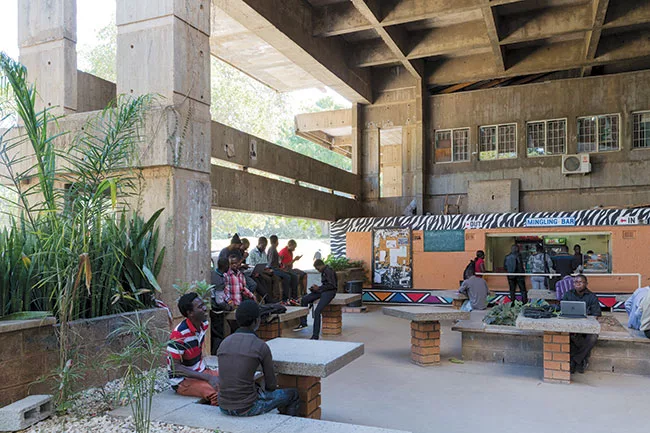
At the University of Zambia UNZA in Lusaka, designed by Julian Elliott, a student bar (1965'70) occupies a covered space open to light and air.
 
Photograph 1974 © Iwan Baan
African Modernism: The Architecture of Independence
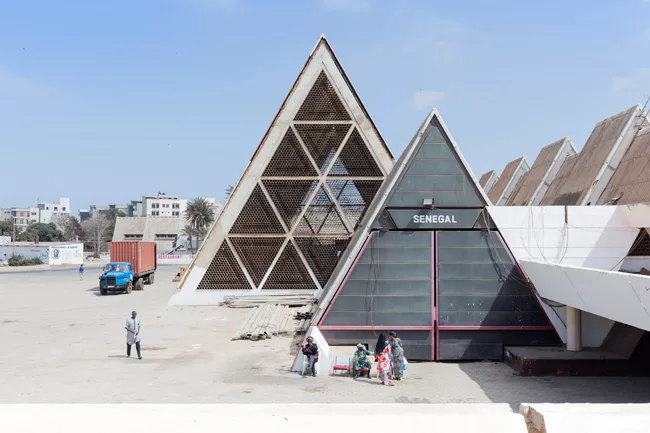
FIDAK - Foire Internationale de Dakar, Dakar (Senegal), by Jean Francois Lamoureux & Jean-Louis Marin.
 
Photograph 1974 © Iwan Baan
African Modernism: The Architecture of Independence
October 16, 2015
African Modernism-the Architecture of Independence: Ghana, Senegal, Ivory Coast, Kenya, Zambia, - edited by Manuel Herz with Ingrid Schröder, Hans Focketyn, and Julia Jamrozik; photographs by Iwan Baan and Alexia Webster. Park Books, August 2015, 640 pages, $79 (paper).
Focketyn,


The dearth of literature on African architecture has long been a source of frustration for the continent’s design community. The last decade, however, has seen a gradual change, as young designers witness the stunning rise of African metropolitan centers like Lagos, which has now surpassed Cairo as Africa’s largest city, and have become eager to engage with narratives of post-colonialism. These days, investors are directing enormous resources to the continent’s development, energizing its cities and opening up a new era in its urbanization. A similar wave of hope during the era of African independence in the 1950s and ’60s inspired the continent’s leaders to commission ambitious and extraordinary buildings that might elevate their nations to the world stage. The architects who designed these works were, in large part, imported from Europe, North America, and Israel, and they came with their own ideologies and biases, modulating them—genuinely or otherwise—to suit the local climates, cultures, and conditions.

A half-century later, a great many of these buildings have been neglected and fallen into disrepair, serving as a poignant reminder that the relationship among African aspirations, identity, and history is still fraught with unresolved questions and tensions. Manuel Herz’s African Modernism endeavours to draw attention to this plight in a series of profiles, essays, and photographs of modernist architecture throughout the continent. The care that Herz and his fellow editors, Ingrid Schröder, Hans Focketyn, and Julia Jamrozik, have taken to provide a balanced and comprehensive discussion of the origins of modernism in Africa will make this a seminal work in the discourse of African architecture. Herz—a Swiss architect who has devoted much of his career to humanitarian-oriented architectural research, largely related to Africa—has leveraged his experience into a potent critical awareness.

More than anything else, African Modernism is an exercise in documentation. The lack of prior archival work on the subject made this a daunting task, but it also compelled the editors to conduct thorough original research based on their own travels. For practical reasons, the editors have limited the scope of analysis to just five countries: Ghana, Senegal, Kenya, Ivory Coast, and Zambia. Of course, for those of us who are familiar with African architecture and the continent itself, this leaves many of its richest offerings sorely missed. The editors state emphatically, however, that African Modernism is just the start of a much larger undertaking, and they encourage the wider design community to assist with the effort through further study. In this respect, they have set the bar high.

The book examines more than 100 architectural works and presents them in sumptuous detail. The editors walk the reader through the basic information on each building and its design, and match the text with site plans and the breathtaking photography of Iwan Baan and Alexia Webster. Each main chapter is devoted to one country and prefaced with a helpful set of social, political, and economic timelines to give a sense of the broader post-independence context. These chapters are book ended by a diverse array of well-written essays that zero in on particular themes ranging from debates on emergent civic identity to settlement patterns across time. The essays are thoughtful and thought-provoking; they boldly confront the thornier issues surrounding the idea of “independence architecture.” Particularly interesting is Zvi Efrat’s “Proxy Colonial­ism,” which details how the newly inde­pen­dent state of Israel employed an intentional strategy of exporting its particular blend of Western architecture to African states as a way of exerting influence.

The obvious intention of African Modernism is to subvert the negative impressions that many people—including Africans themselves—carry about modernist architecture in the post-colonial context. In so doing, the book may engender rethinking about the value of these works. “To document also means to preserve,” writes Herz. This is both admirable and necessary, though I feel it is hampered by the book’s backward-looking approach. It is clear that the editors are reluctant to stray from the confines of historical analysis, preferring to leave engagement with contemporary criticisms of Africa’s modernist relics to others. But such an engagement would have been appropriate, and even better if it involved the perspectives of African architects and thinkers. Herz’s explicit statement in his introductory text of his intention to use African Modernism as a tool for “normalizing Africa” is problematic. While he is correct that Africa is too often orientalized and relegated to a lesser place in the human story, with its problems distorted into blinding caricatures, the readers of African Modernism are forced to contend with the uncomfortable irony that the book’s editors and contributors themselves—like the independence architects of the ’60s—are drawn almost entirely from Europe, North Amer­ica, and Israel. The single exception is photographer Alexia Webster, who is from South Africa, which is not one of the book’s focus countries. One wonders whether the “normalization” of Africa can really be achieved, even by those with the best of intentions, if it is done in the glaring absence of African perspectives.

Nonetheless, African Modernism is a truly remarkable book. It offers intellectual rigor, fascinating insights, and marvelous visuals in equal measure. No book collection on African architecture would be complete without it.

David Adjaye is the founding principal of Adjaye Associates and the author of African Metropolitan Architecture, published in 2011. An exhibition about his work is at the Art Institute of Chicago through January 3, 2016.

KEYWORDS: Africa

Share This Story

Looking for a reprint of this article?
From high-res PDFs to custom plaques, order your copy today!

Post a comment to this article

Report Abusive Comment

Subscription Center
  • Create an Account
  • Start a Subscription
  • Manage My Account
  • Sign Up for Newsletters
  • Visit Customer Service
  • Update Preferences

More Videos

Sponsored Content

Sponsored Content is a special paid section where industry companies provide high quality, objective, non-commercial content around topics of interest to the Architectural Record audience. All Sponsored Content is supplied by the advertising company and any opinions expressed in this article are those of the author and not necessarily reflect the views of Architectural Record or its parent company, BNP Media. Interested in participating in our Sponsored Content section? Contact your local rep!

close
  • 3D configurator
    Sponsored byDoorBird

    How DoorBird’s 3D Configurator Is Redefining Customization Across Residential and Commercial Design

  • interior of modern office
    Sponsored byCurrent

    The Downlight's Second Life: Why Below-Ceiling Serviceability Is the Specification Detail That Matters Most

  • cold storage facility
    Sponsored byCarlisle SynTec Systems

    How Architects Can Design More Continuous Cold Storage Envelopes

DESIGN:ED Podcast
Listen to Architectural Record’s DESIGN:ED Podcast

Events

July 16, 2026

Fit, Form, Function: Rethinking Privacy Curtains for Modern Spaces

Credits: 1 AIA LU/HSW; 1 AIBD P-CE; 0.1 ICC CEU

Explore how privacy curtain systems can enhance occupant comfort, operational efficiency, and sustainability across healthcare, education, hospitality, and senior living environments.

July 22, 2026

Water Containment Waterproofing: Best Practices and System Selection

Credits: 1 AIA LU/HSW; 1 AIBD P-CE; 0.1 ICC CEU

Examine waterproofing strategies for water containment structures that enhance durability, prevent failures, and support long-term building performance.

View All Submit An Event

Products

2026 Architect's Square Foot Costbook

2026 Architect's Square Foot Costbook

See More Products

Popular Stories

Home Spirit apartment building exterior

Outdoor Access Drives the Design of a French Apartment Building

The Mark and Hive Glenrock, LOHA

Two Student Residences Continue LOHA’s Decades-long Reimagination of the L.A. Lifestyle

Trump's triumphal arch

What Exactly Does Trump’s Triumphal Arch Commemorate?

The Bend in Winnipeg, Canada

Multifamily Housing 2026

The Bend in Winnipeg, Canada

The Bend Wraps an Adapted Winnipeg Warehouse, Adding Apartments and Defining Public Space

Fit, Form, Function: Rethinking Privacy Curtains for Modern Spaces - Free Webinar - July 16, 2026

Related Articles

  • African Modernism Book Cover

    Back in Print, Second Edition of 'African Modernism' Surveys Architecture Across the Continent

    See More
  • Gund-Hall-1.jpg

    The Architecture of Architecture Schools

    See More
  • The Architecture of Disability

    In 'The Architecture of Disability,' David Gissen Broadsides Ableism in the Built Environment

    See More

Related Products

See More Products
  • reuse.jpg

    Resource Salvation: The Architecture of Reuse

  • experience of arc.jpg

    The Experience of Architecture

  • of place.jpg

    Architecture of Place

See More Products
×

The latest news and information

#1 Source for Architectural Design, News and Products

SUBSCRIBE
  • RESOURCES
    • Advertise
    • Contact Us
    • Submit
    • Store
  • ACCOUNT CENTER
    • Create an Account
    • Start a Subscription
    • Manage My Account
    • Sign Up for Newsletters
    • Visit Customer Service
    • Update Preferences
  • PRIVACY
    • PRIVACY POLICY
    • TERMS & CONDITIONS
    • DO NOT SELL MY PERSONAL INFORMATION
    • PRIVACY REQUEST
    • ACCESSIBILITY
  • SERVICES
    • Marketing Services
    • Reprints
    • Market Research
    • List Rental
    • Survey/Respondent Access
  • STAY CONNECTED
    • Linkedin
    • Facebook
    • Instagram
    • YouTube
    • X (Twitter)

Copyright ©2026. All Rights Reserved BNP Media, Inc. and BNP Media II, LLC.

Design, CMS, Hosting & Web Development :: ePublishing