Architectural Record
search
cart
facebook twitter linkedin youtube
  • Sign In
  • Subscribe
  • Sign Out
  • My Account
Architectural Record
  • NEWS
    • Latest News
    • Awards
    • Interviews
    • Obituaries
    • Podcasts
      • Design:Ed Podcast
      • Sponsored Podcasts
  • OPINION
    • Book Reviews / Excerpts
    • Exhibition Reviews
    • Forum
  • EXCLUSIVES
    • Videos
    • Design Vanguard
    • Top 300 Firms
    • Sponsored Content
    • Sponsored eBooks
    • From the Archives
  • CONTINUING ED
    • Editorial Continuing Ed
    • CE Center
    • CE Academies
  • PROJECTS
    • Buildings By Type
    • Reuse & Renovation
    • Museums & Arts Centers
    • Colleges & Universities
    • Multifamily Housing
    • Interiors
    • Lighting
    • Kitchen & Bath
  • HOUSES
    • Record Houses
    • House of the Month
    • Featured Houses
  • PRODUCTS
    • Products by Category
    • Record Products of the Year
    • Latest Products
  • EVENTS
    • Dates & Events
    • Record on the Road
    • Innovation Conference
    • Sustainability in Practice
    • Women In Architecture
    • Webinars
    • Ad Excellence Awards
    • Submit an Event
  • CONNECT
    • Ask RECORD AI
    • Newsletters
    • Contact
    • Advertise
    • Editorial Calendar
    • Store
    • Customer Service
  • SUBMIT
    • Submission Guidelines
    • RECORD Competitions
  • MAGAZINE
    • Subscribe
    • My Account
    • Digital Edition
    • Current Issue
    • Firm Pass
    • Historic Archive

In the Cause of Architecture

Santiago Calatrava's Auditorio de Tenerife: Excesses and Enthusiasms

By David Cohn
February 1, 2004

Architects & Firms

Santiago Calatrava

With works such as the Alamillo Bridge in Seville, Spain and the footbridge over the River Nervión in Bilbao, Santiago Calatrava has established himself as the most innovative and influential bridge designer of our time. These structures have shaped the way we understand works of civil engineering, making it much more difficult for public authorities to ignore the aesthetic impact of such large structures on our cities and landscapes. But when Calatrava applies this same expressive flair to building designs, his artistic authority begins to waver—at least in the eye of this observer. While his bold structural experiments, often inspired by the study of animal skeletons, plants and other natural forms, have expanded the narrow formal vocabulary of civil engineering, in his buildings, this use of zoomorphic forms has too often resulted in works that can seem overbearing, lacking in human and urban scale, and even grotesque.

A case in point is the Tenerife Concert Hall, with its bold cantilevered arch that surges over the building, an admittedly functionless, expressive gesture [RECORD, February 2004, page79; Archrecord.com, Project Portfolio, February 2004]. What is this form meant to suggest? Is it an enormous breaking wave, as Calatrava has sometimes implied, an orchid blossom, an exaggerated feather in an exaggerated cap, a tentacle, an enormous muscular tongue? Calatrava deliberately avoids any specific symbolic reference, and leaves the associative process open to the imagination of each visitor. But does he take sufficient artistic control of the full suggestive power of the gesture, and of the darker images it can invoke? The same question could be raised to a greater or lesser degree with previous works such as the rail station at the Lyon-Satolas Airport in France (1994), the City of the Arts and Sciences complex in Valencia, now nearing completion, and the Milwaukee Art Museum [RECORD, March 2002, page 92; Archrecord.com, Project Portfolio, March 2002].

When Frank Gehry also engages in dreamlike images, as in the suspended conference room in the atrium of his DG Bank in Berlin [RECORD, October 2001, page 120; Archrecord.com, Project Portfolio, October 2001], he knows exactly what effect his work will provoke; its sinister chill is a deliberate part of his artistic response to the commission and to its context beside the Brandenburg Gate. Some critics such as Alexander Tzonis have defended the darker overtones of Calatrava's forms as surreal, comparing them to the work of artist Salvador Dalí and filmmaker Luis Buñuel. But there is nothing in the context of these commissions or in Calatrava's public statements about them that supports an intentionally surreal or critical undercurrent. His artistic intentions rather appear to be entirely positive and celebratory.

On the other hand, when Calatrava's buildings are not reaching for operatic heights, they often fall into a routine of vaults and curves, a formal language that seems seductively glamorous at first but exhausts its charm through repetition and an excess of symmetry, creating spaces that are often in fact quite dull and uninviting. A case in point: the galleries and other secondary spaces of the Milwaukee Art Museum.

In my view, Calatrava has run up against the limitations inherent in his attempt to develop a full architectural vocabulary based solely on a handful of structural ideas and metaphors and a relatively unstructured process of imaginative invention. His sources in 20th-century structural experiments are strong—ranging from Antoní Gaudí to Eduardo Torroja, Robert Maillart, Félix Candela, Pier Luigi Nervi and Eero Saarinen. But architects need to draw on many other cultural resources and traditions to make a building a complete cultural artifact. When such senstive cultural cueing is missing, the result can be the scaleless gestures and vacuous secondary spaces found in Calatrava's work, a problem also found in some of the works of his structural masters, such as Nervi.

If this argument seems too intuitive, one can compare the Tenerife Concert Hall to the work of Norman Foster, another architect strongly influenced by engineering. When an apparently arbitrary form appears in Foster's work, such as the unusual mirrored polyhedron that descends from the top of the Reichstag dome, it turns to be a device for getting natural light down into the parliament chamber below. Function disciplines expression, and keeps back the phantoms of unconscious suggestion.
Nevertheless, works such as Tenerife offer an undeniable thrill, and they are often a hit with the public. A vulgar vitality in both life and artistic creation has often proved closer to the heart of the question than the meditated misgivings of the critic. The camp pleasures that Calatrava's daring forms offer are akin to those of a high-finned Cadillac or the casinos of Las Vegas: they are dazzling, preposterous artifacts of our cultural excesses and enthusiasms.
 

Looking for quick answers on architecture and design topics?
Try Ask RECORD, our new smart AI search tool.
Ask RECORD →

KEYWORDS: Spain

Share This Story

Looking for a reprint of this article?
From high-res PDFs to custom plaques, order your copy today!
David Cohn is a Madrid-based architecture critic and international correspondent for Architectural Record. His latest book, Spain: Modern Architectures in History, was released in 2025.

Post a comment to this article

Report Abusive Comment

Subscription Center
  • Create an Account
  • Start a Subscription
  • Manage My Account
  • Sign Up for Newsletters
  • Visit Customer Service
  • Update Preferences

More Videos

Sponsored Content

Sponsored Content is a special paid section where industry companies provide high quality, objective, non-commercial content around topics of interest to the Architectural Record audience. All Sponsored Content is supplied by the advertising company and any opinions expressed in this article are those of the author and not necessarily reflect the views of Architectural Record or its parent company, BNP Media. Interested in participating in our Sponsored Content section? Contact your local rep!

close
  • TAMLYN XtremeTrim Exterior Trim
    Sponsored byTamlyn

    Designing Cleaner Panel Facades: Why Exterior Trim Details Matter

  • Building with Vapor Barriers
    Sponsored byReef Industries, Inc.

    Vapor Barriers Help Control Moisture in Tighter Building Designs

  • Duct Interior with Prodeq System
    Sponsored byHenry, a Carlisle Company

    Designing Resilient Water Containment Systems

DESIGN:ED Podcast
Listen to Architectural Record’s DESIGN:ED Podcast

Events

June 10, 2026

Rethinking Stormwater – The Power of Porous Paving

Credits: 1 AIA LU/HSW; 1 AIBD P-CE; 0.1 ICC CEU

Learn how porous paving systems support stormwater management, reduce heat island effects, and enhance sustainable site design performance.

June 11, 2026

Very Early Warning Fire Detection for Mission-Critical Facilities

Credits: 1 AIA LU/HSW; 1 AIBD P-CE; 0.1 ICC CEU

Examine advanced fire detection strategies that support uptime and enhance safety in data centers and other mission-critical facilities.

View All Submit An Event

Products

2026 Architect's Square Foot Costbook

2026 Architect's Square Foot Costbook

See More Products

Popular Stories

Practice Matters illustration

What’s in a (Firm’s) Name? Thinking About Succession and Legacy

Practice Matters illustration

By the Numbers: Counting America's Architects

House on a Hill

Design Vanguard 2026: Forma

Crane Cove, ONO

Design Vanguard 2026 Winners

KRESA by DLR

In Kalamazoo, DLR Group Completes a Mass-Timber Hub for Career and Technical Education Programs

Broader Sustainability of CMU - Free Webinar - May 21, 2026

Related Articles

  • Santiago Calatrava Pulls Out of Denver Airport Expansion Project

    See More
  • Newsmaker: Santiago Calatrava

    See More
  • Constitution Bridge-Venince.jpg

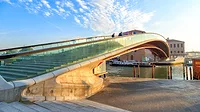
    Venice Begins Dismantling Glass Steps of Santiago Calatrava’s Slippery Glass Bridge

    See More

Related Products

See More Products
  • Architectural Record - September 2025

    Architectural Record September 2025 Issue

See More Products
×

The latest news and information

#1 Source for Architectural Design, News and Products

SUBSCRIBE
  • RESOURCES
    • Advertise
    • Contact Us
    • Submit
    • Store
  • ACCOUNT CENTER
    • Create an Account
    • Start a Subscription
    • Manage My Account
    • Sign Up for Newsletters
    • Visit Customer Service
    • Update Preferences
  • PRIVACY
    • PRIVACY POLICY
    • TERMS & CONDITIONS
    • DO NOT SELL MY PERSONAL INFORMATION
    • PRIVACY REQUEST
    • ACCESSIBILITY
  • SERVICES
    • Marketing Services
    • Reprints
    • Market Research
    • List Rental
    • Survey/Respondent Access
  • STAY CONNECTED
    • Linkedin
    • Facebook
    • Instagram
    • YouTube
    • X (Twitter)

Copyright ©2026. All Rights Reserved BNP Media, Inc. and BNP Media II, LLC.

Design, CMS, Hosting & Web Development :: ePublishing