Casa en El Copé
Patrick Dillon's house in central Panama listens to nature and brings things back to basics.
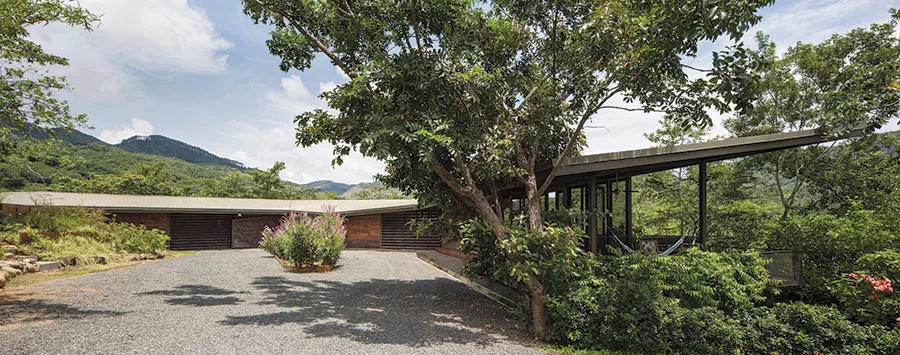
The house embraces its lush surroundings.
Photo © Fernando Alda Calvo
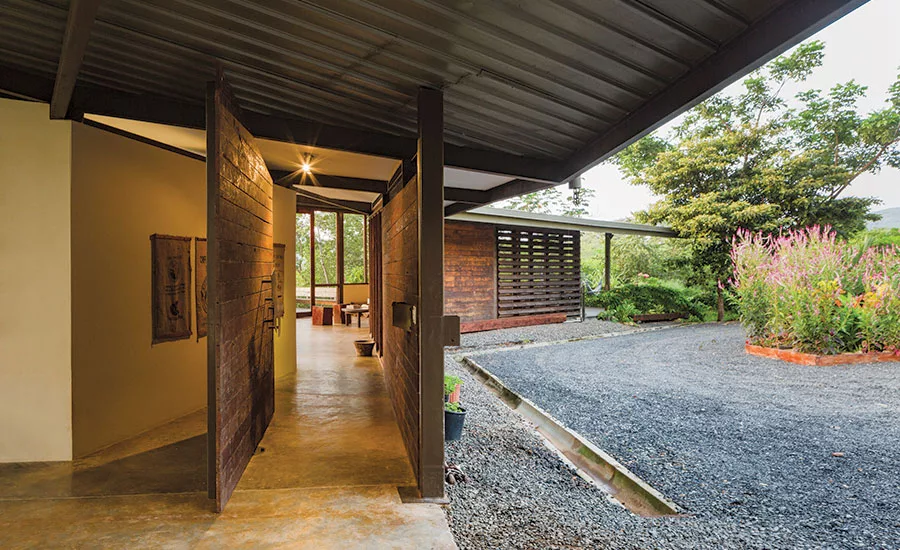
A large door at the entry pass-through pivots to close off the living area.
Photo © Fernando Alda Calvo
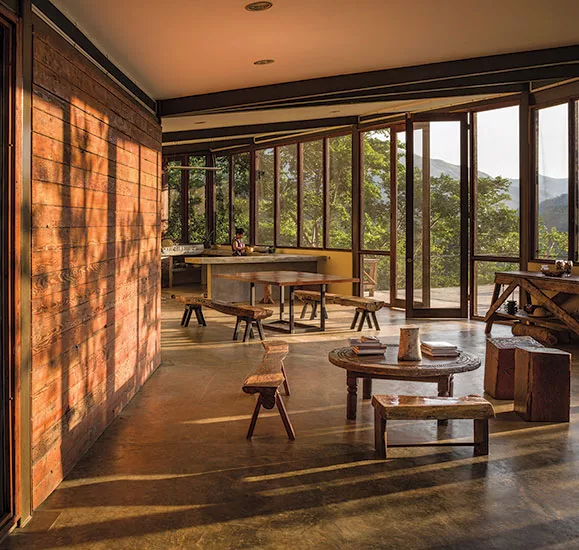
The tree canopy enters the living space in the form of shadows. Rustic wood furniture here was all made locally.
Photo © Fernando Alda Calvo
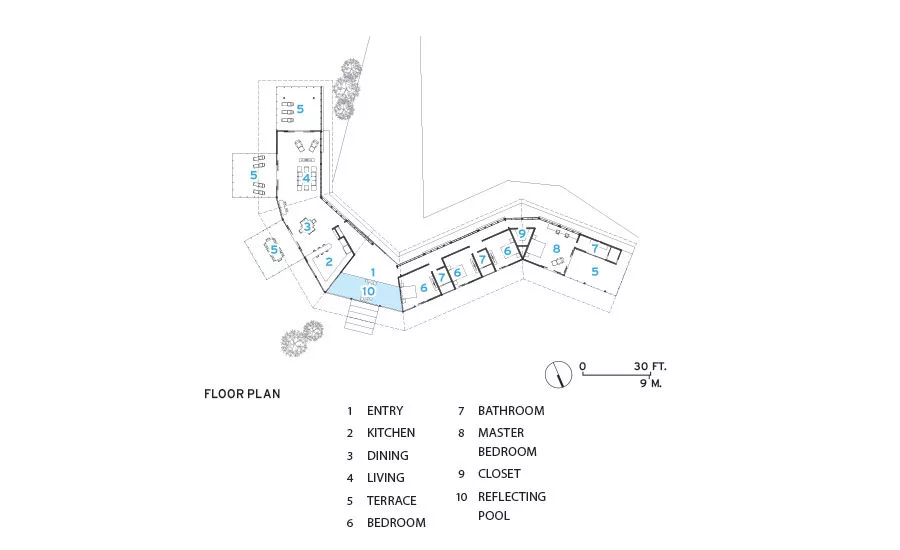
Image courtesy Patrick Dillon Architects
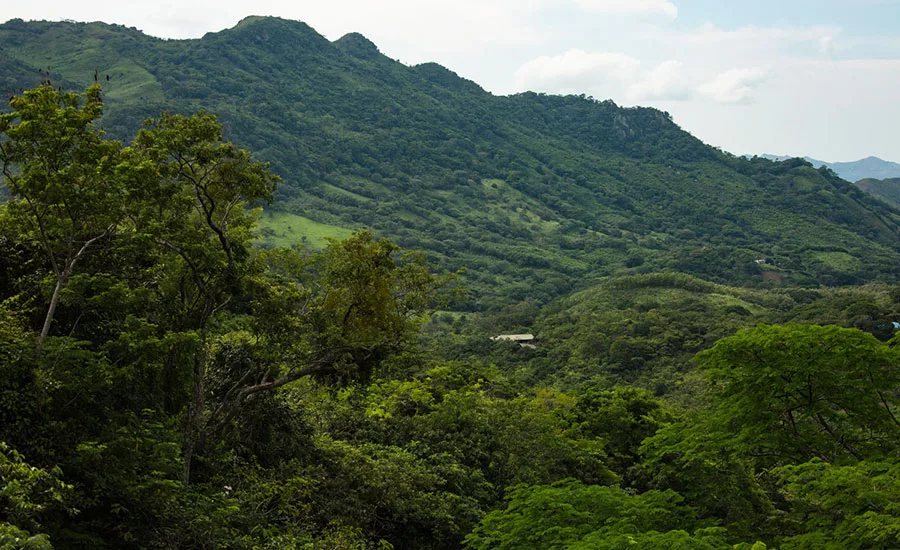
The house is ensconced in the verdant Omar Torrijos National Park.
Photo © Fernando Alda Calvo
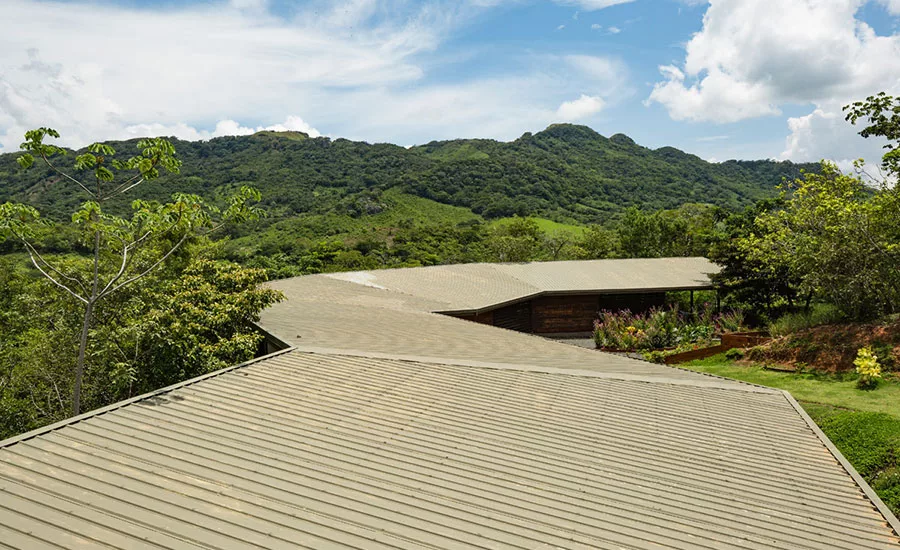
The house follows the contour of the hillside, with the metal roof snaking through the forest.
Photo © Fernando Alda Calvo
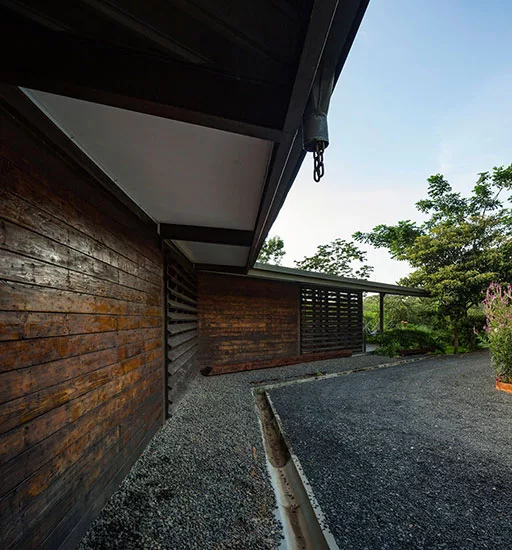
All the wood was repurposed from midcentury American military installations.
Photo © Fernando Alda Calvo
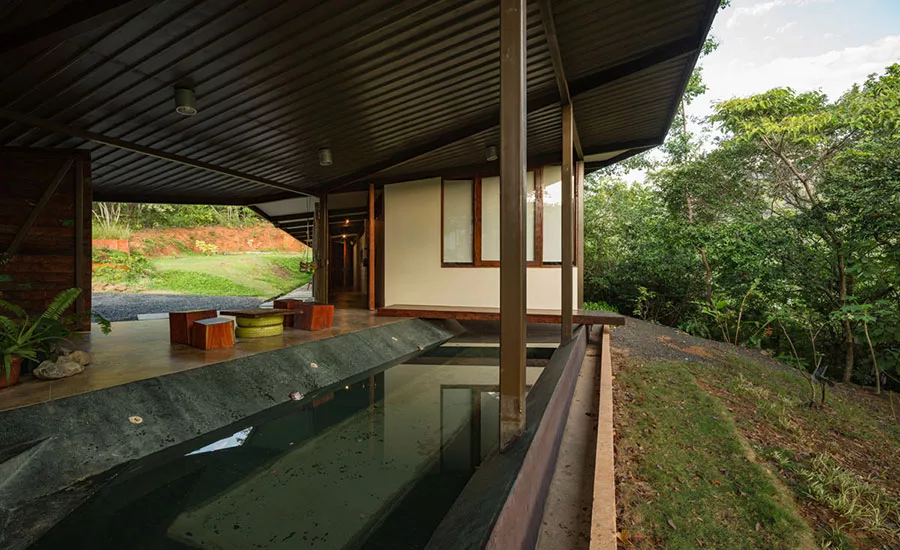
A small pool nods to the river below and can be used to cool off.
Photo © Fernando Alda Calvo
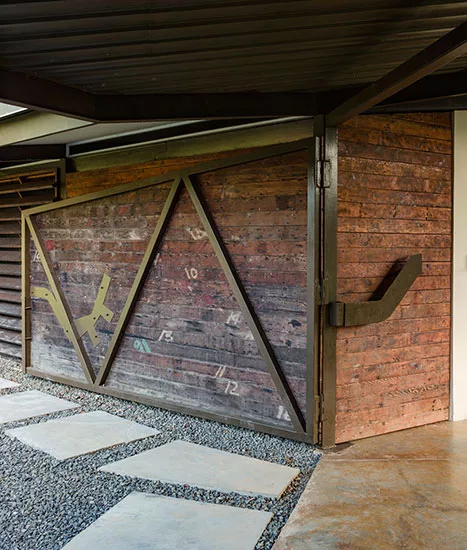
A broad door opens to the entry court.
Photo © Fernando Alda Calvo
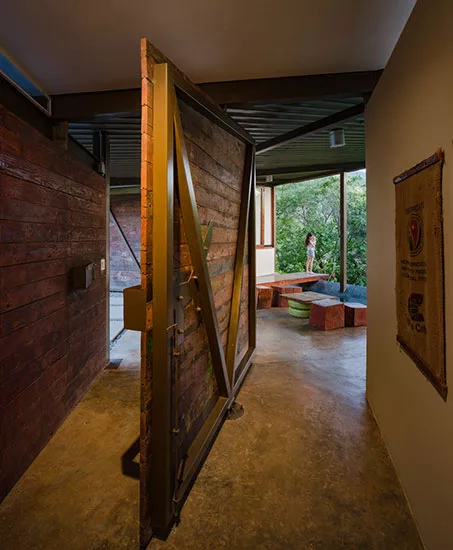
A pivoting door closes off the living quarters from a central pass-through onto a terrace.
Photo © Fernando Alda Calvo
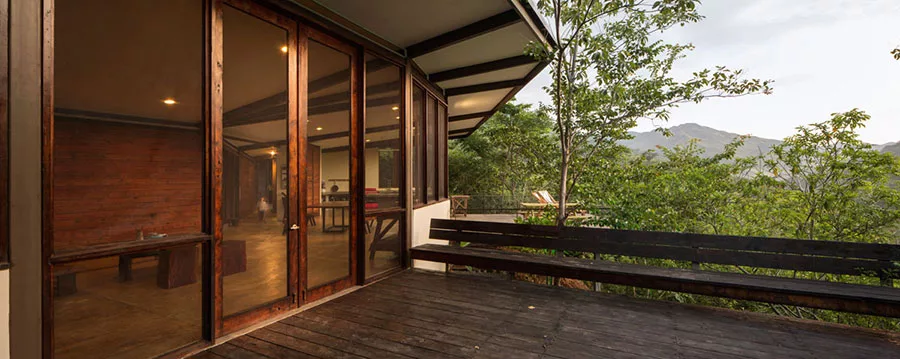
Multiple porches provide ample access to the outdoors.
Photo © Fernando Alda Calvo
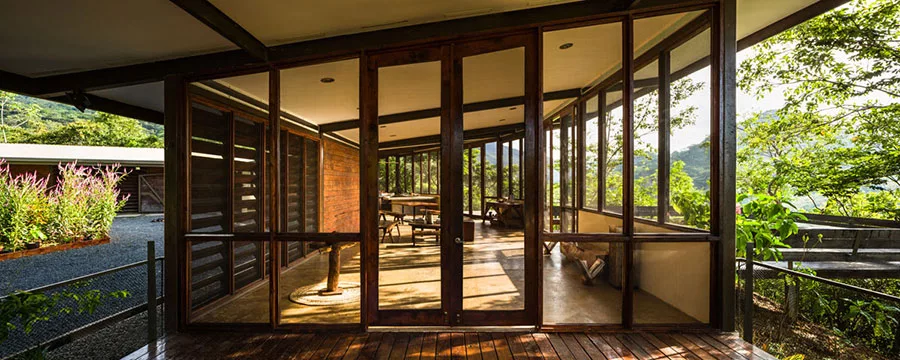
The living quarters are separated from the outside by screening, enabling cross ventilation.
Photo © Fernando Alda Calvo
Architects & Firms
El Copé, Panama
“I am interested in the idea of an ‘essential architecture’ in the tropics,” says Panama City–based architect Patrick Dillon, who was born to American parents and raised in the Canal Zone. “And I’ve always looked at blurring the distinction between inside and out—here, with the climate, we can make do with just a roof, as long as we can deal with mosquitos.” His approach comes to life with this elegantly spare house in a remote section of central Panama, where little separates occupants from the symphony of the surrounding forest.
Additional Information:Jump to People/Products
The house in El Copé is owned by Andrew Bovarnick, a Brit who is the United Nations Development Program’s lead natural resource economist, and his Panamanian wife, Priscilla Castro, a lawyer, who became friends with Dillon, spending time at his weekend house in nearby San Lorenzo. The previous owner of this site—which sits along a valley, looking down to a river and out to the mountains—had cut a road and cleared the plot. For years, Dillon and the couple would camp out here, growing increasingly enchanted by its awe-inspiring location. “It was a no-brainer to keep the road and use the flat area as the entry courtyard, wrapping the house around the contours of the hillside,” says Dillon (who was also the architect of record for Frank Gehry’s Biomuseo, RECORD, October 2014).
The structure of the 20-foot-wide, 180-foot-long winding house combines steel posts and wide flange beams with timber framing. Walls are made of a combination of tongue-and-groove and fixed-louvered Douglas fir and southern yellow pine. All of the wood (including that for the doors and window frames) was recovered from the hip roofs of midcentury structures at the former U.S. military’s Howard Air Force Base near the Pacific entry to the canal. The simple inclined metal roof is typical of those found across the country.
Snaking along the hillside, the form is divided into two parts: to the east are common spaces—enclosed with screening—their narrow width promoting cross ventilation; behind, decks shoot out over the valley. To the west are bedrooms and baths, which have glazed openings and air-conditioning. The entry portico, which separates the wings, leads to a reflecting pool and then to a path down to the river. In its simplicity, the house preserves many of the elements that first excited the clients and architect when they camped here. “It’s about the sensorial experience,” says Dillon, “where you let yourself go and get into that natural rhythm as the light changes and the breezes come in—it makes you aware of being alive. That is the test of good design—you forget about the architecture and enjoy the moment.”
PeopleArchitect: ENSITU, S.A. Personnel in architect's firm who should receive special credit: Partner in Charge: Patrick Dillon Engineers: Structural/ Civil: Ing. José Berminghan Photographer: Fernando Alda www.fernandoalda.com
|
ProductsStructural System - Steel frame structure- 6"x6" steel columns and W8x15 beams Exterior Cladding Masonry: M2 composite polystyrene plastered panels Rainscreen: Fixed wood louvers and tongue and groove facade elements were fabricated with recycled lumber which was also used to build glazing and mosquito screen frames. Wood: All wood was recycled from buildings demolished on the former US military base of Howard, contiguous to the Panama Canal. Roofing Metal: Locally produced lightweight steel corrugated painted panels Windows Wood frame: All wood window and door frames were fabricated with recycled Douglas Fir or SYP culled from demolished structures Glazing Glass: Locally sourced single pane glazing Doors Entrances: Specially built steel structure, pivot type, wood clad doors throughout Hardware Locksets: Locally custom crafted lock mechanisms Pulls: Custom crafted door pulls were designed by the architect and represent the floor plan of the house Interior Finishes Acoustical ceilings: Locally sourced gypsum Suspension grid: Locally sourced suspension grid Cabinetwork and custom woodwork: Custom crafted kitchen by local artisans Paints and stains: Locally sourced, multiple manufacturers Paneling: Tongue and groove interior cladding constructed of recycled DF and/or SYP Raised flooring: All interior cladding was custom fabricated using recycled DF or SYP Special interior finishes unique to this project: All interior cladding was custom fabricated using recycled DF or SYP Furnishings Other furniture: All furniture throughout the house was custom crafted with locally sourced timber or recycled wood Lighting Interior ambient lighting:All interior lighting was sourced from local country hardware stores and thus are essentially generic |
Looking for a reprint of this article?
From high-res PDFs to custom plaques, order your copy today!