A New Chapter for the Sandy Hook School
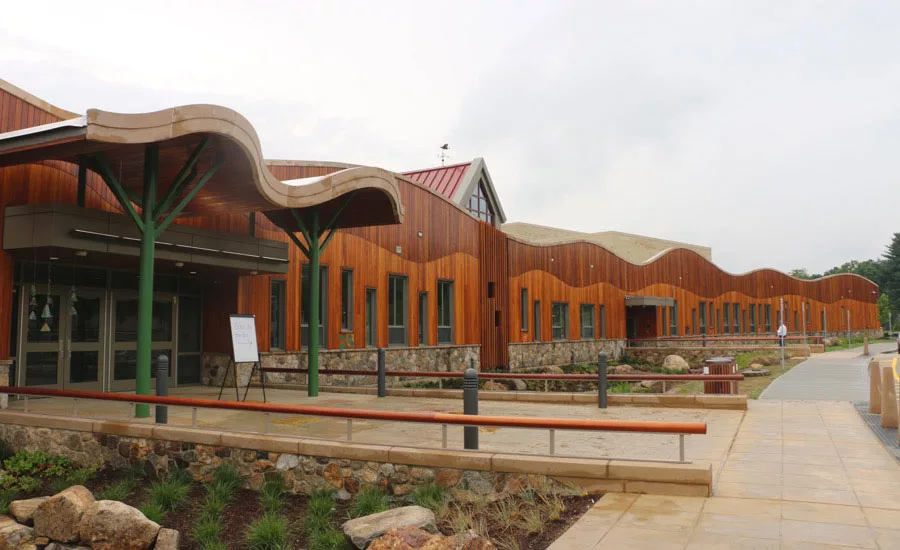
Three footbridges span a landscaped bioswale, providing a buffer between the school and the bus lane, while steel columns, disguised as tree trunks, support a wavy awning that hangs over the main entrance.
Photo © Architectural Record
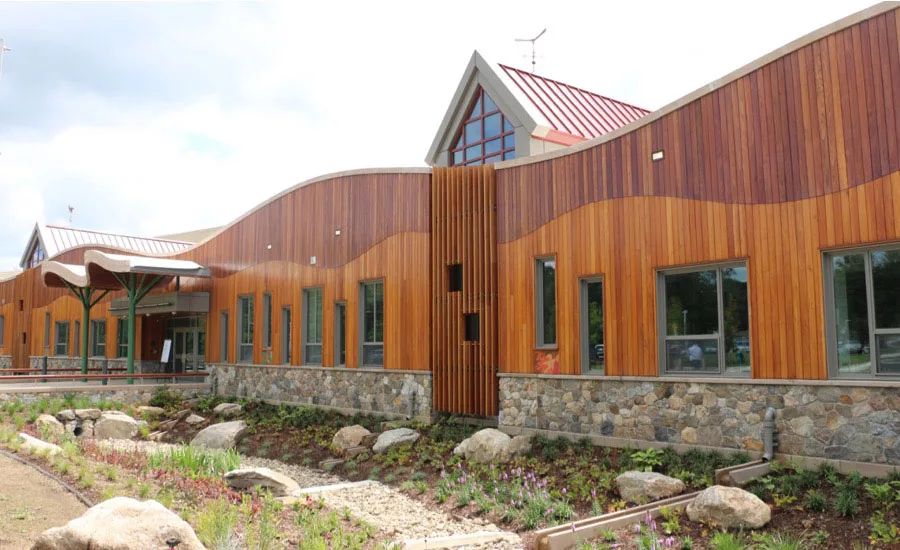
Three footbridges span a landscaped bioswale, providing a buffer between the school and the bus lane.
Photo © Architectural Record
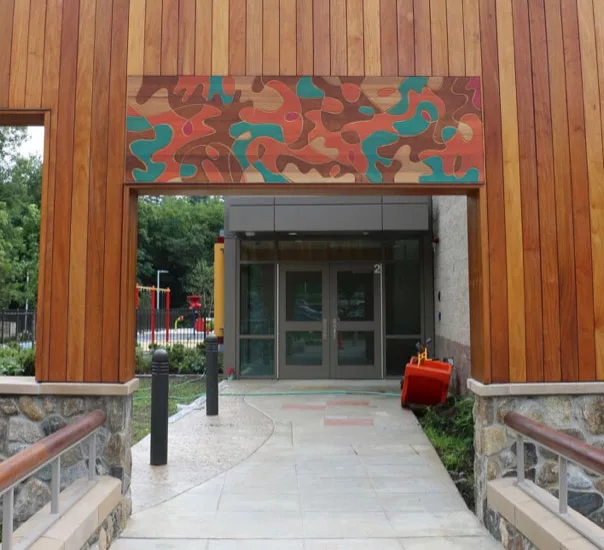
Svigals + Partners digitized shadow drawings made by students and carved them into wooden panels that adorn the building’s exterior.
Photo © Architectural Record
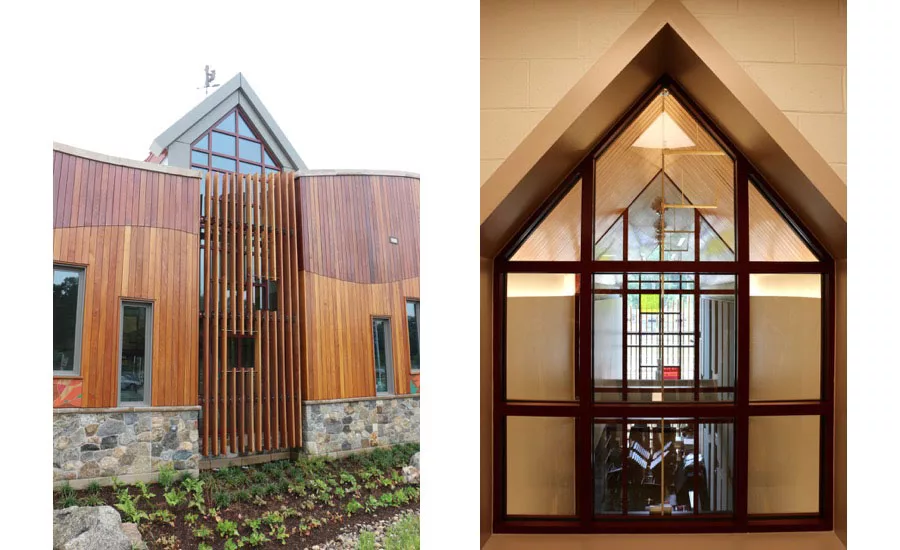
Three gabled “houses” rising from the roof (left) provide daylight and security, explains managing partner Jay Brotman: “Enhanced visibility through natural observation points is an element security design that we looked to include as much as possible."
Photo © Architectural Record
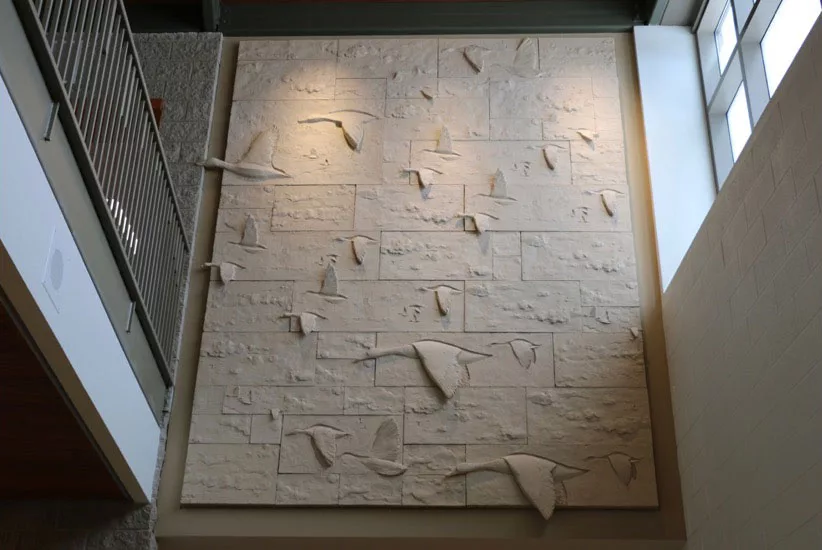
Design principle Barry Svigals created carved fiberglass panels for the atrium, representing a beloved family of ducks that lived in the old school’s courtyard.
Photo © Architectural Record
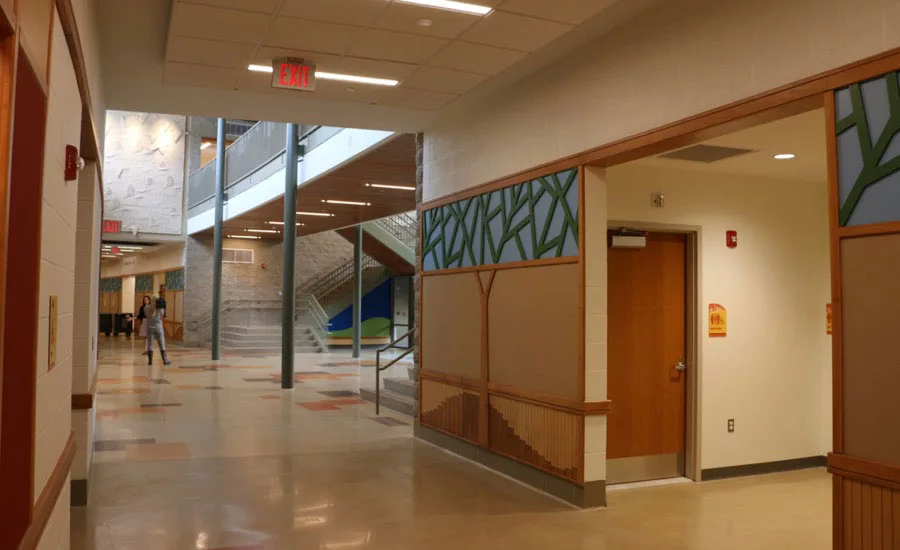
Artistic elements throughout the school reinforce the theme of nature, including these tree bulletin boards in the “main street” hallway.
Photo © Architectural Record
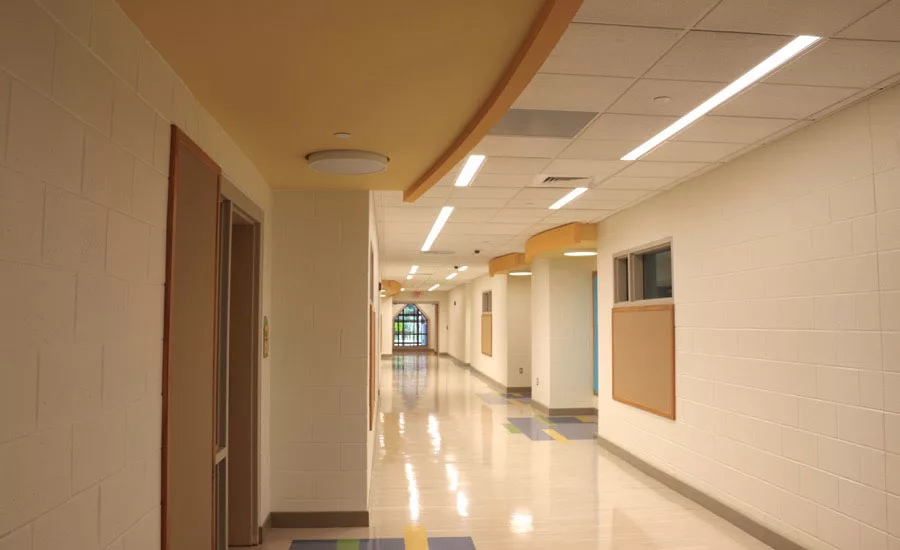
Brightly colored overhangs above each classroom door recall front porches, while the tilework on the ground represents a welcome mat.
Photo © Architectural Record
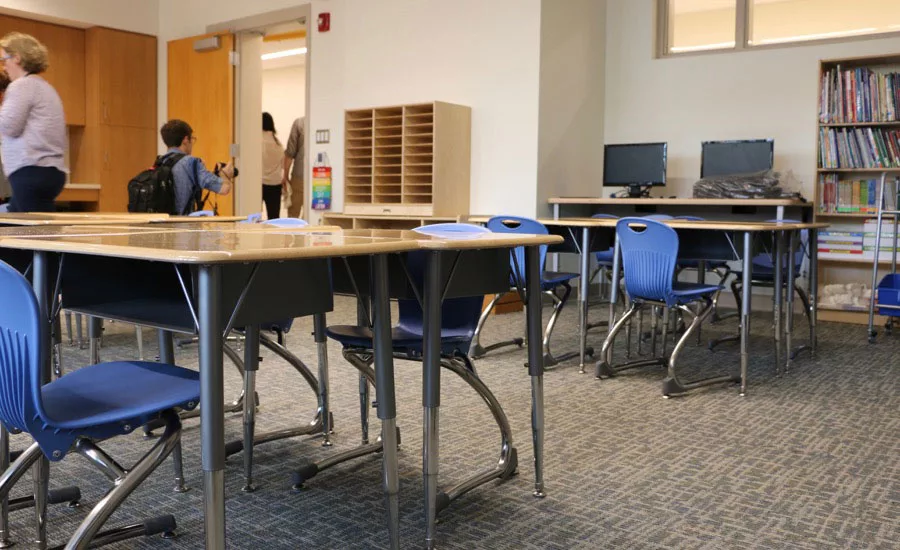
Pairs of classrooms are connected through interior doors.
Photo © Architectural Record
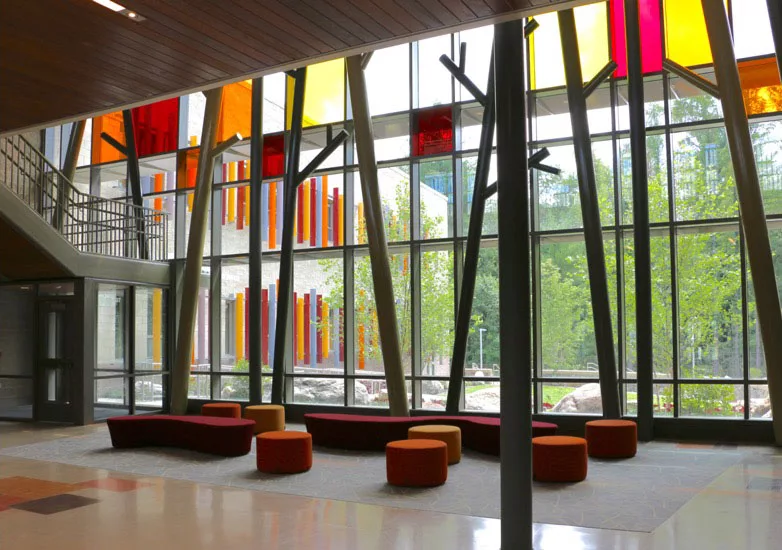
Decorative aluminum trees adorn the colorfully glazed wall of the atrium.
Photo © Architectural Record
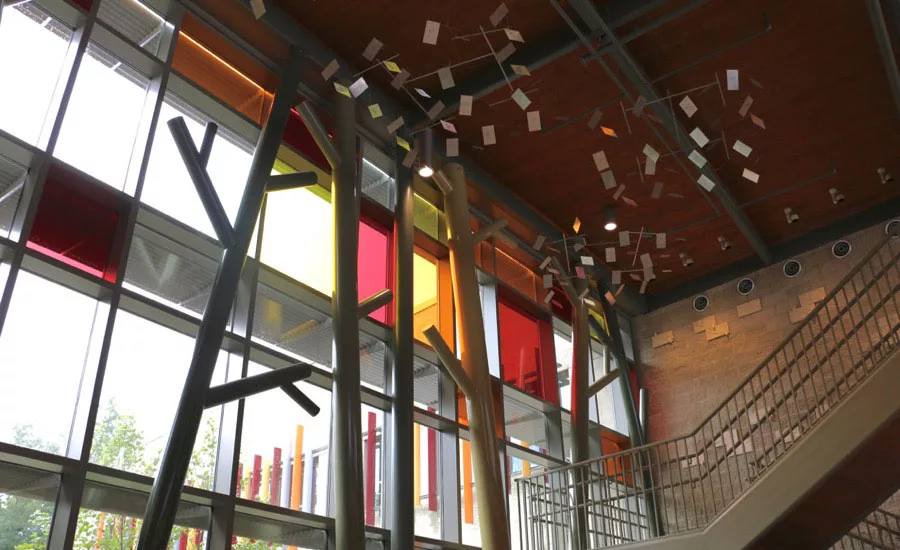
A kinetic sculpture of rectangular metal leaves by artist Tim Prentice hanging from the ceiling of the atrium represents the treetops.
Photo © Architectural Record
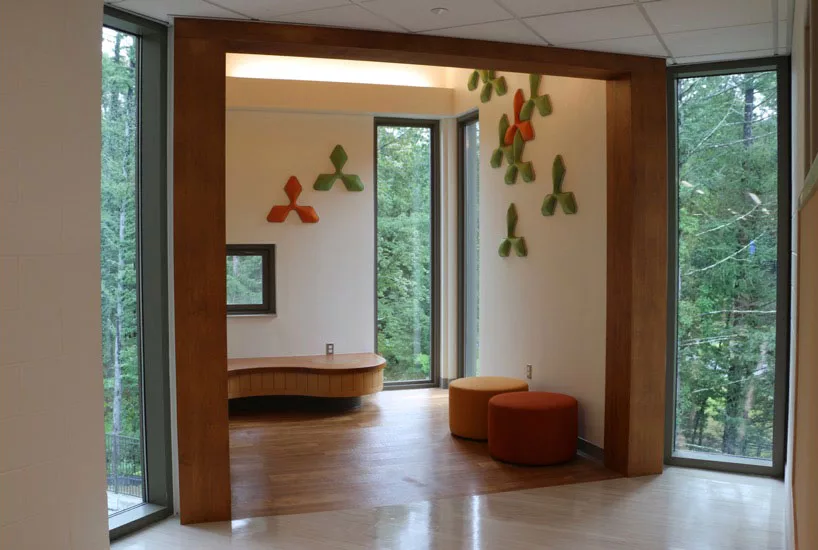
“Tree houses”—flexible spaces for students to gather—anchor the ends of each classroom wing.
Photo © Architectural Record
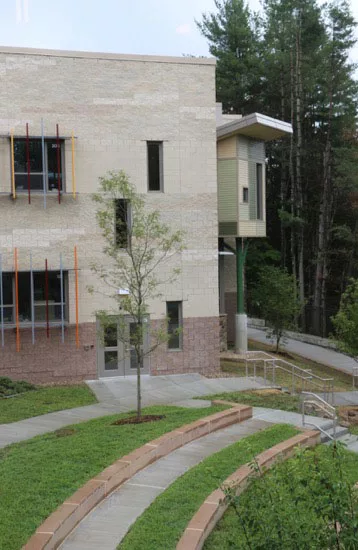
The outside of one tree house can be seen while standing inside the other.
Photo © Architectural Record
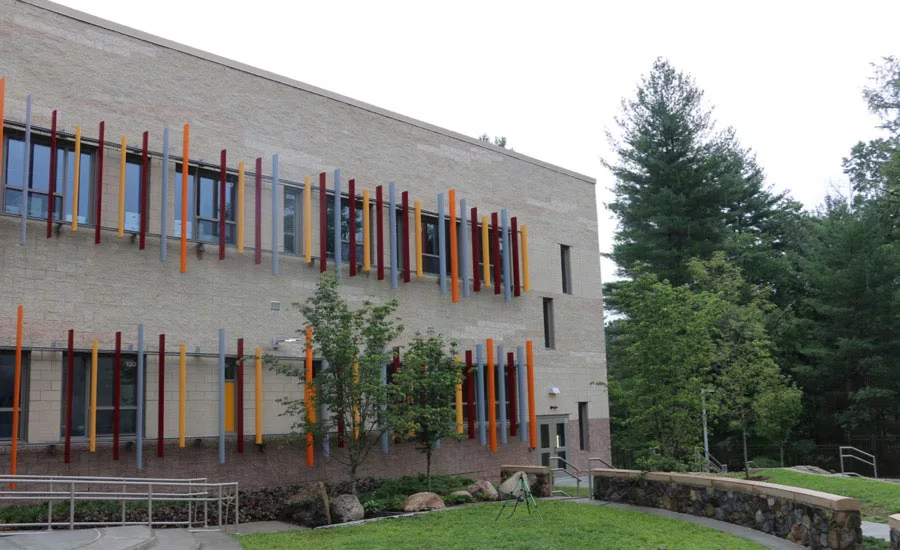
Fins on classroom windows provide sunshading and bring a pops of color to the outdoor amphitheater.
Photo © Architectural Record
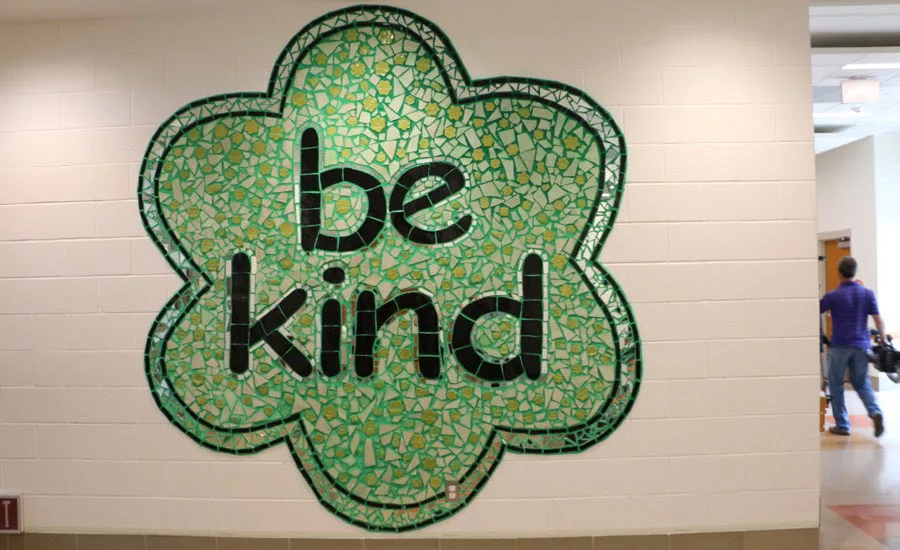
A bright tile mosaic on the wall of the main entrance greets visitors to the school.
Photo © Architectural Record
On August 29, just under 500 students will start their academic year at the new Sandy Hook School in Newtown, Connecticut. New Haven–based architects Svigals + Partners led the design of the 86,800-square-foot K-4 school, working closely with the community, Consigli Construction of Hartford, and a bevy of consultants to create an inviting, colorful, and secure new campus filled with light and art. “The intent of this building is to offer a warm and comfortable environment for students,” said Newtown Superintendent Dr. Joseph V. Erardi, Jr. at a media event on July 29, “and [the architects] hit a grand slam with that.”
Following the mass shooting on December 14, 2012, that took the lives of 20 children and six staff members, Sandy Hook students were transferred to the nearby town of Monroe. After a town referendum, the old ’50s-era school was demolished in the fall of 2013, and Svigals + Partners, selected by the state after an open RFQ process, began meeting with a 50-member committee to understand the community’s values and needs.
“In a certain way, we needed to keep at bay the history that gave rise to this architecture,” says design principal Barry Svigals. “We tried to keep our eyes on our charge—to bring our best work to the project.”
Nature emerged early on as a theme for the $50 million project. Set against a dense backdrop of woodlands, the building’s undulating facade of machiche and garapa timber planks references the surrounding forested landscape, while three gabled “houses” rising from the roof recall steeples peeking through the trees. Fieldstone along the base of the wood rainscreen nods to New England vernacular style. Toward the back of the school, the architects used four colors of concrete block and incorporated red-, orange-, and yellow-colored fins around rear windows “to give everything a joyful or colorful touch,” explains project manager Julia McFadden.
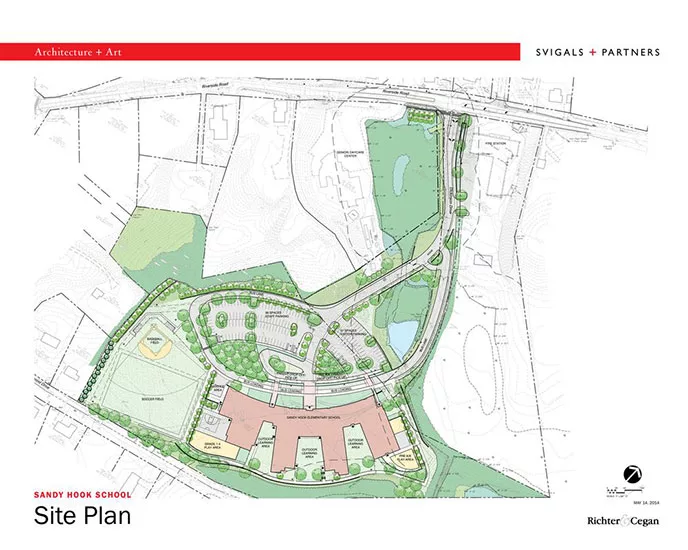
Three footbridges, leading to the building’s main and secondary entrances, span a sloped rain garden, which, in addition to filtering roof runoff, provides a topographic and spatial buffer between the school’s front windows and parking. This bioswale is just one of the many safety features discreetly folded into the project, says managing partner Jay Brotman: “It’s about controlling where people can go.”
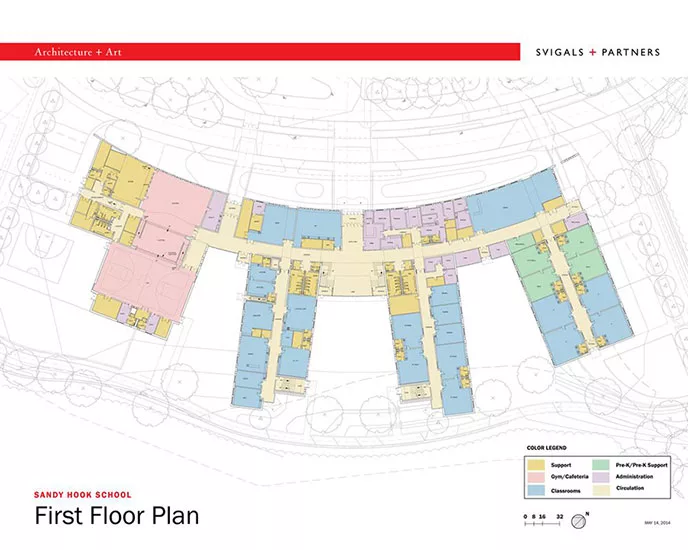
Inside, the two-story building is conceived as a small town organized around a wide hallway—the “main street”—that runs the length of the building. At the school’s primary entrance, the hall widens to a sunny, double-height atrium. Floor-to-ceiling glazing of the back wall allows views, from both the ground floor and a second-floor catwalk, of an outdoor amphitheater. Decorative metal trees crisscross the windows, which are colored in autumnal hues at the top, while a kinetic sculpture by artist Tim Prentice hangs from the atrium’s ceiling, swaying gently.
The firm envisioned the three classroom wings as individual neighborhoods. Brightly colored overhangs above each classroom door recall front porches and visually break up the hall. Interior doors connect pairs of classrooms—yet another subtle safety feature which McFadden says school staff requested. “It helps teachers feel like they’re not isolated,” she says. At the ends of upstairs hallways, “tree house” breakout spaces allow students to look out into the edge of the forest behind the school. “You also get a fabulous view to the courtyard,” says Brotman, adding that “natural observation points are an element of security design that we looked to include as much as possible.”
Looking for quick answers on architecture and design topics?
Try Ask RECORD, our new smart AI search tool.
Ask RECORD →
There are more specific safeguards too, such as a manned surveillance gate at the small road leading to the school, a “heightened level of resistance” on first-floor glazing, and “different measures of hardening on certain walls,” says Brotman. (He, like all those involved with building the school, avoids specifics about the building’s security systems.)
The students also played a direct part in the design. “We have in all our projects, to varying degrees, a connection to the kids who are going to be in the building,” says Svigals. At a workshop, the architects asked the children to trace the shadows of natural elements like twigs and leaves. Those drawings were digitized and carved into wooden panels that adorn the building’s exterior, “reminiscent of when you carve a heart into a tree,” says Svigals. Adds Brotman, “When people see reflections of themselves in the building, they actually feel a part of it.”
While the school is filled with references to nature, the town, and the students, there is no specific memorial to the 2012 tragedy. (A local commission is working to establish a permanent memorial elsewhere in the community.) Yet the school’s history is never far from the minds of those involved. At the July preview of the new facility, Newtown First Selectman Patricia Llodra said, “Let me state unequivocally that we would trade, in a minute, this beautiful new school for the more familiar and aged Sandy Hook School built in the ’50s if we could just change the past.”
Looking for a reprint of this article?
From high-res PDFs to custom plaques, order your copy today!