Architectural Record
search
cart
facebook twitter linkedin youtube
  • Sign In
  • Subscribe
  • Sign Out
  • My Account
Architectural Record
  • NEWS
    • Latest News
    • Awards
    • Interviews
    • Obituaries
    • Podcasts
      • Design:Ed Podcast
      • Sponsored Podcasts
  • OPINION
    • Book Reviews / Excerpts
    • Exhibition Reviews
    • Forum
  • EXCLUSIVES
    • Videos
    • Design Vanguard
    • Top 300 Firms
    • Sponsored Content
    • Sponsored eBooks
    • From the Archives
  • CONTINUING ED
    • Editorial Continuing Ed
    • CE Center
    • CE Academies
  • PROJECTS
    • Buildings By Type
    • Reuse & Renovation
    • Museums & Arts Centers
    • Colleges & Universities
    • Multifamily Housing
    • Interiors
    • Lighting
    • Kitchen & Bath
  • HOUSES
    • Record Houses
    • House of the Month
    • Featured Houses
  • PRODUCTS
    • Products by Category
    • Record Products of the Year
    • Latest Products
  • EVENTS
    • Dates & Events
    • Record on the Road
    • Innovation Conference
    • Sustainability in Practice
    • Women In Architecture
    • Webinars
    • Ad Excellence Awards
    • Submit an Event
  • CONNECT
    • Ask RECORD AI
    • Newsletters
    • Contact
    • Advertise
    • Editorial Calendar
    • Store
    • Customer Service
  • SUBMIT
    • Submission Guidelines
    • RECORD Competitions
  • MAGAZINE
    • Subscribe
    • My Account
    • Digital Edition
    • Current Issue
    • Firm Pass
    • Historic Archive
Architecture NewsOpinion

A New Documentary Wrestles With the Legacy of Designer Eliot Noyes—and Corporate Modernism
By Dante A. Ciampaglia
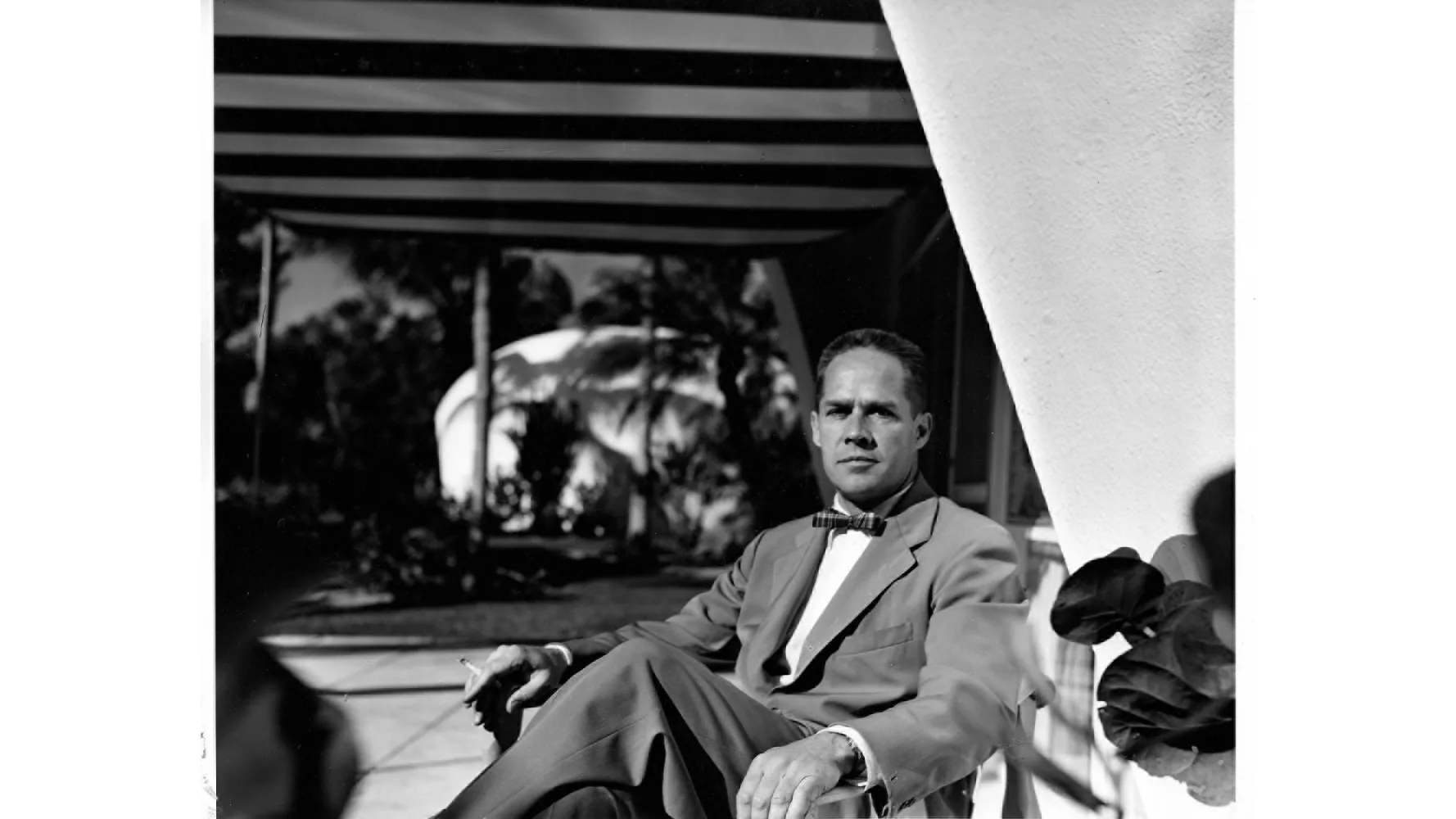
eliot noyes at bubble house
Eliot Noyes pcitured at one of his “Bubble Houses,” completed in 1954 in Hobe Sound, Florida. The architect is the subject of a new documentary film by Jason Andrew Cohn. Photo courtesy the Eliot Noyes Family
July 18, 2024
✕
Image in modal.

There’s a core tension in midcentury American Modernism between authenticity and commercial exploitation. Its most talented adherents were idealists whose work was so good that they became celebrity architects of a world we still occupy. Our buildings, products, even corporate logos all bear Modernism’s fingerprints, or at least DNA. But today much of it is disposable junk and derivative nostalgia, selling a lifestyle aesthetic rather than true craftsmanship.

Commercialism clearly won. And no one person is responsible. But writer-director Jason Andrew Cohn's documentary Modernism, Inc.: The Eliot Noyes Design Story, opening in New York on July 19 and in Los Angeles on August 9, locates Boston-born architect and industrial designer Noyes at the center of the conversation.

eliot noyes.
1
modernism, inc. poster.
2

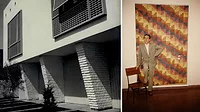
Noyes giving a lecture on the TV program Omnibus; (1); poster art for Modernism, Inc. (2) Photo courtesy the Noyes Family (1); image courtesy First Run Features (2)

The film is brisk at 79 minutes. Cohn, who previously co-directed Eames: The Architect & The Painter (2011), tosses out ideas and arguments—about Noyes and his work; postwar consumer capitalism; the Noyes’ legacy, and Modernism’s—for us to chew on long after the credits roll. But he rarely dwells on anything, particularly when it comes to Noyes enabling, even unintentionally, a corrosive culture of corporate primacy.

It’s a tricky needle to thread. Noyes indeed embodied the best and worst of Modernism. His idealistic goal of improved relationships between people and products, and people and nature, is omnipresent. It’s there in 1940 when, as the Museum of Modern Art's first curator of industrial design, he mounted "Organic Design in Home Furnishings,” a provocative confrontation between overdesigned American stuff and elegantly functional (and minimal) European products. It’s in the homes he designed in New Canaan, Connecticut, which were inspired as much by the Bauhaus as the natural surroundings. And it’s in his work as IBM’s consultant design director, dragging the company out of prewar obsolescence into the postwar vanguard with the Selectric typewriter and a rebrand that still guides the company.

eliot noyes.

Eliot Noyes served as consultant director of design for IBM from 1954-1977. Photo courtesy the Eliot Noyes Family

But Noyes' mantra was "good design is good business.” And his embrace of Modernism in service to IBM—and Mobil and Westinghouse, among others—helped global corporations seed and perpetuate a multigenerational addiction to overconsumption. Noyes wanted better, simpler interactions between humans and machines, be it a computer or a can opener. Corporations just wanted people's money. As his son, the late Eli Noyes, says in the documentary: "You did this in a pure, thorough, clear-sighted way, carving out a life, a purpose, in the middle of a kind of corrupt American postwar society that was clearly going in a different direction than we wanted to go."

The struggle between ideals and distortion flares throughout Modernism, Inc., most emphatically at the 1970 International Design Conference in Aspen (IDCA). What was meant to be a sedate gathering of designers and corporate executives discussing "Environment by Design” became a fiasco. A group of hippies, pranksters, and long-haired activists crashed the party and directly, furiously confronted the middle-aged IDCA squares about their role in environmental degradation. In the aftermath Noyes, then IDCA president, argued that maybe the conference should evolve to meet changing times. The group responded by voting him out.

ibm design.

During Noyes’ time with IBM, he helped revolutionize the design of computers. Image courtesy IBM

In another documentary, one more skeptical of the corporate imperative, this episode would frame the narrative. But Modernism, Inc. allows too much deference to the “Inc.” of its title. The film clearly sees Noyes, who died in 1977 at 66 years old, as a key enabler of the commercial takeover of Modernism—“Modernism-lite,” as a design historian puts it—but it also clearly doesn’t see that as a problem.

eliot noyes.

Eliot Noyes at his office in New Canaan. Photo courtesy of the Eliot Noyes Family

Throughout the film, Noyes’ multifaceted design story is told by historians and academics; people who worked with him; his children, friends, and antagonists. None are naive about his complicated legacy. Yet the final word—the literal closing statement of the film— belongs to Todd Simmons, IBM's vice president of design and brand experience. "It was the role of creating and crafting the character of the company into everything that is his greatest contribution," he says. Noyes' ideas for home-building or dynamics between humans and objects or the coexistence between people and nature are all secondary to corporate synergy.

Something tells me that’s not what Noyes meant by “good design is good business.” And it undercuts an otherwise engaging, albeit flawed documentary. Noyes is a fascinating thinker, designer, person, and his influence is clearly greater than helping corporate America inject itself into every facet of our lives.

At the very least, Simmons’ conclusion deserved some healthy pushback. A 45-second rebuttal wouldn’t have killed the film. But then where does Modernism, Inc. end? Where does the conversation about Modernism’s contested legacy end? As the last 70 years have proved, it doesn’t. It just roils, perpetually, churning up more questions, more debates, more documentaries—and more products.

Looking for quick answers on architecture and design topics?
Try Ask RECORD, our new smart AI search tool.
Ask RECORD →

KEYWORDS: Connecticut film review modernism

Share This Story

Looking for a reprint of this article?
From high-res PDFs to custom plaques, order your copy today!


Dante ciampaglia

Dante A. Ciampaglia has two decades experience editing print and digital magazines, including at Newsweek, Sports Illustrated, and Time. He has been a contributor to Architectural Record for more than 10 years, writing about the intersection of architecture, film, and the visual arts. His work has also been published by the Washington Post, Paris Review, Wired, Los Angeles Review of Books, Metropolis, and the Brooklyn Rail, among others.

Post a comment to this article

Report Abusive Comment

Subscription Center
  • Create an Account
  • Start a Subscription
  • Manage My Account
  • Sign Up for Newsletters
  • Visit Customer Service
  • Update Preferences

More Videos

Sponsored Content

Sponsored Content is a special paid section where industry companies provide high quality, objective, non-commercial content around topics of interest to the Architectural Record audience. All Sponsored Content is supplied by the advertising company and any opinions expressed in this article are those of the author and not necessarily reflect the views of Architectural Record or its parent company, BNP Media. Interested in participating in our Sponsored Content section? Contact your local rep!

close
  • cold storage facility
    Sponsored byCarlisle SynTec Systems

    How Architects Can Design More Continuous Cold Storage Envelopes

  • TAMLYN XtremeTrim Exterior Trim
    Sponsored byTamlyn

    Designing Cleaner Panel Facades: Why Exterior Trim Details Matter

  • Building with Vapor Barriers
    Sponsored byReef Industries, Inc.

    Vapor Barriers Help Control Moisture in Tighter Building Designs

DESIGN:ED Podcast
Listen to Architectural Record’s DESIGN:ED Podcast

Events

June 23, 2026

Enhancing Fire Resistance with Advanced PVC Solutions

Credits: 1 AIA LU/HSW; 1 AIBD P-CE; 0.1 ICC CEU; 1 IIBEC CEH

Evaluate advanced PVC solutions that improve fire resistance, support WUI compliance, and enhance resilience in residential and commercial building design.

June 25, 2026

Designing Glass Railing Systems that Enhance Aesthetics and Meet Code

Credits: 1 AIA LU/HSW; 1 AIBD P-CE; 0.1 ICC CEU

Upon course completion, participants will possess a deeper understanding of glass railings to help ensure that safety, aesthetic, and performance objectives are achieved.

View All Submit An Event

Products

2026 Architect's Square Foot Costbook

2026 Architect's Square Foot Costbook

See More Products

Popular Stories

Lorcan O' Herilhy

California Architect Lorcan O’Herlihy Has Died, Age 66

Obama Presidential Center, Chicago

The Obama Presidential Center Opens on Chicago’s South Side

Spoonbill Ranch

Johnsen Schmaling Architects Integrates Spoonbill Ranch into a Pristine Landscape

Image of Bruce Springsteen Center for American Music

The CookFox-designed Bruce Springsteen Center for American Music Opens in New Jersey

Three Courtyards House

Design Vanguard 2026: Balsa Crosetto Piazzi

Enhancing Fire Resistance with Advanced PVC Solutions - Free Webinar - June 23, 2026

Related Articles

  • Proposal Film Review

    A New Film Probes the Legacy of Mexican Architect Luis Barragán

    See More
  • Theodor Cron.jpg

    Tracing the Legacy of Architect Theodor Cron, Overlooked Giant of Peruvian Modernism

    See More
  • Business and Humanities District

    Lake | Flato’s Mass-Timber Project at Trinity University Builds on the Legacy of Texas Modernism

    See More

Related Products

See More Products
  • corp arch.jpg

    Corporate Architecture Building a Brand

  • Web-Legacy16-1920x1125.jpg

    Legacy

See More Products
×

The latest news and information

#1 Source for Architectural Design, News and Products

SUBSCRIBE
  • RESOURCES
    • Advertise
    • Contact Us
    • Submit
    • Store
  • ACCOUNT CENTER
    • Create an Account
    • Start a Subscription
    • Manage My Account
    • Sign Up for Newsletters
    • Visit Customer Service
    • Update Preferences
  • PRIVACY
    • PRIVACY POLICY
    • TERMS & CONDITIONS
    • DO NOT SELL MY PERSONAL INFORMATION
    • PRIVACY REQUEST
    • ACCESSIBILITY
  • SERVICES
    • Marketing Services
    • Reprints
    • Market Research
    • List Rental
    • Survey/Respondent Access
  • STAY CONNECTED
    • Linkedin
    • Facebook
    • Instagram
    • YouTube
    • X (Twitter)

Copyright ©2026. All Rights Reserved BNP Media, Inc. and BNP Media II, LLC.

Design, CMS, Hosting & Web Development :: ePublishing