Architectural Record
search
cart
facebook twitter linkedin youtube
  • Sign In
  • Subscribe
  • Sign Out
  • My Account
Architectural Record
  • NEWS
    • Latest News
    • Awards
    • Interviews
    • Obituaries
    • Podcasts
      • Design:Ed Podcast
      • Sponsored Podcasts
  • OPINION
    • Book Reviews / Excerpts
    • Exhibition Reviews
    • Forum
  • EXCLUSIVES
    • Videos
    • Design Vanguard
    • Top 300 Firms
    • Sponsored Content
    • Sponsored eBooks
    • From the Archives
  • CONTINUING ED
    • Editorial Continuing Ed
    • CE Center
    • CE Academies
  • PROJECTS
    • Buildings By Type
    • Reuse & Renovation
    • Museums & Arts Centers
    • Colleges & Universities
    • Multifamily Housing
    • Interiors
    • Lighting
    • Kitchen & Bath
  • HOUSES
    • Record Houses
    • House of the Month
    • Featured Houses
  • PRODUCTS
    • Products by Category
    • Record Products of the Year
    • Latest Products
  • EVENTS
    • Dates & Events
    • Record on the Road
    • Innovation Conference
    • Sustainability in Practice
    • Women In Architecture
    • Webinars
    • Ad Excellence Awards
    • Submit an Event
  • CONNECT
    • Ask RECORD AI
    • Newsletters
    • Contact
    • Advertise
    • Editorial Calendar
    • Store
    • Customer Service
  • SUBMIT
    • Submission Guidelines
    • RECORD Competitions
  • MAGAZINE
    • Subscribe
    • My Account
    • Digital Edition
    • Current Issue
    • Firm Pass
    • Historic Archive
Opinion

Why Preservation Matters

By Max Page
By James Gauer
Why Preservation Matters

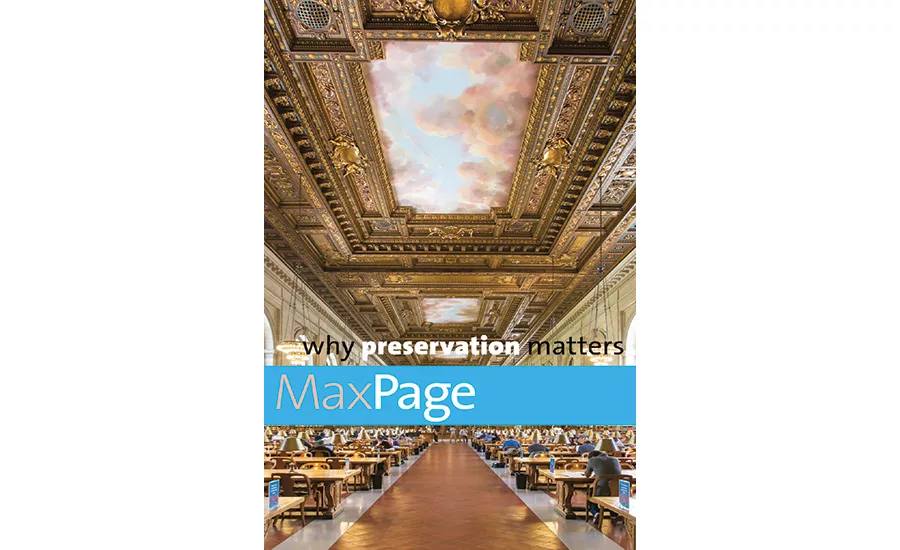
Why Preservation Matters, by Max Page. Yale University Press, October 2016, 224 pages, $25.

February 1, 2017

Architectural historian Max Page believes America’s preservation movement has reached a crossroads. His new book, Why Preservation Matters, written to mark the 50th anniversary of the 1966 National Historic Preservation Act, critiques where the movement has gone and ponders where it should go. The fundamental problems, according to the author, are that it’s too focused on aesthetics, too inclined to emulate the museum approach to conserving and curating precious objects, and—because of the gentrifi- cation and displacement it can catalyze—“too often used as a tool for enshrining the inequality between rich and poor that is the stamp of our global age.” The book attempts “to look beyond the practices of conservation to the role of preser­vation as a force in public life.”

This broader view has been taking shape at the national level for a generation, thanks in large part to the leadership of Richard Moe, National Trust for Historic Preservation president from 1993 to 2009. Quoting Moe’s speech praising National Preservation Award winners in 2000, Page writes, “Preservation isn’t just about saving historic buildings. It’s about saving historic neighborhood schools for our children, revitalizing downtowns, making historic homes affordable, and protecting our ethnic heritage.” But Page doesn’t think Moe went far enough, and he takes aim at one of that year’s winners, Mayor Daley of Chicago, for allowing for-profit development too large a role in setting the agenda.

Page wants preservation to move past “squabbling about the appearance of new windows and the color of shingles” and join forces with the fights against climate change and income inequality. He advocates for a greater emphasis on “difficult places,” such as slave markets and massacre sites, with more focus on “memory making, storytelling,” and “community building,” though he’s rather vague on what these terms mean. And he argues that what impedes these worthy goals is an elite obsession with architectural aesthetics and authenticity.

Page builds this argument in the book’s most intellectually ambitious chapter, “Why We Preserve.” We do so, he says, because we are looking for “a soul-deep connection to our world.” The catch is that this quest is underpinned by the concept of authenticity, which he dismisses as “a mirage and a chimera.” To elaborate on this problem, Page alludes to such thinkers as Gaston Bachelard, Franz Rosenzweig, Martin Heidegger, John Ruskin, Walter Benjamin, and Lionel Trilling, to mention just a few. He concludes that the value of preservation lies not in its authen- ticity but in its ability to “help us confront a difficult past fully and honestly, to employ historic places in the service of economic justice, to secure a sustainable world, and to reaffirm beauty as a path to justice.”

Well, why not? These are all admirable aims. What’s missing is a viable strategy for achieving them. Much of the book reads like a manifesto for the democratization of an elite enterprise in order to create “economically just communities” while offering little useful guidance on how to do so beyond “taking to the streets.” Page seems a bit aloof from economic realities and is especially scornful of market-driven rehab projects, typically enabled by tax credits and often resulting in gentrification. He seems unwilling to consider that preservation follows the money not for lack of idealism but because it’s an expensive endeavor that requires firm financial footing.

Surprisingly, the author’s assertion that the pursuit of justice and sustainability requires us to “jettison” aesthetics and authenticity proves to be more rhetorical than strategic. In the final chapter, he suggests that merely expanding our definition of beauty might suffice.

Looking for quick answers on architecture and design topics?
Try Ask RECORD, our new smart AI search tool.
Ask RECORD →

KEYWORDS: Book Reviews / Excerpts historic preservation

Share This Story

Looking for a reprint of this article?
From high-res PDFs to custom plaques, order your copy today!

James gauer
James Gauer, an architect and author based in Chicago and San Miguel de Allende, Mexico, is a contributing editor at RECORD.

Post a comment to this article

Report Abusive Comment

Subscription Center
  • Create an Account
  • Start a Subscription
  • Manage My Account
  • Sign Up for Newsletters
  • Visit Customer Service
  • Update Preferences

More Videos

Sponsored Content

Sponsored Content is a special paid section where industry companies provide high quality, objective, non-commercial content around topics of interest to the Architectural Record audience. All Sponsored Content is supplied by the advertising company and any opinions expressed in this article are those of the author and not necessarily reflect the views of Architectural Record or its parent company, BNP Media. Interested in participating in our Sponsored Content section? Contact your local rep!

close
  • TAMLYN XtremeTrim Exterior Trim
    Sponsored byTamlyn

    Designing Cleaner Panel Facades: Why Exterior Trim Details Matter

  • Building with Vapor Barriers
    Sponsored byReef Industries, Inc.

    Vapor Barriers Help Control Moisture in Tighter Building Designs

  • Duct Interior with Prodeq System
    Sponsored byHenry, a Carlisle Company

    Designing Resilient Water Containment Systems

DESIGN:ED Podcast
Listen to Architectural Record’s DESIGN:ED Podcast

Events

June 10, 2026

Rethinking Stormwater – The Power of Porous Paving

Credits: 1 AIA LU/HSW; 1 AIBD P-CE; 0.1 ICC CEU

Learn how porous paving systems support stormwater management, reduce heat island effects, and enhance sustainable site design performance.

June 11, 2026

Very Early Warning Fire Detection for Mission-Critical Facilities

Credits: 1 AIA LU/HSW; 1 AIBD P-CE; 0.1 ICC CEU

Examine advanced fire detection strategies that support uptime and enhance safety in data centers and other mission-critical facilities.

View All Submit An Event

Products

2026 Architect's Square Foot Costbook

2026 Architect's Square Foot Costbook

See More Products

Popular Stories

Practice Matters illustration

What’s in a (Firm’s) Name? Thinking About Succession and Legacy

Coronado Bridge

The Architect’s Guide to San Diego

Practice Matters illustration

By the Numbers: Counting America's Architects

Riverdale House by Studio Lau

Riverdale House by Studio Lau

KRESA by DLR

In Kalamazoo, DLR Group Completes a Mass-Timber Hub for Career and Technical Education Programs

Broader Sustainability of CMU - Free Webinar - May 21, 2026

Related Articles

  • Bucky lives! Why Fuller matters more today than ever before

    See More
  • Bucky lives! Why Fuller matters more today than ever before

    See More
  • The Past and Future City

    The Past and Future City: How Historic Preservation is Reviving America’s Communities

    See More

Related Products

See More Products
  • Architectural Record - June 2025

    Architectural Record June 2025 Issue

See More Products

Events

View AllSubmit An Event
  • March 19, 2026

    Visualization Collaboration in Practice: Why It Matters and How to Do It Right

    NOW ON DEMANDCredits: 1 AIA LU/Elective; 1 AIBD P-CE; 0.1 ICC CEU; 0.1 IACET CEUThis session helps you rethink the ROI of your visualization stack, see how collaborative visualization ensures consistent outputs, and reduce reliance on outsourced renderings.
View AllSubmit An Event
×

The latest news and information

#1 Source for Architectural Design, News and Products

SUBSCRIBE
  • RESOURCES
    • Advertise
    • Contact Us
    • Submit
    • Store
  • ACCOUNT CENTER
    • Create an Account
    • Start a Subscription
    • Manage My Account
    • Sign Up for Newsletters
    • Visit Customer Service
    • Update Preferences
  • PRIVACY
    • PRIVACY POLICY
    • TERMS & CONDITIONS
    • DO NOT SELL MY PERSONAL INFORMATION
    • PRIVACY REQUEST
    • ACCESSIBILITY
  • SERVICES
    • Marketing Services
    • Reprints
    • Market Research
    • List Rental
    • Survey/Respondent Access
  • STAY CONNECTED
    • Linkedin
    • Facebook
    • Instagram
    • YouTube
    • X (Twitter)

Copyright ©2026. All Rights Reserved BNP Media, Inc. and BNP Media II, LLC.

Design, CMS, Hosting & Web Development :: ePublishing