Perkins+Will Offices by Perkins+Will
Chicago, Minneapolis, New York, Seattle
Chicago
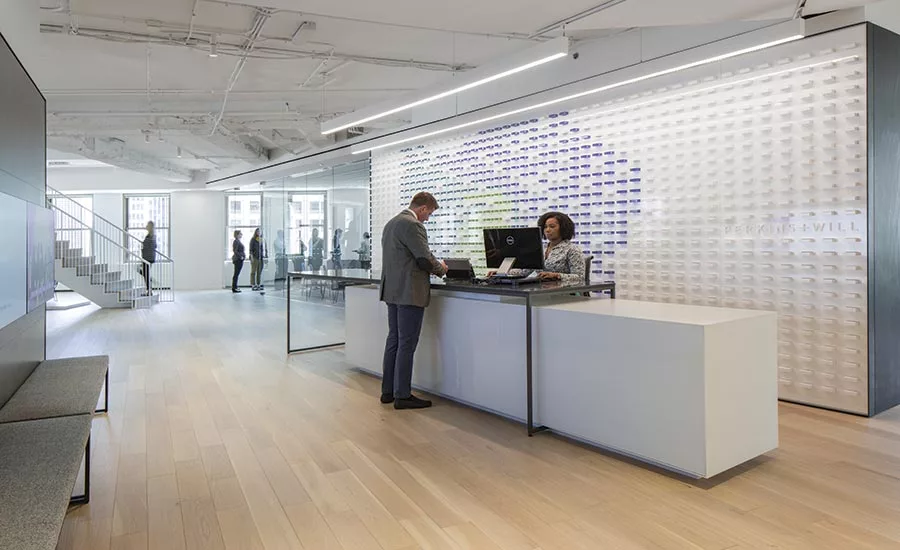
The design of the new Wrigley Building office was based on staff preferences for an environment that is conducive to being more active, where they could choose where they work. The streamlined space includes a daylit multipurpose area on the top floor, reached by a stair near reception, height-adjustable desks, small conference rooms, and comfortable furnishings.
Photo © Michelle Litvin
Chicago
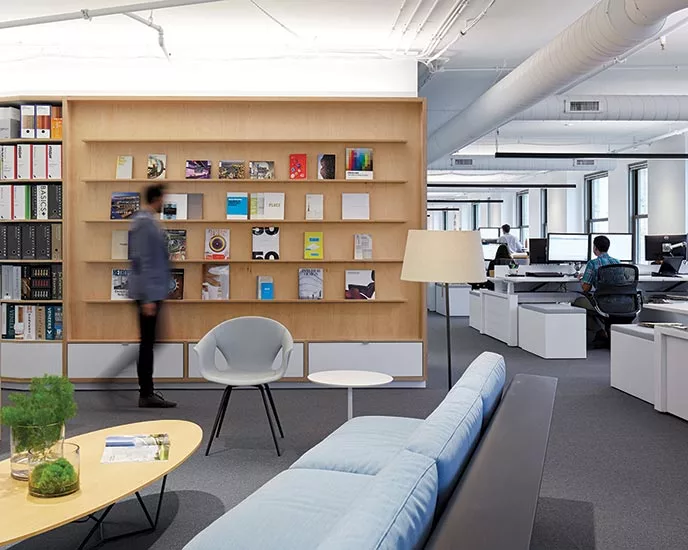
The design of the new Wrigley Building office was based on staff preferences for an environment that is conducive to being more active, where they could choose where they work. The streamlined space includes a daylit multipurpose area on the top floor, reached by a stair near reception, height-adjustable desks, small conference rooms, and comfortable furnishings.
Photo © Steve Hall / Hedrich Blessing
Chicago
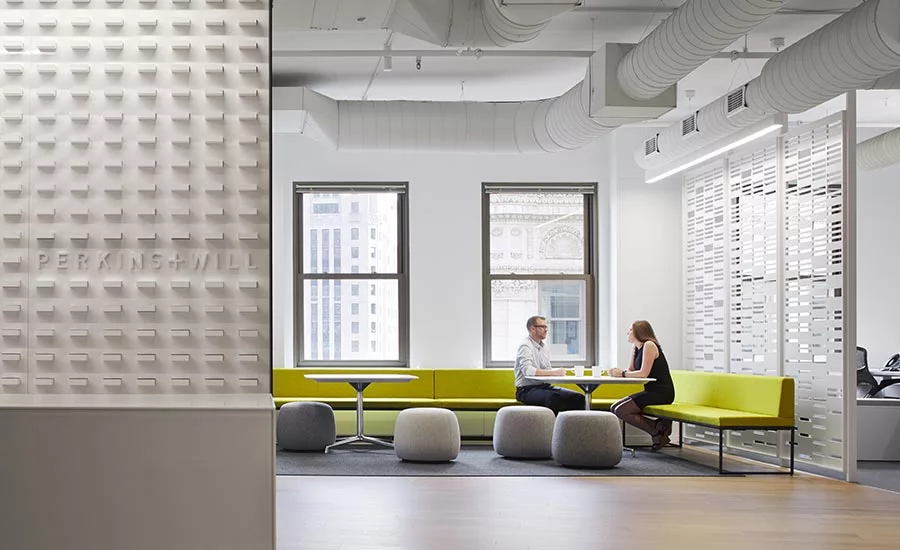
The design of the new Wrigley Building office was based on staff preferences for an environment that is conducive to being more active, where they could choose where they work. The streamlined space includes a daylit multipurpose area on the top floor, reached by a stair near reception, height-adjustable desks, small conference rooms, and comfortable furnishings.
Photo © Steve Hall / Hedrich Blessing
Chicago
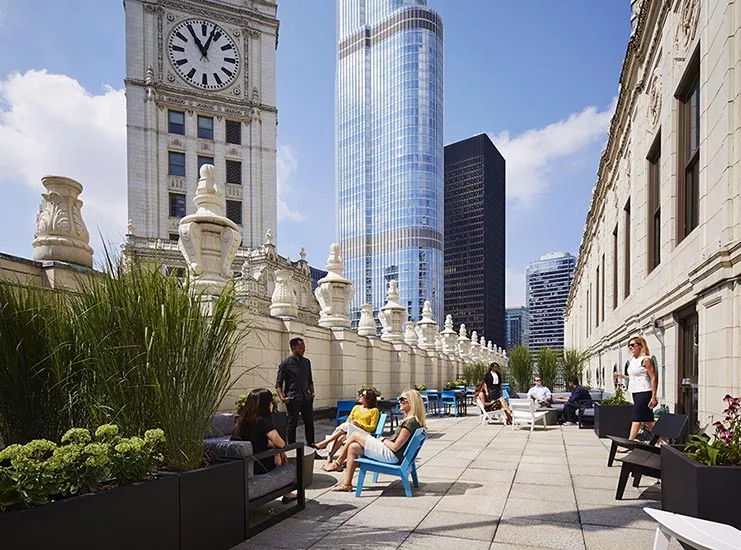
The design of the new Wrigley Building office was based on staff preferences for an environment that is conducive to being more active, where they could choose where they work. The streamlined space includes a daylit multipurpose area on the top floor, reached by a stair near reception, height-adjustable desks, small conference rooms, and comfortable furnishings.
Photo © Steve Hall / Hedrich Blessing
Chicago
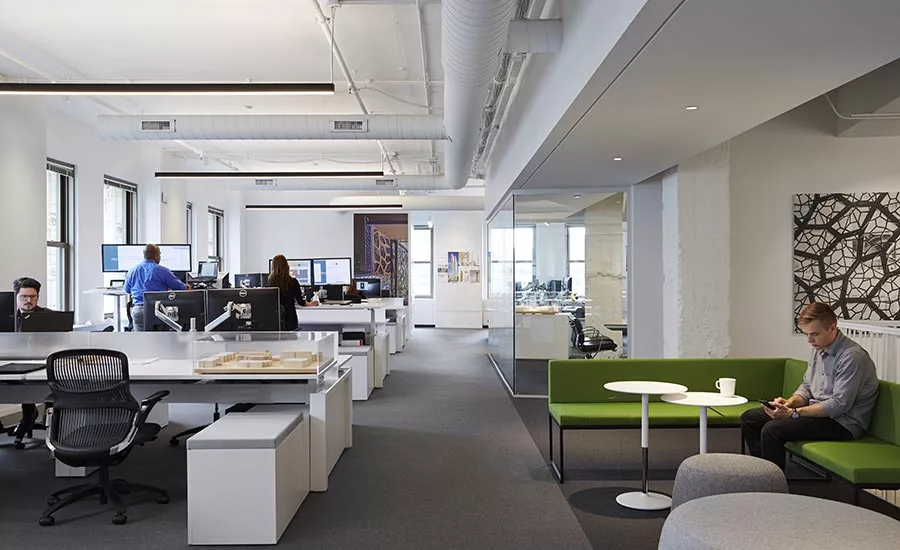
The design of the new Wrigley Building office was based on staff preferences for an environment that is conducive to being more active, where they could choose where they work. The streamlined space includes a daylit multipurpose area on the top floor, reached by a stair near reception, height-adjustable desks, small conference rooms, and comfortable furnishings.
Photo © Steve Hall / Hedrich Blessing
Chicago
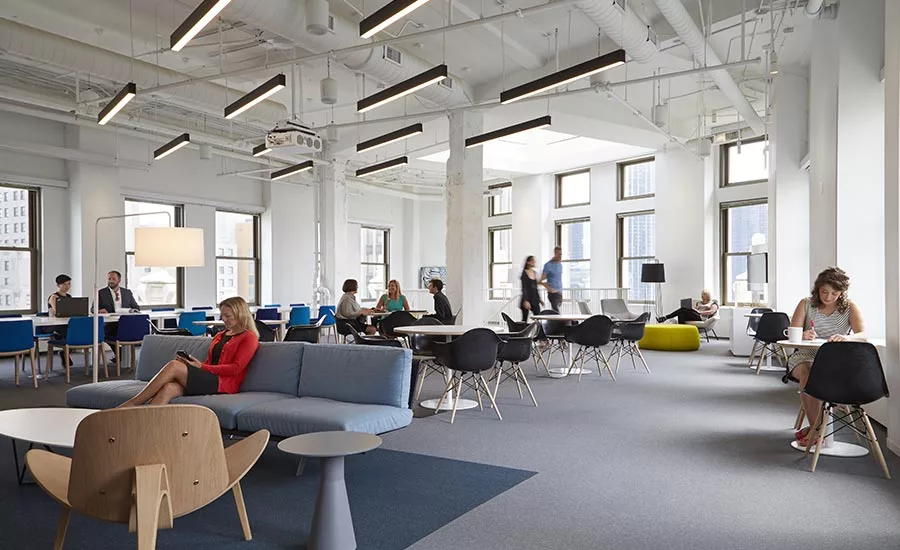
The design of the new Wrigley Building office was based on staff preferences for an environment that is conducive to being more active, where they could choose where they work. The streamlined space includes a daylit multipurpose area on the top floor, reached by a stair near reception, height-adjustable desks, small conference rooms, and comfortable furnishings.
Photo © Steve Hall / Hedrich Blessing
Chicago
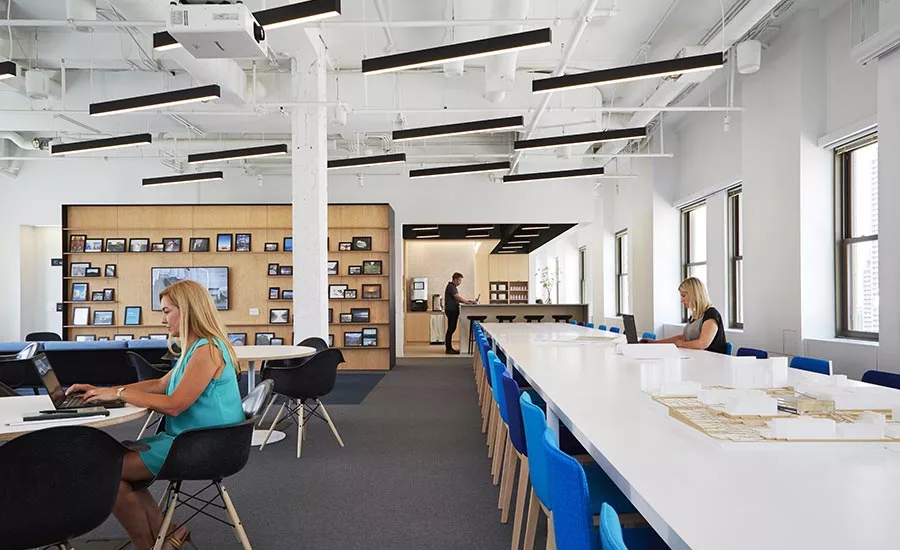
The design of the new Wrigley Building office was based on staff preferences for an environment that is conducive to being more active, where they could choose where they work. The streamlined space includes a daylit multipurpose area on the top floor, reached by a stair near reception, height-adjustable desks, small conference rooms, and comfortable furnishings.
Photo © Steve Hall / Hedrich Blessing
Minneapolis
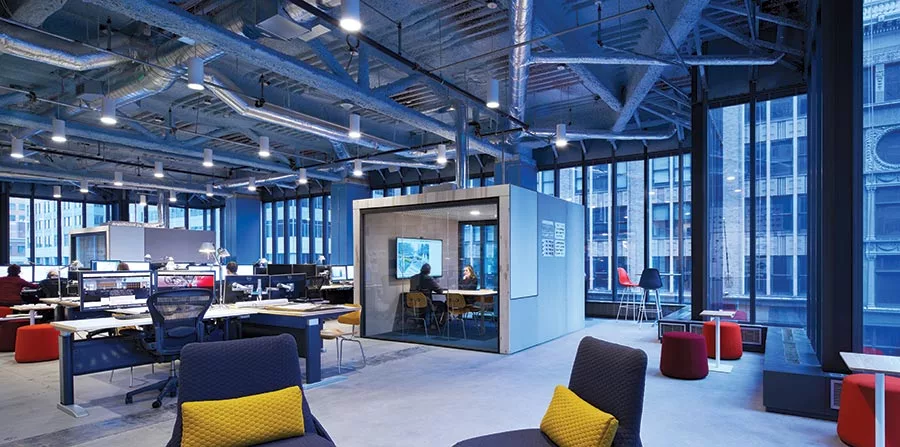
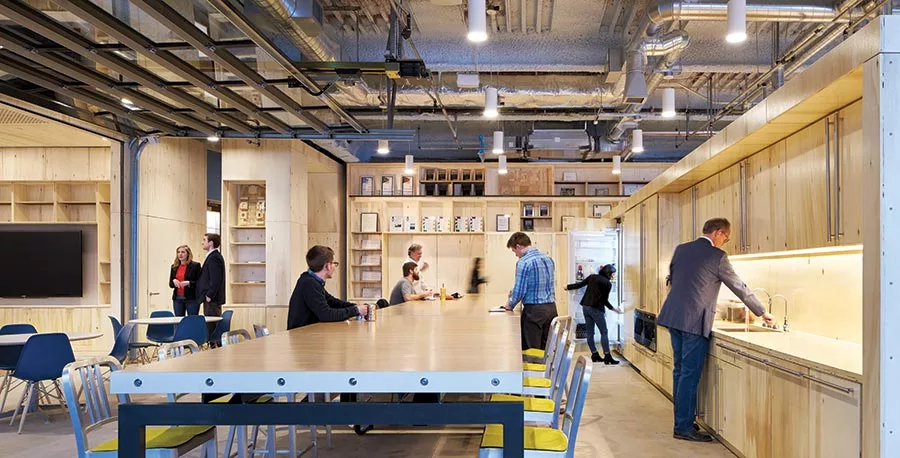
The single-floor Minneapolis office did away with assigned seating, providing 190 options for its 65 employees. The furniture, none of which is fixed, for flexibility, is largely repurposed, made out of materials from the previous location, like the harvest table in the café/meeting/event space, or from rapidly renewable Aspen plywood.
Photo © Corey Gaffer
Minneapolis
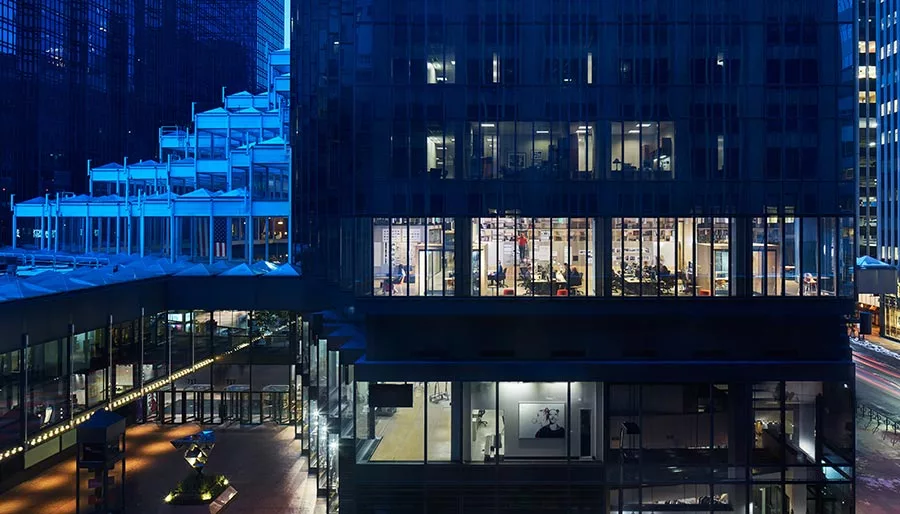
The single-floor Minneapolis office did away with assigned seating, providing 190 options for its 65 employees. The furniture, none of which is fixed, for flexibility, is largely repurposed, made out of materials from the previous location, like the harvest table in the café/meeting/event space, or from rapidly renewable Aspen plywood.
Photo © Corey Gaffer
Minneapolis
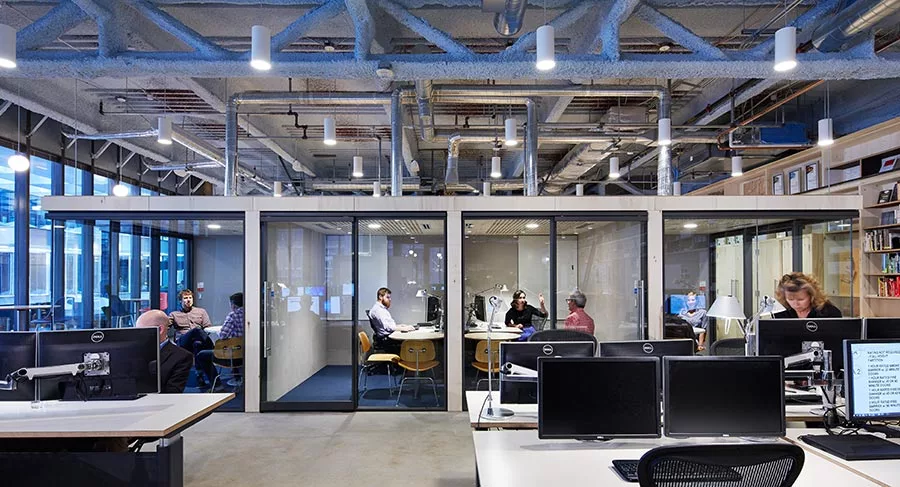
The single-floor Minneapolis office did away with assigned seating, providing 190 options for its 65 employees. The furniture, none of which is fixed, for flexibility, is largely repurposed, made out of materials from the previous location, like the harvest table in the café/meeting/event space, or from rapidly renewable Aspen plywood.
Photo © Corey Gaffer
Minneapolis
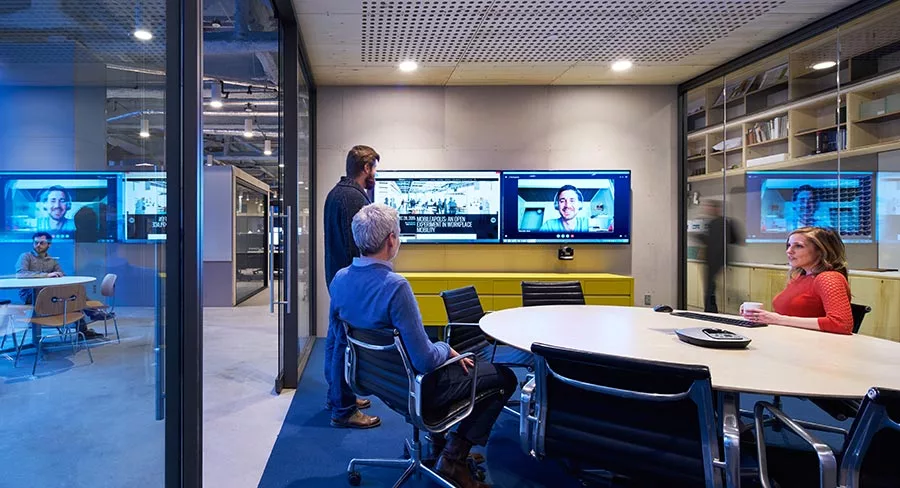
The single-floor Minneapolis office did away with assigned seating, providing 190 options for its 65 employees. The furniture, none of which is fixed, for flexibility, is largely repurposed, made out of materials from the previous location, like the harvest table in the café/meeting/event space, or from rapidly renewable Aspen plywood.
Photo © Corey Gaffer
Minneapolis
The single-floor Minneapolis office did away with assigned seating, providing 190 options for its 65 employees. The furniture, none of which is fixed, for flexibility, is largely repurposed, made out of materials from the previous location, like the harvest table in the café/meeting/event space, or from rapidly renewable Aspen plywood.
Photo © Corey Gaffer
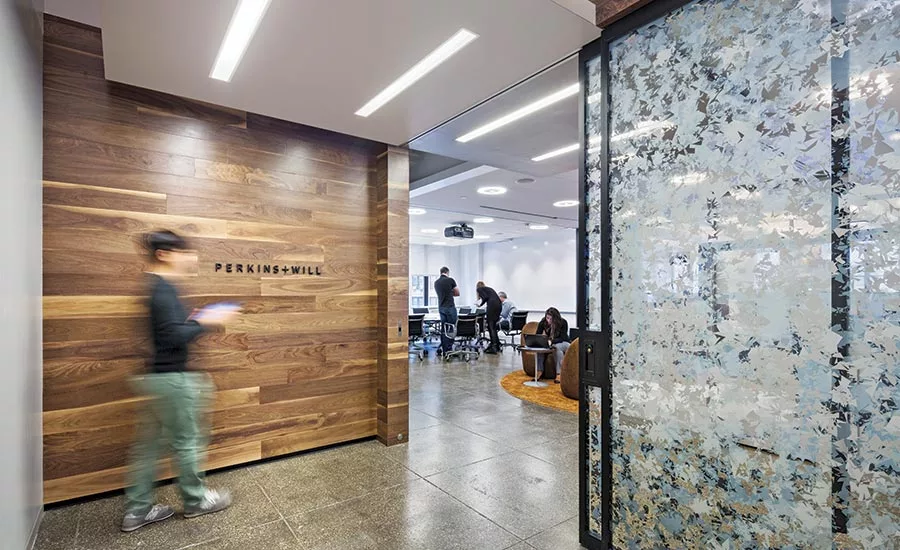
New York
Less formal than its previous iteration, the New York location has fewer private offices and more open and/or flexible team and meeting areas outfitted with comfortable lounge furniture and sit/stand desk options. The palette consists of more natural hues, with outdoor imagery and an emphasis on healthy materials.
Photo © Eduard Hueber
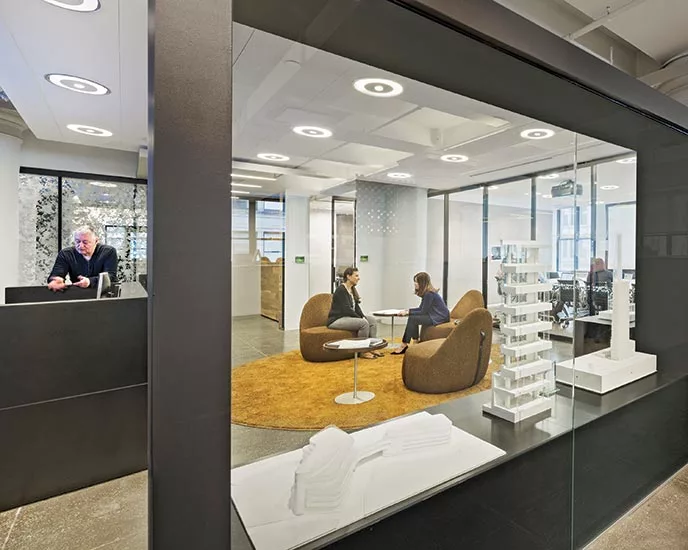
New York
Less formal than its previous iteration, the New York location has fewer private offices and more open and/or flexible team and meeting areas outfitted with comfortable lounge furniture and sit/stand desk options. The palette consists of more natural hues, with outdoor imagery and an emphasis on healthy materials.
Photo © Eduard Hueber
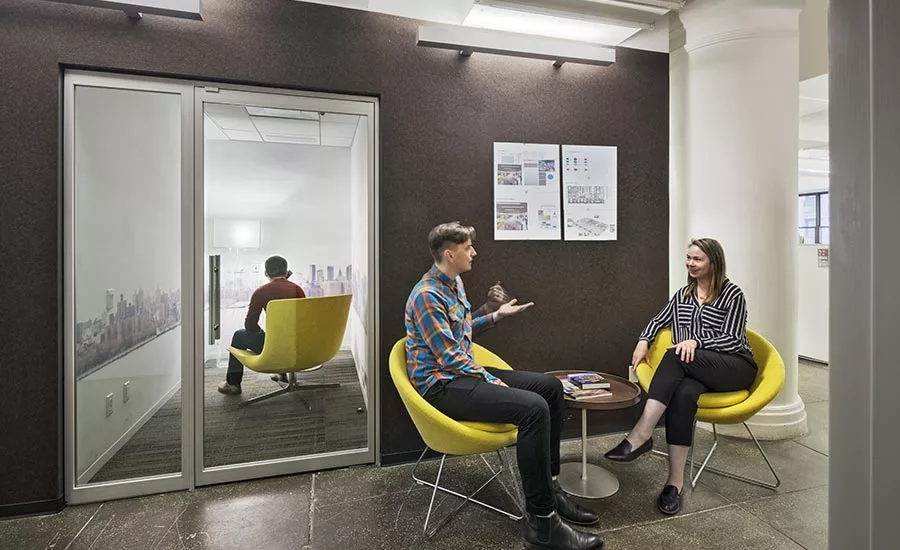
New York
Less formal than its previous iteration, the New York location has fewer private offices and more open and/or flexible team and meeting areas outfitted with comfortable lounge furniture and sit/stand desk options. The palette consists of more natural hues, with outdoor imagery and an emphasis on healthy materials.
Photo © Eduard Hueber
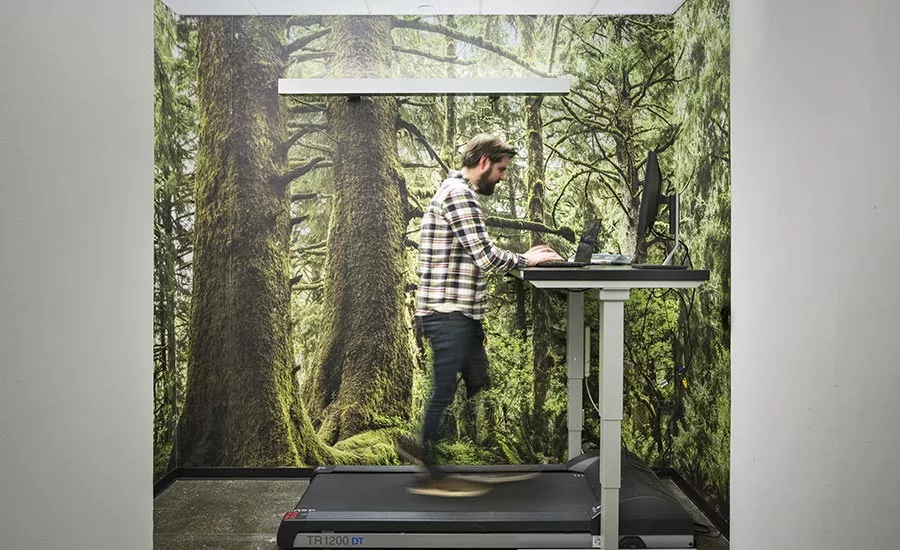
New York
Less formal than its previous iteration, the New York location has fewer private offices and more open and/or flexible team and meeting areas outfitted with comfortable lounge furniture and sit/stand desk options. The palette consists of more natural hues, with outdoor imagery and an emphasis on healthy materials.
Photo © Eduard Hueber
Seattle
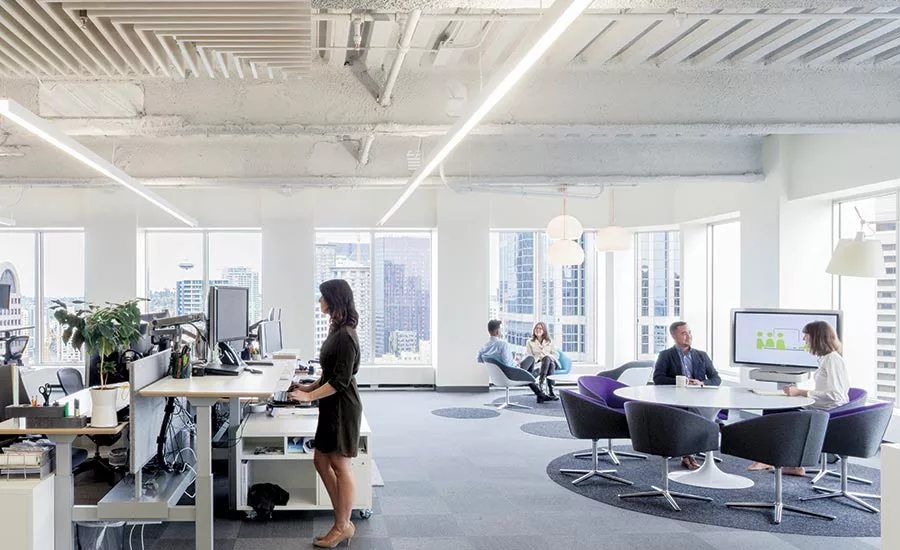
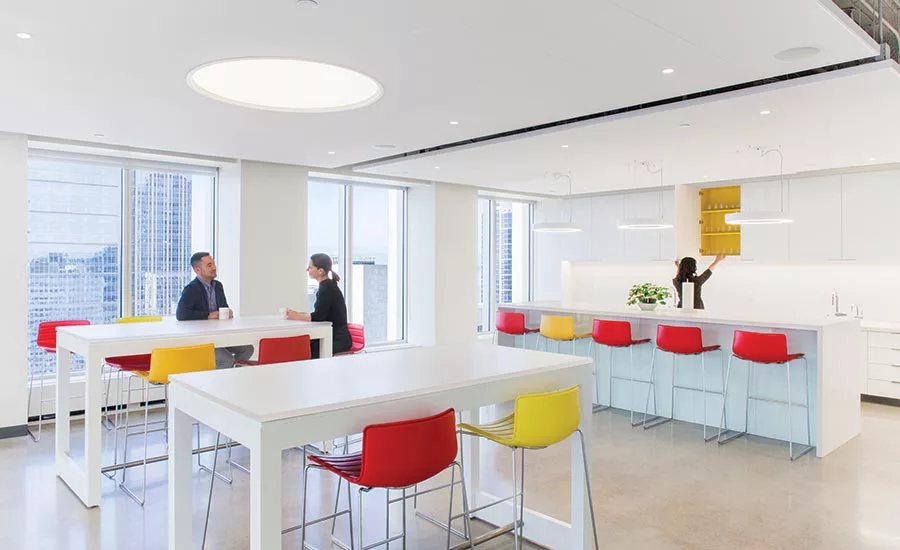
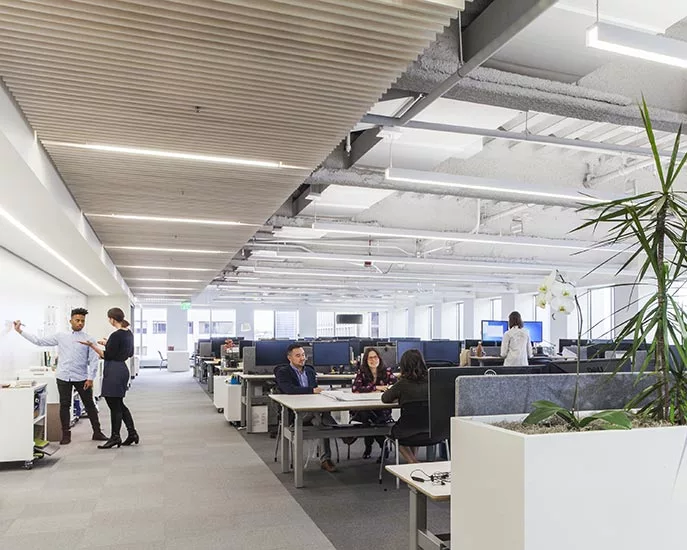
A variety of places to meet, have coffee, and chat enhance the open and democratic layout in Seattle. Healthy materials were used throughout a design that incorporates height-adjustable desks, as well as soft seating and collaborative spaces for planned and impromptu meetings and alternate work environments.
Photo © YE-H Photography
Seattle
A variety of places to meet, have coffee, and chat enhance the open and democratic layout in Seattle. Healthy materials were used throughout a design that incorporates height-adjustable desks, as well as soft seating and collaborative spaces for planned and impromptu meetings and alternate work environments.
Photo © YE-H Photography
Seattle
A variety of places to meet, have coffee, and chat enhance the open and democratic layout in Seattle. Healthy materials were used throughout a design that incorporates height-adjustable desks, as well as soft seating and collaborative spaces for planned and impromptu meetings and alternate work environments.
Photo © YE-H Photography
Architects & Firms
For a global firm like Perkins+Will, with more than 20 offices across four continents, each year offers the chance to rethink spaces as leases expire and real-estate needs change. When it came time for a fresh look at its studios in New York, Chicago, Minneapolis, and Seattle, the firm took the opportunity to lead by example, pushing the boundaries of workspace design.
“We think of our offices as living laboratories,” says CEO Phil Harrison. “We’re testing ideas on ourselves before we recommend them to our clients.” Instead of creating a showroom to demonstrate the latest trends, each of the four offices directly addressed the needs of their employees: commute times and neighborhood amenities for three offices that were moving (Chicago, Minneapolis, and Seattle) and, for all four, cuttingedge technological services and wellness-promoting moves in line with Fitwel guidelines, which were developed by the General Services Administration and U.S. Centers for Disease Control and Prevention to help create healthier workplaces.
Each of the offices was designed to reflect larger professional trends. Specifically, the work of architects and designers has become more transparent and more iterative, with smaller, more frequent meetings replacing formal status briefings. In general, employees report completing a wider range of tasks per day than ever before— tasks that require a greater variety of tools and settings. At the same time, architectural offices are looking to get the most from the smallest footprint possible, trading offices for flexible spaces that serve multiple functions.
Linked by firm-wide values, including Harrison’s rallying cry to be more “bold, brave, and brilliant,” the four Perkins+Will office schemes developed in parallel, with the local teams leading the way. In New York, this meant an interior refresh based on a crowd-sourced evaluation, with improved technology. In Chicago, the staff was split into “client” and design teams. And the Seattle office hired their colleagues at P+W Vancouver as designers. Perhaps the most radical shift came in Minneapolis, where assigned desks were eliminated in favor of a more democratic approach to space that lets the 65 employees choose from among 168 workstations. “It’s actually quite empowering,” Harrison says.
All of these strategies mirror a consumer-facing trend of customization, explains Rachel Casanova, director of workplace strategy for Perkins+Will New York. “When you have that ability in the consumer world, and you don’t give people the ability to affect the environment they come to work in every day, they’re going to be unhappy.” That means creating amenity spaces, such as cafés and outdoor areas that might look more at home in a condominium or hotel, choosing a palette of natural, nontoxic materials, or including subtle reminders of a particular studio’s mission: models scattered throughout the Chicago office; open library shelving in Minneapolis, and a wall of shadowboxes in New York where employees can display personal photographs, artworks, or inspiration. “It’s this physical manifestation of what we do and what impact we have,” Casanova says.
Positive results have already been felt in all four offices. Employees in each reported satisfaction beyond Leesman+ industry standards (a respected, independent workplace-effectiveness benchmark), especially in regard to technology and variety of workspaces—even in Chicago and Minneapolis, where square footage per employee was reduced 17 percent and overall operations costs have decreased 11 percent. As one Seattle employee put it, “Not all architects are created similar, so why should all of their desks be?”
Back to Good Design Is Good Business 2017
CreditsArchitect: Perkins+Will — Chicago: Tim Wolfe, design director; Minneapolis: Dave Dimond, design principal; New York: Joan Blumenfeld, design principal; Seattle: David Dove
General contractor: Chicago: Executive Construction; Minneapolis: Gardner Builders; New York: ACC Construction; Seattle: Turner Construction
Engineers Chicago: TGRWA (structural); Environmental Systems Design (m/e/p, structured cabling/paging); New York: Cosentini (m/e/p)
Client: Perkins+Will
Size: Chicago: 50,500 square feet; Minneapolis: 9,800 square feet; New York: 16,000 square feet; Seattle: 17,800
Cost: Chicago: $7.6 million; Minneapolis: withheld; New York: $473,000; Seattle: $2.1 million
Completion date: Chicago and Minneapolis: February 2016; New York: December 2015; Seattle: April 2016
|
SpecificationsFrit Glass New York: Acura Glass Doors Chicago: Assa Abbloy Wood Doors Chicago: Eggers Industries; Minneapolis: Marshfield; Seattle: Barclay Dean Sliding Doors New York: PK-30 System Acoustical Ceilings Chicago: Decoustics, Claro, Armstrong, Optima; Seattle: Ecophon, Linea Wood Ceiling System Demountable Partitions Chicago: Alur; Minneapolis: Haworth Wall Coverings Chicago: Carnegie, Xorel, MDC Wallcoverings; New York: Buzzispace, Flavor Paper; Seattle: Forbo Floor and Wall Tile Chicago: Lea Ceramiche, Royal Mosa, Ceramic Techniques, Sonoma Loop; Seattle: Daltile Interior Ambient Lighting Chicago: Lumato, Pinnacle Lighting, Lucifer Lighting, Lutron (controls); Minneapolis: Alcon, Audacy (controls); Seattle: Artemide, Flos, Lightnet, Louis Poulsen, Acuity Brands (controls) |
Looking for a reprint of this article?
From high-res PDFs to custom plaques, order your copy today!