Architectural Record
search
cart
facebook twitter linkedin youtube
  • Sign In
  • Subscribe
  • Sign Out
  • My Account
Architectural Record
  • NEWS
    • Latest News
    • Awards
    • Interviews
    • Obituaries
    • Podcasts
      • Design:Ed Podcast
      • Sponsored Podcasts
  • OPINION
    • Book Reviews / Excerpts
    • Exhibition Reviews
    • Forum
  • EXCLUSIVES
    • Videos
    • Design Vanguard
    • Top 300 Firms
    • Sponsored Content
    • Sponsored eBooks
    • From the Archives
  • CONTINUING ED
    • Editorial Continuing Ed
    • CE Center
    • CE Academies
  • PROJECTS
    • Buildings By Type
    • Reuse & Renovation
    • Museums & Arts Centers
    • Colleges & Universities
    • Multifamily Housing
    • Interiors
    • Lighting
    • Kitchen & Bath
  • HOUSES
    • Record Houses
    • House of the Month
    • Featured Houses
  • PRODUCTS
    • Products by Category
    • Record Products of the Year
    • Latest Products
  • EVENTS
    • Dates & Events
    • Record on the Road
    • Innovation Conference
    • Sustainability in Practice
    • Women In Architecture
    • Webinars
    • Ad Excellence Awards
    • Submit an Event
  • CONNECT
    • Ask RECORD AI
    • Newsletters
    • Contact
    • Advertise
    • Editorial Calendar
    • Store
    • Customer Service
  • SUBMIT
    • Submission Guidelines
    • RECORD Competitions
  • MAGAZINE
    • Subscribe
    • My Account
    • Digital Edition
    • Current Issue
    • Firm Pass
    • Historic Archive
Editorial

Street Smarts

By Robert Ivy, FAIA FAIA
March 1, 2002

In the 20th century, urban observers like Jane Jacobs praised the interactive sensory and social experiences that lie on any good block in Greenwich Village or Back Bay Boston. They cited 19th-century precedent, admiring humanely scaled buildings with their wealth of detail and texture, overlaid with the modern era’s democratically raucous street life. Discovering worthwhile contemporary examples of urban vitality, however, has often meant traveling outside the U.S. After a 13-hour flight to Japan, one can find age-old civic traditions mingling with tomorrow’s, out on the open street.

The first, most obvious lesson—one already familiar to Western audiences—is apparent on any Japanese byway: Low-rise, high-density cities can make humane places to live. The civilized residential heart of Tokyo beats outside the governmental core, a hop away by commuter rail. There, unnamed roads conform with the topography, combining four stories of housing above the odors and colors of streetside shops: fishmonger, pharmacy, sweets, antiques, cheap clothing, hardware repair, flower vendor. From wall to wall, a constantly rolling tangle of baby strollers, conversation, and the errant auto converge in a quotidian version of street-heaven.

Conversely, in a city of 8 million people where not everyone can live downtown, transportation counts. Subways link the metropolitan area, interconnected to larger rail lines, buses, and planes, yet a daily commute may take 21¼2 tedious hours from the eastern suburbs. Despite a plethora of rail, including accurate-to-the-moment bullet trains and private lines, freeways can be jammed with Toyotas and Hondas, and at certain hours, the sidewalks seem impassable. Everyone wants to be near the gravitational core.

Unlike Western cities, which owe their rationally gridded roads to the Roman military camp, Japan’s urban origins are more complex. In this multilayered country, mountain wilderness rolls down to space-age cities like Osaka or Tokyo, which, in their historic antecedents such as Kyoto, constantly unfolded inwardly, as wrapping became artful for objects and people (think of the kimono, with its under and outer garments). The late-20th-century reconstruction boom brought astonishing modernity and a stylistic polyglot to the entire country, with a certain grimy urban aspect. Much as John Portman envisioned in this country, layers translate into levels where land is scarce: In Osaka, skybridges connect tall structures; in Tokyo, shopping and dining regularly occur below grade. Despite the presence of a few well-visited parks and the Imperial Palace grounds, only a few large open spaces allow breathing room. The street represents Japan’s contemporary face, the visible, animated component of the whole organism.

Jump downtown to the contemporary drag, where Sunday evening activity reaches fever pitch on the Ginza—blue and red and white signs vertically ablaze and all doors open. Despite Japan’s current, larger economic doldrums, no slowdown in retail activity seems apparent. Stylish shoppers four abreast buzz through the Matsuya department store or the new Hermes emporium, its oversize glass-block facade designed by Renzo Piano. The brand matters, whether the brand is a famous architect or a silk scarf.

And what do you do on a street? Move. You walk, ride, pause, and then walk again, taking the measure of time and place in one meter increments, the width of the human stride. Outdoors in Tokyo or Milan or New York, we fully engage life, not passively but by moving and seeing, watching, gabbing on cell phones, eating, and occasionally buying. But to see this urban vitality as simply the visible heat and light of commerce misses part of the point.

What I saw in Tokyo has more to do with a kind of human unfolding for people whose lives are circumscribed by other physical and social layers. On the street, we put on a new set of garments, what the 17th century would have termed raiment—comprising an environment for mind and body that is broader, open to the sky, electrified with color and the hum of the present. In 21st-century Japan, as in 19th-century New York, we are drawn inevitably to the light, and it shines most clearly on the street. The old lessons about urban life still apply, translated and plugged into a new age.

Looking for quick answers on architecture and design topics?
Try Ask RECORD, our new smart AI search tool.
Ask RECORD →

Share This Story

Looking for a reprint of this article?
From high-res PDFs to custom plaques, order your copy today!
Post a comment to this article

Report Abusive Comment

Subscription Center
  • Create an Account
  • Start a Subscription
  • Manage My Account
  • Sign Up for Newsletters
  • Visit Customer Service
  • Update Preferences

More Videos

Sponsored Content

Sponsored Content is a special paid section where industry companies provide high quality, objective, non-commercial content around topics of interest to the Architectural Record audience. All Sponsored Content is supplied by the advertising company and any opinions expressed in this article are those of the author and not necessarily reflect the views of Architectural Record or its parent company, BNP Media. Interested in participating in our Sponsored Content section? Contact your local rep!

close
  • TAMLYN XtremeTrim Exterior Trim
    Sponsored byTamlyn

    Designing Cleaner Panel Facades: Why Exterior Trim Details Matter

  • Building with Vapor Barriers
    Sponsored byReef Industries, Inc.

    Vapor Barriers Help Control Moisture in Tighter Building Designs

  • Duct Interior with Prodeq System
    Sponsored byHenry, a Carlisle Company

    Designing Resilient Water Containment Systems

DESIGN:ED Podcast
Listen to Architectural Record’s DESIGN:ED Podcast

Events

June 11, 2026

Very Early Warning Fire Detection for Mission-Critical Facilities

Credits: 1 AIA LU/HSW; 1 AIBD P-CE; 0.1 ICC CEU

Examine advanced fire detection strategies that support uptime and enhance safety in data centers and other mission-critical facilities.

June 16, 2026

Focus on the Façade: Exploring Steel, Timber & Fire-Rated Curtain Walls and Channel Glass Systems

Credits: 1 AIA LU/HSW; 1 AIBD P-CE; 0.1 ICC CEU

Explore modern façade and glazing systems that enhance daylighting, fire safety, and thermal performance while expanding architectural design possibilities.

View All Submit An Event

Products

2026 Architect's Square Foot Costbook

2026 Architect's Square Foot Costbook

See More Products

Popular Stories

Coronado Bridge

The Architect’s Guide to San Diego

SanDiegoAirport

Top 300 Architecture Firms of 2026

Practice Matters illustration

By the Numbers: Counting America's Architects

Crane Cove, ONO

Design Vanguard 2026 Winners

House on a Hill

Design Vanguard 2026: Forma

Focus on the Facade - Free Webinar - June 16, 2026

Related Articles

  • 50 New Bond Street and 14 St George Street

    See More
  • House on Town Line Road by Leroy Street Studio

    See More
  • King Street Station

    See More

Related Products

See More Products
  • superlux.jpg

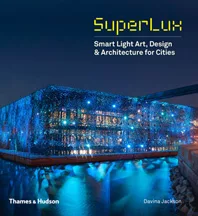
    SuperLux: Smart Light Art, Design & Architecture for Cities

See More Products
×

The latest news and information

#1 Source for Architectural Design, News and Products

SUBSCRIBE
  • RESOURCES
    • Advertise
    • Contact Us
    • Submit
    • Store
  • ACCOUNT CENTER
    • Create an Account
    • Start a Subscription
    • Manage My Account
    • Sign Up for Newsletters
    • Visit Customer Service
    • Update Preferences
  • PRIVACY
    • PRIVACY POLICY
    • TERMS & CONDITIONS
    • DO NOT SELL MY PERSONAL INFORMATION
    • PRIVACY REQUEST
    • ACCESSIBILITY
  • SERVICES
    • Marketing Services
    • Reprints
    • Market Research
    • List Rental
    • Survey/Respondent Access
  • STAY CONNECTED
    • Linkedin
    • Facebook
    • Instagram
    • YouTube
    • X (Twitter)

Copyright ©2026. All Rights Reserved BNP Media, Inc. and BNP Media II, LLC.

Design, CMS, Hosting & Web Development :: ePublishing