Architectural Record
search
cart
facebook twitter linkedin youtube
  • Sign In
  • Subscribe
  • Sign Out
  • My Account
Architectural Record
  • NEWS
    • Latest News
    • Awards
    • Interviews
    • Obituaries
    • Podcasts
      • Design:Ed Podcast
      • Sponsored Podcasts
  • OPINION
    • Book Reviews / Excerpts
    • Exhibition Reviews
    • Forum
  • EXCLUSIVES
    • Videos
    • Design Vanguard
    • Top 300 Firms
    • Sponsored Content
    • Sponsored eBooks
    • From the Archives
  • CONTINUING ED
    • Editorial Continuing Ed
    • CE Center
    • CE Academies
  • PROJECTS
    • Buildings By Type
    • Reuse & Renovation
    • Museums & Arts Centers
    • Colleges & Universities
    • Multifamily Housing
    • Interiors
    • Lighting
    • Kitchen & Bath
  • HOUSES
    • Record Houses
    • House of the Month
    • Featured Houses
  • PRODUCTS
    • Products by Category
    • Record Products of the Year
    • Latest Products
  • EVENTS
    • Dates & Events
    • Record on the Road
    • Innovation Conference
    • Sustainability in Practice
    • Women In Architecture
    • Webinars
    • Ad Excellence Awards
    • Submit an Event
  • CONNECT
    • Ask RECORD AI
    • Newsletters
    • Contact
    • Advertise
    • Editorial Calendar
    • Store
    • Customer Service
  • SUBMIT
    • Submission Guidelines
    • RECORD Competitions
  • MAGAZINE
    • Subscribe
    • My Account
    • Digital Edition
    • Current Issue
    • Firm Pass
    • Historic Archive
ProjectsBuildings by TypeTransportation Architecture

King Street Station

Track Star: ZGF's renovation of King Street Station revives a faded landmark while positioning the city for an integrated transit future.

By Clifford A. Pearson
King Street Station
The project’s first phase involved repairing the station’s roof with glazed terra-cotta tiles from the company that made the originals, rebuilding the campanile’s roof with salvaged glass tiles, and fixing the tower’s four clocks.
 
Photo © Benjamin Benschneider
King Street Station
In addition to cleaning bricks and restoring a glass canopy on the building, the architects created a pedestrian plaza facing Jackson Street and dug geothermal wells below it. They also rebuilt a granite balustrade, using stone found in an adjacent building, and recreated historic light stanchions now equipped with LEDs.
 
Photo © Benjamin Benschneider
King Street Station
In the main waiting room, workers removed a dropped ceiling added in the 1960s and repaired or recreated ornamental plasterwork and other finishes. Old wood benches came from a nearby train station.
 
Photo © Benjamin Benschneider
King Street Station
The ticketing area occupies a place originally used as a dining room, while the former women’s waiting room is now leasable space that could accommodate a restaurant.
 
Photo © Benjamin Benschneider
King Street Station
Image courtesy ZGF Architets
King Street Station
Image courtesy ZGF Architets
King Street Station
King Street Station
King Street Station
King Street Station
King Street Station
King Street Station
August 16, 2014

Architects & Firms

ZGF Architects

Seattle

People/Products

Although just 1,800 Amtrak passengers use it each day, the recently renovated King Street Station in Seattle serves as a landmark and urban catalyst at the junction of several changing neighborhoods. With historic Pioneer Square to the north and the ethnically diverse International District to the east, the station is playing an important role in stitching together a part of town that had become quite ragged over the past few decades. Major new developments nearby— such as two sports stadiums and a $300 million mixed-use complex called Stadium Place—are turning the area into a critical hub increasingly reliant on mass transportation. Within just a few blocks, you'll find a Sounder commuter rail station, two Link light-rail stations connecting downtown to the Seattle-Tacoma airport, and, starting this fall, new streetcar stops.

With its 242-foot-tall campanile, modeled after Venice's in the Piazza San Marco, the King Street Station asserts a strong presence. Completed in 1906, the red-brick Italianate building was designed by Reed & Stem, one of the architects of New York's Grand Central Terminal, which opened seven years later. The downturn in long-distance rail travel in the second half of the 20th century and the persistent financial woes of Amtrak, the station's sole tenant, led to a steady deterioration in the building's condition. An unsympathetic remodeling in 1965 concealed the main waiting room's ornate coffered ceiling and a second-floor arcade. It also ripped out much of the interior's intricate plasterwork and marble finishes, and replaced a stair on the west side of the building with an escalator.

The station's fortunes changed for the better when the City of Seattle bought the building in 2008 for $10 from the Burlington Northern Santa Fe Railroad and, in 2010, hired ZGF Architects to oversee a complete renovation. The city's department of transportation would eventually cobble together $55 million in funding from 15 different sources, including federal, state, and city agencies, and nonprofit organizations. By restoring the 62,400-square-foot building to its former glory, government officials hoped to use the project as leverage to revive Seattle's original downtown, an area dating back to 1852. All the work on the station had to be done while Amtrak used the facility without interruption.

Even before ZGF got involved, the city started repairing the old building. In 2008, it hired Otak—a planning, design, and engineering firm—to renovate the station's roofs, specifying new green-glazed terra-cotta tiles from the company that manufactured the original ones and installing them on the main building. On the campanile, it used salvaged glass tiles for the pyramidal roof and fixed the four clocks.

Once ZGF was onboard, work began on a major seismic upgrading that would eventually account for more than 40 percent of the project's total cost, $55 million. In the main public areas, ZGF and engineers at Arup carefully slipped new steel elements behind surfaces whose historic finishes were being restored. To keep the new structure flush with the building envelope, the designers cut 35-foot-high slots within the brick perimeter, inserted steel columns and high-strength grouting, then connected the columns with flat steel plates. In places where historic finishes were not being restored, they employed less expensive steel cross bracing.

For most people catching trains at the station today, the big wow happens in the main waiting room, where a suspended ceiling installed in the 1960s was removed to reveal the original ornate one and to bring in more daylight from clerestory windows. Repairing the old ceiling and other plasterwork involved creating molds from existing sections and then casting new sections using traditional materials such as plaster, hemp, and burlap. The architects also brought lush materials back to other surfaces, finishing walls with gray-veined white marble from Carrara, Italy (since the original quarries in Alaska had closed) and repairing terrazzo floors and jewel-toned mosaic tiles on both walls and floors.

On the exterior, ZGF simplified vehicular and pedestrian traffic on the King Street side, while rebuilding the metal canopy over the entrance. The firm removed the 1960s escalator that had marred this elevation and rebuilt a covered staircase that connects the King Street entrance to Jackson Street 18 feet above. Eliminating a parking lot on Jackson Street, the architects redesigned this upper level as a pedestrian plaza with planters and seating, and recreated 23 old bronze-and-glass light stanchions now equipped with LEDs.

From the beginning of the project, the client made sustainability a critical goal. As a result, the building today consumes 68 percent less energy than before the renovation, according to ZGF. To accomplish this, the firm dug geothermal wells below the Jackson Street plaza, used ground-source heat pumps for heating and cooling, and restored operable windows throughout the building. Photovoltaics on a restored trackside canopy and water harvesting for toilet flushing also helped the project earn LEED Platinum certification.

“King Street Station had long played a critical role in the civic life of the city,” says Tim Williams, the project manager at ZGF. “Our goal was to restore that.” The building's ties to the rest of the city will be strengthened when retail space adjacent to the Jackson Street plaza is leased and more direct connections are made to the commuter and Link rail stations. Until then, the building bridges Seattle's past to a still-evolving future.


People

Client:
Seattle Department of Transportation

Owner:
Seattle Department of Transportation

Architect:
ZGF Architects LLP
925 Fourth Avenue, Suite 2400
Seattle, WA 98104
Phone: (206) 623-9414
Fax: (206) 623-7868

Personnel in architect's firm who should receive special credit:
Partner in-charge: Bob Zimmerman, AIA
Design Partner: Greg Baldwin, FAIA
Project Manager: Tim Williams
Project Architect: Carlos Bres; Tony Delles; Chris Frost
Interior Designer: Kim Myran, AIA; Melissa Eby
Landscape Architect: David Grant
Design Team: Randal Bennett; Marc Chavez, AIA; Brian Geller, Assoc. AIA

Interior designer: ZGF Architects LLP

Engineers:
Structural: ARUP | Coughlin Porter Lundeen

Civil: KPFF Consulting Engineers, Inc.

Mechanical / Electrical / Plumbing: ARUP | Rushing

Consultant(s):
Landscape: ZGF Architects LLP

Lighting: Pivotal Lighting Design | Affiliated Engineers, Inc. | Eleek Inc.

Acoustical: Sparling

Historical Preservation Consultant: Artifacts Consulting, Inc.

Owner’s Representative: Shiels Obletz Johnsen

Geotechnical / Soils: Hart Crowser & Associates, Inc.

Plaster Restoration: Performance Consulting Inc. | EverGreene Architectural

General Contractor: Sellen Construction

Photographer(s):
Benjamin Benschneider
206-919-2030

Doug Scott
360-661-0549

Size:

62,400 square feet

Construction cost:

$39 million

Project cost:

$55 million

Completion date:

May 2013


Products

Structural system
Steel reinforced masonry

Exterior cladding
Masonry: Brick (existing), Terracotta (existing), Stone (existing), New Stone fabricated by Marenakos

Windows
Wood frame: Bear Wood Windows

Glazing
Glass: Oldcastle BuildingEnvelope

Skylights: Evergreen House

Doors
Entrances: American Direct

Metal doors: American Direct

Wood doors: American Direct

Fire-control doors, security grilles: Cornell

Hardware
Locksets: Corbin

Closers: Norton

Exit devices: Record

Pulls: Trimco

Security devices: ACSI

Other special hardware: Brass Cladding: Tice

Interior finishes
Paints and stains: Benjamin Moore Advance

Floor and wall tile: Mixed-up Mosaics – column capitals

Special interior finishes unique to this project: Interior marble – Architectural Stone and Tile / Synergism
Interior terrazzo new and restored: North American Terrazzo

Furnishings
Fixed seating: Exterior: Landscapeforms

Lighting
Interior ambient lighting: Eleek

Exterior: Sistemalux

Dimming System or other lighting controls: Cooper Lighting Control

Conveyance
Elevators/Escalators: Otis

Plumbing
American Standard, Zurn

Energy
Energy management or building automation system: BACnet

Photovoltaic system: Sharp

 
KEYWORDS: Seattle

Share This Story

Looking for a reprint of this article?
From high-res PDFs to custom plaques, order your copy today!

Cliff portrait 2 0t5a1761 0031

Contributing editor Clifford Pearson is the co-author, with A. Eugene Kohn, of The World By Design, and writes about architecture and urbanism.

Post a comment to this article

Report Abusive Comment

Subscription Center
  • Create an Account
  • Start a Subscription
  • Manage My Account
  • Sign Up for Newsletters
  • Visit Customer Service
  • Update Preferences

More Videos

Sponsored Content

Sponsored Content is a special paid section where industry companies provide high quality, objective, non-commercial content around topics of interest to the Architectural Record audience. All Sponsored Content is supplied by the advertising company and any opinions expressed in this article are those of the author and not necessarily reflect the views of Architectural Record or its parent company, BNP Media. Interested in participating in our Sponsored Content section? Contact your local rep!

close
  • TAMLYN XtremeTrim Exterior Trim
    Sponsored byTamlyn

    Designing Cleaner Panel Facades: Why Exterior Trim Details Matter

  • Building with Vapor Barriers
    Sponsored byReef Industries, Inc.

    Vapor Barriers Help Control Moisture in Tighter Building Designs

  • Duct Interior with Prodeq System
    Sponsored byHenry, a Carlisle Company

    Designing Resilient Water Containment Systems

DESIGN:ED Podcast
Listen to Architectural Record’s DESIGN:ED Podcast

Events

June 10, 2026

Rethinking Stormwater – The Power of Porous Paving

Credits: 1 AIA LU/HSW; 1 AIBD P-CE; 0.1 ICC CEU

Learn how porous paving systems support stormwater management, reduce heat island effects, and enhance sustainable site design performance.

June 11, 2026

Very Early Warning Fire Detection for Mission-Critical Facilities

Credits: 1 AIA LU/HSW; 1 AIBD P-CE; 0.1 ICC CEU

Examine advanced fire detection strategies that support uptime and enhance safety in data centers and other mission-critical facilities.

View All Submit An Event

Products

2026 Architect's Square Foot Costbook

2026 Architect's Square Foot Costbook

See More Products

Popular Stories

Practice Matters illustration

What’s in a (Firm’s) Name? Thinking About Succession and Legacy

Practice Matters illustration

By the Numbers: Counting America's Architects

House on a Hill

Design Vanguard 2026: Forma

Crane Cove, ONO

Design Vanguard 2026 Winners

KRESA by DLR

In Kalamazoo, DLR Group Completes a Mass-Timber Hub for Career and Technical Education Programs

Broader Sustainability of CMU - Free Webinar - May 21, 2026

Related Articles

  • KAFD Metro Station, Riyadh

    Zaha Hadid Architects’ King Abdullah Financial District Metro Station Opens in Riyadh

    See More
  • Moynihan Train Hall.

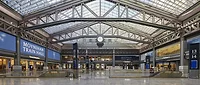
    Moynihan Train Hall Expands New York’s Penn Station

    See More
  • Beijing Finance Street

    See More
×

The latest news and information

#1 Source for Architectural Design, News and Products

SUBSCRIBE
  • RESOURCES
    • Advertise
    • Contact Us
    • Submit
    • Store
  • ACCOUNT CENTER
    • Create an Account
    • Start a Subscription
    • Manage My Account
    • Sign Up for Newsletters
    • Visit Customer Service
    • Update Preferences
  • PRIVACY
    • PRIVACY POLICY
    • TERMS & CONDITIONS
    • DO NOT SELL MY PERSONAL INFORMATION
    • PRIVACY REQUEST
    • ACCESSIBILITY
  • SERVICES
    • Marketing Services
    • Reprints
    • Market Research
    • List Rental
    • Survey/Respondent Access
  • STAY CONNECTED
    • Linkedin
    • Facebook
    • Instagram
    • YouTube
    • X (Twitter)

Copyright ©2026. All Rights Reserved BNP Media, Inc. and BNP Media II, LLC.

Design, CMS, Hosting & Web Development :: ePublishing