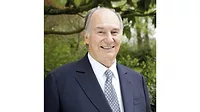
The Aga Khan
The world is extremely dynamic and evolving at the moment, presenting numerous challenges. We talked about cities. What about some of the other challenges like environmental degradation or the converse, sustainability? How can the awards address questions of this type that are broad, societal questions?
I think there are two issues there: one is the rural context and the other is the urban context. The environmental issues in the rural context are related to issues like land ownership, live agricultural production, and rights of grazing, rights of water usage, etc. There the question is really assisting people to understand that the physical process of change can enhance or degrade the inherited issues that they have to deal with. Another question involves land planning in rural environments. I might overstate this, but I’ll say it the way I think it is--it’s literally unheard of. Land planning in rural environments simply is not part of village thinking, nor is it part of architectural schools’ education.
If we found, at some stage, a village which had a perimeter of control over land and they had rehabilitated the whole process, and developed a high quality product, I would recognize and premiate it, and use it as a case study. We actually started doing that ourselves through some of our own programs of instruction.
The urban environment is a very, very different one. The urban environment is one where there is more work that’s being done. There has been, I would say, a massive demographic pressure on the urban space. And it is a very difficult issue to deal with because you’re talking about the livelihoods of people. So, protecting and improving open space is something of an issue. (Oddly) enough it used to be one of the characteristics of Islamic architecture that the great buildings always had spaces around them. They were internalized spaces or at least they were part of the periphery. That aspect of our building has in many ways disappeared.
How are you addressing the urban question?
One of the things that the Trust for Culture is now working on in Cairo, in Zanzibar, and in northern areas of Pakistan, is to try to encourage people to recognize the value of open space. And one of the (past) awards was for a reforestation program for a university in Turkey, which was an enormous program. But, I think one’s got to be respectful of the fact that the demographic pressure is so great, that these open spaces are going to have to be protected tooth and nail. They’ll go, otherwise.
I would say that we have lost some of the competencies in landscape architecture, which were intrinsic to the Islamic world. Landscape architecture is not part of architectural education in a lot of the schools, and this brings me to the program at Harvard and MIT. Now the GSD is part of the program; the GSD was, from the beginning of the program, a target school in my thinking.
Tourism can be both a boon and a problem, because it can introduce stress to culture or to infrastructure. Hasn’t it been an important factor in your own planning for the Trust for Culture, for cities, and for the awards?
We have premiated a number of projects in tourism, and there’s the downside and there’s the upside. I think on the downside, in principle tourism can be managed if the questions are asked. There is probably a level of throughput (of tourists) above which, in a given site or a given building, there will be a problem; a lot of ministers of tourism, a lot of people running hotels or historic areas don’t look at that. Because they don’t look at it, they don’t plan for it. My belief is you can plan for it, but you have to identify the problem (first).
The other aspect to this question is (defining) what sort of tourism you want. We’re particularly interested in cultural tourism. And, we’re particularly interested in cultural tourism—(a) because we’re interested in underwriting the value of pluralism, and therefore having people visit sites or complexes which they would not normally see, and which they learn about. We think that cultural tourism is a very positive factor, particularly in societies that would tend to be rather rigid in their attitudes. The fact that they’ll meet with people from other cultures, other languages, is very important. We have to recognize the need for tourism, but we have to recognize that it needs to be managed. Absolute freedom in the tourism field will end up with serious consequences.
The reverse question is how do you address that? And I think it can be addressed. There are a number of different methods of doing that. It’s also a way of repositioning (a people’s) attitude to their own culture, because very often people who live in a cultural environment are no longer aware of it. When you enhance that environment and you say to people, you actually have an extraordinary asset--protect it, make it work for you, invest in it—that cultural asset, which in many generations has been thought of as an economic and social and physical liability, suddenly gets turned around and they say this is actually something of real value. Then they learn about it, they protect it, and they invest in it.
With regard to bringing about change, can you describe your own experiences as a developer, working with architects and planners?
I learned at a very young age that the resources that we harness to effect change are hardly ever going to be sufficient to meet all the demands. That’s not true now in the entire Islamic world—there are some parts that are very, very wealthy, and they don’t need those resources. The parts of the world I’m working in are generally poor in resources. If you are resource-poor, then you rely on financial investments. You try to make investments in projects that can become self-sustaining, so you don’t have to keep investing in them year after year, and they don’t become burdens on society.
Furthermore, I have been looking at questions of flexibility of buildings, and the way buildings have to adapt to changing society, particularly in the social field.
Also, I give credence to the notion that people’s attitudes toward home are modified if they have an acceptable physical environment. When given the opportunity, people will improve the physical environment they live in. They put a metal shade roof on a hut or they move to a place where there’s fresh water. The physical environment is part of people’s psyche. So I think that in terms of encouraging development, one of the most important aspects is to help people live in better environments.
How do you organize your efforts for the long term?
There are a number of procedures that we employ, most of which have three- and five-year planning processes. We look at our resources and figure out their availability or shortfall. We ask ourselves with whom should we associate to get things moving. For example, in humanitarian aid, the spectrum of support entities is very large, but support for culture is very small.
Because of the way AKDN [the Aga Khan Development Network] is structured, it can bring this multi-input process into these environments. It’s not all the Trust for Culture. In addition to the cultural branch, the AKDN is composed of an economic development arm, and a social development arm. The latter one includes the foundation, health services, education services, and planning and building services components. This means we can build what I would call a form of support net going into these environments. That is just about the only way you can really create a sustainable process of change. Just influencing one aspect, whether it’s agriculture or commerce, doesn’t really work in development. Don’t ask me why.
The nature of AKDN is that we go out into the field. Many development organizations don’t have this intimate relationship with the field that we have. And it’s the intimacy that has given us a bit of an edge in terms of understanding these areas.
Looking for a reprint of this article?
From high-res PDFs to custom plaques, order your copy today!