Regulatory Barriers Stymie Onsite Potable Water Systems
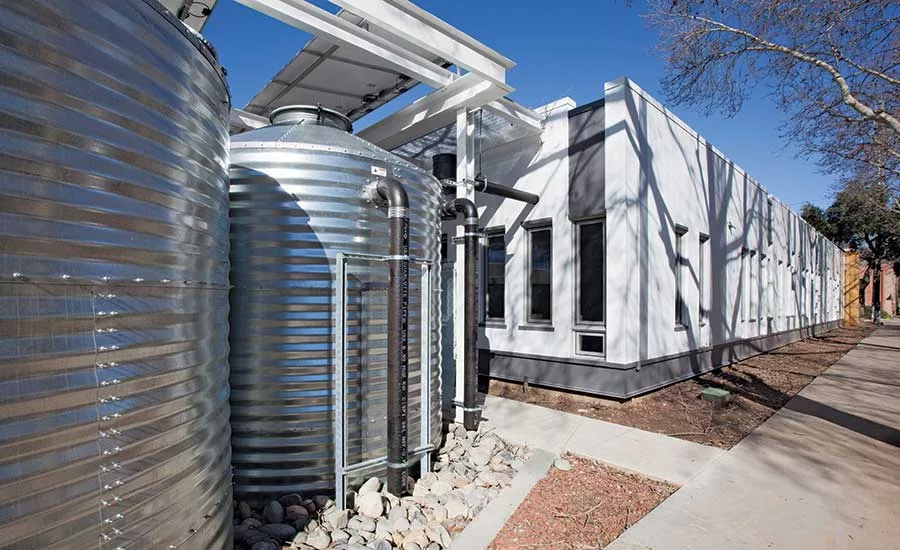
Onsite water collection and treatment systems (above) and composting systems require special permits for construction and operation.
Photo courtesy Architectural Nexus
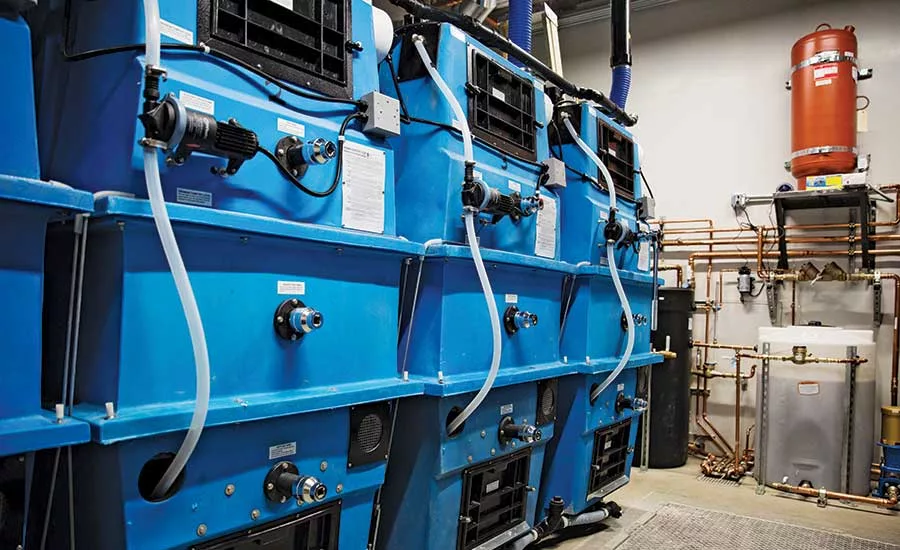
Onsite water collection and treatment systems (previous photo) and composting systems require special permits for construction and operation.
Photo courtesy Architectural Nexus
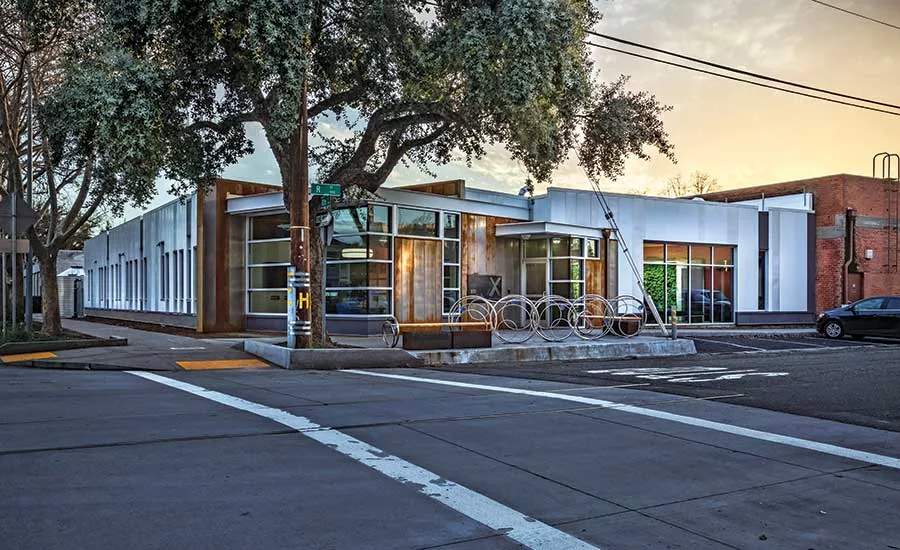
Sacramento renovation still has no operations permit for its potable-water system.
Photo courtesy Architectural Nexus
This story originally ran in Engineering News-Record on May 24, 2017.
California, Oregon and Washington are among the states moving forward with regulations and road maps for the construction and operation of building- and district-scale graywater capture and treatment systems for non-potable-water use, such as toilet flushing and irrigation. But similar rules for construction and operation of on-site potable-water systems are not yet on the regulatory officials’ radar screens. Without codes, the permitting of an on-site potable-water system becomes an approvals nightmare, say sustainability experts.
Regulatory and health-concern issues related to water quality mean it could take at least 25 years for on-site potable-water systems to become the norm, said Paula Kehoe, director of water resources for the San Francisco Public Utilities Commission (SFPUC), at the International Living Future Institute’s “Living Future” 2017 conference. The ILFI gathering, held on May 17-19 in Seattle, attracted more than 1,200 registrants.
“We are starting with non-potable [regulations], but, as a utility, we [also] would want to pilot innovative technologies for on-site treatment to potable-water standards,” said Kehoe.
The first commercial building in the U.S. permitted to capture and treat rainwater for use as drinking water is the Chesapeake Bay Foundation’s 10,500-sq-ft Brock Environmental Center, which opened in late 2014 in Virginia Beach, Va. Seattle’s 52,000-sq-ft Bullitt Center, which opened in 2013, has yet to receive a permit to operate its potable-water system, though testing is underway.
Regulatory Quagmire
Few know more about the regulatory quagmire for approval of on-site potable-water systems, especially for buildings with more than 25 occupants, than the leaders of Architectural Nexus Inc.
The design firm moved into its 8,000-sq-ft renovation in February, but it has not received approval to operate its on-site potable-water system. The project, which got its permits under the alternative means and methods section of the California building code, is registered for certification under ILFI’s rigorous Living Building Challenge 3.0.
Looking for quick answers on architecture and design topics?
Try Ask RECORD, our new smart AI search tool.
Ask RECORD →
Architectural Nexus got a construction permit for its potable system but lacks a permit to operate the system. The firm has installed two cisterns to collect rainwater for non-potable uses. If it gets its permit for a potable-water system, it will install a third cistern.
“We can’t get a no or a yes from the state water board,” said Jeff Davis, an Architectural Nexus principal, adding that the firm is still in talks with state officials.
Further, Architectural Nexus is up against a 2016 law that prevents the creation of any new small water districts, said Davis. To get a permit to operate its system, there would have to be a change in the state charter, he added.
Though progress toward getting approvals for on-site potable-water systems is slow, there is some forward movement regarding on-site water capture and treatment for non-potable uses. San Francisco has a non-potable-water program that provides grants for systems that would save the city potable water, said Kehoe. And the city has an ordinance that currently requires any building greater than 250,000 sq ft to collect and treat water on site for toilet flushing and irrigation. Those projects do not qualify for grants. To date, all buildings must be connected to the city’s water and sewer system.
San Francisco’s vision is to work collaboratively with water, power and sewer authorities to reap multiple benefits. “We are leading up to more complex, district-scale projects that will transform how we are living and working,” Kehoe said.
Local, state and national standards are needed to move forward with water conservation and reuse, she added. All affected agencies are looking for “guidance on appropriate water-quality standards to govern on-site water reuse,” said Kehoe.
Historically, public health departments have not been part of the water-use conversation. “The building code may allow water capture and reuse, but what about the health department?” Kehoe asked. “Public health agencies have felt left out of the code development process.”
Toward this end, the SFPUC and the U.S. Water Alliance partnered to convene the National Blue Ribbon Commission for Onsite Non-Potable Water Systems to “advance best management practices to support the use of onsite non-potable water systems for individual buildings or at the local scale,” according to SFPUC.
The commission recognizes that widespread adoption of these systems has been stymied due to institutional and regulatory barriers. The goal is to establish model state and federal guidance and policy frameworks that support local implementation of sustainable water strategies. Additionally, the commission will identify emerging business opportunities for water utilities, as more commercial and industrial customers deploy on-site water-reuse systems.
At the first meeting last Dec. 14 in San Francisco, the commission brought together representatives from municipalities, public health agencies, water utilities and national organizations to begin work. Information can be found at http://uswateralliance.org/initiatives/commission/.
“Change is very, very difficult, but we are excited about all the opportunities,” Kehoe said.
Looking for a reprint of this article?
From high-res PDFs to custom plaques, order your copy today!