Architectural Record
search
cart
facebook twitter linkedin youtube
  • Sign In
  • Subscribe
  • Sign Out
  • My Account
Architectural Record
  • NEWS
    • Latest News
    • Awards
    • Interviews
    • Obituaries
    • Podcasts
      • Design:Ed Podcast
      • Sponsored Podcasts
  • OPINION
    • Book Reviews / Excerpts
    • Exhibition Reviews
    • Forum
  • EXCLUSIVES
    • Videos
    • Design Vanguard
    • Top 300 Firms
    • Sponsored Content
    • Sponsored eBooks
    • From the Archives
  • CONTINUING ED
    • Editorial Continuing Ed
    • CE Center
    • CE Academies
  • PROJECTS
    • Buildings By Type
    • Reuse & Renovation
    • Museums & Arts Centers
    • Colleges & Universities
    • Multifamily Housing
    • Interiors
    • Lighting
    • Kitchen & Bath
  • HOUSES
    • Record Houses
    • House of the Month
    • Featured Houses
  • PRODUCTS
    • Products by Category
    • Record Products of the Year
    • Latest Products
  • EVENTS
    • Dates & Events
    • Record on the Road
    • Innovation Conference
    • Sustainability in Practice
    • Women In Architecture
    • Webinars
    • Ad Excellence Awards
    • Submit an Event
  • CONNECT
    • Ask RECORD AI
    • Newsletters
    • Contact
    • Advertise
    • Editorial Calendar
    • Store
    • Customer Service
  • SUBMIT
    • Submission Guidelines
    • RECORD Competitions
  • MAGAZINE
    • Subscribe
    • My Account
    • Digital Edition
    • Current Issue
    • Firm Pass
    • Historic Archive
Architecture News

AIANY's “We Are All Neighbors" Explores the Implications of Resettlement and Relocation
By Dante A. Ciampaglia
01-AIANY-Refugee-MOMA-Insecurities.jpg

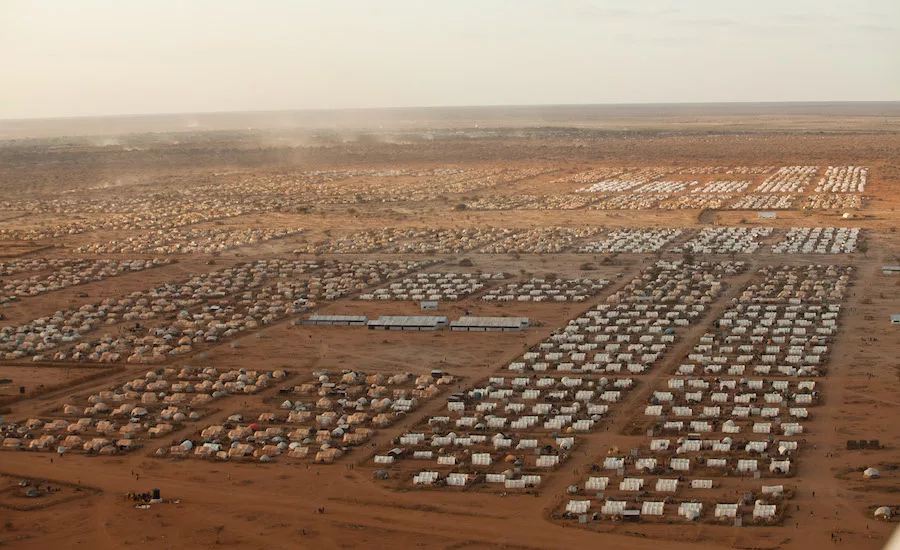
Ifo 2, Dadaab Refugee Camp in Somalia, 2011. Photo from "Insecurities: Tracing Displacement and Shelter" at MoMA.
Photo © Brendan Bannon
02-AIANY-Refugee.jpg

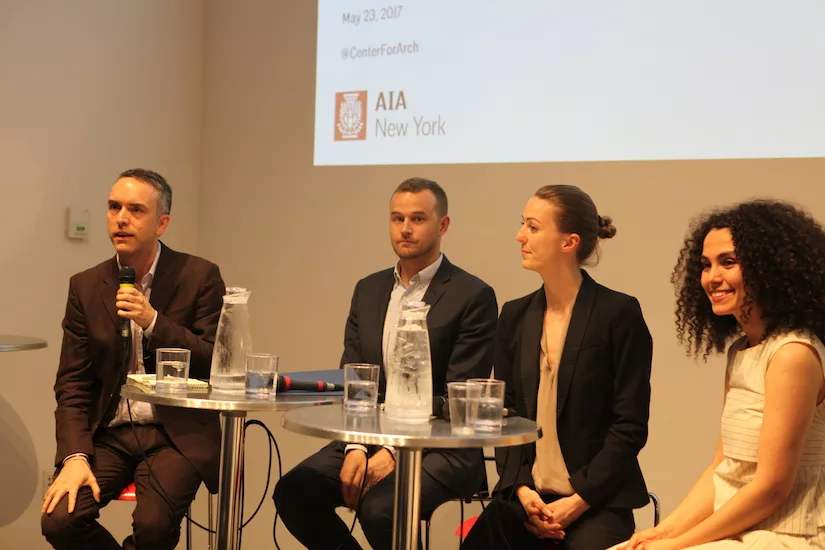
Sean Anderson with Saskia Blume, Brandon Fuller, and Esin Pektas at the Center for Architecture's "We Are All Neighbors" discussion.

Photo courtesy AIANY
03-AIANY-Refugee.jpg

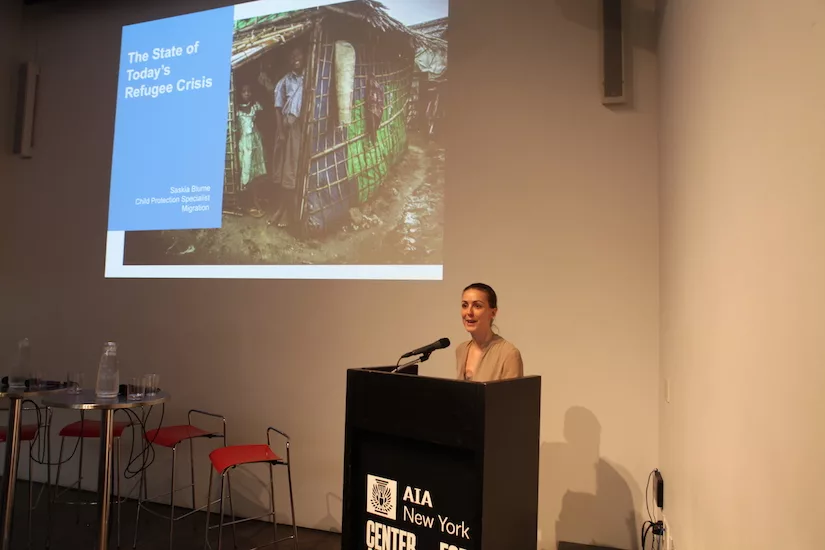
Saskia Blume at the Center for Architecture's "We Are All Neighbors" discussion.

Photo courtesy AIANY
04-AIANY-Refugee-MOMA-Insecurities.jpg

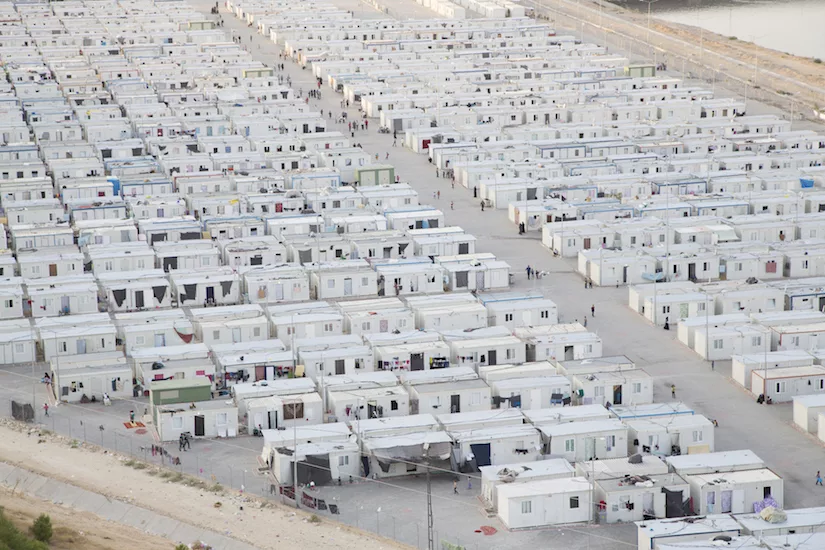
Nizip II, Container Camp in Turkey, 2014. Photo from "Insecurities: Tracing Displacement and Shelter" at MoMA.

Photo © Tobias Hutzler
05-AIANY-Refugee.jpg

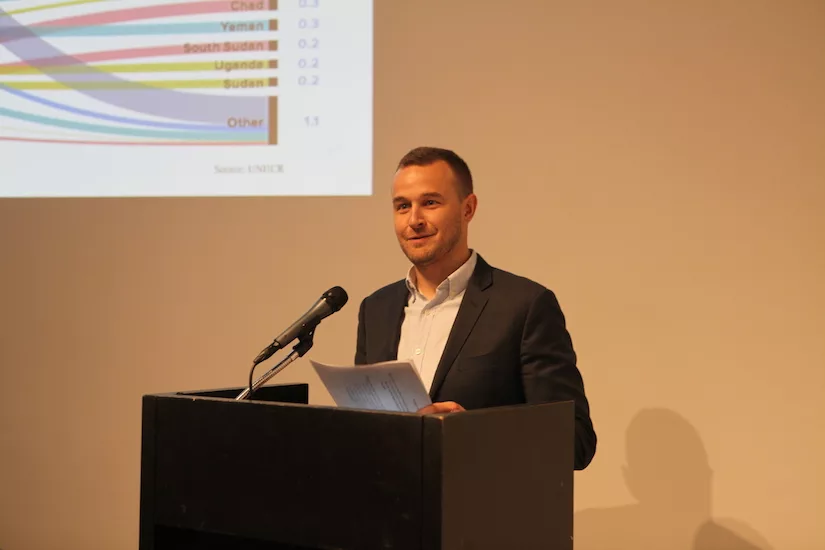
Brandon Fuller at the Center for Architecture's "We Are All Neighbors" discussion.

Photo courtesy AIANY
06-AIANY-Refugee.jpg

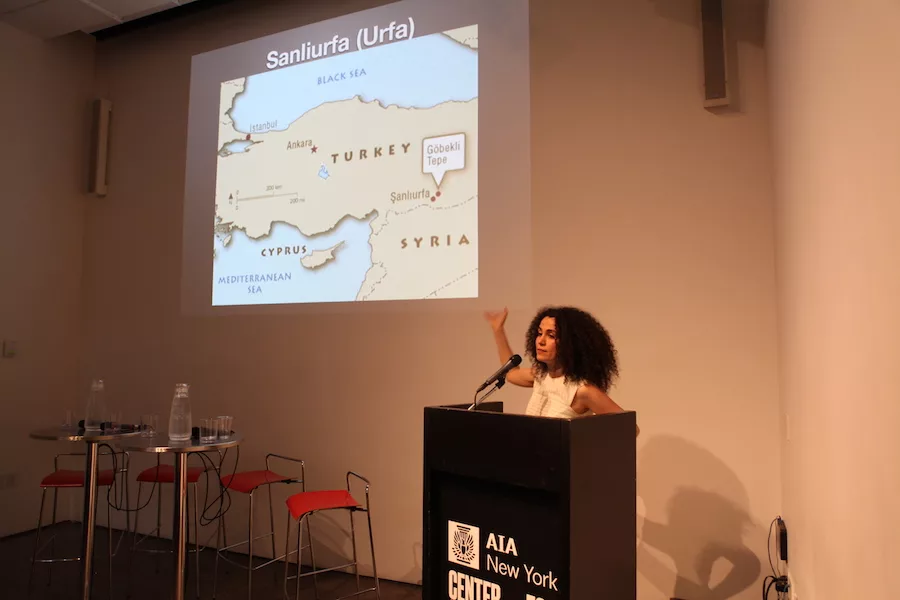
Esin Pektas at the Center for Architecture's "We Are All Neighbors" discussion.

Photo courtesy AIANY

01-AIANY-Refugee-MOMA-Insecurities.jpg
02-AIANY-Refugee.jpg
03-AIANY-Refugee.jpg
04-AIANY-Refugee-MOMA-Insecurities.jpg
05-AIANY-Refugee.jpg
06-AIANY-Refugee.jpg
May 29, 2017

When Kenya’s Dadaab refugee camp opened in 1992, it was intended to temporarily house 90,000 Somalis fleeing conflict. As of 2016, nearly half a million people live in the camp—including some who have been there more than two decades. That unintended endurance is not an outlier; similar camps have become permanent national fixtures around the world. “The crisis is getting longer for more people,” said Saskia Blume, a UNICEF child protection specialist focusing on migration, at an event hosted by AIANY at the Center for Architecture last Tuesday. “We're not talking about a temporary solution. We're talking about city-like camps where people spend generations and children are born.”

Blume was part of the discussion “We Are All Neighbors: Refugees and the Architecture of Resettlement,” which addressed how to confront the increasingly urgent crisis of refugee housing and community building. Blume was joined by Brandon Fuller, chairperson of Refugee Cities and deputy director of NYU’s Marron Institute of Urban Management, as well as architect Esin Pektas, who is working on refugee projects in her native Turkey. Sean Anderson, associate curator in the Museum of Modern Art’s Department of Architecture and Design, served as moderator.

Blume began with a macro view of the conditions faced by many of the world’s displaced peoples, noting that 58 percent of the world’s refugees live in cities, and 51 percent of all refugees are children under the age of 18. Proportionally, Lebanon has the most refugees with 183 per every 1,000 inhabitants. (The United States has a ratio of one per 1,000.) Camp life typically strips refugees of basic rights, robbing them of the possibility to live and work humanely. “The recognition has been in the humanitarian world for a long time that camps are not ideal,” Blume said. “We need to think more about how to reach those that are living in urban areas.”

Fuller shared one way to do that is through a new model: refugee cities. The concept springs from the work of political scientist Alexander Betts and economist Paul Collier. In 2015, they visited the Zatari camp in Jordan. About a 15-minute drive away was an underutilized Special Economic Zone (SEZ): the King Hussein bin Talal Development Area. At the time, it employed 10,000 people, but its capacity was closer to 100,000. Not enough Jordanians worked there to justify investment, but thousands of Syrian refugees, many of them skilled, were staying in the nearby camp with no right to work. Betts and Collier pitched the idea of creating employment for the refugees in the SEZ. In exchange for some international concessions, Jordan agreed and has begun issuing 200,000 work permits to the Syrians. The hope is to integrate these displaced into the workforce, which will lead to greater investment and, hopefully, lead to the establishment of a new, more humane living situation.

“We're moving from thinking about camps as temporary places for palliative care [and] humanitarian aid to thinking about city-scale projects where … there's also a development piece,” Fuller said.

Pektas spoke to that idea by sharing two projects aimed at improving conditions for refugees in Turkey. One of them is already complete: a center called We Are All Neighbors provides classes, job training, and meeting space for refugees in Urfa, near the border with Syria. The facility is integrated into its neighborhood and open to local residents, who use the center to hone or learn new skills, side by side with Urfa’s refugee population.

The second project, currently in development, is a similar center in Van that will be built entirely by women from mountainous regions who are experienced beekeepers—a fact that allowed them to help plan the center. “When I did the design with squares and rectangles, thinking it was simple, they just didn't get it,” Pektas said. But taking cues from the women’s experience, the architect re-framed her perspective: “They look at honeycombs all the time, so put everything in honeycomb shapes!” With that, she said, everything clicked; “We were speaking the same language.”

Ultimately, the panelists agreed: A spirit of cooperation is what’s needed to improve the day-to-day conditions of refugees. Time will tell if it will become the norm, but the potential solutions they presented offer a glimpse into a more humane—and hopeful—future for the world’s displaced people.

Looking for quick answers on architecture and design topics?
Try Ask RECORD, our new smart AI search tool.
Ask RECORD →

KEYWORDS: AIA

Share This Story

Looking for a reprint of this article?
From high-res PDFs to custom plaques, order your copy today!


Dante ciampaglia

Dante A. Ciampaglia has two decades experience editing print and digital magazines, including at Newsweek, Sports Illustrated, and Time. He has been a contributor to Architectural Record for more than 10 years, writing about the intersection of architecture, film, and the visual arts. His work has also been published by the Washington Post, Paris Review, Wired, Los Angeles Review of Books, Metropolis, and the Brooklyn Rail, among others.

Post a comment to this article

Report Abusive Comment

Subscription Center
  • Create an Account
  • Start a Subscription
  • Manage My Account
  • Sign Up for Newsletters
  • Visit Customer Service
  • Update Preferences

More Videos

Sponsored Content

Sponsored Content is a special paid section where industry companies provide high quality, objective, non-commercial content around topics of interest to the Architectural Record audience. All Sponsored Content is supplied by the advertising company and any opinions expressed in this article are those of the author and not necessarily reflect the views of Architectural Record or its parent company, BNP Media. Interested in participating in our Sponsored Content section? Contact your local rep!

close
  • TAMLYN XtremeTrim Exterior Trim
    Sponsored byTamlyn

    Designing Cleaner Panel Facades: Why Exterior Trim Details Matter

  • Building with Vapor Barriers
    Sponsored byReef Industries, Inc.

    Vapor Barriers Help Control Moisture in Tighter Building Designs

  • Duct Interior with Prodeq System
    Sponsored byHenry, a Carlisle Company

    Designing Resilient Water Containment Systems

DESIGN:ED Podcast
Listen to Architectural Record’s DESIGN:ED Podcast

Events

June 18, 2026

Rebooting the Aging Office Building

Credits: 1 AIA LU/HSW; 1 AIBD P-CE; 0.1 ICC CEU; 1 PDH

Explore façade retrofit strategies and award-winning design concepts that can transform aging office buildings into healthier, higher-performing workplaces for today’s hybrid workforce.

June 23, 2026

Enhancing Fire Resistance with Advanced PVC Solutions

Credits: 1 AIA LU/HSW; 1 AIBD P-CE; 0.1 ICC CEU; 1 IIBEC CEH

Evaluate advanced PVC solutions that improve fire resistance, support WUI compliance, and enhance resilience in residential and commercial building design.

View All Submit An Event

Products

2026 Architect's Square Foot Costbook

2026 Architect's Square Foot Costbook

See More Products

Popular Stories

SanDiegoAirport

Top 300 Architecture Firms of 2026

Coronado Bridge

The Architect’s Guide to San Diego

Lorcan O' Herilhy

California Architect Lorcan O’Herlihy Has Died, Age 66

CCA, Studio Gang

The Winners of the AIA’s 2026 Architecture Award Range from Collegiate Rowing Hubs to Housing for the Homeless

Dusk House

Design Vanguard 2026: ONO

Rebooting the Aging Office Building - Free Webinar - June 18, 2026

Related Articles

  • Planners, Designers Mull Implications of Digital Surfaces

    See More
  • Christmas gifts named "Architect": Who do they think we are, anyway?

    See More
  • COP27-Takeaways-1.jpg

    COP27: Where Are We Going, and Why Are We in This Climate Handbasket?

    See More

Related Products

See More Products
  • 1444336282.gif

    The Handbook of Interior Design

  • reuse.jpg

    Resource Salvation: The Architecture of Reuse

See More Products
×

The latest news and information

#1 Source for Architectural Design, News and Products

SUBSCRIBE
  • RESOURCES
    • Advertise
    • Contact Us
    • Submit
    • Store
  • ACCOUNT CENTER
    • Create an Account
    • Start a Subscription
    • Manage My Account
    • Sign Up for Newsletters
    • Visit Customer Service
    • Update Preferences
  • PRIVACY
    • PRIVACY POLICY
    • TERMS & CONDITIONS
    • DO NOT SELL MY PERSONAL INFORMATION
    • PRIVACY REQUEST
    • ACCESSIBILITY
  • SERVICES
    • Marketing Services
    • Reprints
    • Market Research
    • List Rental
    • Survey/Respondent Access
  • STAY CONNECTED
    • Linkedin
    • Facebook
    • Instagram
    • YouTube
    • X (Twitter)

Copyright ©2026. All Rights Reserved BNP Media, Inc. and BNP Media II, LLC.

Design, CMS, Hosting & Web Development :: ePublishing