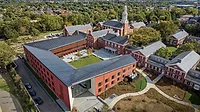
MASS MoCA by Bruner/Cott
North Adams, Massachusetts
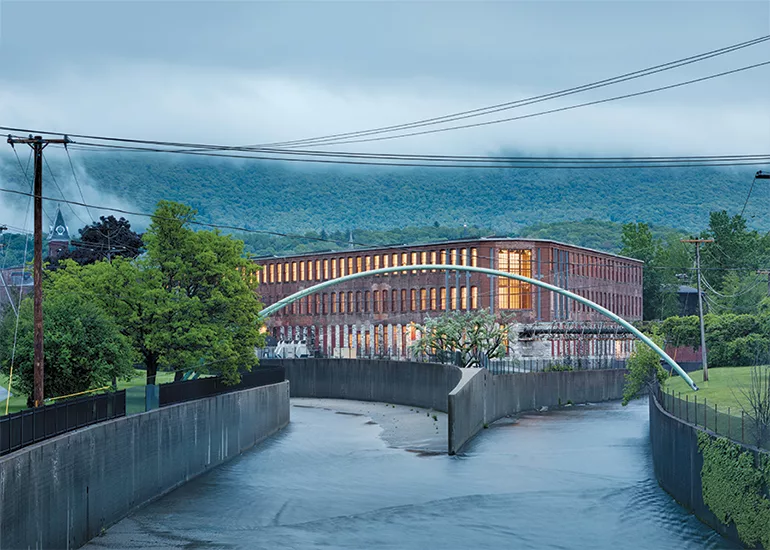
MASS MoCA's just-inaugurated Building 6 sits at the confluence of two branches of the Hoosic River.
Photo © Michael Moran/OTTO
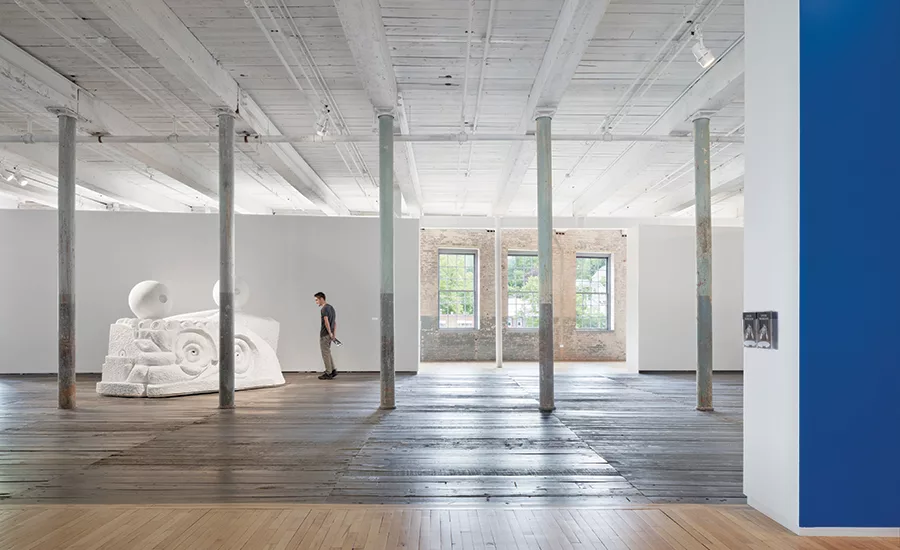
The structure houses long-term installations by several artists, including the late Louise Bourgeois. One of her pieces weighs nearly 30 tons and necessitated reinforcement of the floor.
Photo © Michael Moran/OTTO
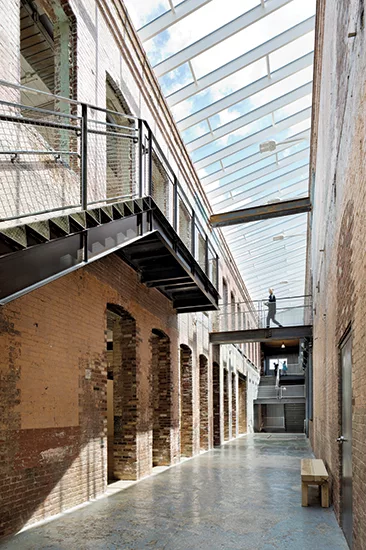
As part of the project, the architects transformed a narrow open-air light court into a circulation spine by covering it with a skylight and inserting walkways across it.
Photo © Michael Moran/OTTO
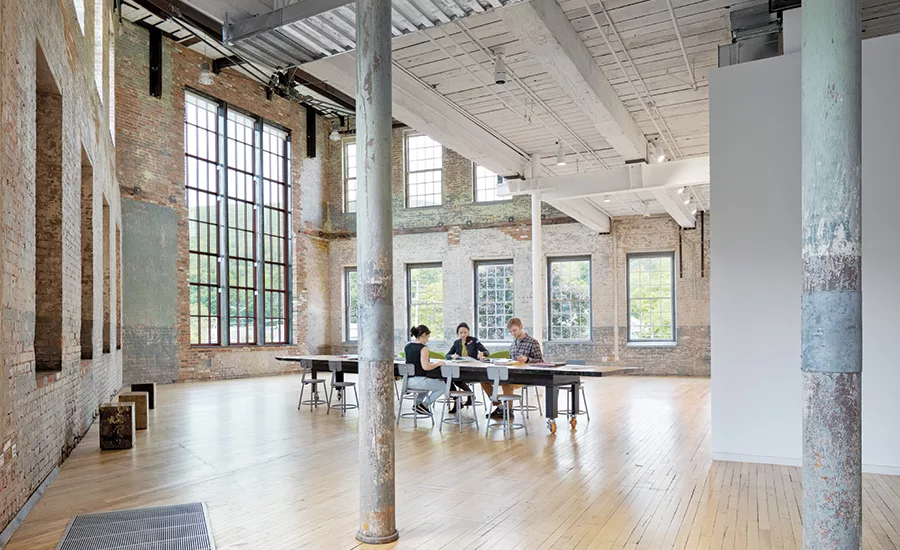
At the building’s “prow,” they created a dramatic double-story space.
Photo © Michael Moran/OTTO
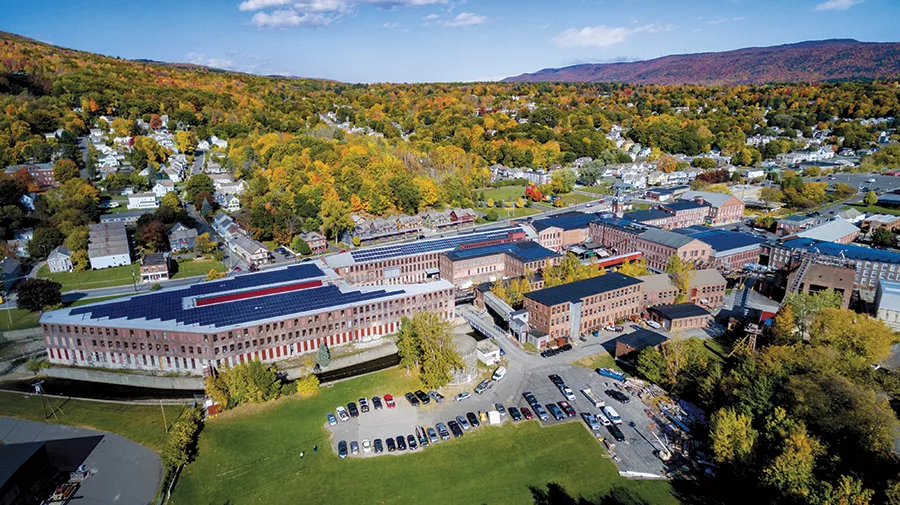
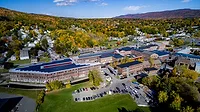
With completion of Building 6, MASS MoCA has renovated nearly all of its 16-acre campus.
Photo © Douglas Mason
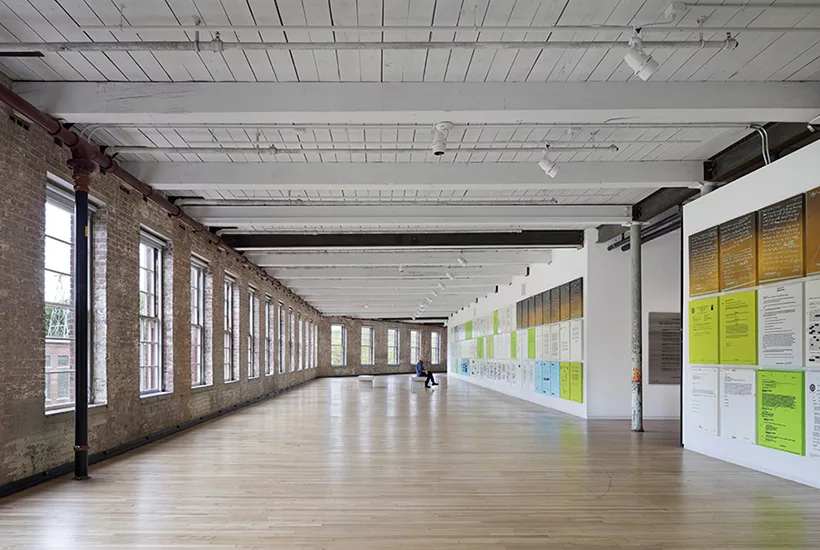
Spaces at the perimeter of Building 6 serve both as circulation and as areas for the display of art.
Photo © Michael Moran/OTTO

New steel reinforcing—required to help the aging structure conform to new seismic codes—is left mostly unpainted and raw.
Photo © Michael Moran/OTTO

Enclosed galleries, including one that showcases the work of Laurie Anderson, offer museum-quality environmental controls.
Photo © Michael Moran/OTTO

A tunnel through the complex featuring the work of Mary Lum is part of the region’s growing network of bike paths.
Photo © Michael Moran/OTTO

Image Courtesy Bruner/Cott

Image Courtesy Bruner/Cott

Image Courtesy Bruner/Cott
Architects & Firms
The American landscape, and especially that of New England, is dotted with relics of our industrial past, shuttered factories that once churned out everything from shoes to steam engines. Many of these facilities have found new leases on life in the postindustrial age as housing, offices, or retail spaces. One of the best examples of such architectural adaptation is in North Adams, Massachusetts. Here, in the foothills of the Berkshires, MASS MoCA has been gradually expanding into its sprawling campus of late 19th-century textile mill buildings since the contemporary-arts center first opened its doors in 1999.
At the end of May, the museum inaugurated its newest set of galleries in a just-renovated three-story wing known as Building 6. The $55 million project, designed by Cambridge-based Bruner/Cott & Associates—the same firm responsible for the two previous phases of renovation, as well as the campus master plan—nearly doubles the institution’s exhibition space to 240,000 square feet and adds new visitor amenities, art-fabrication workshops, and support facilities for music festivals and other outdoor events. With its completion, almost all of the 28 red-brick structures that make up the landmarked 16-acre complex have been renovated.
Additional Content:
Jump to credits & specifications
The recently revamped building, which sits at the site’s western edge, has a triangular footprint shaped by the confluence of the north and south branches of the Hoosic River. It completes a long-envisioned “big, gracious infinity loop across the entire campus,” says Joseph Thompson, the institution’s director. Previously, visitors had to backtrack through galleries they had already viewed in order to return to the main lobby.
Although the museum has no permanent collection, the new galleries continue a strategy initiated in 2008 with the second phase of construction, when MASS MoCA mounted a 25-year installation of Sol Lewitt’s wall drawings. Similarly, the new wing was conceived to host the longterm installations of artists that include Laurie Anderson, James Turrell, Jenny Holzer, Louise Bourgeois, and Robert Rauschenberg, as well as lesser-known artists. Some of the galleries, such as those tailor-made for Turrell’s investigations of light and perception, will be fixed in place for decades, while others, such as those devoted to the work of Anderson and Holzer (each has a 15-year agreement with the museum) are more flexible, allowing the artists to periodically change out their exhibitions as new work is created.
Much of the art is displayed against the tough backdrop of worn (but refinished) maple floors, patched brick walls, and heavy timber beams. But some of the work required constructing what Bruner/Cott founding principal Simeon Bruner calls “galleries within a gallery.” These enclosed rooms offer museum-quality temperature and humidity controls as well as protection from daylight. It would have been nearly impossible to provide such environmental conditions within the old structure, says Bruner.
These areas for display are organized around an existing 140-foot-long, 20-foot-wide light well that Bruner/Cott transformed into a circulation spine and orientation device. The firm demolished small rooms that had accrued in this slotlike space over the years, covered the previously open-air court with a skylight, and inserted walkways across it. In addition, the architects exploited the masonry-and-timber building’s oddly shaped plan by creating a dramatic double-height room for social gatherings and relaxing in the prowlike western end. Here they removed part of a floor and added a generously sized window that offers a view of the Berkshire and Taconic mountains.
New steel trusses, bracing, and ties reinforce the aging structure and help it conform to current seismic codes. These components are mostly left unpainted and raw, making it difficult to tell if the brawny elements are original or recently added. But the lack of self-conscious differentiation between old and new doesn’t detract from the overall power of the expansion. The approach is in keeping with the complex’s organic development, with structures modified “in the most expeditious way” over time, explains Jason Forney, a Bruner/Cott principal. It’s a strategy that celebrates the complex’s industrial past but perfectly suits its new life as a place for the experience of contemporary art.
CreditsArchitect Bruner/Cott & Associates 130 Prospect St # 3, Cambridge, MA 02139 (617) 492-8400
Personnel in architect's firm who should receive special credit: Simeon Bruner, RA and Jason Forney, AIA LEED AP - Principals; Aoife Morris - Associate; Henry Moss, AIA LEED AP, Stephanie Power, George Gard, Lena Kozlowski, Nat Crosby - Project Team
Engineers Structural: ARUP Mechanical, Plumbing, Fire Protection: Petersen Engineering, Inc. Electrical, Fire Alarm: RW Sullivan Engineering Code and Fire Modelling: Cosentini Associates Civil: Hill Engineers Fire Protection (campuswide): Fire Protection Services
Consultants Acoustic: Acentech, Inc. Cost Estimating: Daedelus Projects, Inc. Lighting: Lumen Studio Specifications: Kalin Associates, Inc. Environmental: GZA GeoEnvironmental, Inc. Food Service: Colburn & Guyette Consulting Partners, Inc. Hardware: ASSA ABLOY Inc. Existing Conditions Analysis: Wood Advisory Services, Inc. Existing Conditions Building Scan: Existing Conditions Survey, Inc.
General contractor: Gilbane Building Company
Photographer: Michale Moran (for Bruner/Cott), Douglas Mason (for MASS MoCA)
|
SpecificationsMasonry salvaged existing brick
Windows Metal frame: Wausau Custom Aluminum Windows
Glazing Skylights: Imperial Glass Structures
Interior Finishes Special interior finishes unique to this project: salvaged original wood flooring
|
Looking for a reprint of this article?
From high-res PDFs to custom plaques, order your copy today!