Architectural Record
search
cart
facebook twitter linkedin youtube
  • Sign In
  • Subscribe
  • Sign Out
  • My Account
Architectural Record
  • NEWS
    • Latest News
    • Awards
    • Interviews
    • Obituaries
    • Podcasts
      • Design:Ed Podcast
      • Sponsored Podcasts
  • OPINION
    • Book Reviews / Excerpts
    • Exhibition Reviews
    • Forum
  • EXCLUSIVES
    • Videos
    • Design Vanguard
    • Top 300 Firms
    • Sponsored Content
    • Sponsored eBooks
    • From the Archives
  • CONTINUING ED
    • Editorial Continuing Ed
    • CE Center
    • CE Academies
  • PROJECTS
    • Buildings By Type
    • Reuse & Renovation
    • Museums & Arts Centers
    • Colleges & Universities
    • Multifamily Housing
    • Interiors
    • Lighting
    • Kitchen & Bath
  • HOUSES
    • Record Houses
    • House of the Month
    • Featured Houses
  • PRODUCTS
    • Products by Category
    • Record Products of the Year
    • Latest Products
  • EVENTS
    • Dates & Events
    • Record on the Road
    • Innovation Conference
    • Sustainability in Practice
    • Women In Architecture
    • Webinars
    • Ad Excellence Awards
    • Submit an Event
  • CONNECT
    • Ask RECORD AI
    • Newsletters
    • Contact
    • Advertise
    • Editorial Calendar
    • Store
    • Customer Service
  • SUBMIT
    • Submission Guidelines
    • RECORD Competitions
  • MAGAZINE
    • Subscribe
    • My Account
    • Digital Edition
    • Current Issue
    • Firm Pass
    • Historic Archive
Editorial

Go to the Head of the Class

RECORD explores new collegiate architecture and how it reflects the innovative programs and shifting priorities of academia.

By Cathleen McGuigan
Cathleen McGuigan

Photo © Michel Arnaud

November 1, 2017

Despite rising tuition and cutbacks in government aid, a college education is still a blue chip investment. Graduates between 25 and 34 years old with a bachelor’s degree are more likely to be employed, and they earn a median income of 64 percent more than their cohort with only a high school diploma. About 20 million students are enrolled in American colleges and universities this fall, 5 million more than at the turn of the millennium.

To keep up with growth and embrace new fields of study, colleges and universities continue to build. And as administrators and boards of trustees know, the quality of facilities is key to competing for the best students and the best minds to teach them. In the following pages, record explores new collegiate architecture and how it reflects the innovative programs and shifting priorities of academia.

Take the new campus of Cornell Tech, just opening in New York, on an island in the East River, minutes from both Manhattan and Queens. A partnership between Cornell University and the Technion-Israel Institute of Technology, this institution for the advancement of digital technologies is not a typical ivory tower. Founded to link education and entrepreneurship, it has been designed for graduate students to mingle with those in business and tech start-ups, to facilitate research and collaboration. Its first academic buildings are by Morphosis and Weiss/ Manfredi. But this model is not unique to Cornell Tech. Lab City, an immense, dystopian-looking educational complex outside Paris—with vast, surprisingly light interior spaces—has been designed by OMA to similarly foster connections between students and entrepreneurs.

Spending on educational construction in the U.S., including college and university building, has been increasing since the recession. Cornell’s Ivy League sibling, Princeton University, just completed its biggest building project on campus, with the Lewis Center for the Arts, designed by Steven Holl Architects, at its core. The complex for music, dance, and other creative studies forms a new gateway on the western end of the university. Elsewhere on campus is the School of Architecture’s Embodied Computation Lab, a modest new structure by the firm The Living with a big agenda—to research advanced building technologies. Not far away is an exemplary adaptive reuse of a former historic chemistry lab (Princeton honored Albert Einstein on his 70th birthday with a symposium there). Designed by KPMB Architects, the intervention sensitively integrates contemporary design with the original’s collegiate Gothic style.

Restoration and expansion of existing building stock is, in fact, a significant chunk of capital spending on campuses. At Wellesley College, KieranTimberlake was faced with the challenge of a small footprint and steep grade change in designing an addition that joins two historic buildings for the arts (one of which the firm has renovated), and serves as a nexus between various parts of the campus. At the University of Michigan, an addition and a renovation of an existing building by Preston Scott Cohen has created a new home for the school of architecture and planning, with a distinctive jagged roof and light-filled studios.

Sometimes a single work of architecture can completely transform a neighborhood. Two cases in point: Kengo Kuma’s ArtLab at the École Polytechnique Fédérale in Lausanne, Switzerland, manages, with its daring, low-slung form, to bring order to a haphazard campus plan. And Carme Pinós’s elegantly tough La Massana Fine Arts School in Barcelona was the catalyst for the architect to redesign the vibrant plaza on which the school and several other buildings sit.

Like the best of academic architecture, Pinós’s work is not only an example of how to create a better environment for learning but is also a master class in placemaking.

Looking for quick answers on architecture and design topics?
Try Ask RECORD, our new smart AI search tool.
Ask RECORD →

Share This Story

Looking for a reprint of this article?
From high-res PDFs to custom plaques, order your copy today!


Mcguigan

Cathleen McGuigan served as editor in chief of Architectural Record from 2011 to 2022.

Post a comment to this article

Report Abusive Comment

Subscription Center
  • Create an Account
  • Start a Subscription
  • Manage My Account
  • Sign Up for Newsletters
  • Visit Customer Service
  • Update Preferences

More Videos

Sponsored Content

Sponsored Content is a special paid section where industry companies provide high quality, objective, non-commercial content around topics of interest to the Architectural Record audience. All Sponsored Content is supplied by the advertising company and any opinions expressed in this article are those of the author and not necessarily reflect the views of Architectural Record or its parent company, BNP Media. Interested in participating in our Sponsored Content section? Contact your local rep!

close
  • cold storage facility
    Sponsored byCarlisle SynTec Systems

    How Architects Can Design More Continuous Cold Storage Envelopes

  • TAMLYN XtremeTrim Exterior Trim
    Sponsored byTamlyn

    Designing Cleaner Panel Facades: Why Exterior Trim Details Matter

  • Building with Vapor Barriers
    Sponsored byReef Industries, Inc.

    Vapor Barriers Help Control Moisture in Tighter Building Designs

DESIGN:ED Podcast
Listen to Architectural Record’s DESIGN:ED Podcast

Events

June 23, 2026

Enhancing Fire Resistance with Advanced PVC Solutions

Credits: 1 AIA LU/HSW; 1 AIBD P-CE; 0.1 ICC CEU; 1 IIBEC CEH

Evaluate advanced PVC solutions that improve fire resistance, support WUI compliance, and enhance resilience in residential and commercial building design.

June 25, 2026

Designing Glass Railing Systems that Enhance Aesthetics and Meet Code

Credits: 1 AIA LU/HSW; 1 AIBD P-CE; 0.1 ICC CEU

Upon course completion, participants will possess a deeper understanding of glass railings to help ensure that safety, aesthetic, and performance objectives are achieved.

View All Submit An Event

Products

2026 Architect's Square Foot Costbook

2026 Architect's Square Foot Costbook

See More Products

Popular Stories

SanDiegoAirport

Top 300 Architecture Firms of 2026

Lorcan O' Herilhy

California Architect Lorcan O’Herlihy Has Died, Age 66

CCA, Studio Gang

The Winners of the AIA’s 2026 Architecture Award Range from Collegiate Rowing Hubs to Housing for the Homeless

Spoonbill Ranch

Johnsen Schmaling Architects Integrates Spoonbill Ranch into a Pristine Landscape

Dusk House

Design Vanguard 2026: ONO

Enhancing Fire Resistance with Advanced PVC Solutions - Free Webinar - June 23, 2026

Related Articles

  • Acoustics in school building moves toward the head of the class

    See More
  • If You Go to the High Line, Visit the Bathrooms

    See More
  • Too Much of a Good Thing

    The New Urban Crisis: How Our Cities Are Increasing Inequality, Deepening Segregation, and Failing the Middle Class—and What We Can Do About It

    See More

Related Products

See More Products
  • 3dthinking.jpg

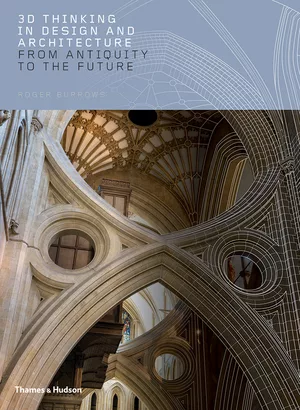
    3D Thinking in Design and Architecture: From Antiquity to the Future

  • GlobalData_logo_blue_header.png

    Construction in the US - Key Trends and Opportunities to 2023

See More Products
×

The latest news and information

#1 Source for Architectural Design, News and Products

SUBSCRIBE
  • RESOURCES
    • Advertise
    • Contact Us
    • Submit
    • Store
  • ACCOUNT CENTER
    • Create an Account
    • Start a Subscription
    • Manage My Account
    • Sign Up for Newsletters
    • Visit Customer Service
    • Update Preferences
  • PRIVACY
    • PRIVACY POLICY
    • TERMS & CONDITIONS
    • DO NOT SELL MY PERSONAL INFORMATION
    • PRIVACY REQUEST
    • ACCESSIBILITY
  • SERVICES
    • Marketing Services
    • Reprints
    • Market Research
    • List Rental
    • Survey/Respondent Access
  • STAY CONNECTED
    • Linkedin
    • Facebook
    • Instagram
    • YouTube
    • X (Twitter)

Copyright ©2026. All Rights Reserved BNP Media, Inc. and BNP Media II, LLC.

Design, CMS, Hosting & Web Development :: ePublishing