Continuing Education: Rammed Earth
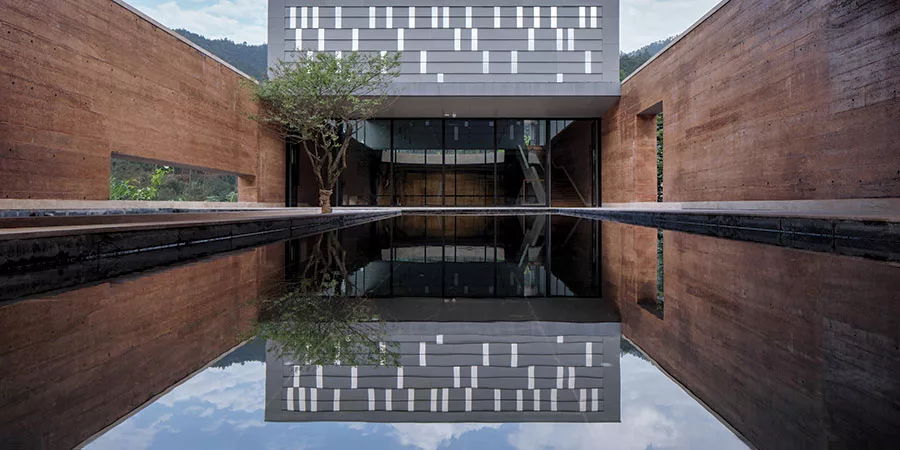
DL-Atelier conceived the San Bao Peng Art Museum near Jingdezheng, China, as a 300-foot-long by 27-foot-wide compound defined by rammed-earth perimeter walls. Galleries are enclosed within titanium-zinc-clad volumes.
Photo © Haiting Sun
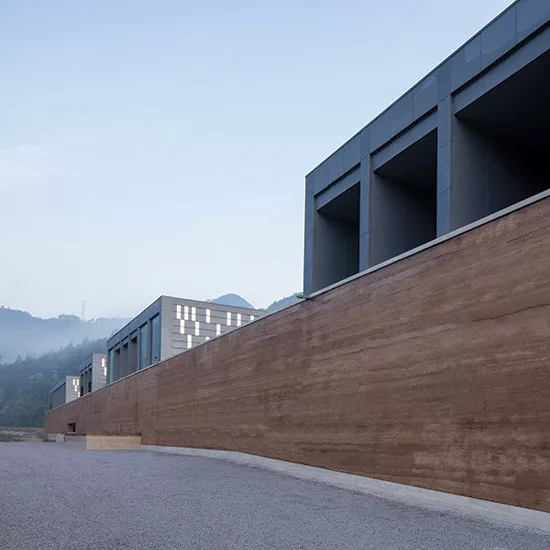
DL-Atelier conceived the San Bao Peng Art Museum near Jingdezheng, China, as a 300-foot-long by 27-foot-wide compound defined by rammed-earth perimeter walls. Galleries are enclosed within titanium-zinc-clad volumes.
Photo © Haiting Sun
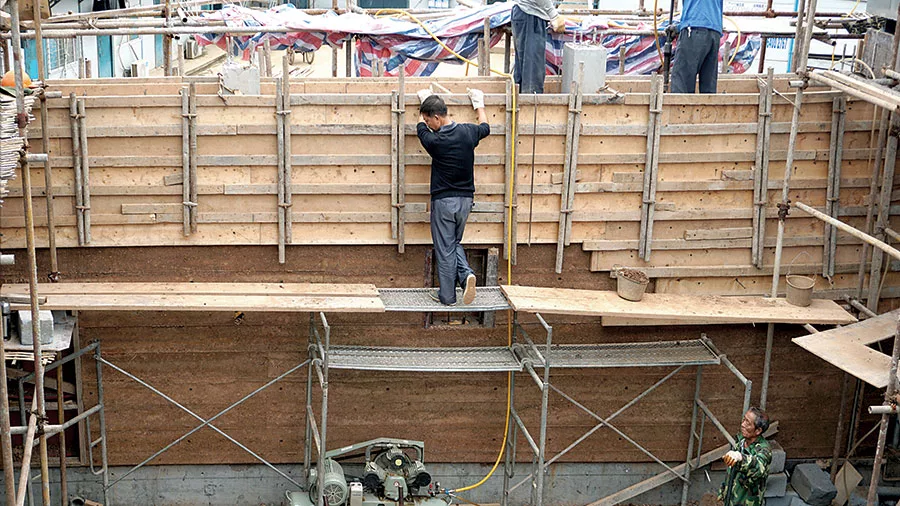
Instead of plywood sheet forms, the museum’s walls were poured within horizontally oriented boards to give added texture to the rammed earth’s surface.
Photo courtesy DL-Atelier
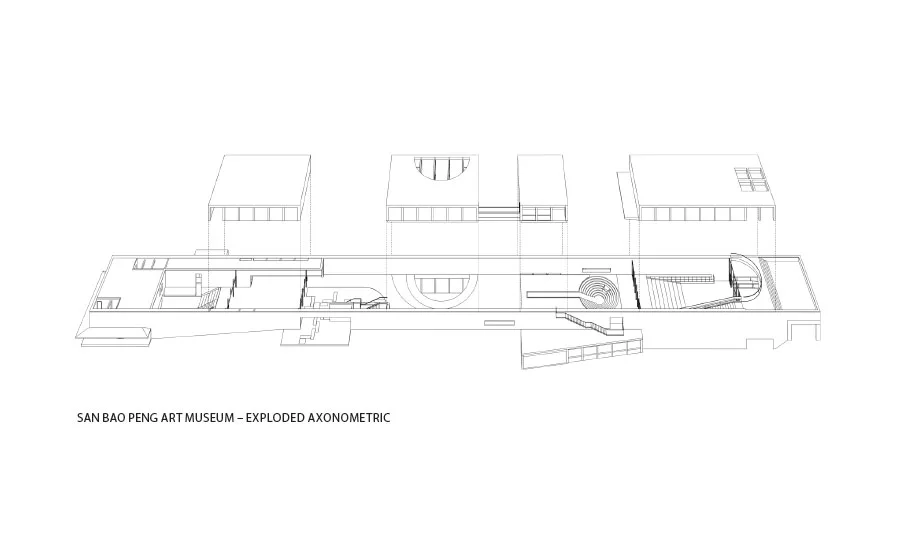
Image courtesy DL-Atelier
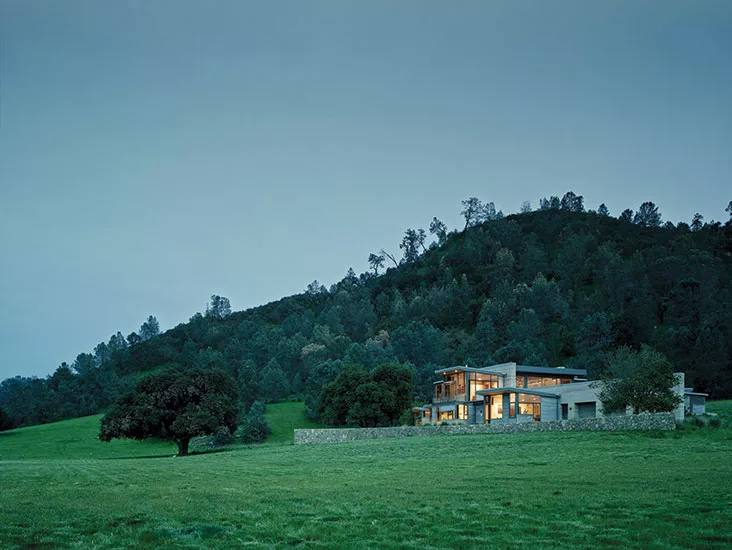
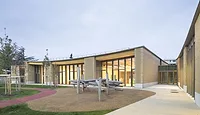
Spring Ranch, near Hollister, California, has hefty rammed-earth walls as thick as 24 inches.
Photo © Joe Fletcher
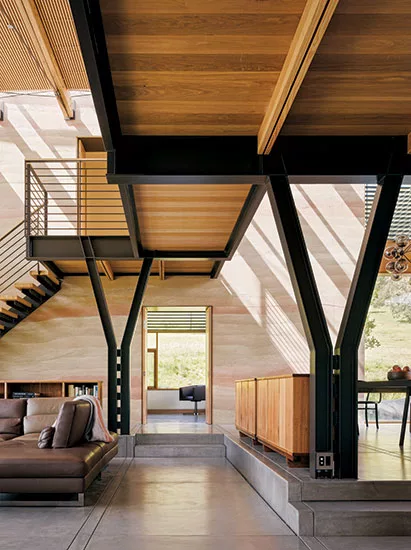
In conjunction with the concrete floors' radiant heating and cooling, the thermal mass provided by the rammed-earth walls helps maintain comfortable indoor temperatures.
Photo © Joe Fletcher
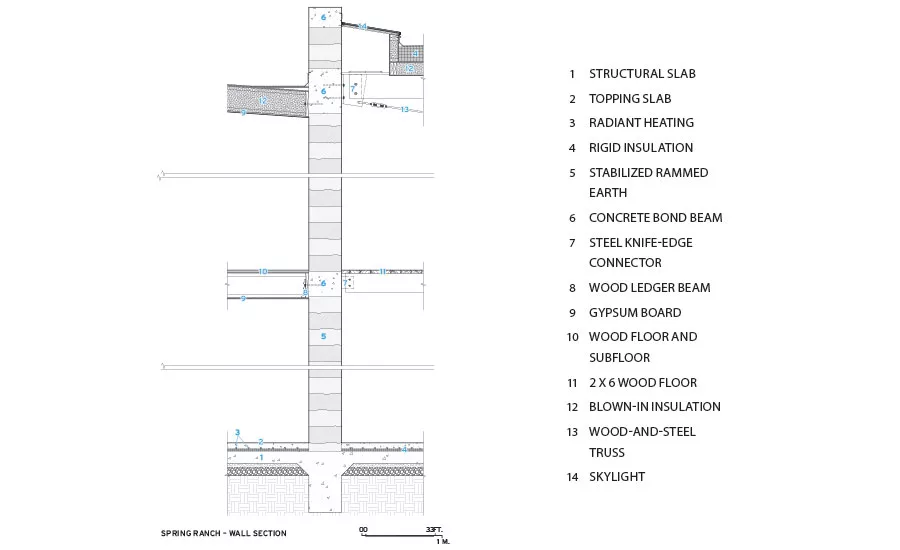
Image courtesy Feldman Architecture

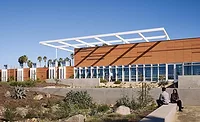
SmithGroupJJR envisioned a 20-foot-wide, 19-foot-tall rammed-earth wall as the focal point of a Santa Clara, California, office building. The 10-ton element is made up of four segments fabricated off-site in Napa.
Photo © Michael David Rose Photography, courtesy SmithGroup JJR
It would be hard to imagine a more elemental building material than rammed earth. Produced by compressing a sandy earthen mixture into forms, the earliest examples of the technique survive at 7,000-year-old archeological sites in China. The method for making walls, with its layers of rich colors and textures, is being rediscovered by architects who are bringing it into the 21st century with refined mixes and innovative technology.
When architect Lui Yang, principal of the Beijing firm DL-Atelier, conceived the design of the San Bao Peng Art Museum near Jingdezheng, China, he imagined a strongly geometric form that would emerge from the ground in contrast to the surrounding bucolic mountainous landscape. Completed in 2017, the 300-foot-long by 27-foot-wide museum, which focuses on the region’s famed porcelain ceramics, is defined by 12-foot-tall rammed-earth walls. Within the compound, the architects arranged courtyards and gallery spaces on multiple levels and topped the composition with a series of steel-framed, titanium-zinc-clad volumes.
The architect chose a “geological” palette of travertine and slate in addition to the rammed earth. The finishes are durable but are intended to record wear from human contact and weather over time. While the form is distinctly linear, Lui says that he wanted to encourage visitors to flow through the spaces in an organic way so that their progression is a series of options and serendipitous discoveries. There are several possible entry points—one at each end and another by way of a broad opening in a side wall that includes a water feature and travertine stepping-stones.
The base material for the rammed earth—a locally quarried ground stone—is the same fundamental ingredient found in the porcelain of the area. The red-hued materials of stone, clays, and silts for the walls were sourced from a nearby hill. Ten full-scale mock-ups, designed to serve as permanent landscape elements, were made to test different combinations of aggregate (crushed stone, gravel, and sand) as well as waterproofing details. Because the local climate is somewhat rainy, the rammed earth includes about 8 percent Portland cement. Socalled “stabilized” rammed earth contains about 5 percent to 10 percent cement—about half the amount in a typical concrete mix— which makes it stronger and more weather-resistant.
Although Portland cement improves durability, rammed earth does not hold up well in direct contact with the ground. Therefore, the architects used concrete for the foundation and subterranean levels of the building with a travertine-clad plinth at grade. To support the headers of several large openings that frame views of the landscape, they embedded steel beams within the rammed earth. And to create an elegant finish detail, they topped the walls and sills with stainless-steel cover plates that are in turn capped with travertine.
The walls were built in a process similar to that used for cast-in-place concrete, with grids of rebar for reinforcement. The formwork was set up in a series of lifts and moved vertically with each successive pour. Instead of the more common plywood sheet forms, DL-Atelier chose 8-inch-wide horizontally placed boards to give added texture to the walls’ surface. Soil was placed inside the forms in layers before compaction with pneumatic tampers. The method essentially replicates the way sedimentary rock is made in nature: the intense compression, and ingredients like clay, which act as binders, fuse the elements. The resulting stonelike density distinguishes it from softer earth-based materials such as adobe.
Across the Pacific Ocean near Hollister, California, a 6,500-square-foot, two-story vacation house by San Francisco–based Feldman Architecture relies on a similar strategy of anchoring the building to the site with massive rammed-earth walls. In this case, three concentric, gently curving walls, as tall as 20 feet, correspond to the contours of the hillside where the house sits and form an armature within which the steel-and-wood-framed living spaces are interspersed.
Looking for quick answers on architecture and design topics?
Try Ask RECORD, our new smart AI search tool.
Ask RECORD →
The house, known as Spring Ranch, is LEED Gold and net zero energy, and the rammed earth plays a significant role in its conservation strategy. The uninsulated rammed-earth walls, in combination with the concrete floors, provide abundant thermal mass for passive solar heating and cooling. In the Mediterranean climate of inland California, hot summer days make cooling the dominant thermal issue for the house, says Jonathan Feldman, firm principal. However, the relatively cool nights—with temperatures that drop into the 50s even in July and August—provide ideal conditions to flush the thermal mass and store cooling energy for use during the day. In addition to these passive strategies, the house has a 7.6-kilowatt roof-mounted photovoltaic array that satisfies all of its electrical needs. A large solar thermal system supplies domestic hot water and heats the radiant-floor system.
Like concrete, masonry, and stone, rammed earth is a notoriously bad insulator—only about R-2 for an 18-inch-thick wall. But despite Spring Ranch’s uninsulated rammed-earth walls, when modeled as a whole building, it readily surpassed California energy standards due to the structure’s ability to store and transfer thermal energy.
However, more strict energy standards implemented since the house was completed five years ago would probably have required that the walls be insulated, according to David Easton, the project’s rammed earth consultant. The updated code presents a conundrum for newer projects—how to maintain durability of the rammed earth and the continuity of the finish on the inside and the outside. One solution is a double wall into which a layer of rigid insulation is inserted. “Essentially, you end up with two 7-inch rammed-earth walls on either side of 4 inches of rigid insulation, an ice cream sandwich of sorts,” says Easton. The detail maintains good thermal mass on the interior. But, in some climates, he explains, it can also interfere with the beneficial transfer of thermal energy through the wall. It also adds complexity to the already labor-intensive construction process and hence increases the cost.
Rammed earth is most sustainable when its raw ingredients are taken from the site or its environs. According to Feldman, some of the earth for the Hollister house’s excavation was incorporated into the mix. But to achieve distinct horizontal lines of color, most of the components were obtained from a variety of nearby locations and were quarried at different depths. A small amount of material from Arizona was used to create the walls’ deepest-red layers.
This variety of ingredients is not unusual in contemporary rammed-earth buildings, says Easton. “In the old days, it was 30 percent clays and silts and 70 percent sand and gravel.” But the mixes have become extremely nuanced and complex, to achieve the level of performance and finish quality architects require now, he says. The term “rammed earth” is somewhat of a misnomer, because the ingredients—ground stone, sand, silts, and gravels—are selectively quarried, and cannot include any organic material.
Like the museum in Jingdezheng, the walls at Spring Ranch are stabilized with cement. But, according to Easton, it’s possible to achieve similar strength and durability without the additive, depending on the availability of refined materials like crushed granite. Mostly because consumers and building officials feel more confident with cement added, only stabilized rammed earth is used in the U.S. Unstabilized rammed earth is still common in Europe, Easton adds.
Building departments often require special testing for alternative materials such as rammed earth. In the case of Spring Ranch, county officials followed a guideline for nonstandard concrete applications that called for a minimum bearing capacity of 2000 pounds per square inch (psi).
Rammed-earth walls are capable of only 800 to 1600 psi, but since they are often much thicker than typical concrete walls, the total bearing capacity can be as good or better. (In other words, the strength per square inch may be lower, but there are more square inches of bearing than are provided by a typical 8-inch concrete wall.) After a round of tests tailored to the specific characteristics of Spring Ranch walls, which are up to 24 inches thick, officials gave the green light, says Feldman.
In addition to concerns about bearing capacity, there were also seismic constraints since the house is situated only a few hundred yards from the San Andreas Fault. The engineers for the project specified two cages (grids) of rebar for each wall. The loads of the roof structure and floor plates are transferred to the walls via reinforced-concrete bond beams embedded with the rammed earth elements.
Up until recently, the nature of rammed-earth walls and the process of producing them limited their use to projects where they could be poured on-site. But new, off-site fabrication techniques have made other applications possible. SmithGroupJJR recently made a 20-foot-wide, 19-foot-tall precast rammed-earth wall the focal point of the main lobby for the Stadium Tech Center in Santa Clara, California—a six-story office building completed in 2016 with a shell designed by the Bay Area firm Arc Tec.
SmithGroupJJR saw the precast panel as the perfect backdrop to the 25-foot-tall reception area, envisioning it as “a large elemental work, like a Mark Rothko painting,” says lead designer Matt Smialek. But, in this case, the wall itself would be the art, he says. The panel, which retains the stratified layers of more traditional cast-in-place rammed earth, also serves to offset the aesthetic coolness of the lobby’s polished-concrete floors and sleek white walls. The designers recessed the panel behind a wide stained-oak frame and then illuminated it from the perimeter.
Although much lighter than conventional rammed earth, the entire 6-inch-thick precast panel, fabricated in a Napa, California, plant, weighed over 10 tons. In order to accommodate transportation and assembly, the installation is held in place by a steel backing frame and made up of four 22-foot-long by 5-foot-tall segments stacked horizontally. Because an open parking deck is located below the lobby, most of the weight of the panel is suspended from the building’s steel structure above, which has been reinforced to carry the extra load.
Factory-fabrication techniques, like those deployed for the Santa Clara project, enable tight control of the mix and the formwork, as well as other factors. They allow slabs as thin as 3 inches to be produced for uses such as exterior wall panels. This evolution from hefty load-bearing wall to cladding demonstrates how far this humble approach has come in its long history. And new applications will continue to emerge. Last year, several Chinese universities won the 2017 World Architecture Award for their work in replacing housing in earthquake-ravaged Guangming Village with reinforced-rammed-earth structures. At the other end of the spectrum, Peter Zumthor has released preliminary plans for a rammed-earth addition to Beyeler Museum in Basel, Switzerland, which was designed by fellow Pritzker Prize–winner Renzo Piano and completed in 1997. Given the abundance of the raw material and the growing need for sustainable building assemblies, architects can be expected to further extend rammed earth’s limits.
|
Continuing Education
 To earn one AIA learning unit (LU), including one hour of health, safety, and welfare (HSW) credit, read "Continuing Education: Rammed Earth," review the supplemental material listed below, and complete the online test. Upon passing the test, you will receive a certificate of completion, and your credit will be automatically reported to the AIA. Additional information regarding credit-reporting and continuing-education requirements can be found online at continuingeducation.bnpmedia.com. To earn one AIA learning unit (LU), including one hour of health, safety, and welfare (HSW) credit, read "Continuing Education: Rammed Earth," review the supplemental material listed below, and complete the online test. Upon passing the test, you will receive a certificate of completion, and your credit will be automatically reported to the AIA. Additional information regarding credit-reporting and continuing-education requirements can be found online at continuingeducation.bnpmedia.com.Supplemental Material
Yves de Morsier
Learning Objectives 1 Define term “rammed earth” and explain how walls of this material are typically built. 2 Discuss the structural and regulatory challenges presented by rammed-earth construction. 3 Explain how the thermal mass provided by a rammed-earth wall can contribute to a building’s climate control strategy. 4 Describe the advantages of factory-fabricated rammed-earth elements.
AIA/CES Course #K1802A
For CEU credit, read "Continuing Education: Rammed Earth" and take the quiz at continuingeducation.bnpmedia.com, or use our Architectural Record Continuing Education app, available in the iTunes store. structure, finishes, and other original fabric when
a building is moved.
significant buildings.
|
Looking for a reprint of this article?
From high-res PDFs to custom plaques, order your copy today!