Architectural Record
search
cart
facebook twitter linkedin youtube
  • Sign In
  • Subscribe
  • Sign Out
  • My Account
Architectural Record
  • NEWS
    • Latest News
    • Awards
    • Interviews
    • Obituaries
    • Podcasts
      • Design:Ed Podcast
      • Sponsored Podcasts
  • OPINION
    • Book Reviews / Excerpts
    • Exhibition Reviews
    • Forum
  • EXCLUSIVES
    • Videos
    • Design Vanguard
    • Top 300 Firms
    • Sponsored Content
    • Sponsored eBooks
    • From the Archives
  • CONTINUING ED
    • Editorial Continuing Ed
    • CE Center
    • CE Academies
  • PROJECTS
    • Buildings By Type
    • Reuse & Renovation
    • Museums & Arts Centers
    • Colleges & Universities
    • Multifamily Housing
    • Interiors
    • Lighting
    • Kitchen & Bath
  • HOUSES
    • Record Houses
    • House of the Month
    • Featured Houses
  • PRODUCTS
    • Products by Category
    • Record Products of the Year
    • Latest Products
  • EVENTS
    • Dates & Events
    • Record on the Road
    • Innovation Conference
    • Sustainability in Practice
    • Women In Architecture
    • Webinars
    • Ad Excellence Awards
    • Submit an Event
  • CONNECT
    • Ask RECORD AI
    • Newsletters
    • Contact
    • Advertise
    • Editorial Calendar
    • Store
    • Customer Service
  • SUBMIT
    • Submission Guidelines
    • RECORD Competitions
  • MAGAZINE
    • Subscribe
    • My Account
    • Digital Edition
    • Current Issue
    • Firm Pass
    • Historic Archive
Architecture NewsInterviews

Interview with Kenneth Frampton

The winner of the 2018 Golden Lion award speaks to RECORD about his life's work.
By Cynthia Davidson
Kenneth Frampton

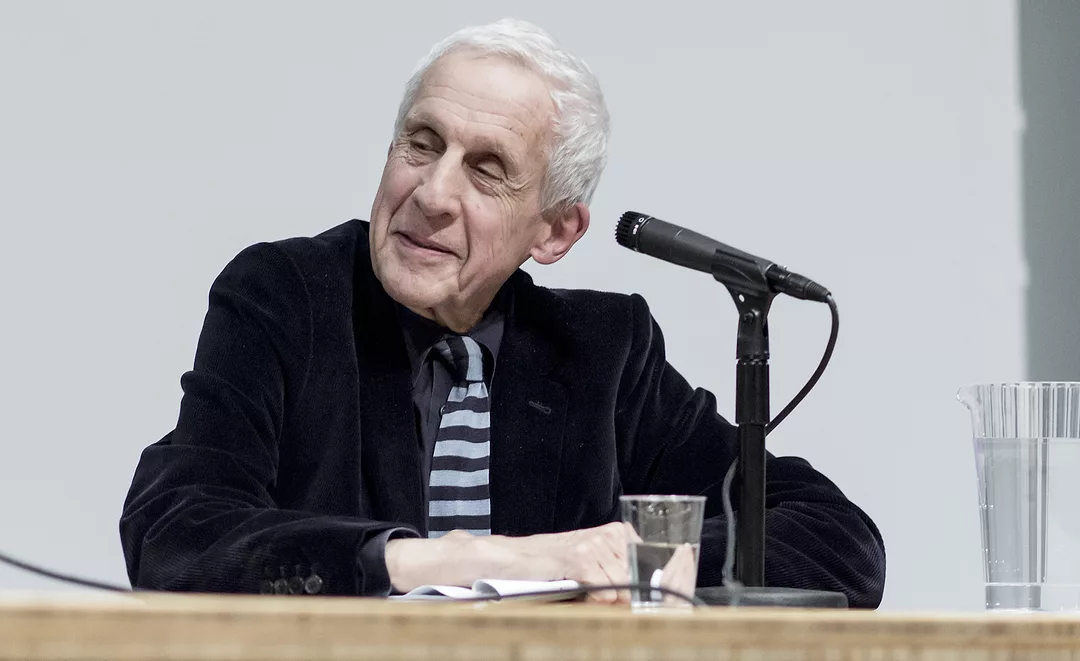
Photo © Columbia GSAPP

Kenneth Frampton

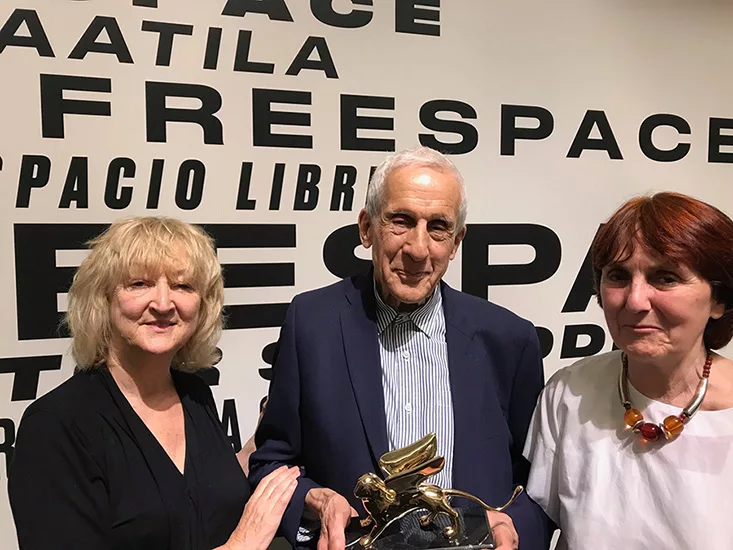
Ken Frampton receiving his Gold Lion at the 2018 Venice Architecture Biennale. 

Photo © Architectural Record

Kenneth Frampton
Kenneth Frampton
May 29, 2018

Architect, historian, critic, and educator Kenneth Frampton is this year’s recipient of the Golden Lion for Lifetime Achievement, awarded at the May opening of the 16th International Architecture Exhibition of the Venice Biennale. His well-known essays and books include Modern Architecture: A Critical History (1980), now in its fourth edition, with a fifth under way. Born in the UK in 1930, he studied at the Architectural Association in London, then worked in the city as an architect for Douglas Stephen & Partners in the early 1960s. In 1962, Frampton also became the technical editor of the journal Architectural Design, a move that foretold his later commitment to writing. In 1965, he began teaching at the Princeton University School of Architecture and in 1972 joined the faculty of Columbia University’s Graduate School of Architecture, Planning and Preservation in New York. Critic Cynthia Davidson spoke with Frampton in his Columbia office about his life’s work.


The Golden Lion typically goes to a practicing architect. But Yvonne Farrell and Shelly McNamara, curators of this year’s Biennale, praised you for arguing for a “humanistic” component “throughout all of the various ‘movements’ and trends often misguided in architecture.” Have you been prevailing against the misguided?

I’ve approached my work through the question of the Modern movement, which from 1918 to 1938 had a certain vitality bound up with modernization—with the idea of the redistribution of wealth and of the welfare state as integral parts of the Modern project. Most of the discussion today is not about that. It’s very complex, of course, because of the talk about feminism and racism and, quite rightly, about the misdistribution of wealth in the United States, but criticism of capitalism is less common. The very aggressive phase of global capitalism that we have entered is a very ruthless landscape, and the techno-sciences, our pride and joy, are the one thing we seem to have lost all control over.

Why is writing important in architecture?

What’s important is critical discourse. Once the culture of architecture is no longer a discourse, it has no continuity—it just becomes a technical provision of built form; there’s no other meaning or significance that you can attribute to it. I have certain regrets about not continuing as an architect, but I got a lot out of being involved with the discourse about the history of the Modern movement.

You often use the word “critical” to frame your work—critical regionalism, critical history, comparative critical analysis. What does it mean to you?

The first edition of Modern Architecture has this beautiful Walter Benjamin quote about the angel of history. It’s an unbelievable idea. The angel cannot close his wings because there’s a storm blowing—this storm we call progress. The idea of the critical basically comes from that.

Looking for quick answers on architecture and design topics?
Try Ask RECORD, our new smart AI search tool.
Ask RECORD →

It also sustains your recent book on comparative analysis.

At Princeton, I decided to get the students to analyze buildings. Then I realized, if you analyze just one thing, you understand more about the thing, but that’s it; there’s no tension built into the method. But you reveal sameness and difference and the layering of architectural expression when you compare two works that are from different points of view, answering more or less the same problem. I called it A Comparative Critical Analysis of Built Form. Ironically, when Lars Müller agreed to publish the work, he said he couldn’t sell a book with a title like that. So he invented the title [A Genealogy of Modern Architecture].

At some point, I stopped using that method, because the references all changed. I feel very strongly the speed of change and the way the field of architecture is disturbed by the speed of change.

Architecture doesn’t move very quickly.

Not at all. I often say to students that it’s a kind of anachronistic preoccupation, but that is its strength, in a way. The idea of architecture on the cutting edge is not too convincing.


Editor’s Note: For a discussion of Frampton’s thoughts about phenomenology and architecture, read his review of George Baird’s Writings on Architecture and the City.

KEYWORDS: modernism Venice Architecture Biennale

Share This Story

Looking for a reprint of this article?
From high-res PDFs to custom plaques, order your copy today!

Cynthia Davidson is editor of Log and cocurator of Model Behavior, an exhibition opening at the Cooper Union in October.

Post a comment to this article

Report Abusive Comment

Subscription Center
  • Create an Account
  • Start a Subscription
  • Manage My Account
  • Sign Up for Newsletters
  • Visit Customer Service
  • Update Preferences

More Videos

Sponsored Content

Sponsored Content is a special paid section where industry companies provide high quality, objective, non-commercial content around topics of interest to the Architectural Record audience. All Sponsored Content is supplied by the advertising company and any opinions expressed in this article are those of the author and not necessarily reflect the views of Architectural Record or its parent company, BNP Media. Interested in participating in our Sponsored Content section? Contact your local rep!

close
  • TAMLYN XtremeTrim Exterior Trim
    Sponsored byTamlyn

    Designing Cleaner Panel Facades: Why Exterior Trim Details Matter

  • Building with Vapor Barriers
    Sponsored byReef Industries, Inc.

    Vapor Barriers Help Control Moisture in Tighter Building Designs

  • Duct Interior with Prodeq System
    Sponsored byHenry, a Carlisle Company

    Designing Resilient Water Containment Systems

DESIGN:ED Podcast
Listen to Architectural Record’s DESIGN:ED Podcast

Events

June 11, 2026

Very Early Warning Fire Detection for Mission-Critical Facilities

Credits: 1 AIA LU/HSW; 1 AIBD P-CE; 0.1 ICC CEU

Examine advanced fire detection strategies that support uptime and enhance safety in data centers and other mission-critical facilities.

June 16, 2026

Focus on the Façade: Exploring Steel, Timber & Fire-Rated Curtain Walls and Channel Glass Systems

Credits: 1 AIA LU/HSW; 1 AIBD P-CE; 0.1 ICC CEU

Explore modern façade and glazing systems that enhance daylighting, fire safety, and thermal performance while expanding architectural design possibilities.

View All Submit An Event

Products

2026 Architect's Square Foot Costbook

2026 Architect's Square Foot Costbook

See More Products

Popular Stories

Coronado Bridge

The Architect’s Guide to San Diego

Practice Matters illustration

By the Numbers: Counting America's Architects

SanDiegoAirport

Top 300 Architecture Firms of 2026

Crane Cove, ONO

Design Vanguard 2026 Winners

House on a Hill

Design Vanguard 2026: Forma

Broader Sustainability of CMU - Free Webinar - May 21, 2026

Related Articles

  • The Other Modern Movement.

    New Book by Kenneth Frampton Looks at the Work of Lesser-Known Modernists

    See More
  • Eyal Weizman

    Interview with Forensic Architecture Founder Eyal Weizman

    See More
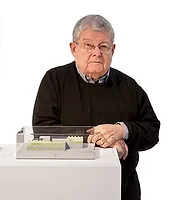
  • Stanley Tigerman shows his model for the Pacific Garden Mission, Chicago's oldest rescue center for the homeless, in 2006, a year before it opened.

    Interview with Stanley Tigerman

    See More

Related Products

See More Products
  • 047177751X.gif

    Sustainable Urbanism: Urban Design With Nature

See More Products
×

The latest news and information

#1 Source for Architectural Design, News and Products

SUBSCRIBE
  • RESOURCES
    • Advertise
    • Contact Us
    • Submit
    • Store
  • ACCOUNT CENTER
    • Create an Account
    • Start a Subscription
    • Manage My Account
    • Sign Up for Newsletters
    • Visit Customer Service
    • Update Preferences
  • PRIVACY
    • PRIVACY POLICY
    • TERMS & CONDITIONS
    • DO NOT SELL MY PERSONAL INFORMATION
    • PRIVACY REQUEST
    • ACCESSIBILITY
  • SERVICES
    • Marketing Services
    • Reprints
    • Market Research
    • List Rental
    • Survey/Respondent Access
  • STAY CONNECTED
    • Linkedin
    • Facebook
    • Instagram
    • YouTube
    • X (Twitter)

Copyright ©2026. All Rights Reserved BNP Media, Inc. and BNP Media II, LLC.

Design, CMS, Hosting & Web Development :: ePublishing