Tai Kwun Centre for Heritage & Arts by Herzog & de Meuron
Hong Kong
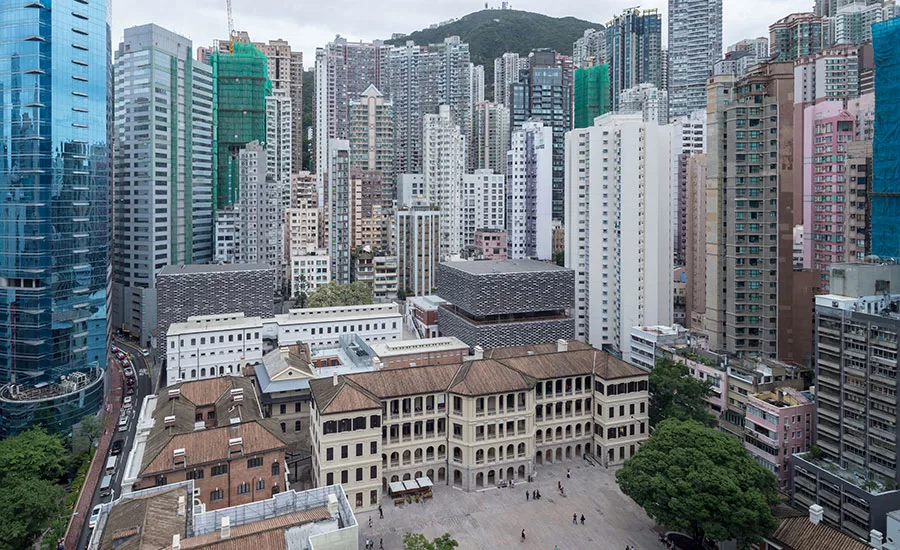
An aerial view shows the Tai Kwun Centre for Heritage & Art amid Hong Kong's dense Central District. The architects added two new buildings to the 16 historic ones on the site.
Photo © Iwan Baan
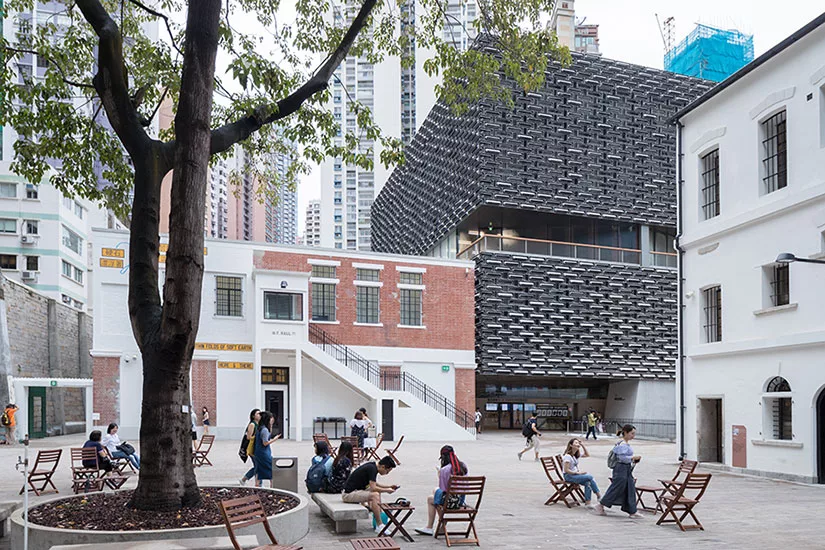
The former prison yard of the complex has been turned into an urban oasis with the new Herzog & de Meuron-designed JC Contemporary building on one corner.
Photo © Iwan Baan
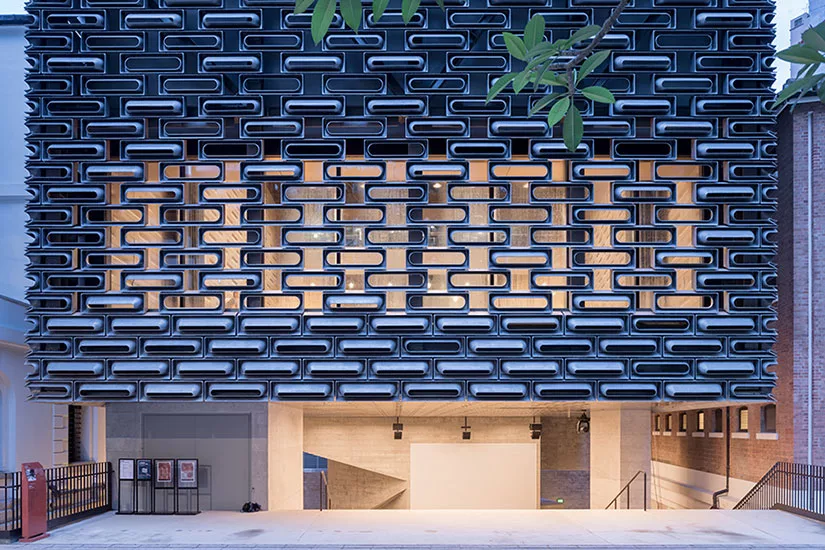
The new structures are are clad in an innovative cast aluminum rain screen.
Photo © Iwan Baan
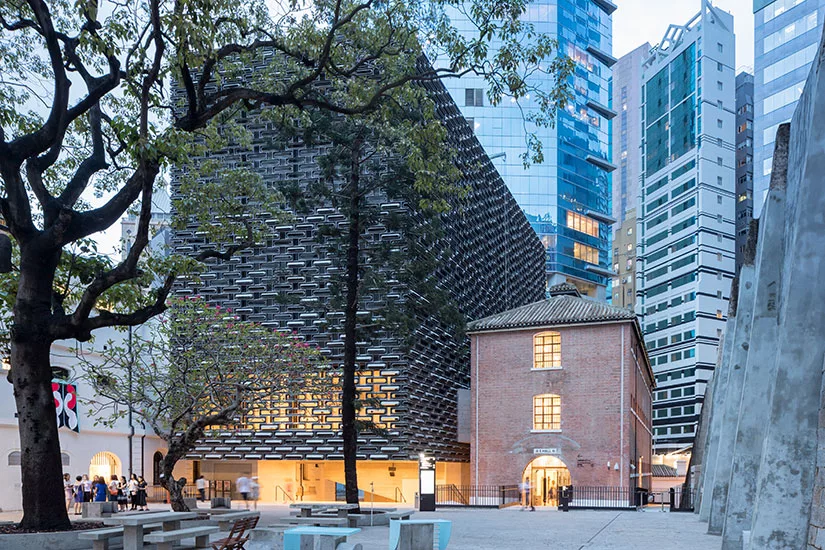
The JC Cube, which houses a 200-seat auditorium inside, is entered through an historic red brick building.
Photo © Iwan Baan
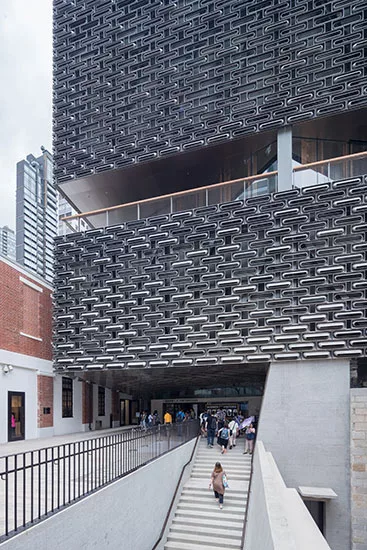
Flowing around and between old and new structures are walkways, stairs, and bridges that knit together once-segregated zones.
Photo © Iwan Baan
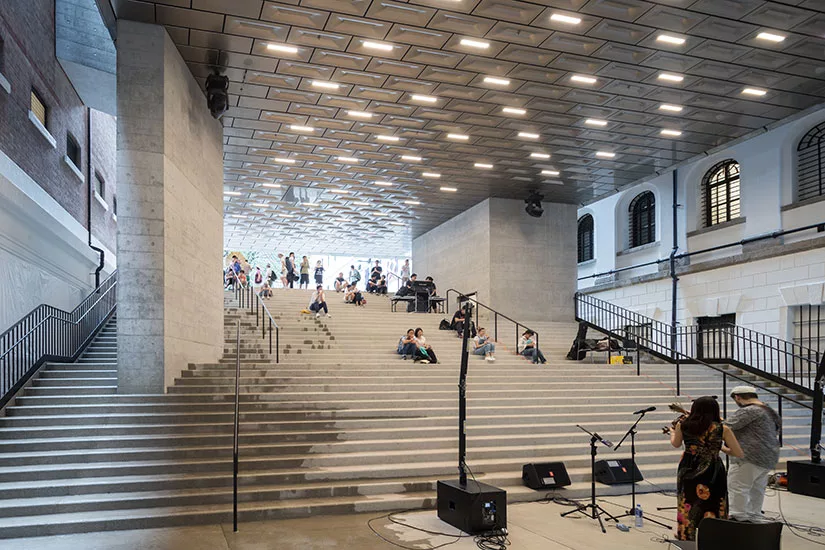
Tucked under the JC Cube is an amphitheater-like space.
Photo © Iwan Baan
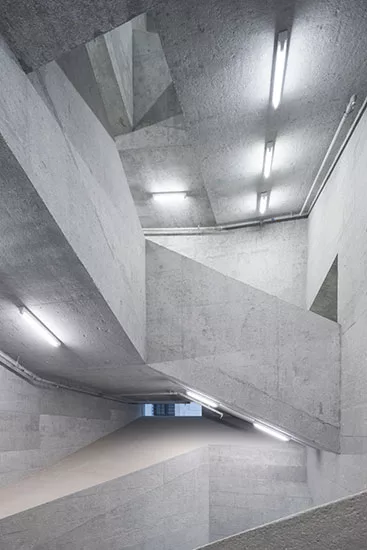
The stair in the JC Cube angles up to the auditorium.
Photo © Iwan Baan
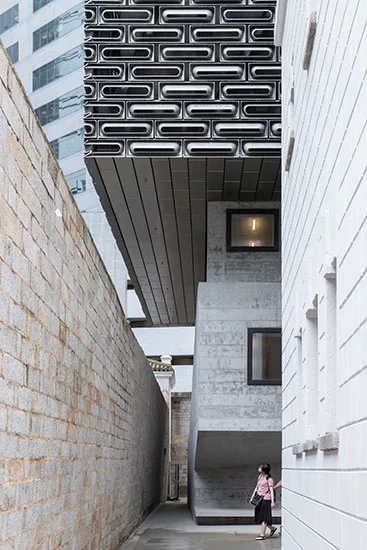
Both new buildings cantilever beyond their base, hovering above the ground to provide an outdoor space protected from the sun and rain.
Photo © Iwan Baan
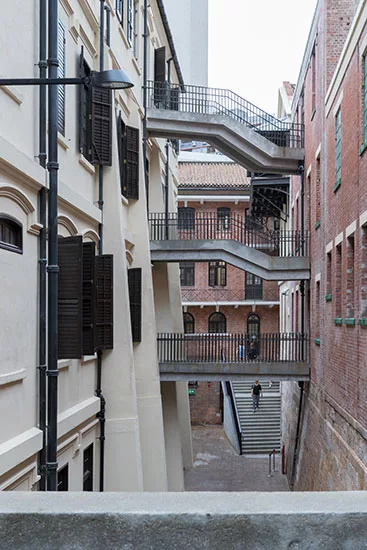
Flowing around and between old and new structures are walkways, stairs, and bridges that knit together once-segregated zones.
Photo © Iwan Baan
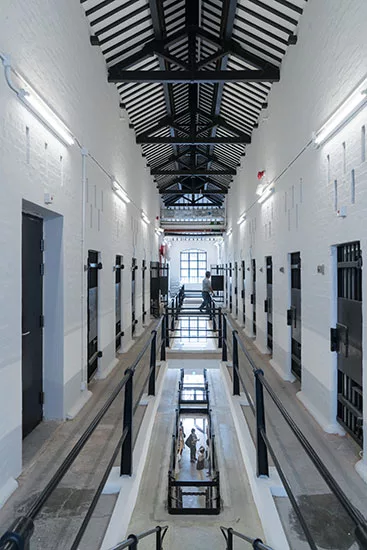
The complex includes 16 heritage buildings.
Photo © Iwan Baan
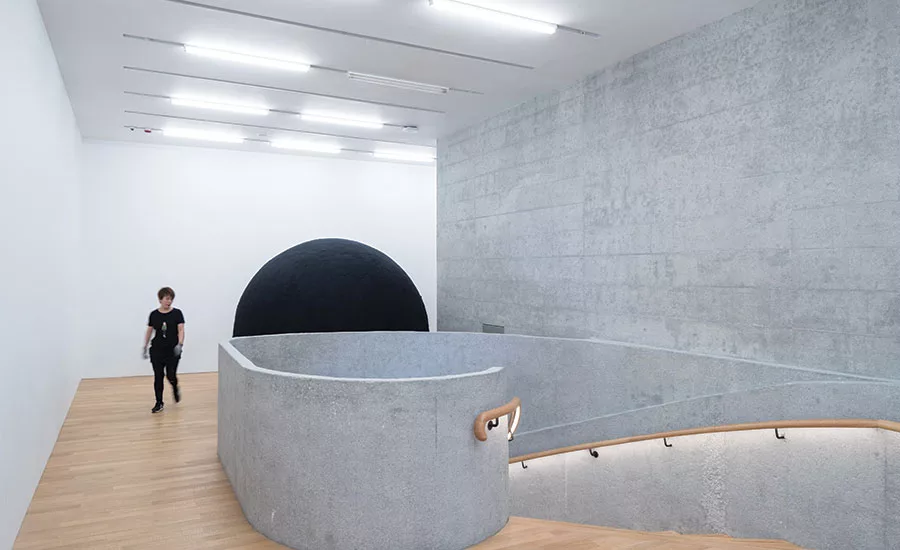
The curving concrete stair in the JC Contemporary takes visitors to the gallery space on the top floor.
Photo © Iwan Baan
Architects & Firms
For most of its history, the Central Police Station in Hong Kong was a walled compound off-limits to most people, a void at the heart of a hectic, dense metropolis. Begun in 1841 by the British colonial authorities, the multi-building complex eventually included not just the main police station but the Central Magistracy, Victoria Prison, officers’ quarters, and police barracks—all arranged around a trio of outdoor spaces spilling down a steep site on Hong Kong Island. In the 19th century, it sat at the edge of the town’s colonial core but, fast-forward 175 years, and it stood as a crumbling relic surrounded by skyscrapers and some of the priciest real estate in the world.
In 2006, years after the police moved out, the city finally decommissioned the complex. As part of a larger effort to expand arts facilities, the local government agreed to convert the low-rise 19th-century structures—listed as historic monuments—into a cultural center. The city entered into a joint venture with the Hong Kong Jockey Club Charities Trust, the philanthropic arm of the company that runs horse racing and gambling operations and uses those revenues to fund nonprofit groups. The idea was to turn this dark hole in the urban fabric into the bustling Tai Kwun Centre for Heritage & Arts. Herzog & de Meuron and conservation architects Purcell soon began work on the $484 million project, which takes its name, Tai Kwun, from the colloquial term “Big Station.” The difficult site, arduous approvals process, and precarious condition of some of the buildings stretched the planning, design, and construction of the project to a dozen years.
“We don’t interpret history,” says Jacques Herzog, one of the partners in charge of the project. “We accept history as it exists.” For Tai Kwun, that meant revealing the powerful materiality of the existing stone and brick structures, while devising ingenious ways of updating the buildings, in close collaboration with Purcell, so they meet today’s code but don’t appear to have changed.
Among the mix of 16 heritage buildings are two visible new elements—a 200-seat auditorium called JC Cube and a 44,000-square-foot contemporary art gallery, JC Contemporary. Herzog & de Meuron clad both volumes in radically modern skins featuring cast-aluminum apertures set in front of glass curtain walls. Flowing around and between old and new structures are walkways, stairs, and bridges that knit together once segregated zones. This network is critical to the experience of the complex and opens it to the surrounding context, via gateways the architects punched through the thick stone revetment walls on the east and west. To link various levels internally on the site, the architects carved out a new north–south pedestrian axis that connects the large Parade Ground at the lower part of the site to the former Prison Yard at the upper end.
Most visitors arrive first at the Parade Ground, off the Hollywood Road, where cafés, restaurants, and shops occupy the older buildings. They can then follow the north–south axis through a sequence of structures and a new gateway cut in a stone wall to ascend to the Prison Yard from the lower portion of the compound. Along the way are “heritage storytelling spaces,” including prison cells and rooms now mounted with exhibitions on Tai Kwun’s history. The paths and outdoor spaces create a sense of discovery, one of the more unusual aspects of this project.
“We try to expose the archaic nature of places,” says Herzog, explaining his team’s strategy in shaping the flow of visitors through the site, “by moving people through a narrow passageway or into an open yard.”
At the top of the site, the Prison Yard is now a beautifully proportioned outdoor room dotted with trees, benches, and sculpture. On the east side is the new JC Cube, which visitors can enter through a renovated prison building to get to the auditorium. Taking advantage of the change in grade, the architects carved out an outdoor amphitheater-like space tucked underneath the new building.
Looking for quick answers on architecture and design topics?
Try Ask RECORD, our new smart AI search tool.
Ask RECORD →
On the opposite side of the Prison Yard, JC Contemporary features a 16,000-square-foot gallery on the top floor that’s lit from above, a terraced restaurant on the second floor, and a museum shop and galleries at the entry level. Sculptural poured-concrete stairs connect the floors. Like JC Cube, the art-gallery building cantilevers beyond its base, hovering above the ground to provide an outdoor space protected from the sun and rain.
Made of 100 percent recycled aluminum, the distinctive rainscreen wrapping JC Cube and JC Contemporary continues Herzog & de Meuron’s ceaseless exploration of unusual ways to clad buildings. The shape and dimensions of the modules were inspired by the granite blocks used to build the fortress-like walls surrounding the police complex. The modules encase mouth-like oblong apertures with lips that protrude to varying lengths and open to varying degrees—depending on the amount of daylight required inside. Looming over the historic surroundings, the new buildings, with their thick but porous envelopes, spark an intriguing dialogue between old and new.
Free to the public, the Tai Kwun Centre offers a welcome escape from the intensity of modern Hong Kong, an oasis of culture in a city best known for its business deals. “We wanted to create a place where people could slow down,” says Herzog. Its architecture literally breaks through walls to get out a message that says art may be as important to the city’s future as office towers and shopping malls.
Looking for a reprint of this article?
From high-res PDFs to custom plaques, order your copy today!