Nationalmuseum by Wingårdhs with Wikerstål Architects
Stockholm
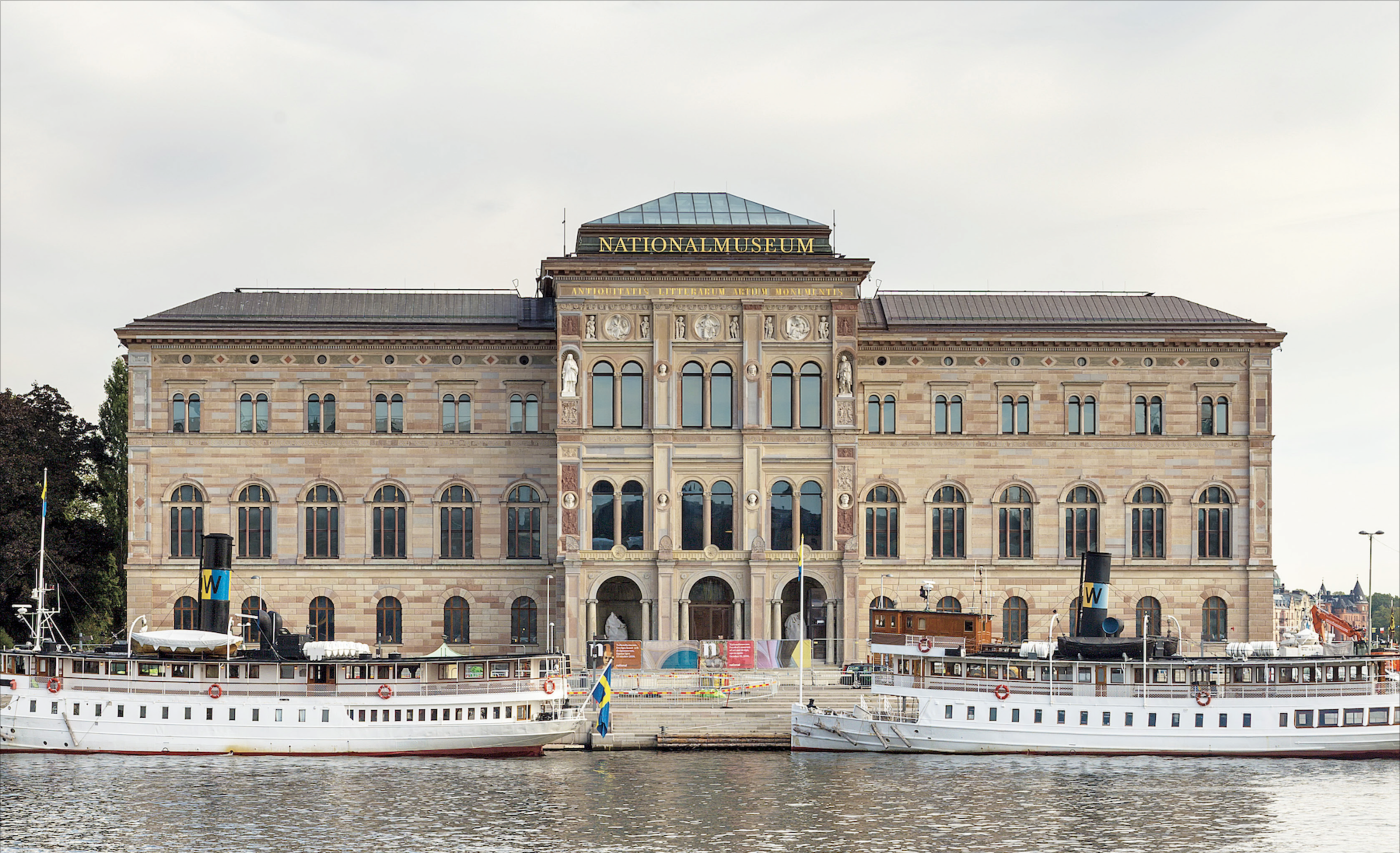
The Neo-Renaissance building is located along the waterfront on a peninsula in central Stockholm.
Photo © André Pihl
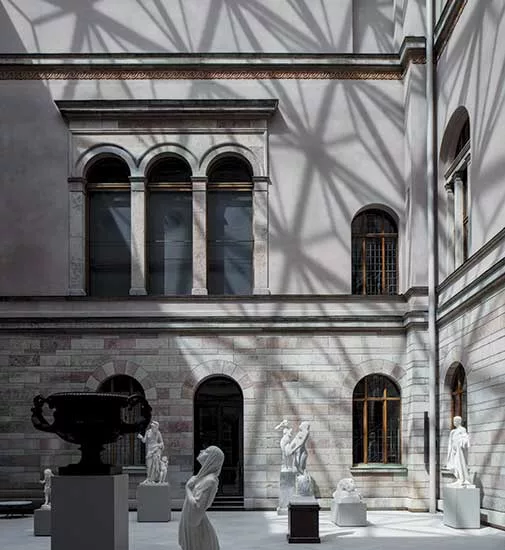
A shallow glass dome mounted on complex steel structures encloses the two courtyards, with the northern one now housing a sculpture court.
Photo © Bruno Ehrs
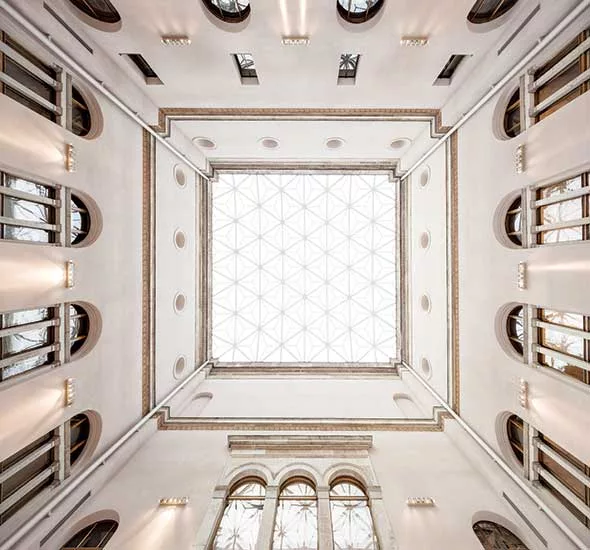
A shallow glass dome mounted on complex steel structures encloses the two courtyards, with the northern one now housing a sculpture court.
Photo © André Pihl
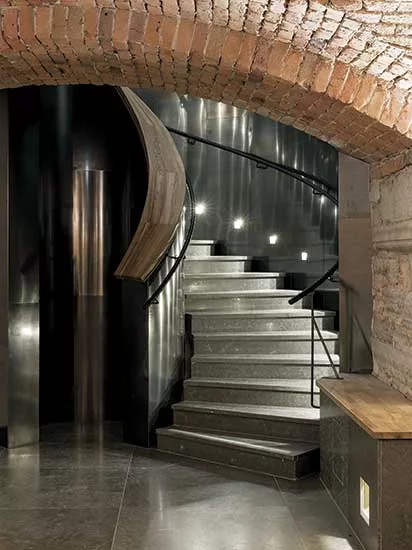
A sensuous modern stair leads to the sprawling, vaulted underground space for coat rooms and lavatories, which is now accessible.
Photo © André Pihl
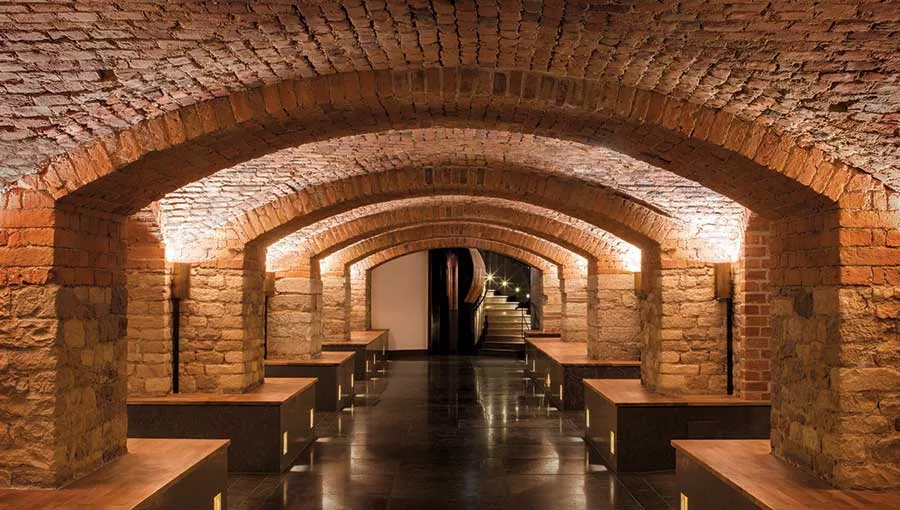
A sensuous modern stair leads to the sprawling, vaulted underground space for coat rooms and lavatories, which is now accessible.
Photo © Bruno Ehrs
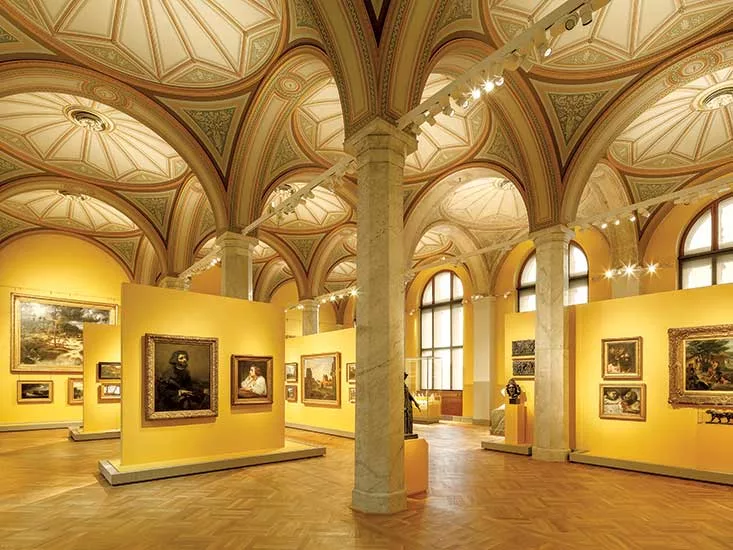
Covered since the 1930s, gallery windows have been exposed, and art is displayed on movable walls.
Photo © André Pihl
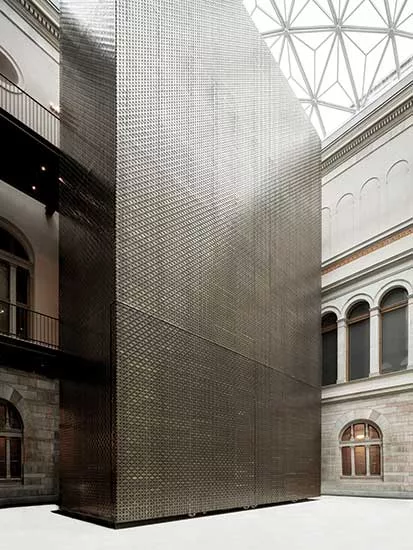
A sculptural elevator tower for transporting art and people is clad in woven oxidized brass and dominates the southern courtyard.
Photo © André Pihl
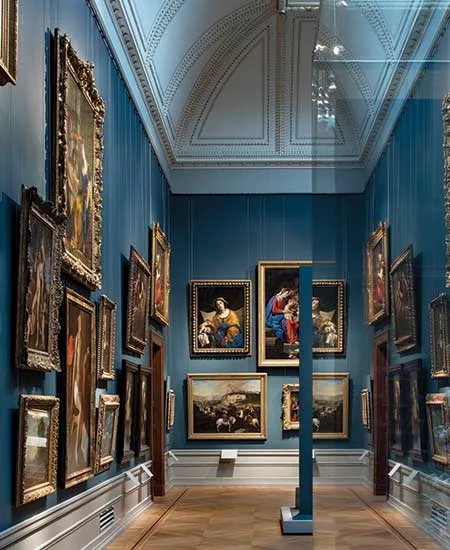
The bold wall-color selections were based on the original schemes for the museum and on the artworks in each room.
Photo © Bruno Ehrs
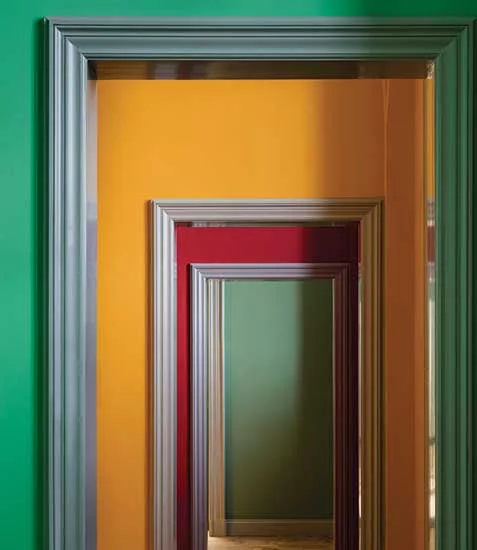
The bold wall-color selections were based on the original schemes for the museum and on the artworks in each room.
Photo © Bruno Ehrs
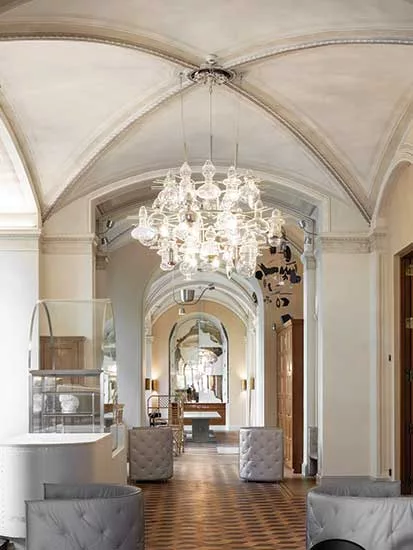
A number of design objects were created for the restaurant, including a glass.
Photo © André Pihl
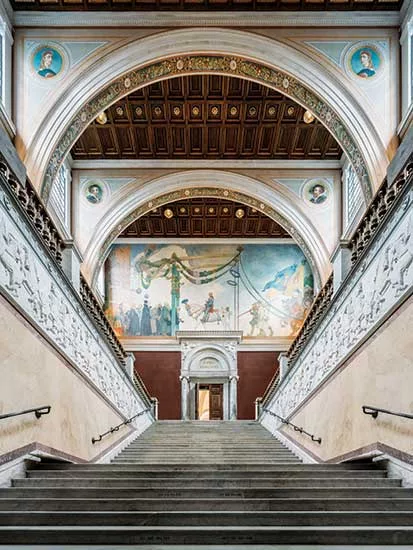
The central stair is used for concerts, so that there are numbered seats in the steps.
Photo © André Pihl
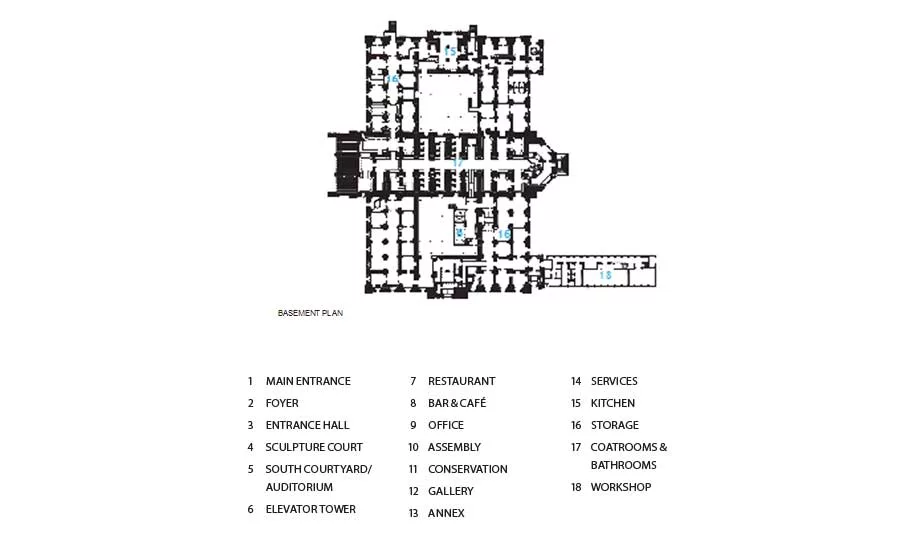
Image courtesy Wingårdhs & Wikerstål Architects
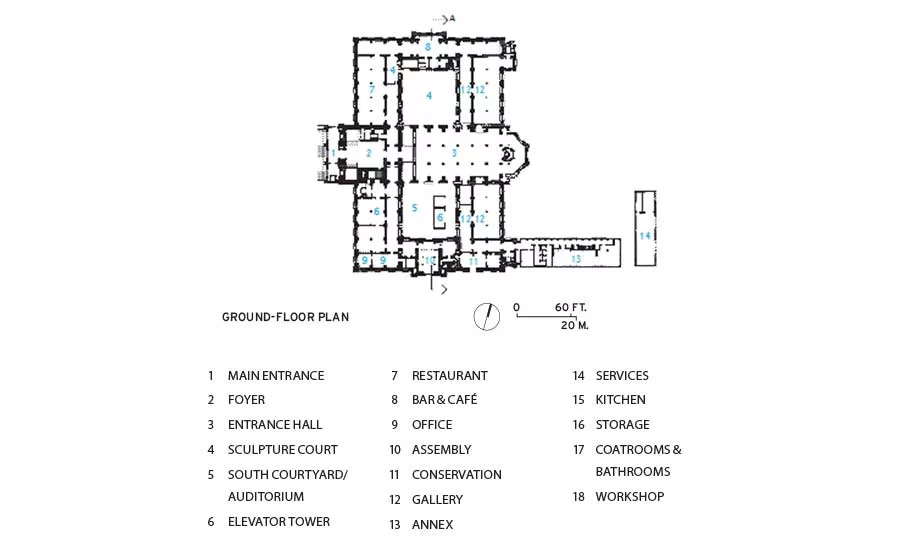
Image courtesy Wingårdhs & Wikerstål Architects
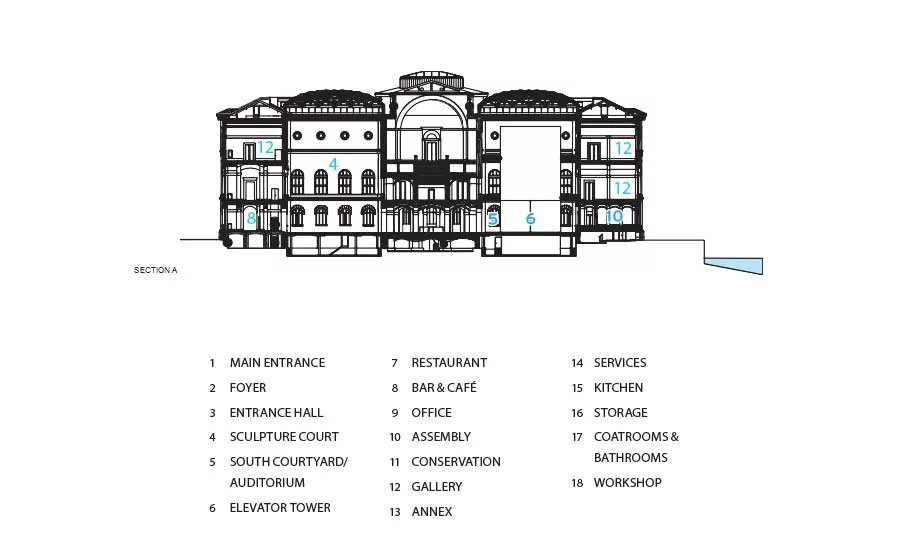
Image courtesy Wingårdhs & Wikerstål Architects
"A museum for all” was the founding dictum of Sweden’s Nationalmuseum, opened in 1866 and designed by Friedrich August Stüler, architect of the Neues Museum in Berlin. Chronic lack of space due to constant adaptation of its footprint for administrative and storage purposes, however, meant that only 30 percent of its area was accessible to the general public, and only 2.4 per- cent of its art collection could be displayed at any given time. In 2013, the museum closed its doors and went through a comprehensive, five-year-long, $132 million renovation led by Swedish firms Wingårdhs—known for its contemporary architecture—and acclaimed restoration specialist Erik Wikerstål. The result, unveiled in October 2018, is an exemplary reconstruction that draws on Stüler’s original design while catering to the institution’s contemporary needs and potential growth.
Additional Content:
Jump to credits & specifications
After extensive studies on its spatial requirements and development strategy, the museum and the design team created a plan that included an expansion of the three-story Neo-Renaissance building. Government funds were significantly lower than required, however, and the addition was quickly scrapped. Instead, the architects sifted through the existing building— moving storage, administration, and conservation rooms underground and off-site—in order to free up more of the museum for art and the public. “Then we needed much bigger mechanical rooms,” explains Wingårdhs founder Gert Wingårdh. “For that, we blasted 6½ feet below ground level and raised the two courtyards.” This solution not only created a sprawling vaulted underground space for coat rooms and lavatories, it also opened up the entire ground floor, giving visitors a grander sense of space when entering the museum. Another important gesture in making room for three times as many artworks as before—totaling just over 7 percent of the museum’s collection—was controlling the climate for all of the second floor for all types of art. Originally designed to house the Royal Library, which never moved in, the second floor previously accommodated the sculpture gallery (now located in the northern courtyard) and offices.
The architects’ intervention was comprehensive but largely indiscernible, with only two prominent additions—one outside and one inside—that tie the project together, both conceptually and programmatically. Behind the museum building, a new loading bay is clad in patterned precast concrete mimicking a woven surface. From there, artworks travel underground and rise “as if by magic,” says Wingårdh, through an imposing intervention in the southern courtyard—an enclosed space which, over the years, was used as an auditorium, storage, and offices—in the form of a sculptural elevator tower clad in woven oxidized brass. This nucleus includes two smaller general elevators for the public on either side of a huge elevator for the art, which can carry almost 100 people. The lower part of the shaft can be opened, revealing a video screen, so that the courtyard will double as an auditorium. “We think this will be a very active room, and, since it has not been seen by the public since the 1940s, the experience will be very strong,” says Wingårdh. The woven pattern is a nod to Gottfried Semper’s ideas about textile enclosures and hints at the complementary role of the two structures in the new organization of the museum, whose improved logistical operation will allow for exhibitions to be rotated more frequently.
To continue the textile analogy, great care was taken in intertwining the technical elements with the fabric of the building, so as to make them not just unobtrusive, but part and parcel of the design. There are two major examples of this: one makes use of scientific advances in materials and acoustic design, and the other is the result of the adaptation of existing decorative elements and architectural features. The two courtyards around which the building is organized are fitted with shallow glass domes, a commonly used element which, here, remains hidden when viewing the building from the exterior. The three-dimensional dome structures, made up of a series of small glass pyramids, reflect sound in many different directions toward the sound-absorbing stucco-clad walls. On the second floor, ventilation grilles and sprinklers have been disguised within 71 of the 349 ornamental plaster flowers that adorn the ceilings, and new ductwork has been incorporated into the space between the ceiling’s cupolas.
One of the key alterations in the top-floor exhibition space was to open up the windows, which had been covered since the 1930s to make room for more art. Instead, the galleries are now fitted with movable walls designed by Joel Sanders, the project's exhibition designer. According to Wingårdh, natural light will help create a brighter sense of space and “get rid of the stuffiness, preventing visitors from getting overwhelmed by everything on display.”
The permanent exhibition—which comprises a mixture of objects, furniture, and art—is organized in chronological order, starting from 16th-century art on the third floor and spiraling down each level in figure eight loops around the two courtyards. The path terminates in the ground-floor restaurant that doubles as a showcase of contemporary design. The 300-seat space occupies three west-facing galleries that previously housed the conservation workshops. Intended as “a constantly changing living room,” it is an artistic project developed by Swedish designers Matti Klennell, TAF Studio, Carina Seth Andersson, and Stina Löfgren.
Wingårdhs and Wikerstål’s architectural choreography of past and present, artworks and visitors, resulted in an updated and accessible contemporary museum in a 19th-century building—one that has been propelled into the vanguard of technological innovation while remaining true to its history. The Nationalmuseum is now, thoroughly, “a museum for all.”
CreditsArchitect: Wingårdhs — Gert Wingårdh, principal
Associate architect: Wikerstål Architects — Erik Wikerstål, Josefin Larsson, project leaders Exhibition design: Joel Sanders Architect Engineers: Sweco Structures (structural); Bengt Dahlgren Stockholm (mechanical, plumbing); Ingemar Åblad, Jonas Schärman (electrical)
Consultants: Andersson Jönsson Landskapsarkitekter (landscape); Brandskyddslaget (fire safety); ACC (glazing); ÅF (acoustics); Urban Pihl (accessibility); Kardorff Ingenieure Lichtplanung (lighting) |
SpecificationsCourtyard roof glazing KGC
Courtyard roof frame Sjölins
Wood floors Stombergs
Display cases Goppion
Elevator-tower brass Klass Metall
Limestone Borghamns Stenförädling |
Looking for a reprint of this article?
From high-res PDFs to custom plaques, order your copy today!