‘Dimensions of Citizenship’ Dreams of Belonging Best at the Smallest and Largest Scales
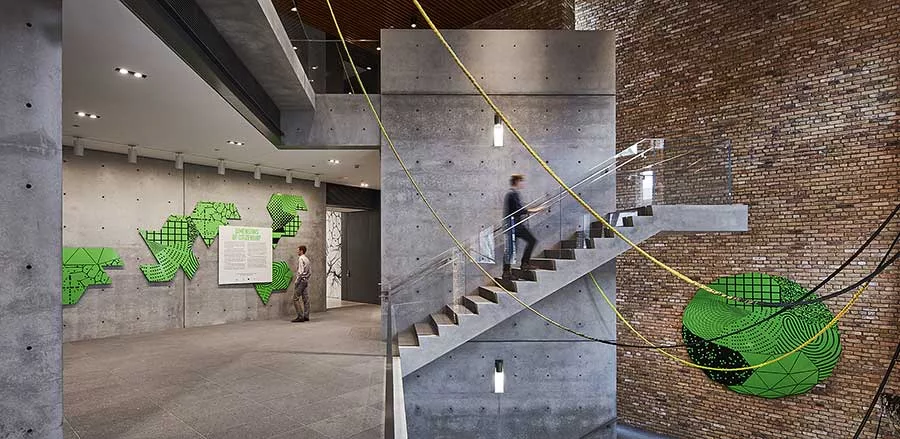
Dimensions of Citizenship at Wrightwood 659. Graphics and exhibition design by IN-FO.CO.
Photo © Tom Harris. Courtesy of Wrightwood 659, the School of the Art Institute of Chicago and the University of Chicago.
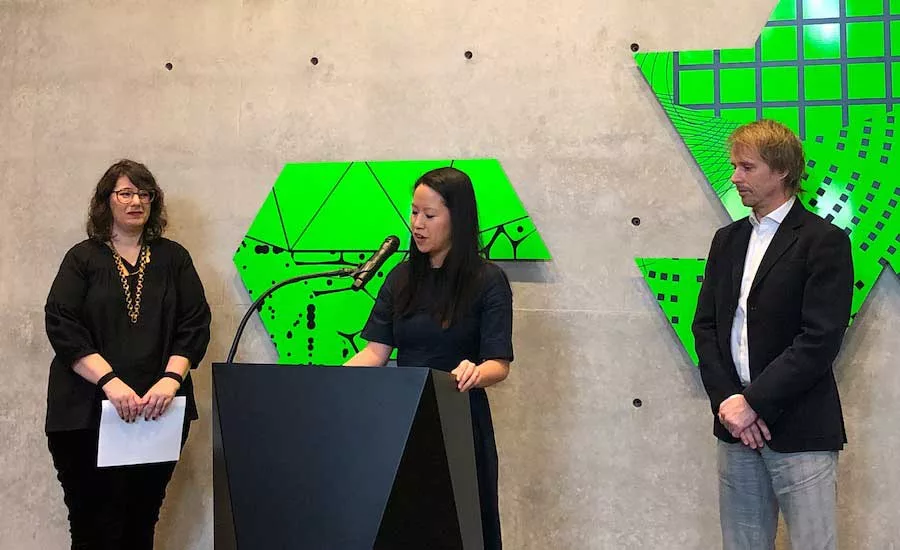
Curators Mimi Zeiger, Ann Lui, and Niall Atkinson
Photo © Zach Mortice
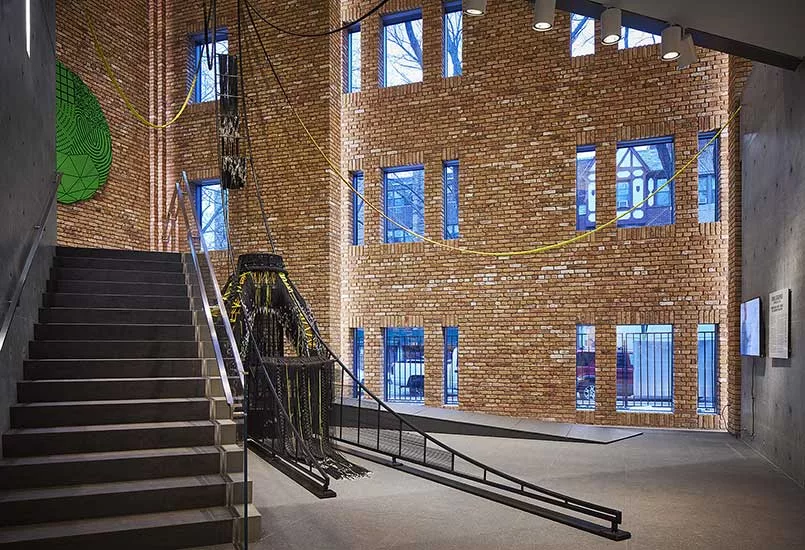
Thrival Geographies (In My Mind I See a Line) by Amanda Williams + Andres L. Hernandez, in collaboration with Shani Crowe at Wrightwood 659.
Photo © Tom Harris. Courtesy of Wrightwood 659, the School of the Art Institute of Chicago and the University of Chicago.
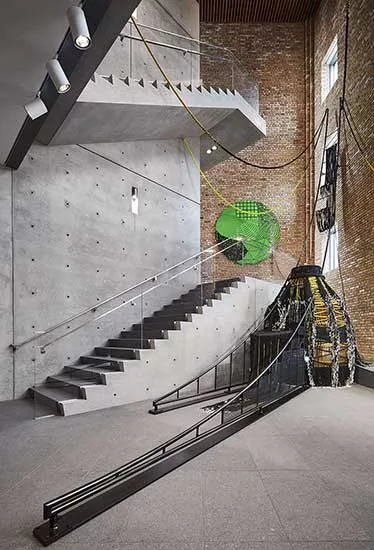
Thrival Geographies (In My Mind I See a Line) by Amanda Williams + Andres L. Hernandez, in collaboration with Shani Crowe at Wrightwood 659.
Photo © Tom Harris. Courtesy of Wrightwood 659, the School of the Art Institute of Chicago and the University of Chicago.
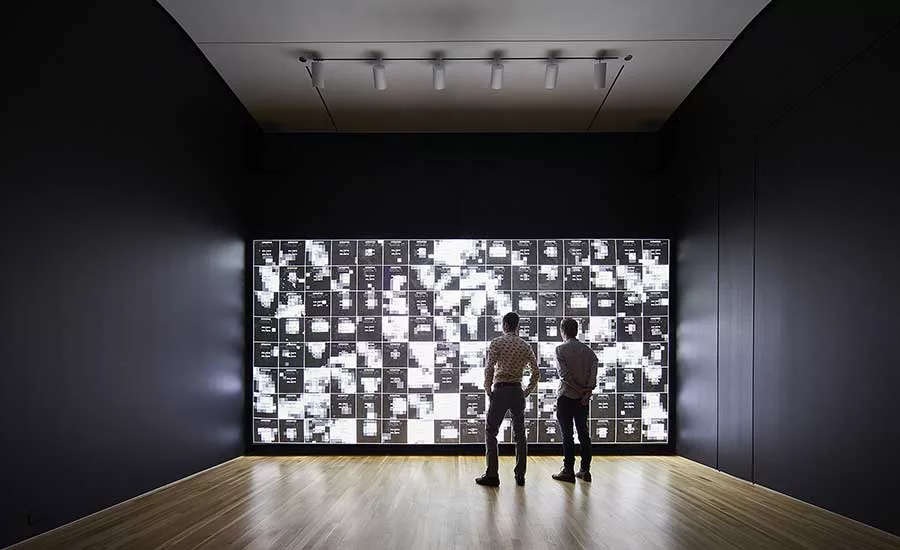
In Plain Sight by Diller Scofidio + Renfro, Laura Kurgan, Robert Gerard Pietrusko with Columbia Center for Spatial Research at Wrightwood 659.
Photo © Tom Harris. Courtesy of Wrightwood 659, the School of the Art Institute of Chicago and the University of Chicago.
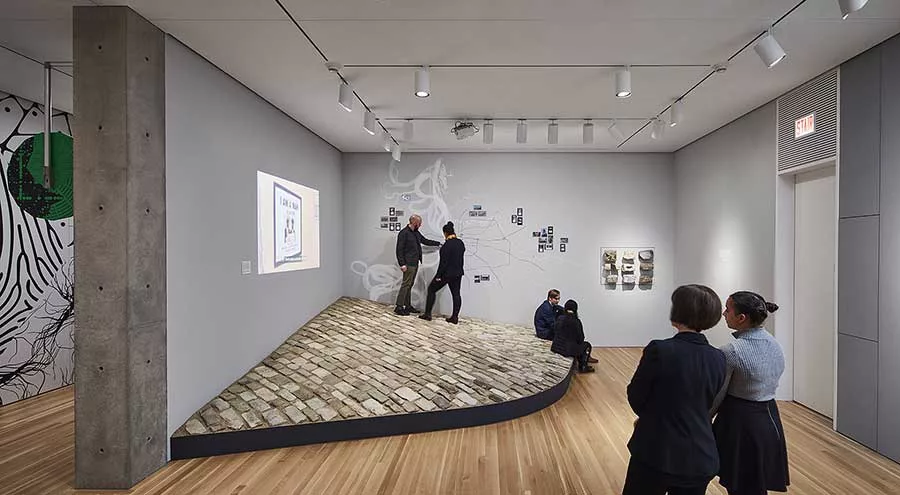
Stone Stories by Studio Gang at Wrightwood 659.
Photo © Tom Harris. Courtesy of Wrightwood 659, the School of the Art Institute of Chicago and the University of Chicago.
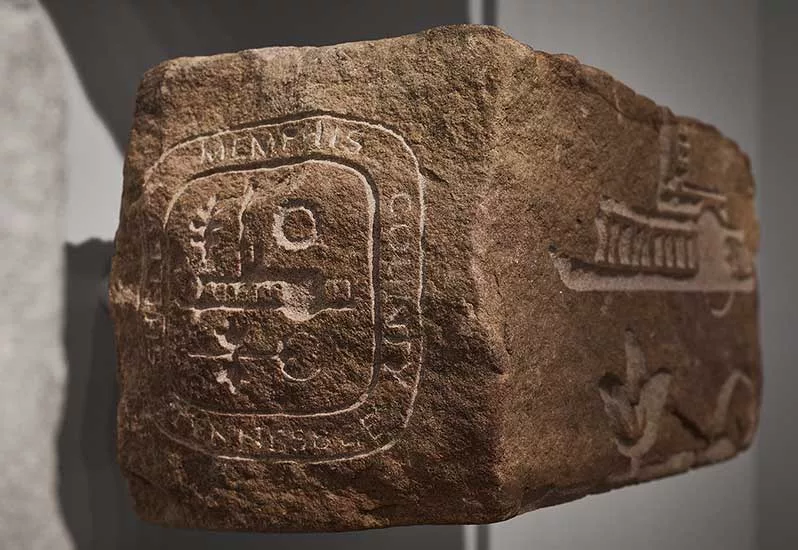
Stone Stories by Studio Gang at Wrightwood 659.
Photo © Tom Harris. Courtesy of Wrightwood 659, the School of the Art Institute of Chicago and the University of Chicago.
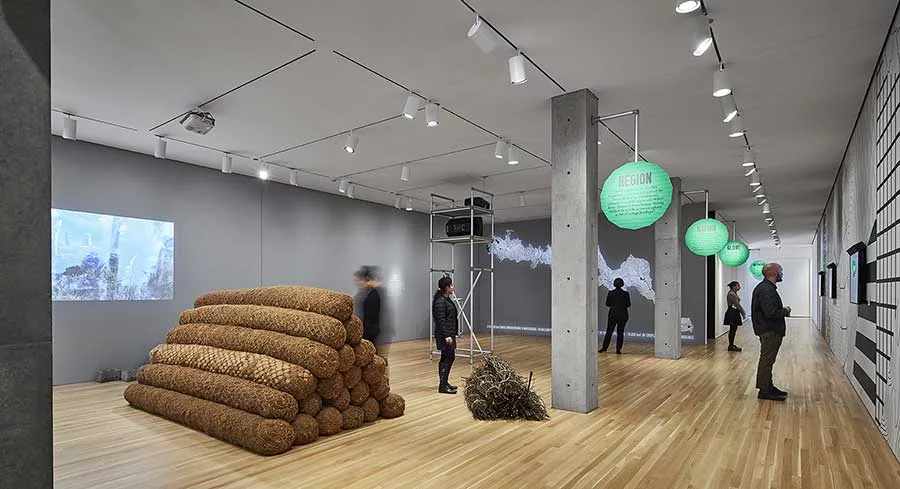
Ecological Citizens by SCAPE at Wrightwood 659 (foreground).
Photo © Tom Harris. Courtesy of Wrightwood 659, the School of the Art Institute of Chicago and the University of Chicago.
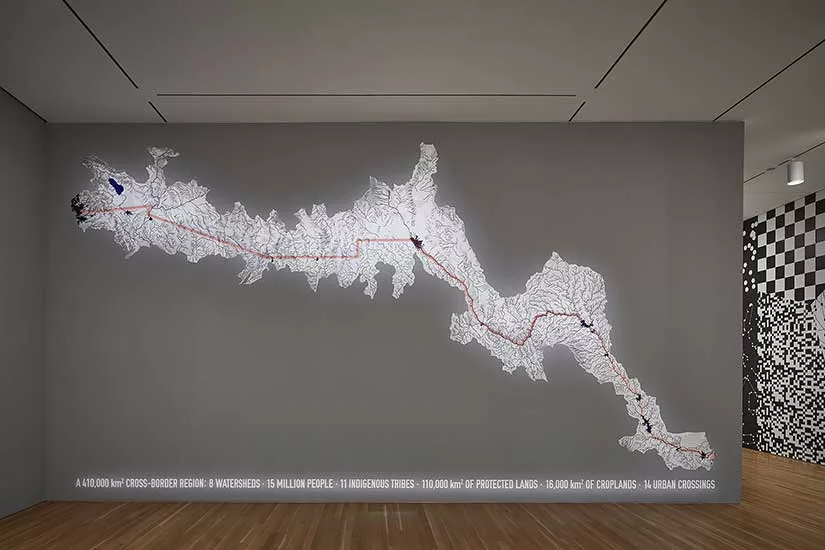
MEXUS: A Geography of Interdependence by Estudio Teddy Cruz + Fonna Forman at Wrightwood 659.
Photo © Tom Harris. Courtesy of Wrightwood 659, the School of the Art Institute of Chicago and the University of Chicago.
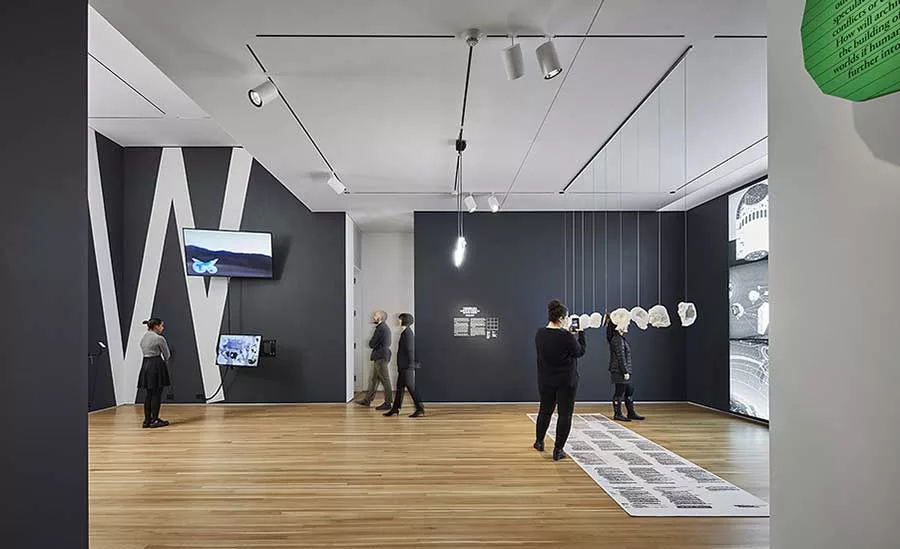
MANY by Keller Easterling with MANY (left) and Cosmorama by Design Earth (right) at Wrightwood 659.
Photo © Tom Harris. Courtesy of Wrightwood 659, the School of the Art Institute of Chicago and the University of Chicago.
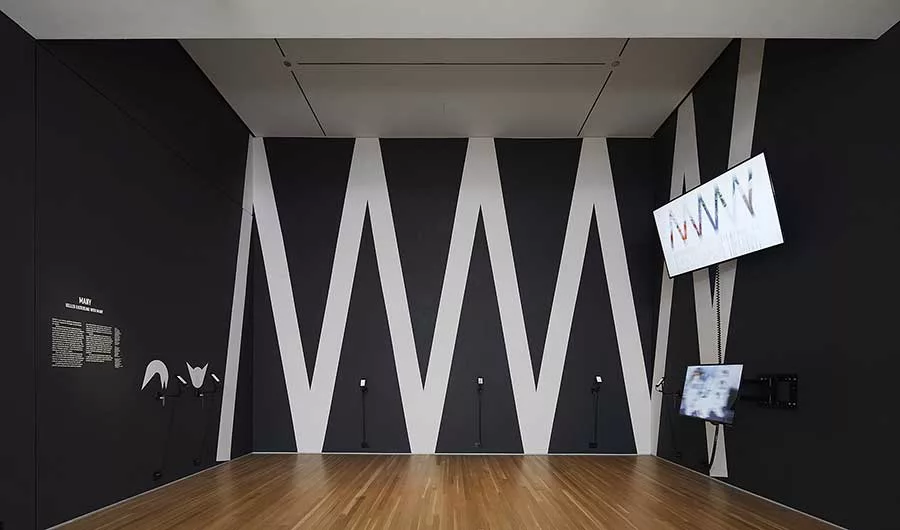
MANY by Keller Easterling with MANY at Wrightwood 659.
Photo © Tom Harris. Courtesy of Wrightwood 659, the School of the Art Institute of Chicago and the University of Chicago.
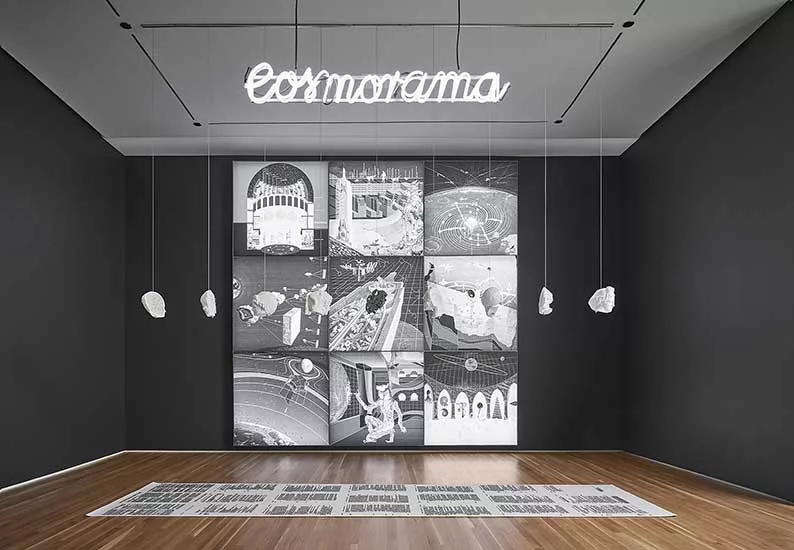
Cosmorama by Design Earth at Wrightwood 659.
Photo © Tom Harris. Courtesy of Wrightwood 659, the School of the Art Institute of Chicago and the University of Chicago.
The opening of “Dimensions of Citizenship,” shipped from the U.S. Pavilion at the 2018 Venice Architecture Biennale to Chicago, was delayed by the government shutdown in January, caused by President Trump’s insistence on funding for a border wall. Which was an unanticipated irony: it’s a show whose politics are also our national conversation.
The exhibition investigates the intersections of design and the borders that define citizenship and identity. The show acts as a response to hardening national borders and serves as a pressure release valve—charting, advocating, and accelerating different types of movement across boundaries, whether incremental or far flung, whether physical treks or inward journeys. But most all are pushing against the confines of traditional nation-states.
The work takes place across seven scales, from the “interpersonal to the inter-galactic,” says Paul Coffey, Dean of Community Engagement at the School of the Art Institute of Chicago (SAIC), which sponsored the exhibition along with the University of Chicago.
“Architecture has agency to speak at this range of scales, at not just the scale of the building,” says SAIC Architecture Professor Ann Lui, who curated the pavilion with writer and curator Mimi Zeiger, University of Chicago professor Niall Atkinson, and MAS Studio director Iker Gil.
The new home for the U.S. Pavilion installation is Tadao Ando’s Wrightwood 659, a former apartment building converted into an exhibition gallery. The show gets off to a materially electrifying start by contrasting the rich Chicago common brick of the original structure with the smooth, velvet-like concrete of Ando’s intervention, and the woven cord of the first citizen-scaled exhibit by Amanda Williams, Andres L. Hernandez, and artist Shani Crowe.
Amanda Williams, Shani Crowe, and Andres L. Hernandez discuss their installation in Venice.
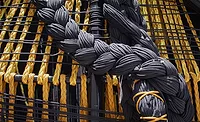
“Thrival Geographies (In My Mind I See a Line)” is a metal and rope sculpture that greets visitors in the first-floor atrium. There’s a strong sense of domestic enclosure and protection with “Thrival Geographies.” Scaled to Williams’ and Crowe’s bodies (both African-American women), the structure’s woven cord and bright yellow beads offer obvious allusions to braided African-American hair, one of Crowe’s mediums. Geometric and fractal patterns implicitly reference West African art and African architecture. By adding racial identity to their assigned scale of the citizen, this installation approaches “the scale of the individual as a collective,” says Williams.
Looking for quick answers on architecture and design topics?
Try Ask RECORD, our new smart AI search tool.
Ask RECORD →
The trio’s domed beehive-like structure is attached to steel tubes that look a bit like sled runners. It’s conceptually and metaphorically dense, and its multiple forms can be interpreted as a carriage, roller coaster, or spaceship—anything that can blow past barriers at rapid velocity. There’s also an otherworldly sense of optimism and confidence; a warm Afro-futurism, and the ladder extending from the dome’s oculus reads as something of an escape hatch. This dynamic motion sets up hopeful questions for Williams and powerful narratives of perseverance for the viewer. “Is it a spaceship? Has it landed? Where can we go?” she asks.
The civic scale and regional scale are represented by installations made of tactile objects that are part of functional infrastructure. Studio Gang’s collection of cobblestones from Memphis’ 19th-century Mississippi riverbank landing have been reorganized into a fresh civic space, forging a new story for the materials that gave birth to this capital of the inland cotton trade and slave economy. The installation also includes video interviews with local citizens. Next, the landscape architecture firm SCAPE’s installation works at the regional level, calling out the impotency of political borders at policing ecological forces, and offering functional infrastructure (coir logs, micro-tidal pools, fascines) that can better marshal erosion cycles and animal habitats. After the exhibition, SCAPE will deploy these elements in the Venice Lagoon to seed a new salt marsh.
Working at the national scale, “MEXUS: A Geography of Interdependence” by Teddy Cruz and Fonna Forman is the most politically engaged of the bunch—and also expresses an ecological truth. It’s a wall-scaled illustration of the U.S.-Mexico border, with political borders alternately obscured and revealed, and the cross-border watershed environment delineated in sharp relief, indifferent to nationhood.
At the network scale, “MANY” by a team led by Keller Easterling is perhaps the most attuned to the economic structures that define and stress our notions of citizenship but is also perhaps too wedded to them. “MANY” springs from Easterling’s astute observation that we can move tourists or goods around the globe seamlessly “but can’t manage to move people away from atrocities like those in Syria, or can’t manage to move those that are in economic or labor crisis,” she says. One answer is the MANY app, designed as a swipe-right, swipe-left matching service for peer-to-peer bartering of labor, education, and lodging. Using the app, refugees or global flaneurs ideally might sign on to work at a national forest in Oregon or a dairy farm in California for a few months or years.
MANY accepts global migration as the status quo and aims to create a network that can leverage it to humanitarian ends. “It’s trying to reduce the violence of the moment by making a more resilient set of global connections that serve as insurance,” she says. But while Easterling intends MANY to foster equitable relationships and discourage power imbalances, there’s little in the structure of the app (or in the wider world) that would actively prevent exploitation from coalescing on such a platform.
Keller Easterling discusses MANY in Venice.
Nearly invisible global players such as extractive industry corporations (which could potentially find their way into Easterling’s app) are given the spotlight in the global-scale installation “In Plain Sight,” by Diller Scofido + Renfro with Robert Pietrusko, Laura Kurgan, and the Columbia Center for Spatial Research. The team created a video installation that charts the location of industrial and commercial activities that (from a satellite view) are as bathed in light as any metropolis yet are largely depopulated: strip mines, military bases, national borders, natural gas extraction points. Conversely, it also shines a spotlight on places where large populations, such as vast informal settlements, often undercounted by demographers, are hidden in darkness.
The show ends at the cosmic scale, by conjuring new gods that have transcended our notions of borders and terrestrial citizenship. A fantastically dystopian sci-fi triptych, “Cosmorama” presents three stories drawn in the style of Renaissance etchings with an underlying parametric and infographic sensibility—timeless, antiquated, and radical all at once. In “Mining the Sky,” a new galactic empire is formed by exploiting the resources of the cosmos. In “Planetary Ark,” the Empire State Building is repurposed into a vessel that spirits endangered animals into space after total climate collapse, one day to return. Finally, “Pacific Cemetery” envisions a remote section of the Pacific Ocean where scrapped space debris and satellites have collected, becoming a new home for climate refugees. This installation most directly addresses Lui’s stated mission to “envision and construct alternate futures.”
These illustrations, by Rania Ghosn and El Hadi Jazairy of Design Earth, highlight cycles of consumption and abandonment. “The same kind of crises on earth play out whenever we act [out] a colonial mindset,” says Lui. But here, there’s reason for alien optimism. At the end of the “Pacific Cemetery” cycle, the presence of a Ganesh-like elephantine hybrid figure hints at a post-human future.
Rania Ghosn and El Hadi Jazairy of Design Earth discuss their installation in Venice.
Lui says the exhibition’s mandate for architecture is to create new forms of belonging, and the smallest and largest scale installations do this most explicitly and effectively. In the abstraction of citizenship for one, or in total futurist transcendence, there’s plenty of room for designers to experiment and dream, away from economic and political realities. As the national discourse on borders and citizenship becomes more heated, there may well be fewer compromises, which is all the more reason to insist on dreams.
The U.S. Pavilion exhibition Dimensions of Citizenship: Architecture and Belonging from the Body to the Cosmos, first shown at the 2018 Venice Architecture Biennale, runs through April 27 at Wrightwood 659 in Chicago. Watch original video interviews with each of the participants.
Looking for a reprint of this article?
From high-res PDFs to custom plaques, order your copy today!