Architectural Record
search
cart
facebook twitter linkedin youtube
  • Sign In
  • Subscribe
  • Sign Out
  • My Account
Architectural Record
  • NEWS
    • Latest News
    • Awards
    • Interviews
    • Obituaries
    • Podcasts
      • Design:Ed Podcast
      • Sponsored Podcasts
  • OPINION
    • Book Reviews / Excerpts
    • Exhibition Reviews
    • Forum
  • EXCLUSIVES
    • Videos
    • Design Vanguard
    • Top 300 Firms
    • Sponsored Content
    • Sponsored eBooks
    • From the Archives
  • CONTINUING ED
    • Editorial Continuing Ed
    • CE Center
    • CE Academies
  • PROJECTS
    • Buildings By Type
    • Reuse & Renovation
    • Museums & Arts Centers
    • Colleges & Universities
    • Multifamily Housing
    • Interiors
    • Lighting
    • Kitchen & Bath
  • HOUSES
    • Record Houses
    • House of the Month
    • Featured Houses
  • PRODUCTS
    • Products by Category
    • Record Products of the Year
    • Latest Products
  • EVENTS
    • Dates & Events
    • Record on the Road
    • Innovation Conference
    • Sustainability in Practice
    • Women In Architecture
    • Webinars
    • Ad Excellence Awards
    • Submit an Event
  • CONNECT
    • Ask RECORD AI
    • Newsletters
    • Contact
    • Advertise
    • Editorial Calendar
    • Store
    • Customer Service
  • SUBMIT
    • Submission Guidelines
    • RECORD Competitions
  • MAGAZINE
    • Subscribe
    • My Account
    • Digital Edition
    • Current Issue
    • Firm Pass
    • Historic Archive
Architecture News

Design Competitions Raise Questions of Compensation
By Deane Madsen
Design Competitions Raise Questions of Compensation

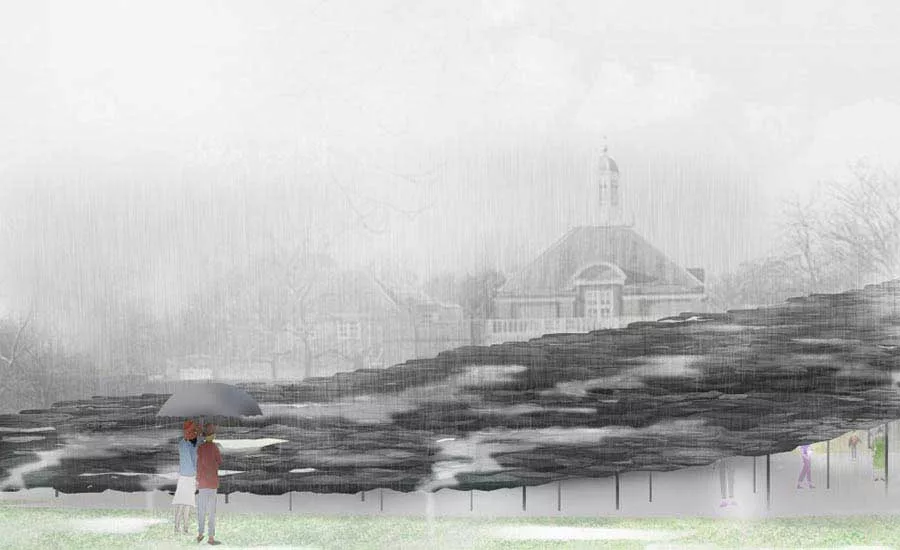
Ishigami’s Serpentine Pavilion will open June 21, 2019, in London’s Kensington Gardens.

Photo © Junya Ishigami + Associates
Design Competitions Raise Questions of Compensation

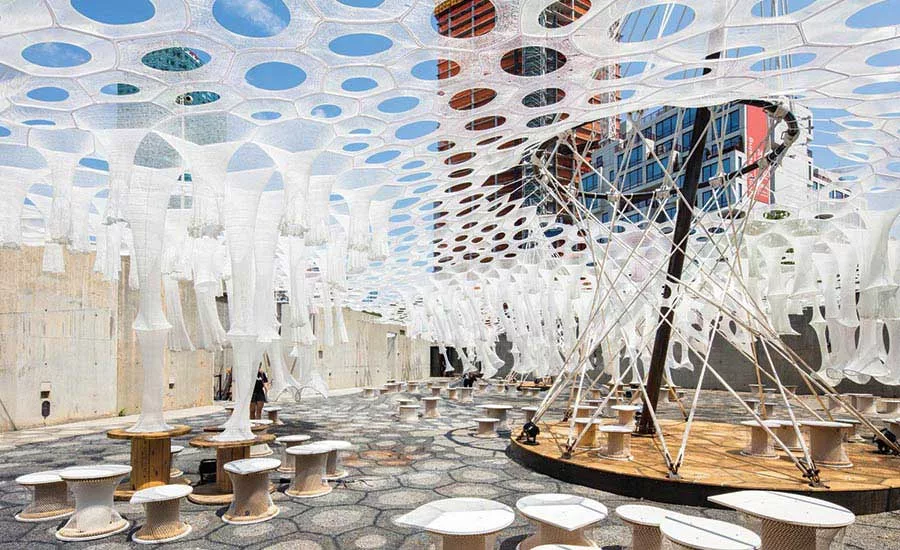
Sabin’s installation Lumen was installed in the courtyard of MoMA PS1 in New York during the summer of 2017.

Photo © Pablo Enriquez

Design Competitions Raise Questions of Compensation
April 26, 2019

Few occupations require as rigorous a set of academic courses and professional exams while promising so little by way of remuneration as architecture. And, for early-career architects, salaries can be precarious—and in some cases nonexistent—while emerging designers chase dream commissions, and prioritize prestige over pay when taking jobs.

Recent questions about the internship practices of this year’s Serpentine Gallery pavilion winner, Junya Ishigami, have again brought the topic of competition compensation to the fore. Shortly after the February announcement of Ishigami’s selection, designer Adam Nathaniel Furman circulated an image purporting to be a screenshot of an e-mail soliciting unpaid work at the firm. Although Ishigami’s office could not be reached for comment, the Serpentine Gallery later issued a statement requiring Ishigami to pay all those working on his commission for the annual summer pavilion. (The same issue arose in 2013 when fellow Japanese architect Sou Fujimoto won the Serpentine commission.)

In the United States, unpaid work is illegal. Federal law prohibits employment without a minimum wage, which varies from state to state, but student internships offer a loophole, allowing non-employee interns to receive on-the-job training or school credit in lieu of payment.

The AIA’s official stance on internship payment is as hard to pin down as its exact definition of an intern. “If you, as an AIA member, want to run for office or want to submit a project or your firm for an honor or award, you have to state that you do not employ, or have not employed, working students or unpaid interns,” said AIA deputy general counsel Terence F. Canela in a video for the organization. Beyond that, the AIA’s Code of Ethics requires its members to follow federal laws, which are murky on the subject at best.

Design competitions also remain a complex realm within the profession. Many offer more in the way of prestige and recognition than they do in prize money. Some open competitions are criticized for soliciting thousands of hours of design work with pay reserved for a small group of finalists. Other invited competitions offer build budgets and travel stipends, but leave employee overhead to be covered by the firms.

There’s no doubt in the mind of 2017 Young Architects Program (YAP) winner Jenny Sabin that designing Lumen for MoMA PS1’s annual summer pavilion is one of the biggest highlights of her career. According to the museum’s press office, the year Sabin won, the YAP began offering finalists $5,000 to develop their designs and produce an exhibition model; the ultimate winner receives an additional $15,000 toward design development, and $100,000 for build-out. But even with those designated funds, Sabin says that “part of the creative maneuvering of producing the design is finding ways to bolster the budget in support of the project.” YAP winners are not allowed to fund-raise, but “there are ways of thinking creatively around the budget,” Sabin tells record. “You have to organize a team of professionals, such as structural engineers and contractors, and because of the size of their companies, many of those people are able to do pro bono work.”

A relative newcomer on the American competition circuit originated with Exhibit Columbus, the annual program in Columbus, Indiana, celebrating art, architecture, and community. Named for the philanthropists who helped shape the city’s notable architectural legacy (in 30 square miles, one can find works by Eliel and Eero Saarinen, Cesar Pelli, Kevin Roche, I.M. Pei, and others) and meant to encourage the next generation of architectural creativity, the J. Irwin and Xenia S. Miller Prize offers $70,000 build budgets to each of five winners. But Richard McCoy, who is director of Landmark Columbus, the organization behind the Exhibit Columbus program, admits that organizers have never verified a firm’s accounting for Miller Prize–winning projects. “We offer to help the winners find local fabricators and people to build or work with them, and we’ve had a tremendous amount of in-kind donations to all of the installations,” McCoy tells record. “But I also recognize that some studios don’t view this as a profitable enterprise,” he adds. “They all do it for the love of the art, and because it’s a chance to experiment in an interesting context.”

While, generally, these types of commissions are not money-making ventures, for Sabin, participating in the MoMA PS1 program yielded creative dividends, and the exposure for Lumen was “stratospheric.”

Looking for quick answers on architecture and design topics?
Try Ask RECORD, our new smart AI search tool.
Ask RECORD →

KEYWORDS: MoMA PS1 Serpentine Pavilion

Share This Story

Looking for a reprint of this article?
From high-res PDFs to custom plaques, order your copy today!


Deane Madsen is a Washington, D.C.–based writer and photographer specializing in architecture.

Post a comment to this article

Report Abusive Comment

Subscription Center
  • Create an Account
  • Start a Subscription
  • Manage My Account
  • Sign Up for Newsletters
  • Visit Customer Service
  • Update Preferences

More Videos

Sponsored Content

Sponsored Content is a special paid section where industry companies provide high quality, objective, non-commercial content around topics of interest to the Architectural Record audience. All Sponsored Content is supplied by the advertising company and any opinions expressed in this article are those of the author and not necessarily reflect the views of Architectural Record or its parent company, BNP Media. Interested in participating in our Sponsored Content section? Contact your local rep!

close
  • TAMLYN XtremeTrim Exterior Trim
    Sponsored byTamlyn

    Designing Cleaner Panel Facades: Why Exterior Trim Details Matter

  • Building with Vapor Barriers
    Sponsored byReef Industries, Inc.

    Vapor Barriers Help Control Moisture in Tighter Building Designs

  • Duct Interior with Prodeq System
    Sponsored byHenry, a Carlisle Company

    Designing Resilient Water Containment Systems

DESIGN:ED Podcast
Listen to Architectural Record’s DESIGN:ED Podcast

Events

June 10, 2026

Rethinking Stormwater – The Power of Porous Paving

Credits: 1 AIA LU/HSW; 1 AIBD P-CE; 0.1 ICC CEU

Learn how porous paving systems support stormwater management, reduce heat island effects, and enhance sustainable site design performance.

June 11, 2026

Very Early Warning Fire Detection for Mission-Critical Facilities

Credits: 1 AIA LU/HSW; 1 AIBD P-CE; 0.1 ICC CEU

Examine advanced fire detection strategies that support uptime and enhance safety in data centers and other mission-critical facilities.

View All Submit An Event

Products

2026 Architect's Square Foot Costbook

2026 Architect's Square Foot Costbook

See More Products

Popular Stories

Practice Matters illustration

What’s in a (Firm’s) Name? Thinking About Succession and Legacy

Practice Matters illustration

By the Numbers: Counting America's Architects

Riverdale House by Studio Lau

Riverdale House by Studio Lau

House on a Hill

Design Vanguard 2026: Forma

Crane Cove, ONO

Design Vanguard 2026 Winners

Broader Sustainability of CMU - Free Webinar - May 21, 2026

Related Articles

  • Community Forum Questions Crop of Tall Buildings Around Central Park

    See More
  • Three Questions: Cynthia E. Smith, Curator of Socially Responsible Design at the Smithsonian Cooper-Hewitt, National Design Museum

    See More
  • Centre Pompidou

    No Contest: Architectural Competitions

    See More

Related Products

See More Products
  • 1444336282.gif

    The Handbook of Interior Design

  • 0470130628.gif

    Sustainable Design: The Science of Sustainability and Green Engineering

  • drawingfrommodel.jpg

    Drawing from the Model: Fundamentals of Digital Drawing, 3D Modeling, and Visual Programming in Architectural Design

See More Products

Events

View AllSubmit An Event
  • November 4, 2025

    Fire-Rated Glazing Essentials: Addressing Common Design Questions

    NOW ON DEMANDCredits: 1 AIA LU/HSW; 1 AIBD P-CE; 0.1 ICC CEU; 0.1 IACET CEUThis course offers an overview of modern fire-rated glass and framing systems, and answers common fire-rated glazing questions from the design community.
View AllSubmit An Event
×

The latest news and information

#1 Source for Architectural Design, News and Products

SUBSCRIBE
  • RESOURCES
    • Advertise
    • Contact Us
    • Submit
    • Store
  • ACCOUNT CENTER
    • Create an Account
    • Start a Subscription
    • Manage My Account
    • Sign Up for Newsletters
    • Visit Customer Service
    • Update Preferences
  • PRIVACY
    • PRIVACY POLICY
    • TERMS & CONDITIONS
    • DO NOT SELL MY PERSONAL INFORMATION
    • PRIVACY REQUEST
    • ACCESSIBILITY
  • SERVICES
    • Marketing Services
    • Reprints
    • Market Research
    • List Rental
    • Survey/Respondent Access
  • STAY CONNECTED
    • Linkedin
    • Facebook
    • Instagram
    • YouTube
    • X (Twitter)

Copyright ©2026. All Rights Reserved BNP Media, Inc. and BNP Media II, LLC.

Design, CMS, Hosting & Web Development :: ePublishing