UC Gardner Neuroscience Institute by Perkins and Will
Cincinnati

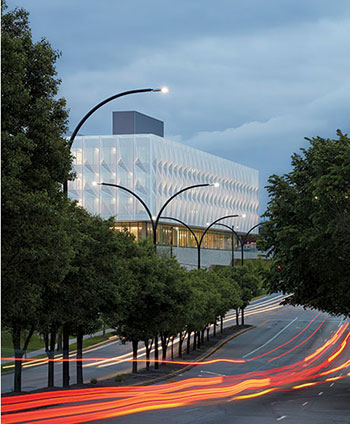
The Gardner Neuroscience Institute, which sits next to Frank Gehry’s Vontz Center for Molecular Studies, stands out with its lustrous white scrim. A new gateway for UC Health, the building sets the tone for the future medical-campus master plan.
Photo © Mark Herboth
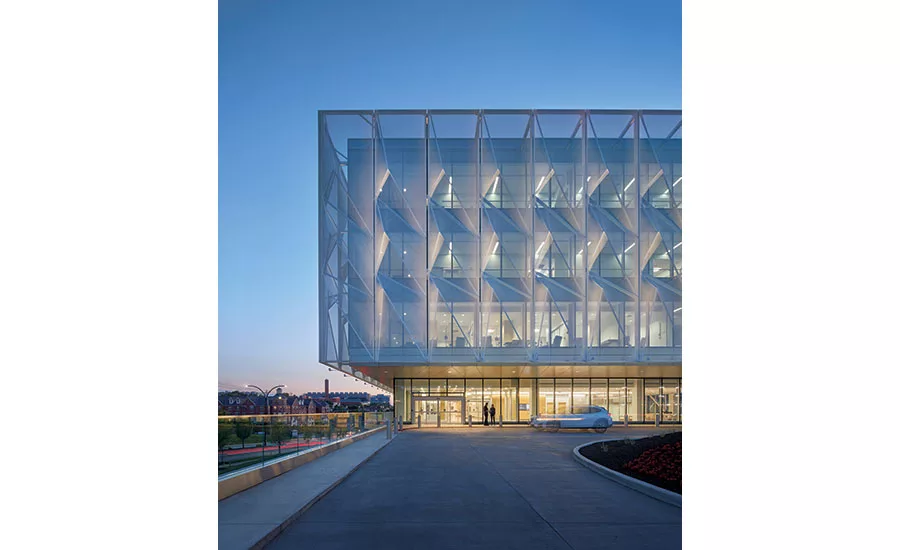
A drop-off area at the main entrance facilitates a smooth transition into the building.
Photo © Mark Herboth
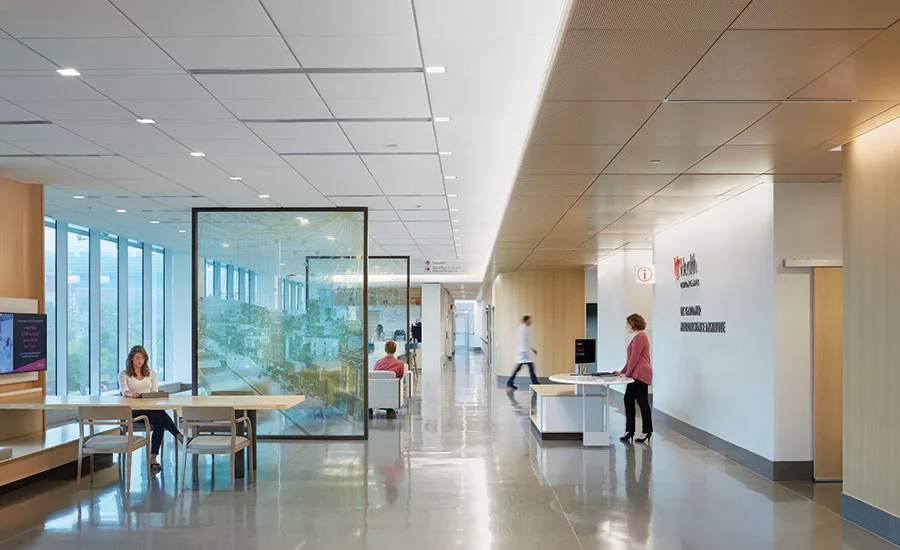
In lieu of a large atrium, the architects broke down the scale of the lobby to create a more soothing environment with small, movable check-in desks.
Photo © Mark Herboth
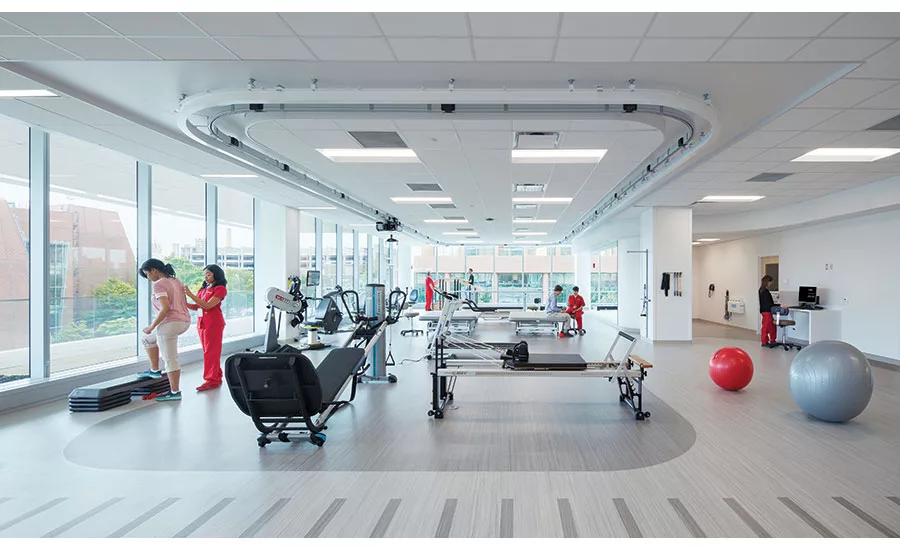
Treatment rooms along the perimeter are bathed in natural light.
Photo © Mark Herboth
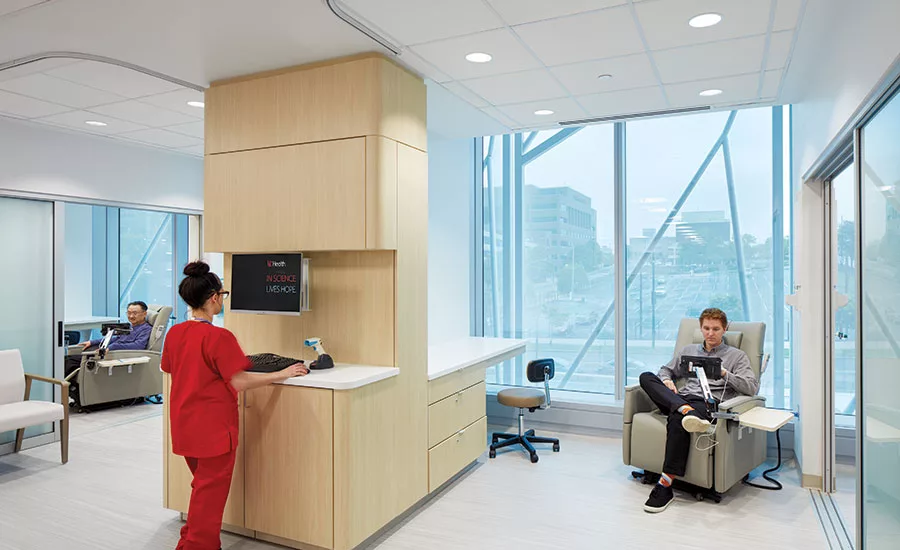
Treatment rooms along the perimeter are bathed in natural light.
Photo © Mark Herboth
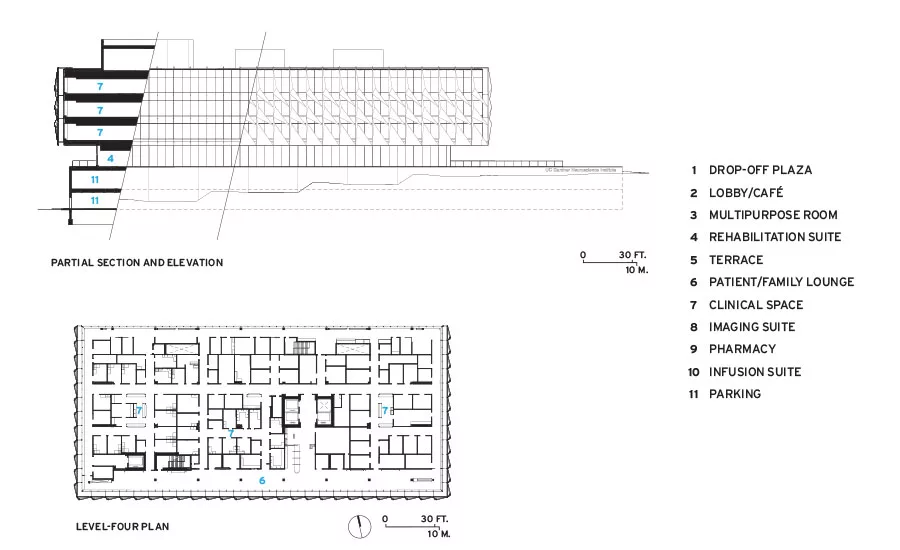
Image courtesy Perkins+Will
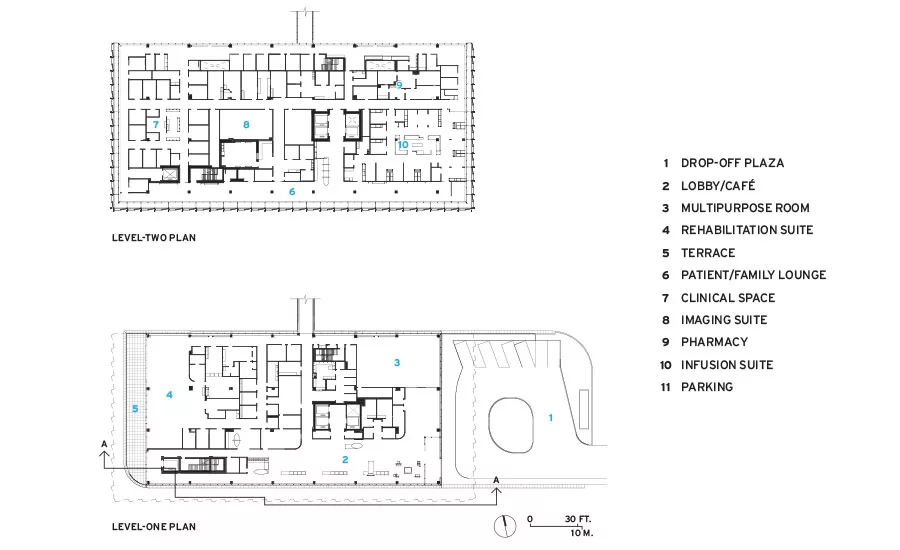
Image courtesy Perkins+Will
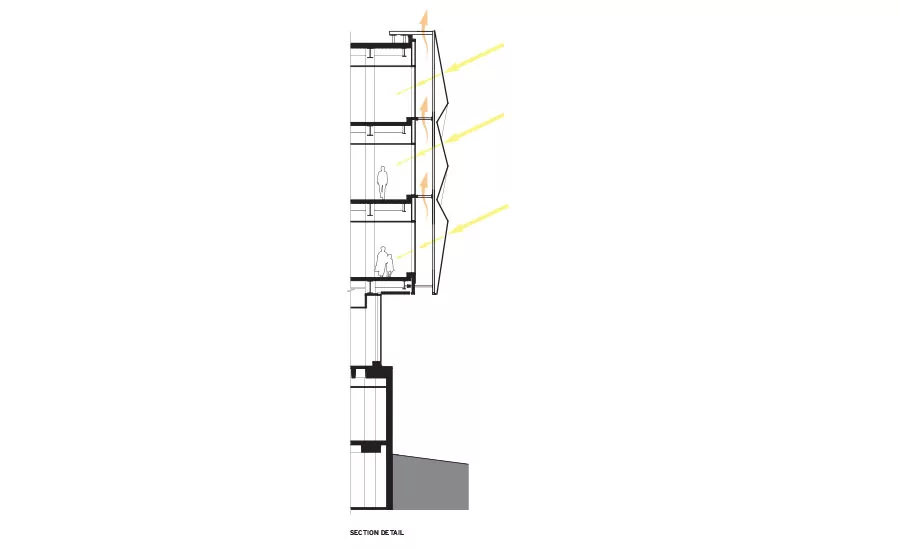
Image courtesy Perkins+Will
Architects & Firms
Not many buildings can compete with the skewed geometries of Frank Gehry’s sculptural architecture, but, despite its simple rectilinear form, Perkins and Will’s new Gardner Neuroscience Institute at UC Health (the clinical center affiliated with the University of Cincinnati College of Medicine) manages to make its neighbor—the bulging redbrick Vontz Center for Molecular Studies (1999)—recede into the background. What’s captivating about the Institute is its tensile white scrim, a delicately crinkled surface that varies in transparency and iridescence, like a mood ring, as the sun cycles through the day.
Additional Content:
Jump to credits & specifications
The facility—the first ground-up building by UC Health in more than 30 years—sits at the edge of the medical campus, along a major thoroughfare. Rising atop an Indiana limestone plinth carved into its sloped site, the steel-and-glass structure soars skyward at its west end; uphill, where the main entrance is located, the less imposing east elevation presents a friendlier, more human scale. The Institute’s visual identity, a clear departure from the surrounding mélange of dated health-care and research buildings, represents not only a new gateway for UC Health, but also an influence for a new campus master plan, by Cannon Design and Cincinnati-based WA Architects, that will reflect the look and feel of this new building, according to vice president of facilities, Bob Feldbauer.
The $68 million project is the result of a long-held ambition of Dr. Joseph Broderick, a director at UC Health’s Neuroscience Institute since its founding in 1999. Four years ago, the Institute launched a fundraising campaign to build a facility that would bring together 15 specialty centers, including those for treating epilepsy, brain tumors, mood disorders, stroke patients, and Alzheimer’s disease, and accommodate 125 faculty members and expanded programming. Previously, these departments were scattered around campus, and patients, who often suffer from more than one neurological impairment, had to travel between buildings for treatment. “For some, going to the doctor is like going on a cross-country trip,” says Broderick, so one of the goals was to minimize the stress associated with medical visits. With a large donation from the family of James J. Gardner, a former executive at Cintas, an apparel company, who established a philanthropic foundation in 2005 after his wife was diagnosed with Parkinson’s, Broderick was able to see his vision come to fruition.
The 194,000-square-foot outpatient building provides facilities for multidisciplinary neurological care as well as collaborative workspaces for physicians, researchers, and students; 93 exam rooms, 43 consultation offices, 24 specialty-care rooms, and 16 infusion-treatment spaces are spread across four levels. Central to Broderick’s vision was creating a dignified environment for patients and their caregivers; the interiors—crisp, airy, and flooded with natural light—possess a grace that clinical facilities typically lack. Says Perkins and Will managing principal Clark Miller: “There was such a strong statement from the beginning. If it didn’t benefit the patient, it wasn’t going to be included. That was the fundamental point when it came to the architecture.”
As the team developed the design, they consulted with a patient advisory board, composed of about 15 individuals representing an assortment of neurological conditions. At these meetings, patients illuminated the difficulties of performing basic tasks such as navigating sloped parking garages and opening heavy doors; even restrooms designed for those with disabilities may be too cramped if they need a caretaker to assist them. “The process was very humbling,” says design principal Jerry Johnson. “We were told, ‘You can design an ADA toilet, but that doesn’t mean it will meet all of our needs.’” Dr. Eve Edelstein, the research director at the Perkins and Will Human Experience Lab, the firm’s user-research branch, also weighed in, helping translate the Lab’s original scientific research to formulate objective design principles. “Eve was there to tell us, ‘No, you can’t use that sparkly terrazzo,’ ” explains interior-design principal Amy Sickeler, “because that can impair those with balance, sensory, or motor issues. As designers, we know better, but sometimes we can’t help ourselves.”
Among other topics that came up in conversation with patients were the large atria, which caused vertigo for some, and the prominent registration desks often found in medical lobbies. For many, large, centralized reception areas are too cold and imposing, according to Johnson. Instead, the Institute’s spacious, open foyer welcomes visitors with a variety of alcoves to gather in, including a café. Smaller reception stations, as well as self-check-in kiosks, sit within the elevator bays. The lobby’s bright surfaces, use of wood, and floor-to-ceiling windows with views out to the street together foster a positive and empathetic environment.
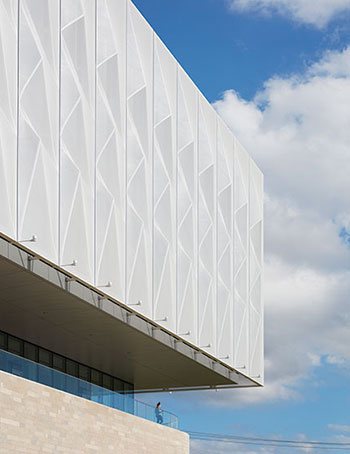
The building’s gossamer mesh scrim, stretched across a sculpted frame that extends 3 feet beyond the glass curtain wall, covers the cantilevered east, west, and south sides of the second-through-fourth levels, where treatment areas and workspaces are located. The infusion rooms, where patients receive IV therapy, sometimes for several hours at a time, are placed along the light-filled perimeter, as is the physical therapy space, which has a large terrace for outdoor exercises. The exterior fabric sheathing mediates direct daylight and reduces interior shadows, addressing patients’ light sensitivity while offering unimpeded views out. It is also energy efficient and eliminates the need for shades. “The skin is remarkable,” says Miller. “It’s soothing for the patients, it’s an energy saver, and it gives the building an iconic expression.”
The Gardner Neuroscience Institute is an architectural embodiment of patient advocacy and a point of pride for UC Health, one of the largest centers for neurological and psychiatric care in the region. According to Broderick, feedback since its opening in April has been overwhelmingly positive, with visitors praising the myriad ways the building addresses their particular needs. But providing the best care also means adapting to critiques that will inevitably arise. “We’re still learning things, still finetuning” says Broderick, “which is the way it should be.”
CreditsArchitect: Perkins and Will 410 N. Michigan Avenue Chicago, IL t. 312.755.0770
Personnel in architect's firm who should receive special credit: Jerry Johnson, AIA – Design Principal, Architecture Clark Miller, AIA, LEED AP – Managing Principal Elizabeth Rack, AIA, LEED AP – Planning Principal Diedra Woodring, AIA LEED AP – Programming Principal Eve Edelstein, PhD, EDAC, Assoc. AIA, F-AAA – Neuro Architect Adana Johns, AIA, LEED AP – Project Manager Max Adams, AIA, LEED AP – Sr. Project Architect/Designer James Giebelhausen, AIA – Sr. Project Architect/Technical Emily Bateman, ACHA, AIA, LEED AP – Project Architect Rob Deering, LEED Green Associate – Construction Administration Senaid Salcin – Designer Amy Sickeler, IIDA, CHID, LEED AP – Design Principal, Interiors Stephen Mai – Interior Project Designer Brian Weatherford – Branded Environments Lead Cary Lancaster – Branded Environments Project Designer
Architect of record: Perkins and Will – Chicago
Interior designer: Perkins and Will – Atlanta
Engineers: Structural: Shell + Meyer Associates, Inc Mechanical: Heapy Engineering Electrical: Heapy Engineering Civil: The Kleingers Group
Consultants: FF&E: Elevar Design Group Medical Equipment: Global Workplace Solutions Signage: Kolar Art: Kalisher
General contractor: Messer Construction Company / Cincinnati, Ohio
Construction Manager: Hplex Solutions, Inc
Photographer: Mark Herboth |
SpecificationsExterior Cladding Masonry: Variegated Indiana Limestone Rainscreen MCM Panels: Morin EIFS, ACM, or other: Moisture barrier: Curtain Wall: Pioneer Cladding & Glazing Systems Tensile Mesh: Valmex façade by Mehler Texnologies / Structurflex
Roofing Elastomeric: Firestone TPO
Glazing Glass: Viracon & Guardian
Doors Entrances: Pioneer Cladding & Glazing Systems Sliding doors: Wilson Partitions
Hardware Locksets: Assa Abloy
Interior Finishes Acoustical ceilings: Armstrong, Rulon Cabinetwork and custom woodwork: Cutting Edge Woodworks Paints and stains: Paint – Benjamin Moore Plastic laminate: Formica Solid surfacing: Corian Floor and wall tile: Ceramic Technics, Ltd Seamless Resinous Flooring: Stonhard, Forbo Carpet: Kinetex Epoxy Resin Terrazzo: Martina Bros.
Furnishings Office furniture: Haworth, Krug Reception furniture: Knoll Chairs: KI, Herman Miller, Via Tables: Haworth, OFS, Herman Miller, Versteel, Carolina, ERG, Krug, HBF Upholstery: Carnegie, Knoll, Maharam, HBF, Stinson, Xorel, Architex Other furniture: Linak Patient Recliner, Midmark Exam Chair, Herman Miller Eames, Herman Miller Swoop
Lighting Interior ambient lighting: Lithonia, Metalux Daybright Downlights: Edison Price, Lumenpulse Tasklighting: Kenall Healthcare Exterior: Cree Dimming system or other lighting controls: Lutron
Conveyance Elevators: Otis Elevator Company / United Technologies |
Looking for a reprint of this article?
From high-res PDFs to custom plaques, order your copy today!