A Blockbuster Exhibition in Paris Explores the Pioneering Work of Charlotte Perriand
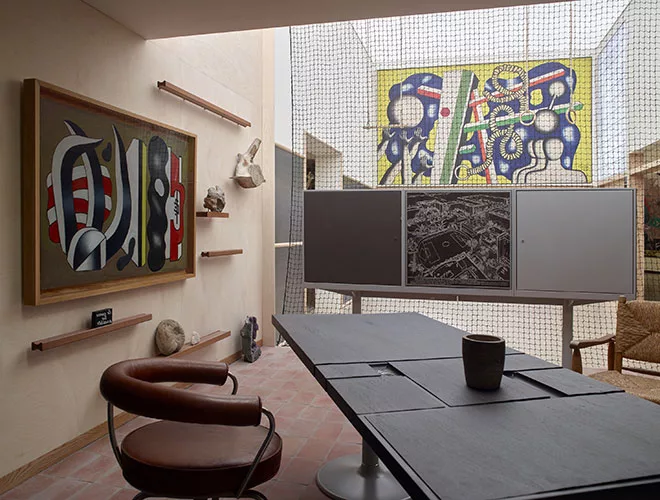
A reconstruction of Maison de Jeune Homme, designed by Charlotte Perriand with René Herbst, Luis Sognot for the Exposition Universelle de Bruxelles (1935)
Photo © Adagp, Paris, 2019; © Fondation Louis Vuitton / Marc Domage
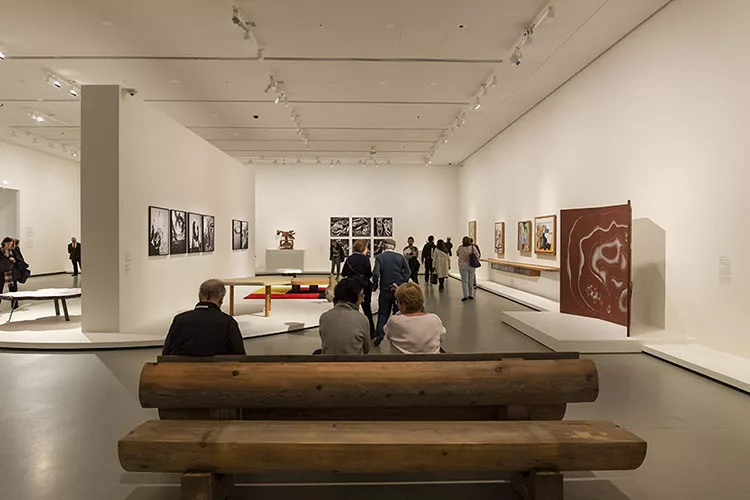
Visitors to Charlotte Perriand: Inventing a New World
Photo © Adagp, Paris, 2019; © Fondation Louis Vuitton / Felix Cornu

A reconstruction of Tonneau Refuge, designed by Charlotte Perriand with Pierre Jeanneret (1938)
Photo © Adagp, Paris, 2019; © Fondation Louis Vuitton / Felix Cornu
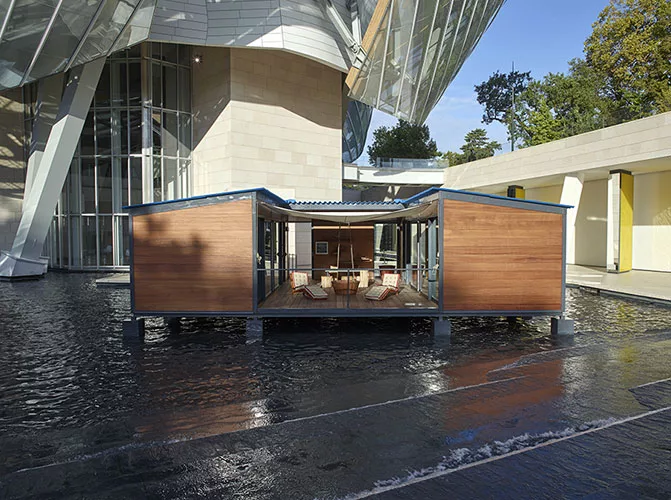
A reconstruction of the Maison au bord de l’eau (1934) sited at the cascading water feature in front of Frank Gehry’s 2014 building for the Fondation Louis Vuitton in Paris
Photo © Adagp, Paris, 2019; © Fondation Louis Vuitton / Marc Domage
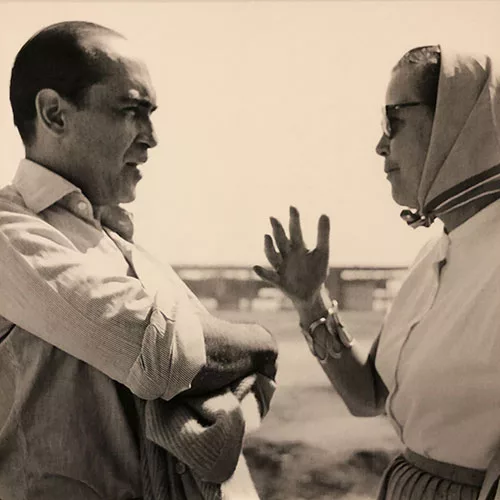
Snapshot of a photograph in the exhibition of Charlotte Perriand with Oscar Niemeyer
Photo © Architectural Record
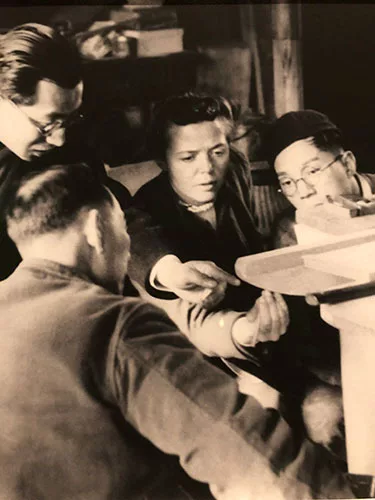
Snapshot of a photograph of Charlotte Perriand with collaborators in Japan
Photo © Architectural Record
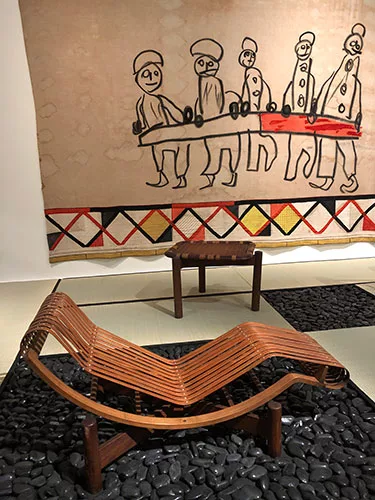
A wood version of the famous chaise longue designed by Perriand, beside a tapestry of a child’s drawing, selected by Perriand and painted by Saburo Hasegawa (1940)
Photo © Architectural Record
Charlotte Perriand died in 1999 at the age of 96. On the twentieth anniversary of her death, the Louis Vuitton Foundation in Paris has mounted an incredible exhibition of the work of this often unheralded designer who helped shape 20th-century living.
For the first time since its opening in 2014, the entirety of the sprawling Frank Gehry building has been devoted to one designer, a testament to Perriand's influence and appeal to contemporary audiences after decades in the shadow of Le Corbusier, in whose studio she worked beginning in 1927. Opened last week and on view through February 24, 2020, Charlotte Perriand: Inventing a New World spans four levels and showcases her revolutionary furniture pieces, like the ubiquitous Swivel Armchair (1927) and the bent plywood stacking Ombre Chair (1954), as well as faithful reconstructions of spaces and structures she designed such as the Tea House for the Cultural Festival of Japan in Paris (1993) and La Maison au bord de l'eau (1934) nearly 60 years earlier, installed outside over the cascading water feature at the bow of Gehry's shiplike pile.
A true Modernist who often wore a necklace of large chrome-plated metal ball bearings (displayed in the show), Perriand also embraced nature—producing photography and designing objects based on her love of the beach and mountains—and traditional craft, especially following her pivotal stays in Japan beginning in 1940.
For Perriand, "l'art d'habiter" involved a synthesis with the other arts. The exhibition is chock-full of colorful, large-scale paintings by Fernard Léger, with whom she maintained a remarkable poetic dialogue over many years. It also features works by other friends and influences Alexander Calder, Georges Braque, Joan Miró, and Pablo Picasso, in addition to her many collaborations with Pierre Jeanneret and Le Corbusier.
Her most significant architectural project came when she was in her sixties and would last over twenty years. Leading a team of designers to develop the 30,000-bed Les Arcs ski resort in the French Alps, she took an organic approach, replacing towers from a previous plan with "reclining buildings" adapted to the sloping site.
Often the sole woman in a world full of men, the talented, globe-trotting, politically active, daring, and unapologetic Perriand was ahead of her time. Two decades after her death, this exhibition is long overdue and not to be missed.
Looking for quick answers on architecture and design topics?
Try Ask RECORD, our new smart AI search tool.
Ask RECORD →
Looking for a reprint of this article?
From high-res PDFs to custom plaques, order your copy today!