Student Learning Commons at Springfield Technical Community College by Ann Beha Architects
Springfield, Massachusetts
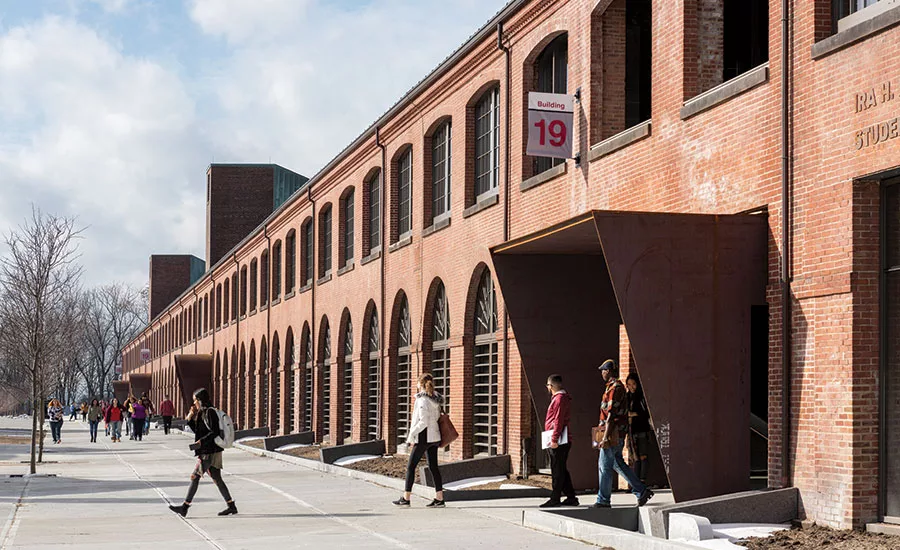
The original building, located near officers’ quarters constructed in the 1830s, housed lumber for manufacturing gunstocks. Its renovation included the addition of weathering steel canopies to announce four new entry points (shown).
Photo © Chuck Choi
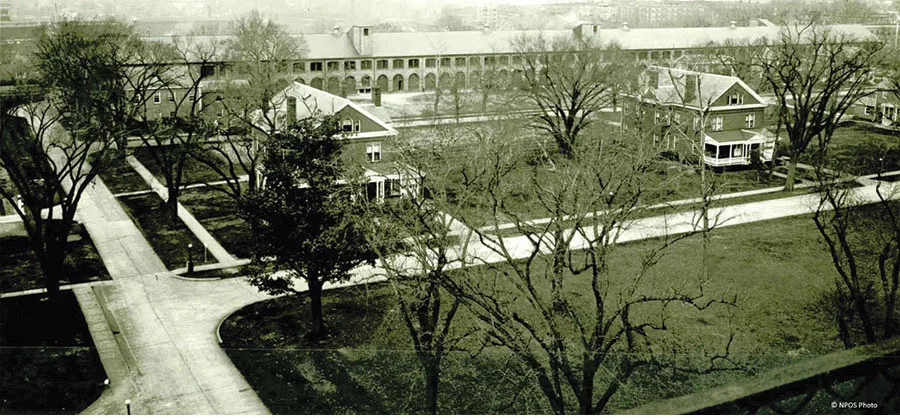
The original building, located near officers’ quarters constructed in the 1830s (shown), housed lumber for manufacturing gunstocks. Its renovation included the addition of weathering steel canopies to announce four new entry points.
Photo © Springfield Armory National Historic Site Collections/National Park Service
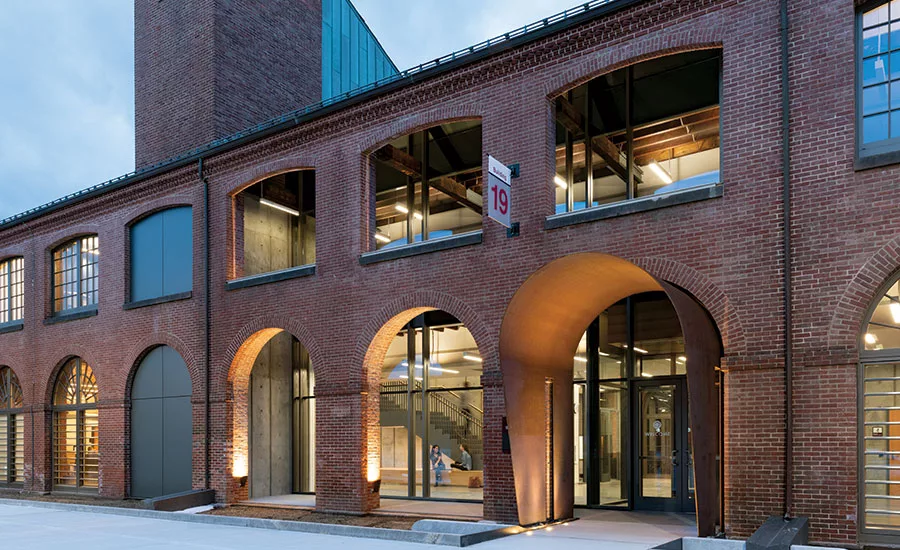
Inset glazed curtain walls maximize natural light within the interior.
Photo © Chuck Choi
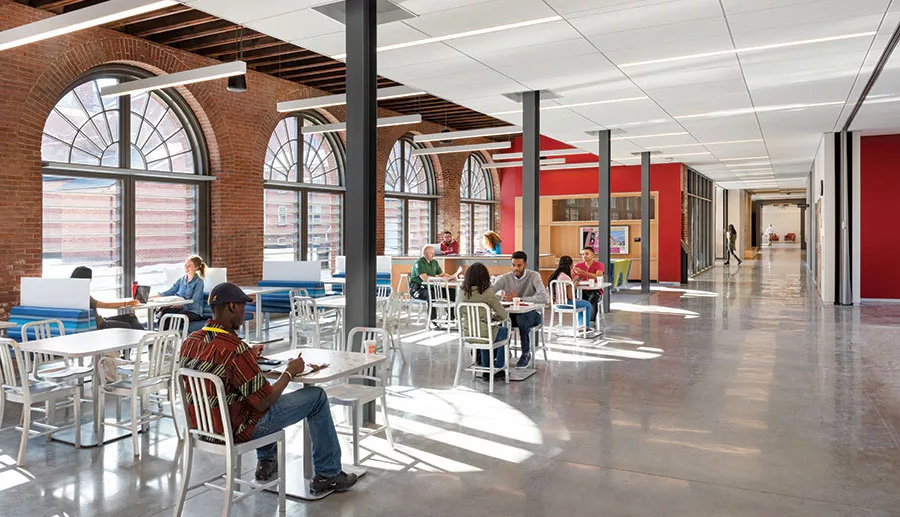
The original masonry walls and timber beams and columns were left exposed.
Photo © Chuck Choi
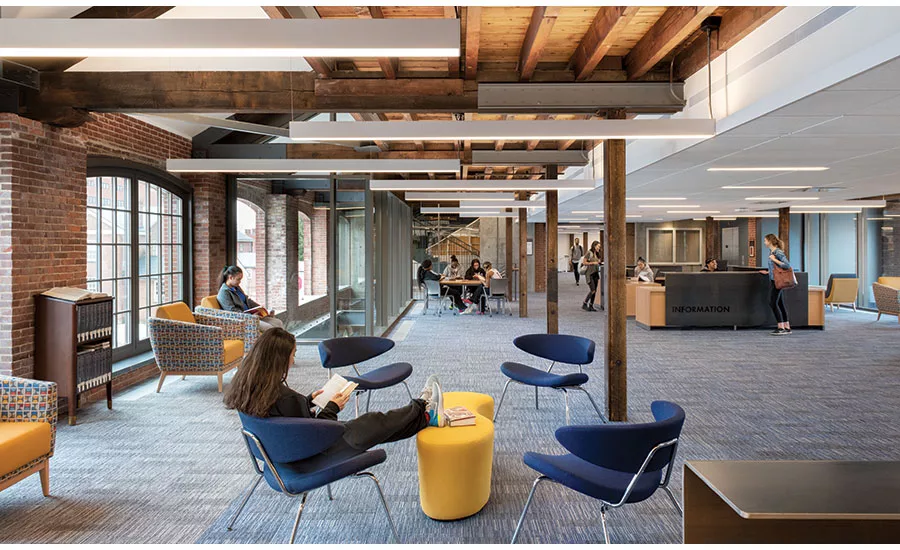
The original masonry walls and timber beams and columns were left exposed.
Photo © Chuck Choi
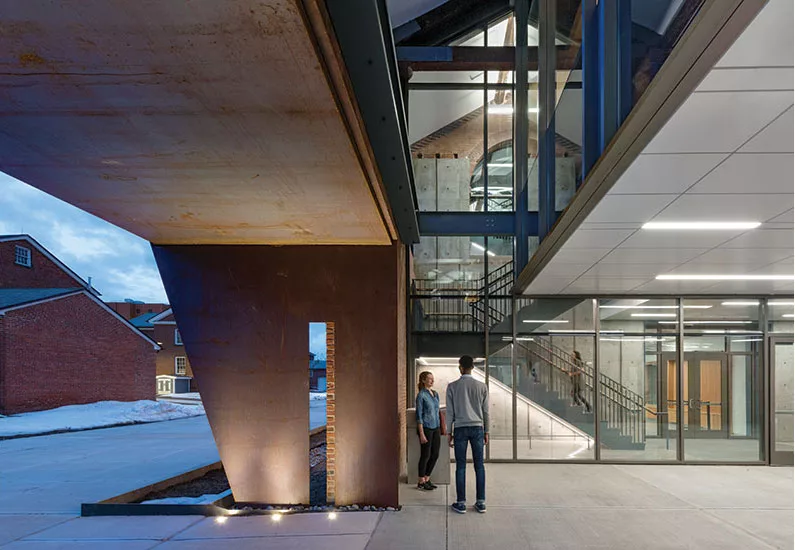
Generous glazing reveals the contrast of old and new materials throughout the interior. The durability of the exposed concrete shear walls and weathering steel canopies nod to the building’s original role in arms manufacturing.
Photo © Chuck Choi
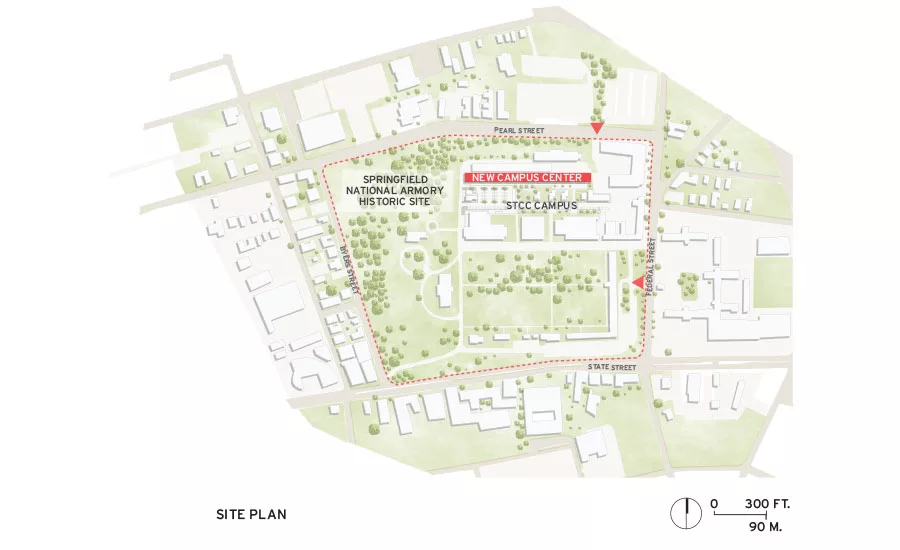
Image courtesy Ann Beha Architects
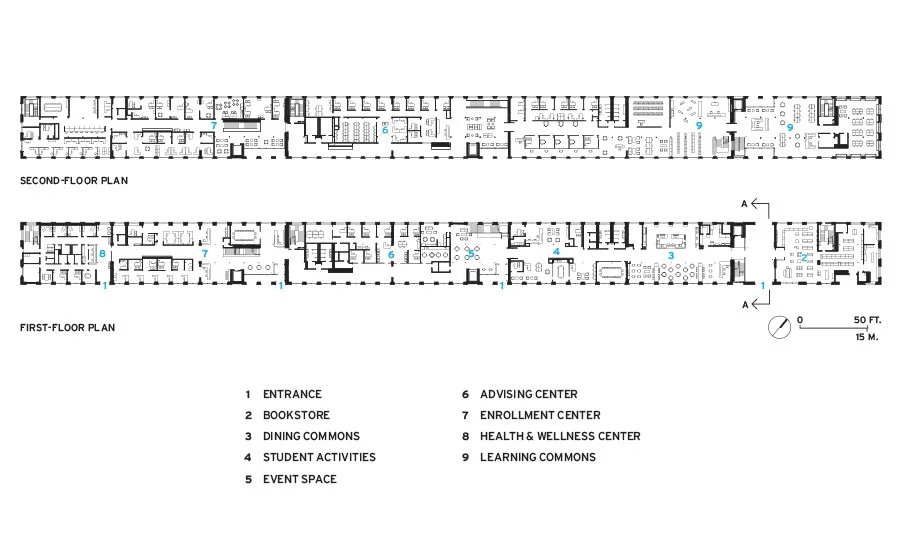
Image courtesy Ann Beha Architects
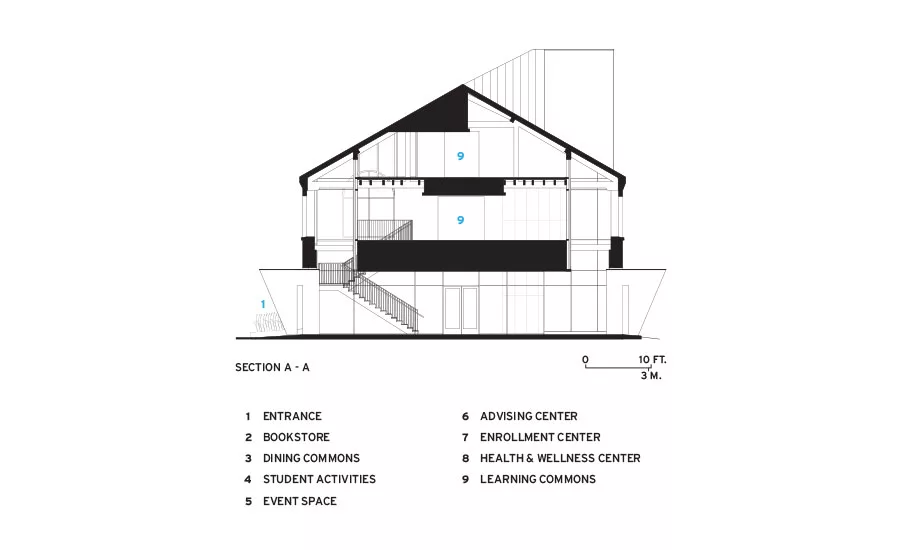
Image courtesy Ann Beha Architects
Architects & Firms
From the time of the Revolutionary War until the Vietnam War, the Springfield Armory in central Massachusetts served as an important small arms manufacturer for the U.S. military; it reached its peak production point during World War II, when nearly 50 percent of its workforce was composed of Women Ordnance Workers (WOWs)—the inspiration for the iconic image of Rosie the Riveter. When the arsenal was decommissioned in 1968, Springfield Technical Community College (STCC) took over various structures across its 55-acre campus. The institution’s newest facility, converted from a 156-year-old warehouse, is the Ira H. Rubenzahl Learning Commons, designed by Boston-based Ann Beha Architects.
Additional Content:
Jump to credits & specifications
A national historic landmark, the two-story building, previously known as the Long Storehouse, was constructed between 1846 and 1863 in the style of French cavalry barracks. Originally built as a storage facility to stow black walnut lumber used for musket stocks, the 764-foot-long, 55-foot-wide masonry-and-wood structure was also used over the years as horse stables, an X-ray facility, and a cryptology lab before falling into disuse. Located amidst the college’s main cluster of academic buildings, and near the primary student parking lot at the campus’s northern edge, the long, slender structure had been vacant for decades. The architects’ 2014 feasibility study recommended that it be adapted to accommodate much-needed gathering spaces and student services facilities.
In upgrading the building for 21st-century use while preserving its integrity, one of the biggest “knots to untie,” says Philip Chen, Ann Beha project manager, was preparing the building—whose systems were absent or woefully outdated—to be populated by people. The project required major infrastructural prep work, including the creation of new electrical and water-drainage systems. To slip new mechanicals into the building while maintaining its historic character, the architects raised the second-level floor, creating a cavity between it and the first-floor ceiling. On the second level, they inserted a soffit down the middle of the ceiling to conceal additional systems, while leaving the timber beams exposed on either side. Structurally, the warehouse, which had been reinforced in 1940 with additional steel columns, was robust; however, it required the insertion of 24 two-story concrete shear walls throughout to meet seismic code.
The Long Storehouse’s narrow form, which the architects describe as a “horizontal shaft,” also made programming a challenge. “It wasn’t only about physical relocation but the rethinking of how these departments work together,” says Chen. The goal was to create a welcome center that would also be a one-stop shop for student services, which had previously been scattered around campus, making the admissions and enrollment processes cumbersome. As a solution, the design team broke down the interior into four hubs—enrollment, academic advising, student-life spaces, and the learning commons. The administrative functions are clustered at the building’s western half, while the student areas, which include social spaces on the ground level and a library and reading areas on the second and attic levels, are spread out across the eastern half. To avoid “tunnel vision,” the architects created meandering circulation routes, shifting from central double-loaded corridors to single-loaded ones along the building’s perimeter.
Materials were kept simple and durable. Concrete floors and exposed shear walls, as well as custom steel administrative desks, add to the building’s industrial character, and built-in beech-wood benches nod to the original Eastern white pine and Douglas fir columns and beams. Some walls are painted in bold colors—yellow, red, and purple—to distinguish the different functions. Generously glazed interior walls allow light to filter into the building’s core.
With guidance from the National Park Service, which shares the campus with STCC, the architects worked to restore the building’s front facade, whose surface, composed of 58 window bays, is over 50 percent fenestration. To announce entry points in a subtle yet legible way, the design team installed weathering steel canopies at four different bays along the exterior wall. At these locations, they kept the window apertures free of glazing and inserted glass walls, three of them set back 6½ feet and one 1 foot, to create sheltered outdoor spaces. New high-performance windows have thin steel exterior louvers, which replace the historic wood ones that once promoted natural ventilation in the warehouse.
At the building’s front, the architects transformed an asphalt parking lot into a landscaped area with tables and benches, extending the gathering spaces to the outdoors. Completed in December of last year, the Learning Commons celebrates the campus’s storied roots while activating what was once a dead zone. Whereas the structure’s commanding horizontal presence had previously created a physical barrier, now, with the varied spaces it provides—from quiet study areas to transparent conference rooms and open community zones—it serves as the primary congregating point both for students and faculty. “The best way to preserve a building is to make it well-used,” says Chen. “We just had to reveal what it could do.”
Back to More than Academic: Colleges & Universities
CreditsArchitect: Ann Beha Architects — Philip Chen, principal; Robert Carroll, Jacqueline Mossman, Ric Panciera, Rita Terjeki, George Faber, Ian Ford, design team
Engineering: RSE (structural); Altieri Sebor Wieber (m/e/p); Nitsch (civil); The Green Engineer (sustainability)
Consultants: Jensen Hughes (code); Sladen Feinstein (lighting); IBI (landscape); Public Archaeological Laboratory (archaeology); Jaffe Holden (acoustics); Structures North (wood framing); Preservation Technology Associates (masonry); BVH (audiovisual)
Size: 100,000 square feet
Cost: $50 million
Completion date: December 2018
|
SpecificationsAluminum storefront Kawneer
Glazing Vitro; SaftiFirst; C.R. Laurence
Doors VT Industries; Cascade Coil; McKeon
Acoustical ceilings Armstrong; CertainTeed
Suspension grid Armstrong
Paints and stains Sherwin-Williams
Plastic laminate Formica
Solid surfacing Silestone
Floor and wall tile Daltile
Resilient flooring Armstrong, Norament
Elevators Schindler
Plumbing Kohler |
Looking for a reprint of this article?
From high-res PDFs to custom plaques, order your copy today!