Architectural Record
search
cart
facebook twitter linkedin youtube
  • Sign In
  • Subscribe
  • Sign Out
  • My Account
Architectural Record
  • NEWS
    • Latest News
    • Awards
    • Interviews
    • Obituaries
    • Podcasts
      • Design:Ed Podcast
      • Sponsored Podcasts
  • OPINION
    • Book Reviews / Excerpts
    • Exhibition Reviews
    • Forum
  • EXCLUSIVES
    • Videos
    • Design Vanguard
    • Top 300 Firms
    • Sponsored Content
    • Sponsored eBooks
    • From the Archives
  • CONTINUING ED
    • Editorial Continuing Ed
    • CE Center
    • CE Academies
  • PROJECTS
    • Buildings By Type
    • Reuse & Renovation
    • Museums & Arts Centers
    • Colleges & Universities
    • Multifamily Housing
    • Interiors
    • Lighting
    • Kitchen & Bath
  • HOUSES
    • Record Houses
    • House of the Month
    • Featured Houses
  • PRODUCTS
    • Products by Category
    • Record Products of the Year
    • Latest Products
  • EVENTS
    • Dates & Events
    • Record on the Road
    • Innovation Conference
    • Sustainability in Practice
    • Women In Architecture
    • Webinars
    • Ad Excellence Awards
    • Submit an Event
  • CONNECT
    • Ask RECORD AI
    • Newsletters
    • Contact
    • Advertise
    • Editorial Calendar
    • Store
    • Customer Service
  • SUBMIT
    • Submission Guidelines
    • RECORD Competitions
  • MAGAZINE
    • Subscribe
    • My Account
    • Digital Edition
    • Current Issue
    • Firm Pass
    • Historic Archive
Architecture News

National Trust for Historic Preservation Supports Removal of Confederate Monuments
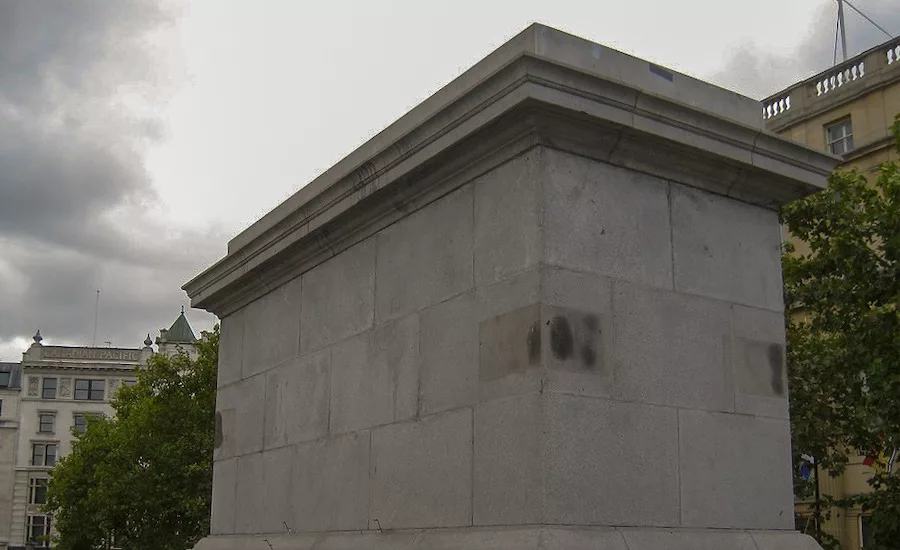
Empty Plinth

Empty plinth, photo © Andy Roberts Photos

June 19, 2020

As architects, educational institutions, and professional organizations speak out against longstanding racial injustice, the National Trust for Historic Preservation has issued a statement supporting the removal of Confederate monuments from public places.

Read the full statement below,  released June 18, 2020:

In recent weeks, protests throughout America and around the world have sprung up in support of racial justice and equity, sparked by the horrific killings of George Floyd, Ahmaud Arbery, Breonna Taylor, and others. The National Trust stands committed to support this fight for justice. We believe that Black Lives Matter, Black History Matters, and that historic preservation has a powerful role to play in telling the full story of our often-difficult history.

A critically important part of this work is elevating and preserving the enormous and important contributions that African Americans have made to our nation and carrying that profound legacy forward through places of truth, justice, and reconciliation.

This nationwide call for racial justice and equity has brought renewed attention to the Confederate monuments in many of our communities.

The National Trust for Historic Preservation has previously issued statements about the history and treatment of Confederate monuments, emphasizing that, although some were erected—like other monuments to war dead—for reasons of memorialization, most Confederate monuments were intended to serve as a celebration of Lost Cause mythology and to advance the ideas of white supremacy. Many of them still stand as symbols of those ideologies and sometimes serve as rallying points for bigotry and hate today. To many African Americans, they continue to serve as constant and painful reminders that racism is embedded in American society.

We believe it is past time for us, as a nation, to acknowledge that these symbols do not reflect, and are in fact abhorrent to, our values and to our foundational obligation to continue building a more perfect union that embodies equality and justice for all.

Although Confederate monuments are sometimes designated as historic, and while many were erected more than a century ago, the National Trust supports their removal from our public spaces when they continue to serve the purposes for which many were built—to glorify, promote, and reinforce white supremacy, overtly or implicitly. While some have suggested that removal may result in erasing history, we believe that removal may be necessary to achieve the greater good of ensuring racial justice and equality. And their history needs not end with their removal: we support relocation of these monuments to museums or other places where they may be preserved so that their history as elements of Jim Crow and racial injustice can be recognized and interpreted.

Looking for quick answers on architecture and design topics?
Try Ask RECORD, our new smart AI search tool.
Ask RECORD →

We believe that communities have an obligation to take on this issue forthrightly and inclusively. We recognize that not all monuments are the same, and a number of communities have carefully and methodically determined that some monuments should be removed and others retained but contextualized with educational markers or other monuments designed to counter the false narrative and racist ideology that they represent, providing a deeper understanding of their message and their purpose.

We also recognize that some state legislatures have prohibited removal of such monuments, disallowing the rights of local communities wishing to remove these offensive symbols. Until such state laws are changed or overturned, contextualization may be the only option, at least for the present. Our view, however, is that unless these monuments can in fact be used to foster recognition of the reality of our painful past and invite reconciliation for the present and the future, they should be removed from our public spaces.

KEYWORDS: diversity in architecture

Share This Story

Looking for a reprint of this article?
From high-res PDFs to custom plaques, order your copy today!
Post a comment to this article

Report Abusive Comment

Subscription Center
  • Create an Account
  • Start a Subscription
  • Manage My Account
  • Sign Up for Newsletters
  • Visit Customer Service
  • Update Preferences

More Videos

Sponsored Content

Sponsored Content is a special paid section where industry companies provide high quality, objective, non-commercial content around topics of interest to the Architectural Record audience. All Sponsored Content is supplied by the advertising company and any opinions expressed in this article are those of the author and not necessarily reflect the views of Architectural Record or its parent company, BNP Media. Interested in participating in our Sponsored Content section? Contact your local rep!

close
  • cold storage facility
    Sponsored byCarlisle SynTec Systems

    How Architects Can Design More Continuous Cold Storage Envelopes

  • TAMLYN XtremeTrim Exterior Trim
    Sponsored byTamlyn

    Designing Cleaner Panel Facades: Why Exterior Trim Details Matter

  • Building with Vapor Barriers
    Sponsored byReef Industries, Inc.

    Vapor Barriers Help Control Moisture in Tighter Building Designs

DESIGN:ED Podcast
Listen to Architectural Record’s DESIGN:ED Podcast

Events

June 23, 2026

Enhancing Fire Resistance with Advanced PVC Solutions

Credits: 1 AIA LU/HSW; 1 AIBD P-CE; 0.1 ICC CEU; 1 IIBEC CEH

Evaluate advanced PVC solutions that improve fire resistance, support WUI compliance, and enhance resilience in residential and commercial building design.

June 25, 2026

Designing Glass Railing Systems that Enhance Aesthetics and Meet Code

Credits: 1 AIA LU/HSW; 1 AIBD P-CE; 0.1 ICC CEU

Upon course completion, participants will possess a deeper understanding of glass railings to help ensure that safety, aesthetic, and performance objectives are achieved.

View All Submit An Event

Products

2026 Architect's Square Foot Costbook

2026 Architect's Square Foot Costbook

See More Products

Popular Stories

Lorcan O' Herilhy

California Architect Lorcan O’Herlihy Has Died, Age 66

Obama Presidential Center, Chicago

The Obama Presidential Center Opens on Chicago’s South Side

Spoonbill Ranch

Johnsen Schmaling Architects Integrates Spoonbill Ranch into a Pristine Landscape

Image of Bruce Springsteen Center for American Music

The CookFox-designed Bruce Springsteen Center for American Music Opens in New Jersey

Three Courtyards House

Design Vanguard 2026: Balsa Crosetto Piazzi

Enhancing Fire Resistance with Advanced PVC Solutions - Free Webinar - June 23, 2026

Related Articles

  • National Trust Endangered 2020_12

    National Trust for Historic Preservation Unveils 11 Most Endangered Historic Places of 2020

    See More
  • The Turtle, Niagara Falls

    The National Trust for Historic Preservation Announces America’s 11 Most Endangered Historic Places of 2025

    See More
  • The Brick House

    The Glass House and National Trust for Historic Preservation Announce the Restoration of Philip Johnson’s 1949 Brick House

    See More

Related Products

See More Products
  • const estimator

    2026 National Construction Estimator

  • manual

    2026 National Building Cost Manual

See More Products
×

The latest news and information

#1 Source for Architectural Design, News and Products

SUBSCRIBE
  • RESOURCES
    • Advertise
    • Contact Us
    • Submit
    • Store
  • ACCOUNT CENTER
    • Create an Account
    • Start a Subscription
    • Manage My Account
    • Sign Up for Newsletters
    • Visit Customer Service
    • Update Preferences
  • PRIVACY
    • PRIVACY POLICY
    • TERMS & CONDITIONS
    • DO NOT SELL MY PERSONAL INFORMATION
    • PRIVACY REQUEST
    • ACCESSIBILITY
  • SERVICES
    • Marketing Services
    • Reprints
    • Market Research
    • List Rental
    • Survey/Respondent Access
  • STAY CONNECTED
    • Linkedin
    • Facebook
    • Instagram
    • YouTube
    • X (Twitter)

Copyright ©2026. All Rights Reserved BNP Media, Inc. and BNP Media II, LLC.

Design, CMS, Hosting & Web Development :: ePublishing