Architectural Record
search
cart
facebook twitter linkedin youtube
  • Sign In
  • Subscribe
  • Sign Out
  • My Account
Architectural Record
  • NEWS
    • Latest News
    • Awards
    • Interviews
    • Obituaries
    • Podcasts
      • Design:Ed Podcast
      • Sponsored Podcasts
  • OPINION
    • Book Reviews / Excerpts
    • Exhibition Reviews
    • Forum
  • EXCLUSIVES
    • Videos
    • Design Vanguard
    • Top 300 Firms
    • Sponsored Content
    • Sponsored eBooks
    • From the Archives
  • CONTINUING ED
    • Editorial Continuing Ed
    • CE Center
    • CE Academies
  • PROJECTS
    • Buildings By Type
    • Reuse & Renovation
    • Museums & Arts Centers
    • Colleges & Universities
    • Multifamily Housing
    • Interiors
    • Lighting
    • Kitchen & Bath
  • HOUSES
    • Record Houses
    • House of the Month
    • Featured Houses
  • PRODUCTS
    • Products by Category
    • Record Products of the Year
    • Latest Products
  • EVENTS
    • Dates & Events
    • Record on the Road
    • Innovation Conference
    • Sustainability in Practice
    • Women In Architecture
    • Webinars
    • Ad Excellence Awards
    • Submit an Event
  • CONNECT
    • Ask RECORD AI
    • Newsletters
    • Contact
    • Advertise
    • Editorial Calendar
    • Store
    • Customer Service
  • SUBMIT
    • Submission Guidelines
    • RECORD Competitions
  • MAGAZINE
    • Subscribe
    • My Account
    • Digital Edition
    • Current Issue
    • Firm Pass
    • Historic Archive
Architecture News

Designers Confront Structural Racism in the Profession
By Miriam Sitz
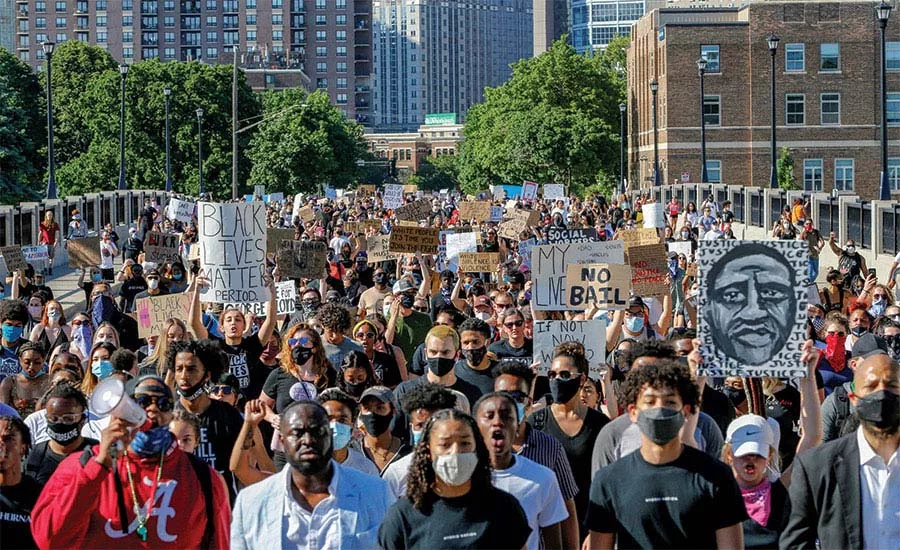
On June 5, thousands of protesters marched from downtown Minneapolis to the site of George Floyd's arrest.

On June 5, thousands of protesters marched from downtown Minneapolis to the site of George Floyd’s arrest. Photo © Eric Miller/Reuters/Newscom

June 23, 2020
✕
Image in modal.

“A man was lynched yesterday.” Between 1920 and 1938, a flag bearing those words flew from the window of the NAACP’s headquarters in New York each time a Black person was lynched in this country. On May 26, the organization posted a black-and-white photograph of that banner to its Instagram account, with a caption demanding justice for George Floyd the Black man killed by Minneapolis police the previous day.

More than half a century after the civil-rights movement, and over 400 years since the first enslaved Africans arrived in Virginia, protests and cries for an end to racial injustice and police brutality have swept across the globe as the United States once again grapples with its original sin. Within the field of architecture, where demographics skew toward white male homogeneity, many are beginning to interrogate the ways that systemic racism has shaped the profession and the built environment.
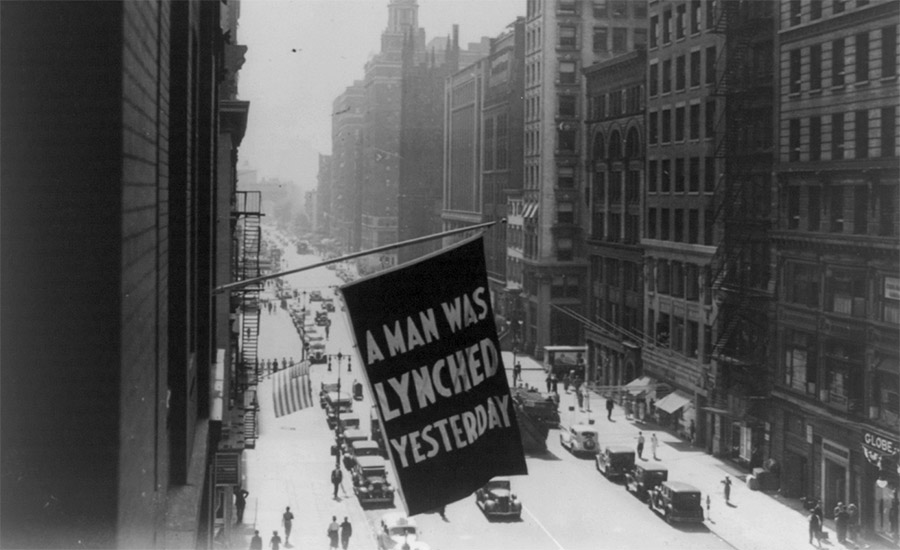
A 1936 photograph shows the NAACP’s flag flying over Fifth Ave.

A 1936 photograph shows the NAACP’s flag flying over Fifth Ave. Photo © Library of Congress, click to enlarge.

The National Organization of Minority Architects (NOMA) was quick to issue a statement in the days following Floyd’s death. Kimberly Dowdell, the 2019–20 president, brought into sharp focus the stakes of the current and longstanding crisis: “Before we can confidently advocate for greater economic opportunities for architects of color, we need to ensure that those very people are first able to breathe.”

Artist Amanda Williams, who earned her B.Arch. from the Cornell University School of Architecture, Art, and Planning, describes the racist foundations of the built environment as “a metastasis baked into every kernel, from planning and zoning to multi- and single-family housing and conversations about public and private space.” Born, raised, and based in Chicago, Williams was aware of the relationship between race and urban design from a young age. “My limitations and movements were formed by planners, designers, and society telling me that there were places that I should and should not be before I was even born,” she says.

Much of Williams’s work which has been featured in exhibitions from the Chicago Biennial to the Venice Biennale deals with the complexities of race, place, and value. “It’s extremely painful to have to admit that most of the country was built on unpaid or low-wage labor,” she says. “But when you bring in a group of people to be free labor, and then emancipate them after the physical ground they walk on has been divvied up and given to everyone else, then, literally, there’s nowhere for Black lives to be, so of course they don’t matter.”

Tiffany Brown.

Tiffany Brown (at right) founded the mentorship program 400 Forward to encourage young Black women to pursue architecture. Photo courtesy Tiffany Brown.

In the weeks since Floyd’s killing the latest in a long and growing list of similar tragedies many professional groups, firms, and schools have released statements in support of racial justice. But for Tiffany Brown, a project manager at SmithGroup’s Detroit office and NOMA executive-board member, many of those words fell flat. “There was no empathy behind them, no purpose. It was, ‘Maybe we should say something.’ But when you look at those companies, do they have Black leadership? Black people on their executive board or board of directors? Maybe a few, but minuscule numbers in relation to the amount of staff they have.”

The lack of representation in professional leadership and education, especially, has emerged as a top concern for many designers. “Maybe there is a parallel to be drawn between the lack of Black perspectives within the architectural ‘we’ and the inability of the architectural profession to find a suitable response to the current state of social justice,” wrote architect and educator Sekou Cooke in an essay RECORD published online last month.

Looking for quick answers on architecture and design topics?
Try Ask RECORD, our new smart AI search tool.
Ask RECORD →

“I don’t understand how you can have a conversation or lead a studio about any major American urban center without one person there from that environment, who can give you a different perspective,” says Williams. “Just whose Black lives matter to you? Whose Black lives are you talking about? If you can’t see them, then that is the problem.”

To help right these systemic wrongs, Tiffany Brown is encouraging young people to pursue architecture in particular, those from backgrounds similar to her own. “I was born in a development that was created by racist urbanism,” she says. “Somehow I made it to where I am, but generation after generation, there are so many who do not, because of the built environment and the way that our neighborhoods and cities are designed.”

Architect Pascale Sablan, a senior associate at the firm S9 Architecture in New York, argues that equality should be woven into the fabric of a firm’s culture. “We can’t say we’re only going to start fighting for justice when it’s time to build a monument, memorial, or museum,” she says, suggesting actions like volunteering, making contributions, and hiring for greater diversity. She founded Beyond the Built Environment, an organization that addresses inequality by profiling Black architects, curating exhibitions, and creating a database of Black professionals for others in or considering a career in architecture.

But there are no easy solutions for such complex and deeply rooted injustices. “Nobody wants to hear this answer, but what you need to do now is the work,” says Williams. “You’ve got to do the reading, you’ve got to have the tears by yourself. You’ve got to understand why it happened, and then make personal decisions.”


Kara Mavros contributed reporting.

KEYWORDS: diversity in architecture

Share This Story

Looking for a reprint of this article?
From high-res PDFs to custom plaques, order your copy today!


Miriam Sitz was a staff writer and editor for Architectural Record from 2015 to 2020, during which time she served as the web editor, then senior news & web editor.

Post a comment to this article

Report Abusive Comment

Subscription Center
  • Create an Account
  • Start a Subscription
  • Manage My Account
  • Sign Up for Newsletters
  • Visit Customer Service
  • Update Preferences

More Videos

Sponsored Content

Sponsored Content is a special paid section where industry companies provide high quality, objective, non-commercial content around topics of interest to the Architectural Record audience. All Sponsored Content is supplied by the advertising company and any opinions expressed in this article are those of the author and not necessarily reflect the views of Architectural Record or its parent company, BNP Media. Interested in participating in our Sponsored Content section? Contact your local rep!

close
  • TAMLYN XtremeTrim Exterior Trim
    Sponsored byTamlyn

    Designing Cleaner Panel Facades: Why Exterior Trim Details Matter

  • Building with Vapor Barriers
    Sponsored byReef Industries, Inc.

    Vapor Barriers Help Control Moisture in Tighter Building Designs

  • Duct Interior with Prodeq System
    Sponsored byHenry, a Carlisle Company

    Designing Resilient Water Containment Systems

DESIGN:ED Podcast
Listen to Architectural Record’s DESIGN:ED Podcast

Events

June 10, 2026

Rethinking Stormwater – The Power of Porous Paving

Credits: 1 AIA LU/HSW; 1 AIBD P-CE; 0.1 ICC CEU

Learn how porous paving systems support stormwater management, reduce heat island effects, and enhance sustainable site design performance.

June 11, 2026

Very Early Warning Fire Detection for Mission-Critical Facilities

Credits: 1 AIA LU/HSW; 1 AIBD P-CE; 0.1 ICC CEU

Examine advanced fire detection strategies that support uptime and enhance safety in data centers and other mission-critical facilities.

View All Submit An Event

Products

2026 Architect's Square Foot Costbook

2026 Architect's Square Foot Costbook

See More Products

Popular Stories

Coronado Bridge

The Architect’s Guide to San Diego

Practice Matters illustration

What’s in a (Firm’s) Name? Thinking About Succession and Legacy

Practice Matters illustration

By the Numbers: Counting America's Architects

Inward House

Inward House by VeeV Design Studio

Riverdale House by Studio Lau

Riverdale House by Studio Lau

Broader Sustainability of CMU - Free Webinar - May 21, 2026

Related Articles

  • NCARB 2020 Demographics Summary

    Does the Long Road to Licensure Impede Diversity in the Profession?

    See More
  • New Federal Rules Will Redefine Overtime Pay For Architects

    Op-Ed: Resistance to Overtime Pay a 'Cancer in the Profession'

    See More
  • Portraits of three panelists

    Three Architects Discuss Whiteness and Racism in the Built Environment

    See More

Related Products

See More Products
  • GlobalData_logo_blue_header.png

    Construction in the US - Key Trends and Opportunities to 2023

See More Products

Events

View AllSubmit An Event
  • October 7, 2016

    Interior Design: The Essential Profession

    Fast-paced, interactive, and exciting: this one-day symposium will look at the work of interior designers today and in the future, making the case that interior design is inarguably essential to organizational and human health, wellness, and happiness.
View AllSubmit An Event
×

The latest news and information

#1 Source for Architectural Design, News and Products

SUBSCRIBE
  • RESOURCES
    • Advertise
    • Contact Us
    • Submit
    • Store
  • ACCOUNT CENTER
    • Create an Account
    • Start a Subscription
    • Manage My Account
    • Sign Up for Newsletters
    • Visit Customer Service
    • Update Preferences
  • PRIVACY
    • PRIVACY POLICY
    • TERMS & CONDITIONS
    • DO NOT SELL MY PERSONAL INFORMATION
    • PRIVACY REQUEST
    • ACCESSIBILITY
  • SERVICES
    • Marketing Services
    • Reprints
    • Market Research
    • List Rental
    • Survey/Respondent Access
  • STAY CONNECTED
    • Linkedin
    • Facebook
    • Instagram
    • YouTube
    • X (Twitter)

Copyright ©2026. All Rights Reserved BNP Media, Inc. and BNP Media II, LLC.

Design, CMS, Hosting & Web Development :: ePublishing