Opinion: Blackout — Amplifying the Voices of Blackness Within Architecture
Architect and educator Sekou Cooke considers the role of the profession in confronting historically entrenched racism and violence in the U.S.

Image © Architectural Record
Last Saturday, I took a simple action: I put my fingers over the camera on my phone, took a picture of pure blackness, and posted it to Instagram. I then used the same image to replace the one on my profile—a spot usually reserved for some headshot I think might make me appear thoughtful or smart. The goal of that change was to communicate in one simple image what I felt at the time: an empty, lightless, hollowed-out void. I chose the language of image because, as an architect and professor of architecture, I consider it my native tongue.

Words had, quite frankly, failed me in my attempted response to three completely unprecedented events from the previous day. On the morning of May 29, I watched CNN reporter Omar Jimenez and his entire crew get arrested on live television while actively reporting on the social unrest taking place in Minneapolis—a city aflame after the murder of its native son, George Floyd. The arrest appeared unprovoked and without any discernible verbal explanation from the arresting officers. Later, I read about the President of the United States using his Twitter account to threaten protesters with deadly violence: “When the looting starts, the shooting starts.” I had previously believed that one of the Commander in Chief’s responsibilities was keeping the nation calm and assured in a crisis. By the end of the day, I listened to Chicago mayor Lori Lightfoot—whose identity as queer, Black, and female would have disqualified her from that office in any other era—publicly tell the president that what she really wants to say “starts with F and ends in U.”
My action on Instagram the next day was a general expression of anger and pain surrounding Floyd’s murder by the Minnesota Police Department (yes, the entire department); of fear and anxiety around the universal state of frustration blanketing the globe; of confusion around what happened the day before. Had any one of these events—or the events that continued through the next several days—happened even a few months earlier, they would have dominated headlines across the country. The fact that they all occurred under the haze of a global pandemic further exacerbated both their incredulity and my speechlessness.

After I posted that little black square—without a hashtag, a location tag, or a caption—it received a few likes. A couple hours later, I noticed a few people in my small circle of designers post black squares as well. One noted that they were directly inspired by me to do so, but I made no assumption that any of the others were acting based on any similar inspiration. On Tuesday morning, I woke up to an endless stream of black squares flowing through my Instagram feed, most bearing the hashtag “#blackouttuesday.” Once again, I made no assumption that this collective action had any direct connection to my own; maybe there was an invisible force in the ether simultaneously robbing us all of our words. With no clear thoughts to express, all we had was our Blackness.
Today, I have found a few words, and I’m more able to reflect on this current moment and what it says about Blackness and architecture in America. In short, they are inextricably linked.
Deans, directors, and chairs of architecture programs across the country have issued well-crafted public statements that denounce the actions of the Minnesota Police Department while acknowledging the systemic pervasiveness of racism and discussing ways to support marginalized communities through design. Among these, the statement by Milton S. F. Curry, dean of the University of Southern California School of Architecture, stands out in its unapologetic ownership of architecture’s direct involvement in and responsibility to confront this country’s history of racism and violence. As architects, “we too are the guardians of the democratic space and civic imaginations that breathe life into the consciousness of persons of all races, ethnicities, and identities,” Curry writes.
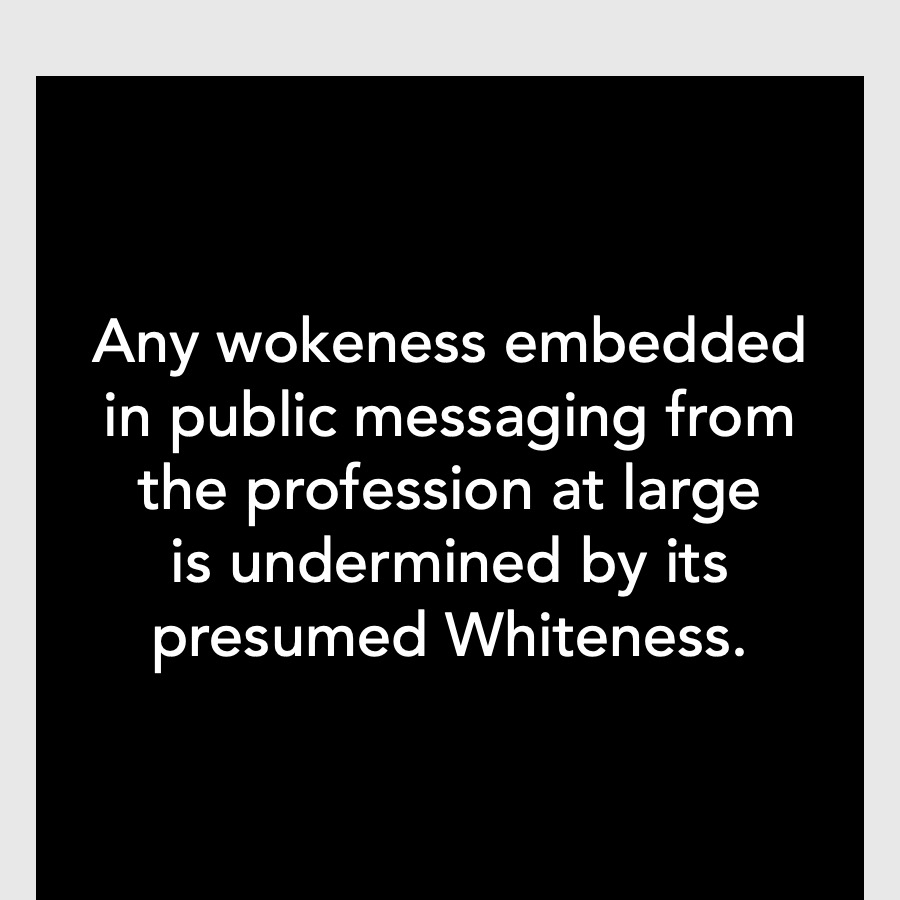
What remains universally disconnected about every other statement that I’ve read, however, is the presupposition that the design community serves or supports the Black community—as if, by default, they have always been and will always be two separate entities. The idea that Black and designer, or Black and architect, can be one and the same is absent from the language used by many of these leaders of architectural education. Any wokeness embedded in public messaging from the profession at large is undermined by its presumed Whiteness.
Looking for quick answers on architecture and design topics?
Try Ask RECORD, our new smart AI search tool.
Ask RECORD →
My work has always been interested in the idea that the underrepresentation of Black voices within architectural discourse is ultimately detrimental to the entire field of architecture—and that the agency of Black people to design, shape, and reimagine the built environment already exists but has gone widely unrecognized. That Blackness and architecture are connected is evident in the use of the word “urban,” quite often interchangeable with the word “Black”—though usually with an air of disdain. (A problem to be solved; an obstacle to be placed and displaced.) Where Black people reside, own property, or run businesses—those are major determining factors in how a city develops. How Black people occupy public space, and how Black culture helps transform public streetscapes affects how we engage with buildings. The creative impact that those few Black voices within architectural practice and education have had should clearly upend any notion that being Black and representative of the architectural firmament are mutually exclusive.
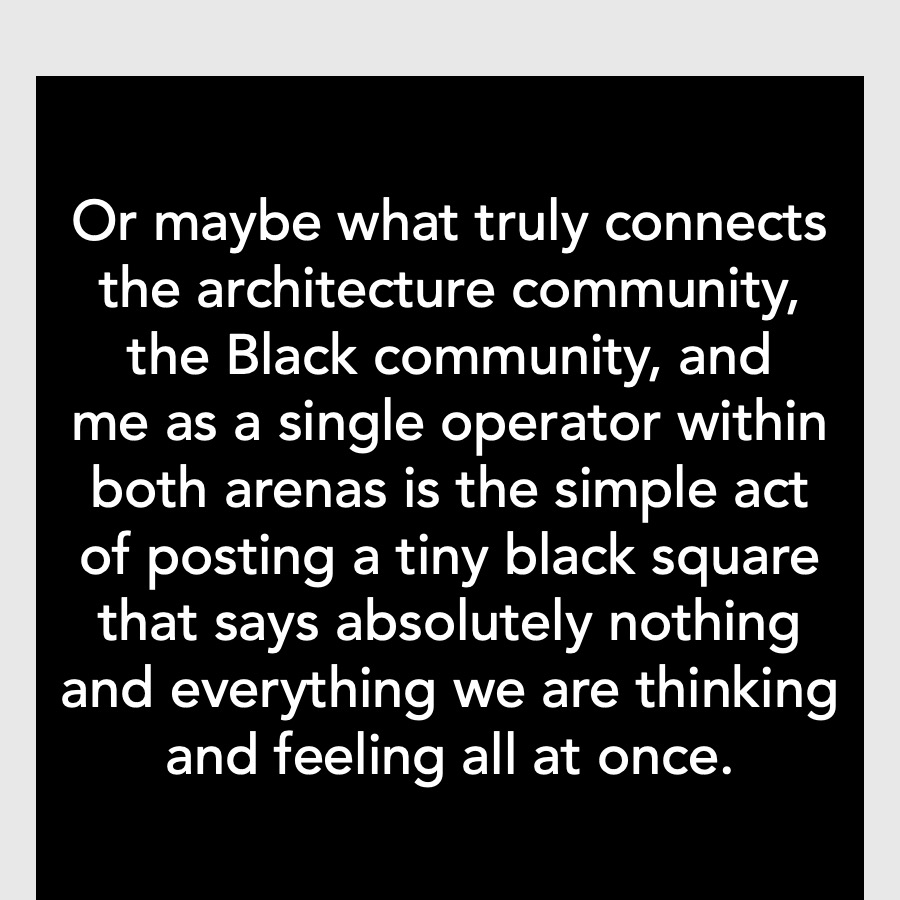
Maybe there is a parallel to be drawn between the lack of Black perspectives within the architectural “we” and the inability of the architectural profession to find a suitable response to the current state of social justice. Maybe we can extend that parallel to include my own ineptitude to find words when words could have given meaning. Or maybe what truly connects the architecture community, the Black community, and me as a single operator within both arenas is the simple act of posting a tiny black square that says absolutely nothing and everything we are thinking and feeling all at once.
“Well that’s all nice and poetic,” you might say. “But what’s the solution? How can we fix the problem of racism in society? How can I, as an architect who isn’t Black, positively change this structural oppression?”[i]
I often tell thesis students I’m not interested in working with them on a “save the world” project. I run my design studios and my own professional practice under the premise that solving problems is not our primary concern. Why? To debunk the myth of the hero architect. If we set ourselves up as the saviors of society, we separate ourselves from the experiences of the people we design for. We must, instead, directly confront the realities of the environments we seek to manipulate. If these spaces do not become painfully real for us as designers, they will remain virtual play spaces in our minds, to be gutted and destroyed at will.
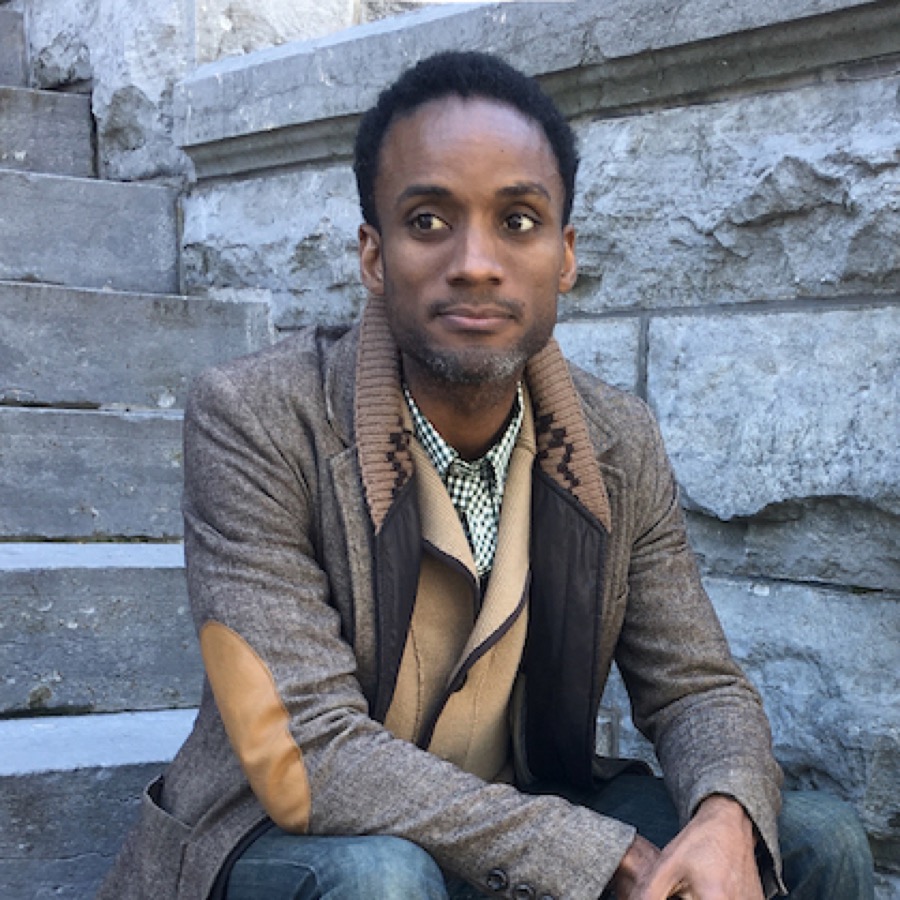
We architects are much better equipped to create new conceptual problems to solve rather than find solutions to existing problems. We research, dissect, explore, and iterate. Instead of trying to use design to fix society, let’s bring structural racism, systematic oppression, white supremacy, white privilege, and police violence into our design studios for interrogation. In doing so, we will learn far more about our world than through any process focused solely on solutions.
[i] There are many organizations (and I’m a part of a few) that are challenging architecture to be better by making specific demands of administrations and institutions in favor of social justice and equity—more Black principals of major firms, more Black deans, directors, and chairs of architecture schools, more Black professors, greater matriculation of Black students, and higher percentages of Black students admitted to architecture schools, to name a few.
Looking for a reprint of this article?
From high-res PDFs to custom plaques, order your copy today!