Architectural Record
search
cart
facebook twitter linkedin youtube
  • Sign In
  • Subscribe
  • Sign Out
  • My Account
Architectural Record
  • NEWS
    • Latest News
    • Awards
    • Interviews
    • Obituaries
    • Podcasts
      • Design:Ed Podcast
      • Sponsored Podcasts
  • OPINION
    • Book Reviews / Excerpts
    • Exhibition Reviews
    • Forum
  • EXCLUSIVES
    • Videos
    • Design Vanguard
    • Top 300 Firms
    • Sponsored Content
    • Sponsored eBooks
    • From the Archives
  • CONTINUING ED
    • Editorial Continuing Ed
    • CE Center
    • CE Academies
  • PROJECTS
    • Buildings By Type
    • Reuse & Renovation
    • Museums & Arts Centers
    • Colleges & Universities
    • Multifamily Housing
    • Interiors
    • Lighting
    • Kitchen & Bath
  • HOUSES
    • Record Houses
    • House of the Month
    • Featured Houses
  • PRODUCTS
    • Products by Category
    • Record Products of the Year
    • Latest Products
  • EVENTS
    • Dates & Events
    • Record on the Road
    • Innovation Conference
    • Sustainability in Practice
    • Women In Architecture
    • Webinars
    • Ad Excellence Awards
    • Submit an Event
  • CONNECT
    • Ask RECORD AI
    • Newsletters
    • Contact
    • Advertise
    • Editorial Calendar
    • Store
    • Customer Service
  • SUBMIT
    • Submission Guidelines
    • RECORD Competitions
  • MAGAZINE
    • Subscribe
    • My Account
    • Digital Edition
    • Current Issue
    • Firm Pass
    • Historic Archive
Architecture News

AIA Ramps Up Support for Democracy in Design Act

Proposed bill would bar federal mandates for architectural styles
By Deane Madsen
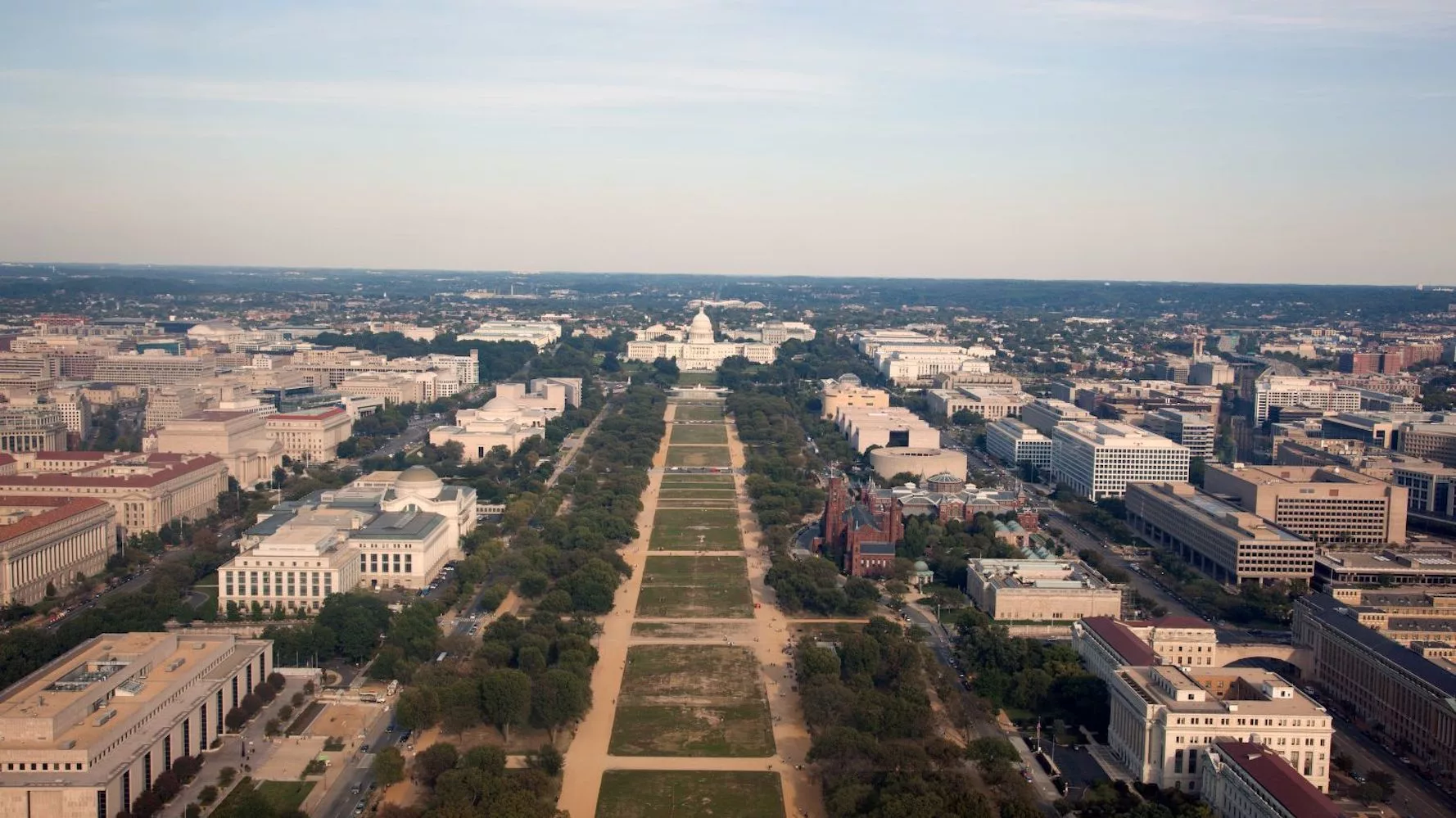
National Mall in Washington

The National Mall in Washington. Photo courtesy Library of Congress

March 23, 2022

The American Institute of Architects (AIA) is embarking on a significant new push for passage of the Democracy in Design Act, first proposed in 2020. Initially introduced by Rep. Dina Titus (D-Nevada) in response to efforts by former President Trump to mandate Neoclassical design for federal buildings, the bill would codify federal design guidelines dating to the 1960s and bar the federal government from mandating the use of particular architectural styles.

In April, the AIA will hold a “Hill Day” for its members, during which architects will advocate for the bill in a bid to add co-sponsors to it—as well as Senators willing to see it through in the Senate. Backers hope to pass it before the end of the year, and the bill recently received a boost when Rep. Eleanor Holmes Norton, the at-large representative from Washington, D.C.—which might face the most immediate impacts of the bill—signed on as its third co-sponsor.

“We wanted to make sure that the Guiding Principles for Federal Architecture from 1962 were finally enshrined into law,” says Kara Kempski, director of federal relations at the AIA. “That was something that never carried the force of law before. It just had been precedent for so long that it hadn't really been challenged in the way that we saw it challenged in 2020.”

If passed and signed into law by President Biden, the Democracy in Design Act will ensure that the Biden-Harris administration’s Build Back Better efforts are designed according to the 2022 version of the 1962 Guiding Principles, allowing architectural styles to be chosen autonomously as opposed to being mandated from Washington.  

“The federal government should be neutral in all questions of design; there shouldn't be a national preferred design style—that should flow from the design community and be allowed to evolve,” Kempski says. “American architectural innovation is important and it’s been furthered by that neutrality.”

A little more than two years ago, RECORD broke the story of a draft executive order prepared for the Trump administration that would mandate Neoclassical architecture for federal courthouses and all buildings within the National Capital Region, while banning the government from building in the Brutalist or Deconstructivist styles. As one of the final measures of his administration, in December 2020, former President Trump signed the order into law—only to see it reversed just weeks later by his successor.

Under Trump’s order, new federal buildings were required to be shoehorned into traditional designs instead of addressing contemporary concerns and incorporating sustainable building practices. On top of this, the order would have designated a committee to approve designs for the General Services Administration (GSA)—an authoritarian overlay likely included by one of former President Trump’s appointees to the Commission of Fine Arts (CFA) angling for a position on the committee.

Looking for quick answers on architecture and design topics?
Try Ask RECORD, our new smart AI search tool.
Ask RECORD →

While the order was met with almost instant disbelief and derision among practitioners and architecture critics—with its supporters trending toward traditionalist practitioners, some of whom would have benefited directly with new commissions—a more measured reaction saw the creation of a new bill designed to prevent stylistic edicts: the Democracy in Design Act. Working with representatives from the AIA’s advocacy group, Rep. Titus introduced the first version of the act in July 2020.

The act proposes turning the suggestions of the Guiding Principles for Federal Architecture—which federal agencies have largely followed since 1962—into law. Specifically, the bill directs the GSA to adhere to the principles and to establish “minimum standards by which the [GSA] Administrator shall construct and acquire public buildings in the United States.”

Written for the Kennedy administration by Daniel Patrick Moynihan—then assistant secretary of the Department of Labor and later a senator representing New York—the Guiding Principles laid the groundwork for the GSA to design its government buildings “in an architectural style and form which is distinguished and which will reflect the dignity, enterprise, vigor, and stability of the American National Government.” The Guiding Principles notably are not binding, and do not mandate any specific architectural style. They instead suggest that “[m]ajor emphasis should be placed on the choice of designs that embody the finest contemporary American architectural thought,” and they encourage respect for local vernacular styles.

Though Trump’s executive order was overturned by President Joe Biden in January 2021, work continued on the Democracy in Design Act through the spring of 2021. Rep. Titus soon gained a cross-aisle co-signer, Rep. Mike Simpson (R-ID), and in September of the same year, the Democracy in Design Act was re-introduced, albeit to a new Congress, as a bipartisan bill that went further than the original 2020 edition by also protecting the GSA’s Design Excellence program with a new, more transparent rule-making process.

While there are other more pressing global and national concerns, April’s AIA Hill Day will represent a big push to gain momentum for the Democracy in Design Act. And if passed, the act will go a long way toward ensuring that if and when this administration begins to Build Back Better—as the campaign slogan goes—it will do so without style as a foregone conclusion.

KEYWORDS: Washington D.C.

Share This Story

Looking for a reprint of this article?
From high-res PDFs to custom plaques, order your copy today!


Deane Madsen is a Washington, D.C.–based writer and photographer specializing in architecture.

Post a comment to this article

Report Abusive Comment

Subscription Center
  • Create an Account
  • Start a Subscription
  • Manage My Account
  • Sign Up for Newsletters
  • Visit Customer Service
  • Update Preferences

More Videos

Sponsored Content

Sponsored Content is a special paid section where industry companies provide high quality, objective, non-commercial content around topics of interest to the Architectural Record audience. All Sponsored Content is supplied by the advertising company and any opinions expressed in this article are those of the author and not necessarily reflect the views of Architectural Record or its parent company, BNP Media. Interested in participating in our Sponsored Content section? Contact your local rep!

close
  • TAMLYN XtremeTrim Exterior Trim
    Sponsored byTamlyn

    Designing Cleaner Panel Facades: Why Exterior Trim Details Matter

  • Building with Vapor Barriers
    Sponsored byReef Industries, Inc.

    Vapor Barriers Help Control Moisture in Tighter Building Designs

  • Duct Interior with Prodeq System
    Sponsored byHenry, a Carlisle Company

    Designing Resilient Water Containment Systems

DESIGN:ED Podcast
Listen to Architectural Record’s DESIGN:ED Podcast

Events

June 16, 2026

Focus on the Façade: Exploring Steel, Timber & Fire-Rated Curtain Walls and Channel Glass Systems

Credits: 1 AIA LU/HSW; 1 AIBD P-CE; 0.1 ICC CEU

Explore modern façade and glazing systems that enhance daylighting, fire safety, and thermal performance while expanding architectural design possibilities.

June 18, 2026

Rebooting the Aging Office Building

Credits: 1 AIA LU/HSW; 1 AIBD P-CE; 0.1 ICC CEU; 1 PDH

Explore façade retrofit strategies and award-winning design concepts that can transform aging office buildings into healthier, higher-performing workplaces for today’s hybrid workforce.

View All Submit An Event

Products

2026 Architect's Square Foot Costbook

2026 Architect's Square Foot Costbook

See More Products

Popular Stories

SanDiegoAirport

Top 300 Architecture Firms of 2026

Coronado Bridge

The Architect’s Guide to San Diego

Dusk House

Design Vanguard 2026: ONO

Crystal Bridges Museum of American Art expansion

Safdie Architects Returns to the Crystal Bridges Museum of American Art for Major Expansion

Hikma Community Complex

Design Vanguard 2026: Mariam Issoufou Architects

Focus on the Facade - Free Webinar - June 16, 2026

Related Articles

  • White-House

    ‘Democracy in Design Act’ Would Block Expected Federal Classical Architecture Order

    See More
  • Ledger

    Development Ramps Up in Downtown Bentonville, Arkansas, With 'Bikeable' Mixed-Use Building

    See More
  • a building with a faceted facade on an nyc street

    Brotherhood Sister Sol's Mission of Transformative Support for At-Risk Youth Gets a New Home in Harlem

    See More

Related Products

See More Products
  • 3dthinking.jpg

    3D Thinking in Design and Architecture: From Antiquity to the Future

  • drawingfrommodel.jpg

    Drawing from the Model: Fundamentals of Digital Drawing, 3D Modeling, and Visual Programming in Architectural Design

  • 0470126736.gif

    Modern Sustainable Residential Design: A Guide for Design Professionals

See More Products
×

The latest news and information

#1 Source for Architectural Design, News and Products

SUBSCRIBE
  • RESOURCES
    • Advertise
    • Contact Us
    • Submit
    • Store
  • ACCOUNT CENTER
    • Create an Account
    • Start a Subscription
    • Manage My Account
    • Sign Up for Newsletters
    • Visit Customer Service
    • Update Preferences
  • PRIVACY
    • PRIVACY POLICY
    • TERMS & CONDITIONS
    • DO NOT SELL MY PERSONAL INFORMATION
    • PRIVACY REQUEST
    • ACCESSIBILITY
  • SERVICES
    • Marketing Services
    • Reprints
    • Market Research
    • List Rental
    • Survey/Respondent Access
  • STAY CONNECTED
    • Linkedin
    • Facebook
    • Instagram
    • YouTube
    • X (Twitter)

Copyright ©2026. All Rights Reserved BNP Media, Inc. and BNP Media II, LLC.

Design, CMS, Hosting & Web Development :: ePublishing