Architectural Record
search
cart
facebook twitter linkedin youtube
  • Sign In
  • Subscribe
  • Sign Out
  • My Account
Architectural Record
  • NEWS
    • Latest News
    • Awards
    • Interviews
    • Obituaries
    • Podcasts
      • Design:Ed Podcast
      • Sponsored Podcasts
  • OPINION
    • Book Reviews / Excerpts
    • Exhibition Reviews
    • Forum
  • EXCLUSIVES
    • Videos
    • Design Vanguard
    • Top 300 Firms
    • Sponsored Content
    • Sponsored eBooks
    • From the Archives
  • CONTINUING ED
    • Editorial Continuing Ed
    • CE Center
    • CE Academies
  • PROJECTS
    • Buildings By Type
    • Reuse & Renovation
    • Museums & Arts Centers
    • Colleges & Universities
    • Multifamily Housing
    • Interiors
    • Lighting
    • Kitchen & Bath
  • HOUSES
    • Record Houses
    • House of the Month
    • Featured Houses
  • PRODUCTS
    • Products by Category
    • Record Products of the Year
    • Latest Products
  • EVENTS
    • Dates & Events
    • Record on the Road
    • Innovation Conference
    • Sustainability in Practice
    • Women In Architecture
    • Webinars
    • Ad Excellence Awards
    • Submit an Event
  • CONNECT
    • Ask RECORD AI
    • Newsletters
    • Contact
    • Advertise
    • Editorial Calendar
    • Store
    • Customer Service
  • SUBMIT
    • Submission Guidelines
    • RECORD Competitions
  • MAGAZINE
    • Subscribe
    • My Account
    • Digital Edition
    • Current Issue
    • Firm Pass
    • Historic Archive
Architecture News

In Poland, Shigeru Ban Deploys Paper Partitions to Help Ukrainian Refugees

Ban’s modular system was used extensively following Japan’s 2011 earthquake

By Naomi Pollock, FAIA
Ukrainian refugees in Poland

Ukrainian refugees in a now-defunct Tesco supermarket in Chełm, Poland, where Ban's partition system has been installed. Photo by Jerzy Latka, courtesy Shigeru Ban Architects

Ukrainian refugees in Poland

Ukrainian refugees in a now-defunct Tesco supermarket in Chełm, Poland, where Ban's partition system has been installed. Photo by Jerzy Latka, courtesy Shigeru Ban Architects

Ukrainian refugees in Poland

Ukrainian refugees in a now-defunct Tesco supermarket in Chełm, Poland, where Ban's partition system has been installed. Photo by Jerzy Latka, courtesy Shigeru Ban Architects

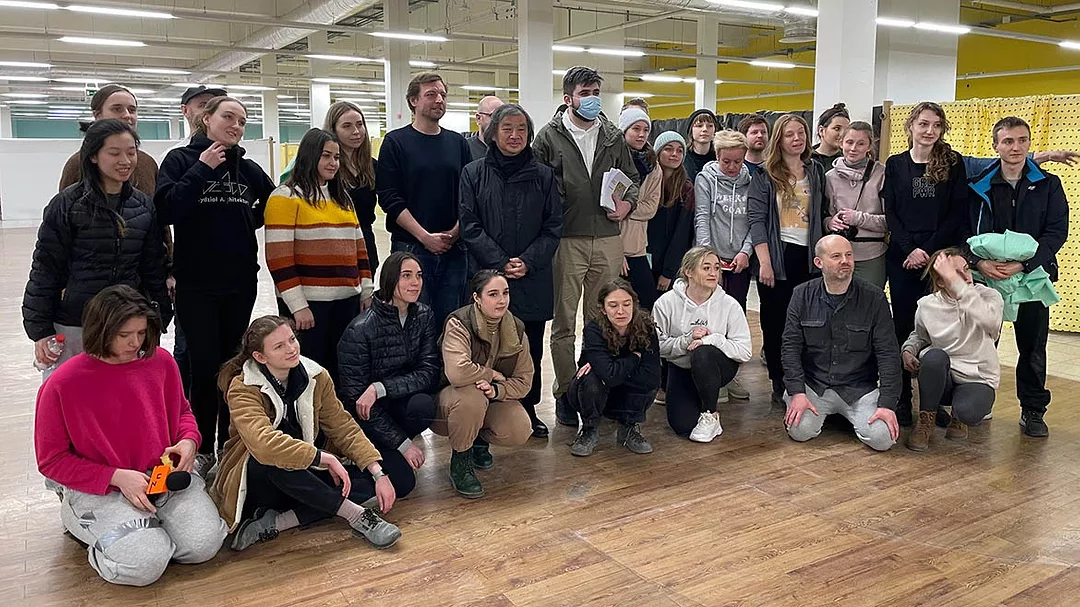
Shigeru Ban with the volunteers who installed the partition system in Poland.

Shigeru Ban with the volunteers who installed the partition system in Poland. Photo courtesy Voluntary Architects' Network

Shigeru Ban's partition system

Ban's partition system being installed in Poland. Photo by Jerzy Latka, courtesy Shigeru Ban Architects

Shigeru Ban's partition system

Ban's partition system being installed in Poland. Photo by Jerzy Latka, courtesy Shigeru Ban Architects

Shigeru Ban's partition system

Ban's partition system being installed in Poland. Photo by Jerzy Latka, courtesy Shigeru Ban Architects
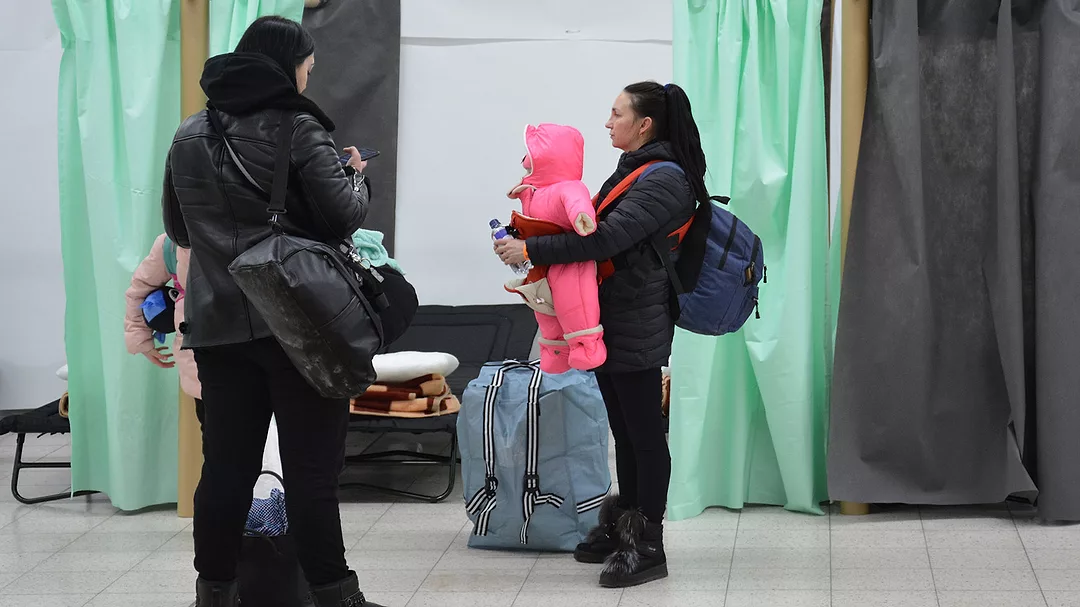
Shigeru Ban's PPS system in Poland

A now-defunct Tesco supermarket in Chełm, Poland, where Ban's partition system has been installed. Photo by Jerzy Latka, courtesy Shigeru Ban Architects

Ukrainian refugees in Poland
Shigeru Ban with the volunteers who installed the partition system in Poland.
Shigeru Ban's partition system
Shigeru Ban's PPS system in Poland
March 24, 2022

Architects & Firms

Shigeru Ban Architects
✕
Image in modal.

When Tokyo-based architect and Pritzker Prize laureate Shigeru Ban left Japan for a quick trip to the United States in early March, little did he know that only days later he’d wind up in Poland. But with waves of Ukrainian refugees fleeing their homeland, the veteran relief worker couldn’t just stand by and watch. Understanding that adding temporary partitions to the emergency shelters was one way to offer immediate help, the architect called on colleagues and students in Warsaw and Wrocław who laid the groundwork with local authorities and donors. And then they got the job done before Ban’s plane even landed on Polish soil. 

Working at breakneck speed, the team of 20 students built and installed the Japanese designer’s Paper Partition System (PPS) in shelters in the Wrocław Main Railway Station and a now-defunct Tesco supermarket in Chełm, one of the first stops across the Ukrainian border. Set up for refugees who stay for a few days before moving to other parts of Poland and points beyond, the shelters are well equipped, with toilets, showers, kitchens, and children’s play areas. But Ban knew the PPS could improve these conditions by dividing the vast sleeping areas and providing a modicum of privacy. 

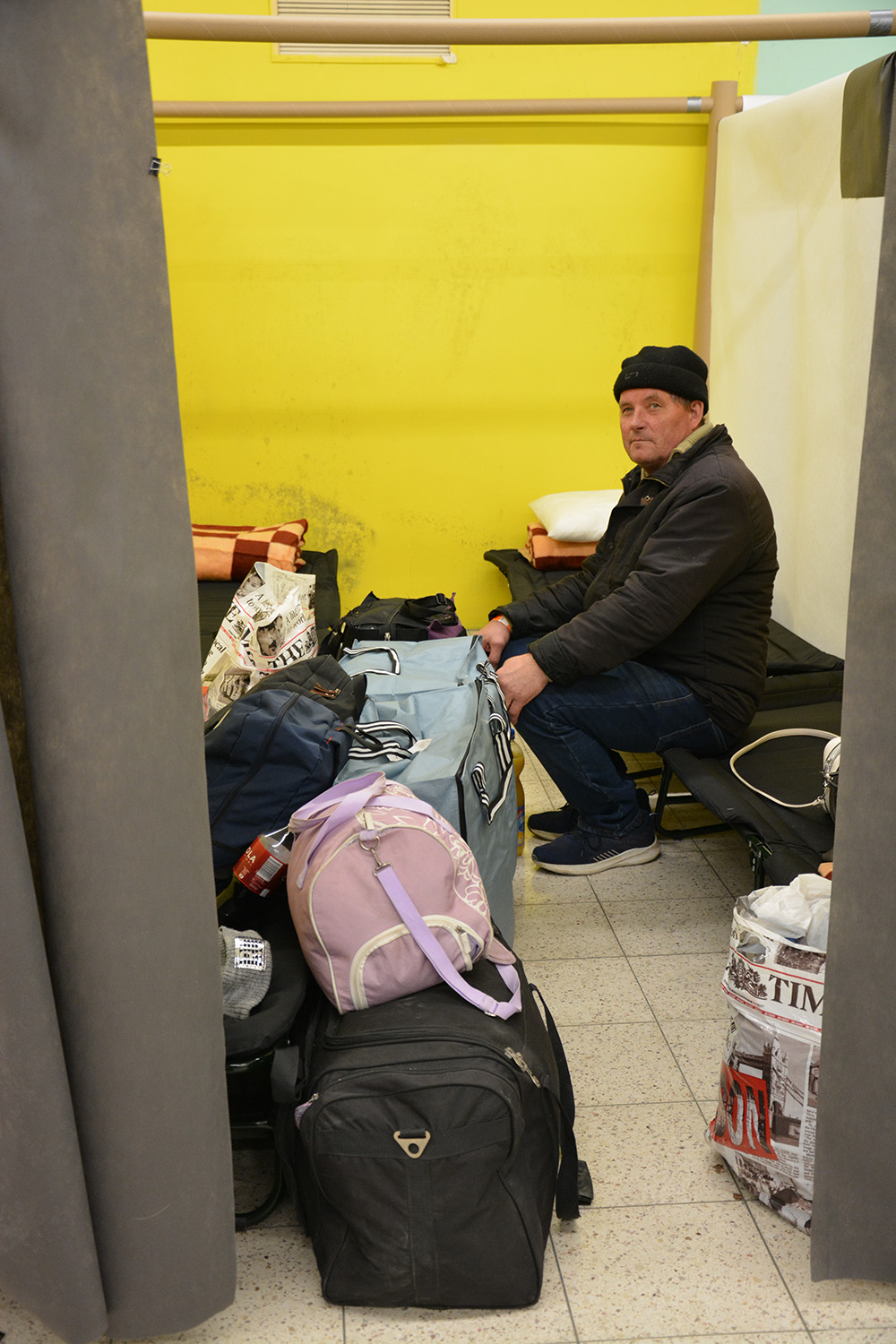
A Ukrainian refugee in Poland

A Ukrainian refugee at the supermarket in Chełm. Photo by Jerzy Latka, courtesy Shigeru Ban Architects

Guided by an instruction manual sent from Tokyo, the students created the PPS components for 60 units in Wrocław and 320 in Chełm. Intended to accommodate one family apiece, each unit consists of four columns, four beams and sheets of colorful cloth—materials donated by Polish paper tube and fabric companies. “They stopped their regular production to make the tubes for us,” says Ban. 

Working at school, the students cut holes in the tubes’ tops and safety-pinned the cloth to create the curtains’ horizontal top seams. Once on site, the pieces went together like Tinker Toys. While ordinary binder clips close the curtains vertically, their two-meter height is thought to help control the spread of Covid-19, an ongoing concern since masks and PCR tests are not provided at the shelters. 

The fourth iteration of Ban’s PPS, this construction method was first used at the emergency centers in Japan after the earthquake and tsunami decimated the Tohoku region on March 11, 2011. The only difference is the dimension of the beams: “The length of a folding bed is bigger than a futon,” explains Ban. But the initial PPS idea traced back to the 1995 Great Hanshin Earthquake in Kobe, when Ban first became aware of the paucity of privacy inside the evacuation centers. In 2004, after another earthquake struck Niigata Prefecture, Ban got his first chance to address the problem by building a partition system with paper honeycomb. “It was like a house,” says Ban. 
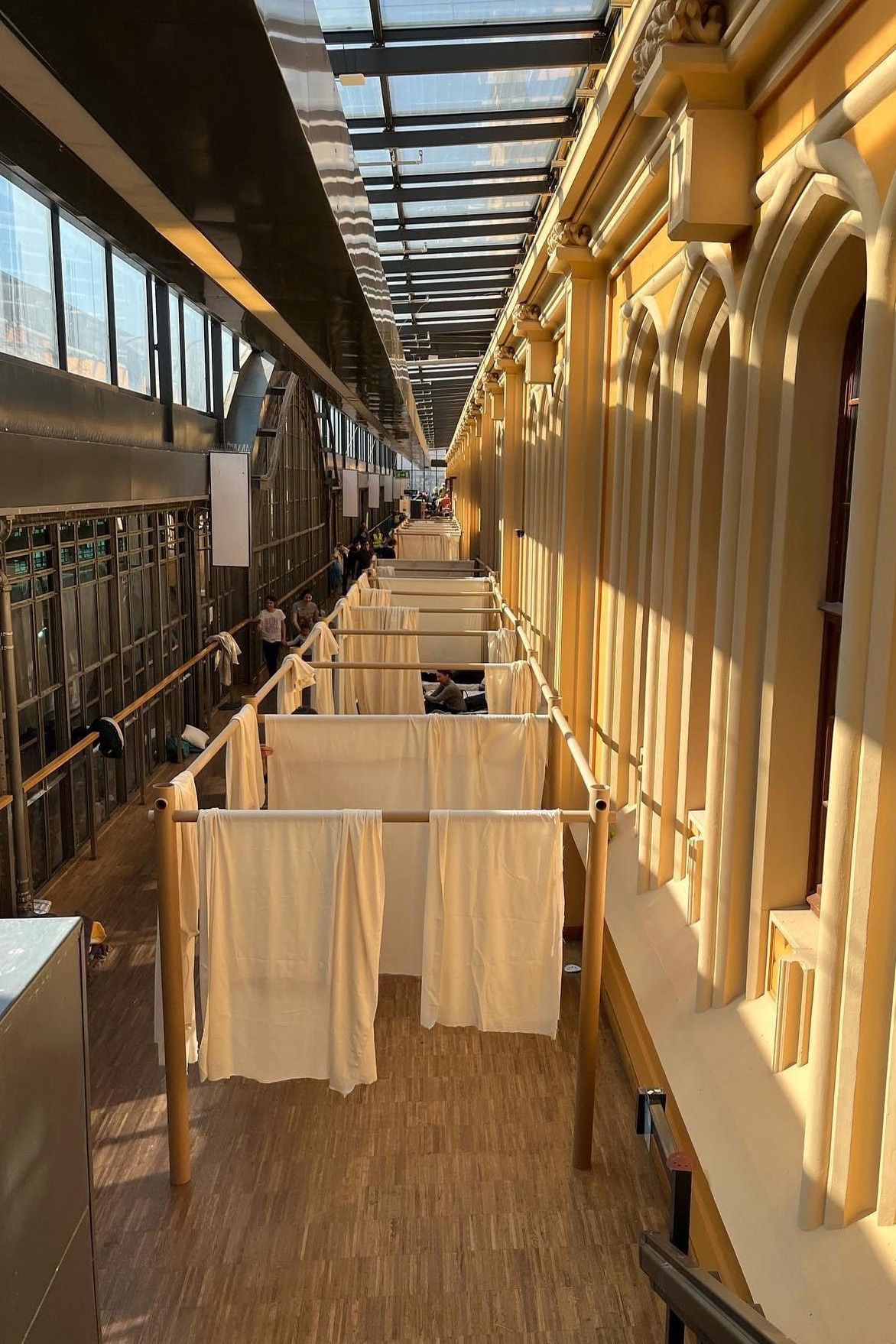
A Ukrainian refugee in Poland

Ban's partition system in the Wrocław Main Railway Station. Photo by Maciej Bujko, courtesy Shigeru Ban Architects

In response to a request for a more open, flexible system, Ban began using curtains. “Every time we simply adjust to meet the needs of the victims and authorities,” he explains. After years of negotiation, the Japanese government finally accepted the PPS as a standard in 2019 and has started to stockpile the units in anticipation of the inevitable next catastrophe. “If I have to convince the authorities after a disaster, it is too late,” says Ban.

But where the crisis in Eastern Europe is concerned, the architect has his work cut out for him. More PPS units are now being planned for multiple locations in Poland, Slovenia, western Ukraine and Paris, where two gymnasiums are being converted into refugee shelters. Ban’s firm is also now accepting donations to fund the additional PPS deployments.

“Unfortunately, the situation in the Ukraine has not been resolved, so I may have to keep doing this,” Ban says.

Video by Nicolas Grosmond, courtesy Shigeru Ban Architects

Looking for quick answers on architecture and design topics?
Try Ask RECORD, our new smart AI search tool.
Ask RECORD →

KEYWORDS: Poland Ukraine

Share This Story

Looking for a reprint of this article?
From high-res PDFs to custom plaques, order your copy today!


Contributing Editor Naomi Pollock, FAIA, is the author of Japanese Design Since 1945: A Complete Sourcebook and the forthcoming Vanishing Japan: Modern Architecture Gone But Not Forgotten,

Post a comment to this article

Report Abusive Comment

Subscription Center
  • Create an Account
  • Start a Subscription
  • Manage My Account
  • Sign Up for Newsletters
  • Visit Customer Service
  • Update Preferences

More Videos

Sponsored Content

Sponsored Content is a special paid section where industry companies provide high quality, objective, non-commercial content around topics of interest to the Architectural Record audience. All Sponsored Content is supplied by the advertising company and any opinions expressed in this article are those of the author and not necessarily reflect the views of Architectural Record or its parent company, BNP Media. Interested in participating in our Sponsored Content section? Contact your local rep!

close
  • TAMLYN XtremeTrim Exterior Trim
    Sponsored byTamlyn

    Designing Cleaner Panel Facades: Why Exterior Trim Details Matter

  • Building with Vapor Barriers
    Sponsored byReef Industries, Inc.

    Vapor Barriers Help Control Moisture in Tighter Building Designs

  • Duct Interior with Prodeq System
    Sponsored byHenry, a Carlisle Company

    Designing Resilient Water Containment Systems

DESIGN:ED Podcast
Listen to Architectural Record’s DESIGN:ED Podcast

Events

June 16, 2026

Focus on the Façade: Exploring Steel, Timber & Fire-Rated Curtain Walls and Channel Glass Systems

Credits: 1 AIA LU/HSW; 1 AIBD P-CE; 0.1 ICC CEU

Explore modern façade and glazing systems that enhance daylighting, fire safety, and thermal performance while expanding architectural design possibilities.

June 18, 2026

Rebooting the Aging Office Building

Credits: 1 AIA LU/HSW; 1 AIBD P-CE; 0.1 ICC CEU; 1 PDH

Explore façade retrofit strategies and award-winning design concepts that can transform aging office buildings into healthier, higher-performing workplaces for today’s hybrid workforce.

View All Submit An Event

Products

2026 Architect's Square Foot Costbook

2026 Architect's Square Foot Costbook

See More Products

Popular Stories

SanDiegoAirport

Top 300 Architecture Firms of 2026

Coronado Bridge

The Architect’s Guide to San Diego

Crystal Bridges Museum of American Art expansion

Safdie Architects Returns to the Crystal Bridges Museum of American Art for Major Expansion

Dusk House

Design Vanguard 2026: ONO

Hikma Community Complex

Design Vanguard 2026: Mariam Issoufou Architects

Focus on the Facade - Free Webinar - June 16, 2026

Related Articles

  • Breaking: Shigeru Ban to Deploy Emergency Shelters in Nepal

    See More
  • GH_3_22_2024 Paper House_DSC00388.jpg

    Shigeru Ban’s Paper Log House Meets Glass—and Brick—at Historic Philip Johnson Estate

    See More
  • Shigeru Ban Aims to Build Waterproof Shelters in Haiti

    See More

Related Products

See More Products
  • GlobalData_logo_blue_header.png

    Construction in the US - Key Trends and Opportunities to 2023

  • 3dthinking.jpg

    3D Thinking in Design and Architecture: From Antiquity to the Future

  • 9 ways.jpg

    9 Ways To Make Housing for People

See More Products
×

The latest news and information

#1 Source for Architectural Design, News and Products

SUBSCRIBE
  • RESOURCES
    • Advertise
    • Contact Us
    • Submit
    • Store
  • ACCOUNT CENTER
    • Create an Account
    • Start a Subscription
    • Manage My Account
    • Sign Up for Newsletters
    • Visit Customer Service
    • Update Preferences
  • PRIVACY
    • PRIVACY POLICY
    • TERMS & CONDITIONS
    • DO NOT SELL MY PERSONAL INFORMATION
    • PRIVACY REQUEST
    • ACCESSIBILITY
  • SERVICES
    • Marketing Services
    • Reprints
    • Market Research
    • List Rental
    • Survey/Respondent Access
  • STAY CONNECTED
    • Linkedin
    • Facebook
    • Instagram
    • YouTube
    • X (Twitter)

Copyright ©2026. All Rights Reserved BNP Media, Inc. and BNP Media II, LLC.

Design, CMS, Hosting & Web Development :: ePublishing