Architectural Record
search
cart
facebook twitter linkedin youtube
  • Sign In
  • Subscribe
  • Sign Out
  • My Account
Architectural Record
  • NEWS
    • Latest News
    • Awards
    • Interviews
    • Obituaries
    • Podcasts
      • Design:Ed Podcast
      • Sponsored Podcasts
  • OPINION
    • Book Reviews / Excerpts
    • Exhibition Reviews
    • Forum
  • EXCLUSIVES
    • Videos
    • Design Vanguard
    • Top 300 Firms
    • Sponsored Content
    • Sponsored eBooks
    • From the Archives
  • CONTINUING ED
    • Editorial Continuing Ed
    • CE Center
    • CE Academies
  • PROJECTS
    • Buildings By Type
    • Reuse & Renovation
    • Museums & Arts Centers
    • Colleges & Universities
    • Multifamily Housing
    • Interiors
    • Lighting
    • Kitchen & Bath
  • HOUSES
    • Record Houses
    • House of the Month
    • Featured Houses
  • PRODUCTS
    • Products by Category
    • Record Products of the Year
    • Latest Products
  • EVENTS
    • Dates & Events
    • Record on the Road
    • Innovation Conference
    • Sustainability in Practice
    • Women In Architecture
    • Webinars
    • Ad Excellence Awards
    • Submit an Event
  • CONNECT
    • Ask RECORD AI
    • Newsletters
    • Contact
    • Advertise
    • Editorial Calendar
    • Store
    • Customer Service
  • SUBMIT
    • Submission Guidelines
    • RECORD Competitions
  • MAGAZINE
    • Subscribe
    • My Account
    • Digital Edition
    • Current Issue
    • Firm Pass
    • Historic Archive
Architecture News

Studio Gang’s Gilder Center Materializes at the American Museum of Natural History

A canyon-like atrium built of shotcrete highlights the long-awaited expansion

By Joann Gonchar, FAIA
Gilder-1.jpg

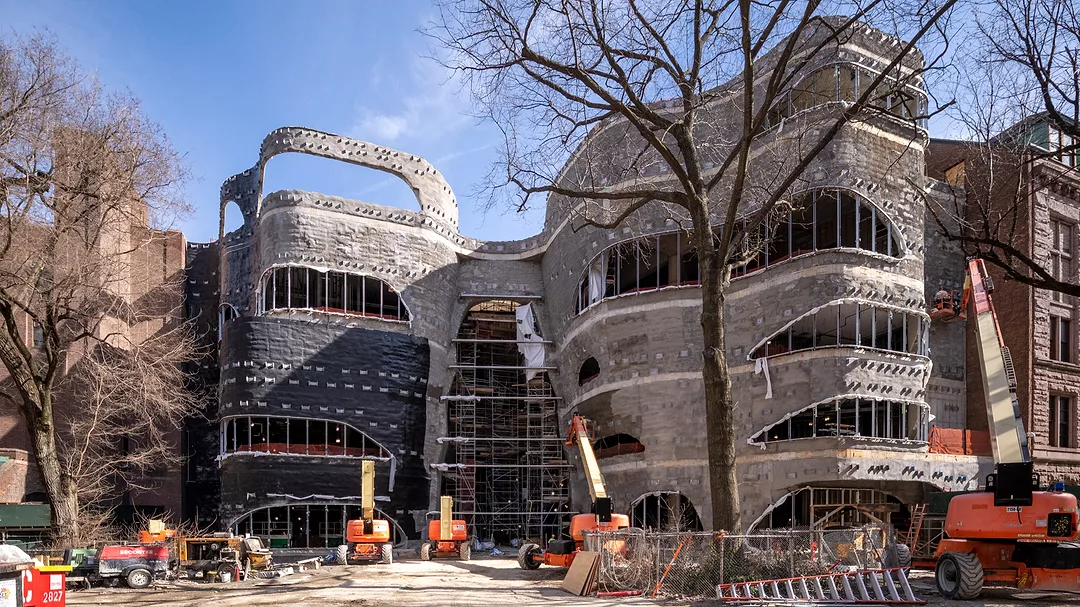
View of the front entrance of the Richard Gilder Center for Science, Education, and Innovation from Columbus Avenue. Photo © Timothy Schenck, courtesy AMNH

Gilder-2.jpg

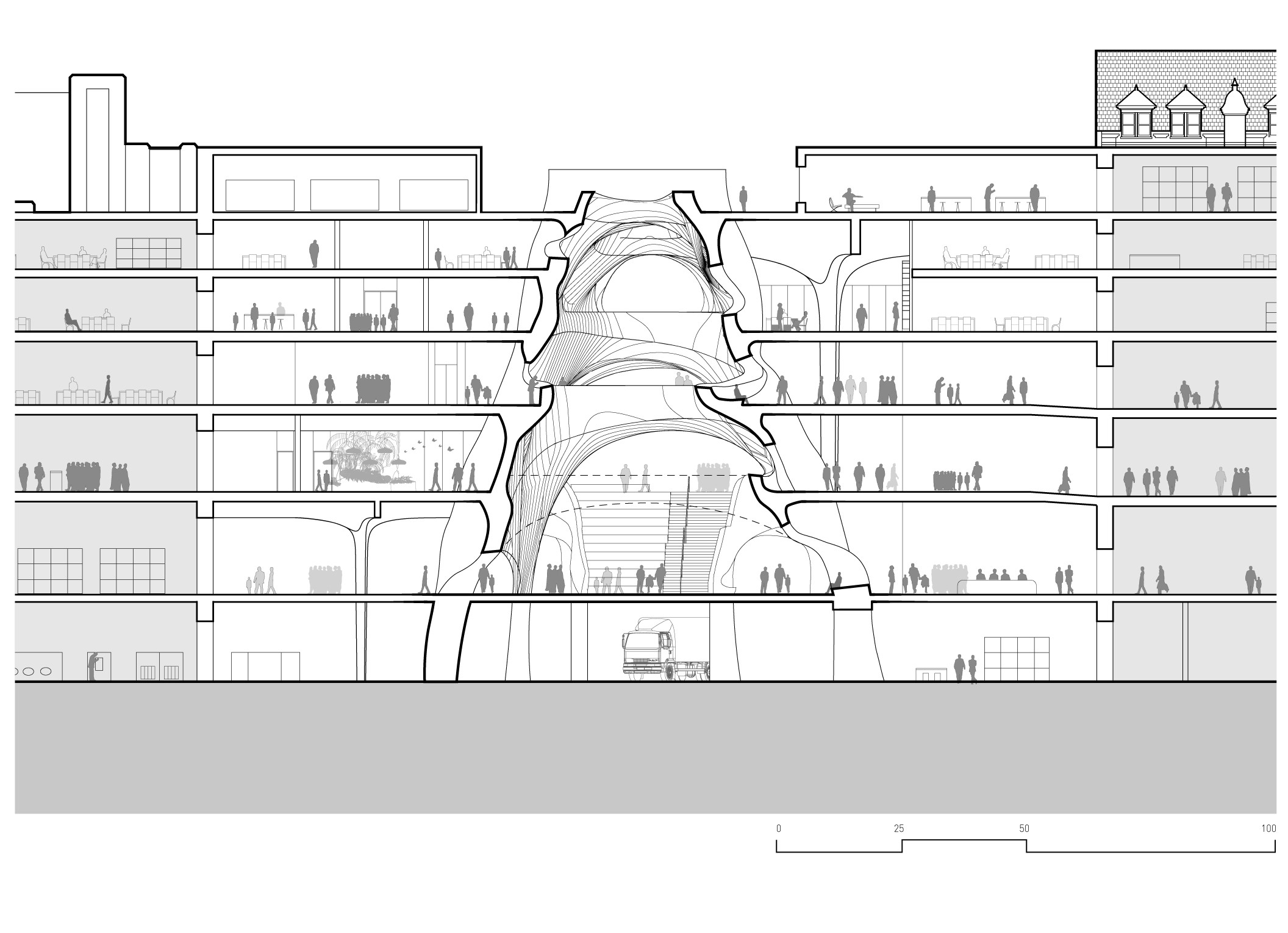
The Gilder Center will house close to four million scientific specimens, displayed primarily in a collections core, located one floor below grade and four floors above. Image © Neoscape, Inc.
Gilder-1.jpg
Gilder-2.jpg
March 29, 2022

Architects & Firms

Studio Gang Architects
✕
Image in modal.

“It is all about connections,” says architect Jeanne Gang, founding principal of Studio Gang. She’s referring to the Richard Gilder Center for Science, Education, and Innovation—a $431-million expansion the firm has designed for the American Museum of Natural History (AMNH) on Manhattan’s Upper West Side. With a late 2022 or early 2023 opening just announced, the project aims to improve visitor flow and relieve congestion inside the labyrinthine campus which encompasses four city blocks and 23 contiguous structures built since the late 19th century, including the original wing by Calvert Vaux and J. Wrey Mould (1877) and Polshek Partnership’s Rose Center for Earth and Space (2000).
Empire State Building.

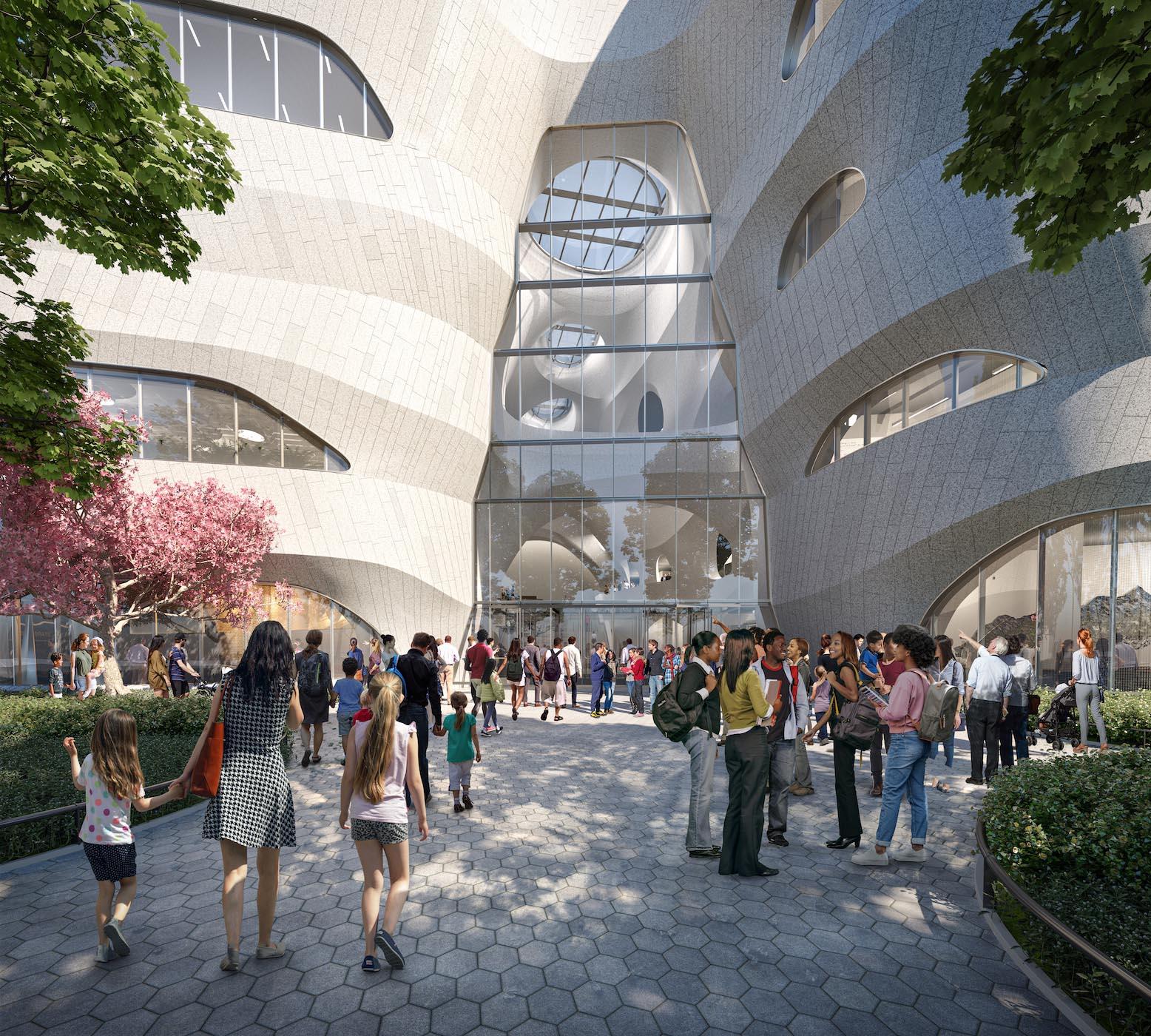
A rendering of the Gilder Center's exterior. Image © Neoscape, Inc.

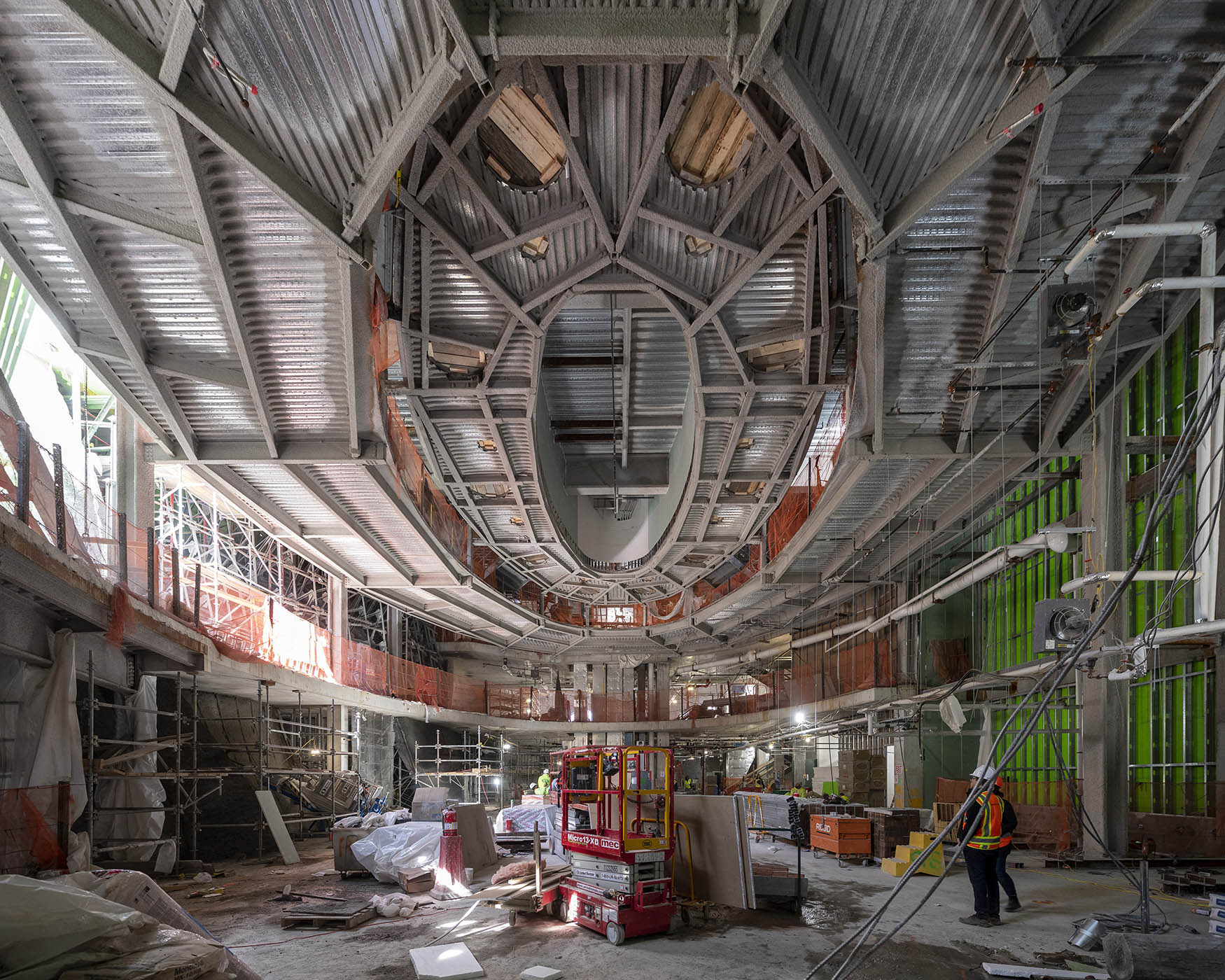
The Studio Gang project’s ambition is to better connect the museum’s nearly five million annual visitors with its collections and programming, establishing adjacencies and links among scientific disciplines and AMNH’s diverse holdings. Among the new spaces to be housed in Gilder: an “Invisible Worlds” theater, which will feature immersive experiences on topics as varied as the human mind, the ocean floor, or the ecology of forests; a purpose-built space for AMNH’s popular butterfly exhibit; a research library; as well as classrooms and laboratories. A multi-level “collections core” will display millions of scientific specimens representing every area of museum’s fields of study, including vertebrate and invertebrate biology, geology, anthropology, and archaeology. “The core will literally be a record of life on earth and a testament to the legitimacy, authenticity, and reliability of science,” says Ellen V. Futter, AMNH president. 
Empire State Building.

Construction of the Invisible Worlds Theater at the Gilder Center. Photo © Timothy Schenck, courtesy AMNH

To make way for the 230,000-square-foot project, while minimizing its impact on the surrounding Theodore Roosevelt Park, three structures that were part of the complex have been demolished. The strategy allowed the new construction to be inserted deeply into the museum’s existing footprint and resulted in an expression on the complex’s exterior that is relatively modest in scale—something that passersby on Columbus Avenue can now appreciate, nearly three years after the start of construction. The undulant addition, which will be clad in Milford pink granite (a material used on the main, Central Park West entrance), creates a fully accessible west entry on axis with 79th Street. Because of this positioning, visitors will be able view “Manhattan Henge” from within the building, points out Gang, using the term coined by AMNH astrophysicist Neil deGrasse Tyson to refer the phenomenon that occurs when the setting or rising sun aligns with the city’s street grid. “Gilder will allow visitors to make connections even on a planetary scale,” she says.
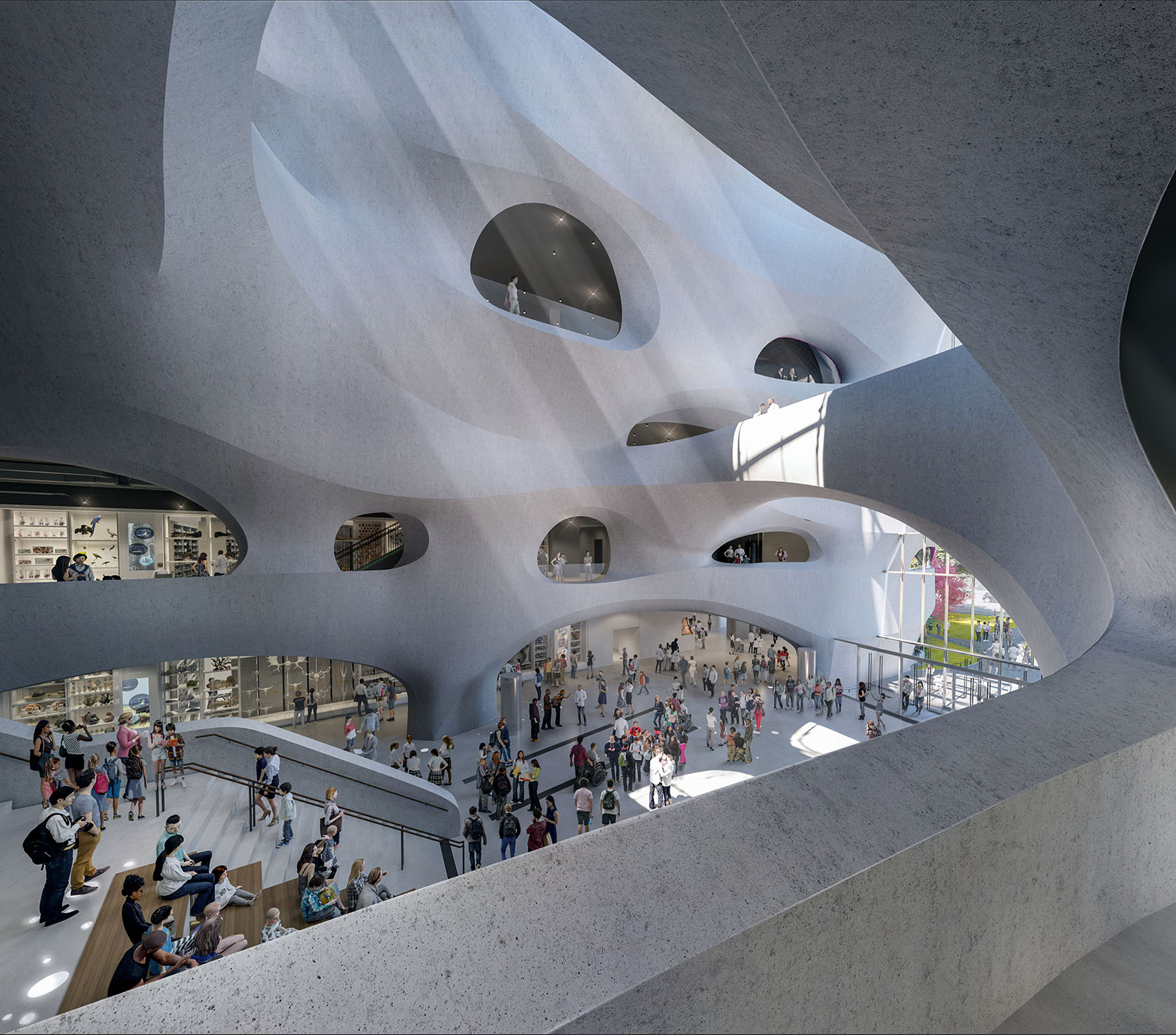
Empire State Building.

A rendering of the Gilder Center's atrium. Image © Neoscape, Inc.

Though seemingly compact on the outside, from the interior, the addition should feel more expansive—especially within the four-story skylit atrium that is now taking shape. The canyon-like space takes its cues from natural processes such as erosion and weathering, and from hydrologic flows. The organically curved walls comprise what Gang calls a “building within a building,” with the adjacent floors framing into it. The project team ruled out constructing this sculptural element in poured-in-place concrete since that method would have required laboriously built formwork and necessitated more regular and repetitive shapes to enable their reuse. Instead, the atrium has been made with schotcrete, a process coincidentally first developed in the early twentieth century by Carl Akeley, an AMNH taxidermist. The technique involves spraying concrete on an armature of rebar and metal mesh. Studio Gang refined its design for the shotcrete walls’ contours with physical mockups and specialized modelling software, paying particular attention to the “creases,” or edges, where the various curved surfaces meet. 

The atrium includes bridges and openings to make physical and visual links among the museum’s many spaces—and to make the museum’s previously confounding circulation more legible. Gang’s hope is that her intervention will spark a spirit of discovery in visitors. Once inside, she says, “people will see different pathways and feel like they want to explore.”

Empire State Building.

Perspective (top) and section (below). Drawings courtesy Studio Gang

Looking for quick answers on architecture and design topics?
Try Ask RECORD, our new smart AI search tool.
Ask RECORD →

Share This Story

Looking for a reprint of this article?
From high-res PDFs to custom plaques, order your copy today!


Joann gonchar

Joann Gonchar, FAIA, LEED AP, is deputy editor at Architectural Record. She joined RECORD in 2006, after working for eight years at its sister publication, Engineering News-Record. Before starting her career as a journalist, Joann worked for several architecture firms and spent three years in Kobe, Japan, with the firm Team Zoo, Atelier Iruka. She earned a Master of Architecture degree from the University of Pennsylvania and a Bachelor of Arts from Brown University. She is licensed to practice architecture in New York State.

Post a comment to this article

Report Abusive Comment

Subscription Center
  • Create an Account
  • Start a Subscription
  • Manage My Account
  • Sign Up for Newsletters
  • Visit Customer Service
  • Update Preferences

More Videos

Sponsored Content

Sponsored Content is a special paid section where industry companies provide high quality, objective, non-commercial content around topics of interest to the Architectural Record audience. All Sponsored Content is supplied by the advertising company and any opinions expressed in this article are those of the author and not necessarily reflect the views of Architectural Record or its parent company, BNP Media. Interested in participating in our Sponsored Content section? Contact your local rep!

close
  • TAMLYN XtremeTrim Exterior Trim
    Sponsored byTamlyn

    Designing Cleaner Panel Facades: Why Exterior Trim Details Matter

  • Building with Vapor Barriers
    Sponsored byReef Industries, Inc.

    Vapor Barriers Help Control Moisture in Tighter Building Designs

  • Duct Interior with Prodeq System
    Sponsored byHenry, a Carlisle Company

    Designing Resilient Water Containment Systems

DESIGN:ED Podcast
Listen to Architectural Record’s DESIGN:ED Podcast

Events

June 10, 2026

Rethinking Stormwater – The Power of Porous Paving

Credits: 1 AIA LU/HSW; 1 AIBD P-CE; 0.1 ICC CEU

Learn how porous paving systems support stormwater management, reduce heat island effects, and enhance sustainable site design performance.

June 11, 2026

Very Early Warning Fire Detection for Mission-Critical Facilities

Credits: 1 AIA LU/HSW; 1 AIBD P-CE; 0.1 ICC CEU

Examine advanced fire detection strategies that support uptime and enhance safety in data centers and other mission-critical facilities.

View All Submit An Event

Products

2026 Architect's Square Foot Costbook

2026 Architect's Square Foot Costbook

See More Products

Popular Stories

Practice Matters illustration

What’s in a (Firm’s) Name? Thinking About Succession and Legacy

Coronado Bridge

The Architect’s Guide to San Diego

Practice Matters illustration

By the Numbers: Counting America's Architects

Riverdale House by Studio Lau

Riverdale House by Studio Lau

House on a Hill

Design Vanguard 2026: Forma

Broader Sustainability of CMU - Free Webinar - May 21, 2026

Related Articles

  • Studio Gang's new Gilder Center at AMNH

    Studio Gang Delivers Architecture Inspired by Nature at the American Museum of Natural History in New York

    See More
  • American Museum of Natural History

    American Museum of Natural History Reveals Details about Studio Gang Expansion

    See More
  • ANHM Gang

    American Museum of Natural History in New York Breaks Ground on Jeanne Gang–Designed Building

    See More
×

The latest news and information

#1 Source for Architectural Design, News and Products

SUBSCRIBE
  • RESOURCES
    • Advertise
    • Contact Us
    • Submit
    • Store
  • ACCOUNT CENTER
    • Create an Account
    • Start a Subscription
    • Manage My Account
    • Sign Up for Newsletters
    • Visit Customer Service
    • Update Preferences
  • PRIVACY
    • PRIVACY POLICY
    • TERMS & CONDITIONS
    • DO NOT SELL MY PERSONAL INFORMATION
    • PRIVACY REQUEST
    • ACCESSIBILITY
  • SERVICES
    • Marketing Services
    • Reprints
    • Market Research
    • List Rental
    • Survey/Respondent Access
  • STAY CONNECTED
    • Linkedin
    • Facebook
    • Instagram
    • YouTube
    • X (Twitter)

Copyright ©2026. All Rights Reserved BNP Media, Inc. and BNP Media II, LLC.

Design, CMS, Hosting & Web Development :: ePublishing