Tribute: Richard Serra (1938-2024)
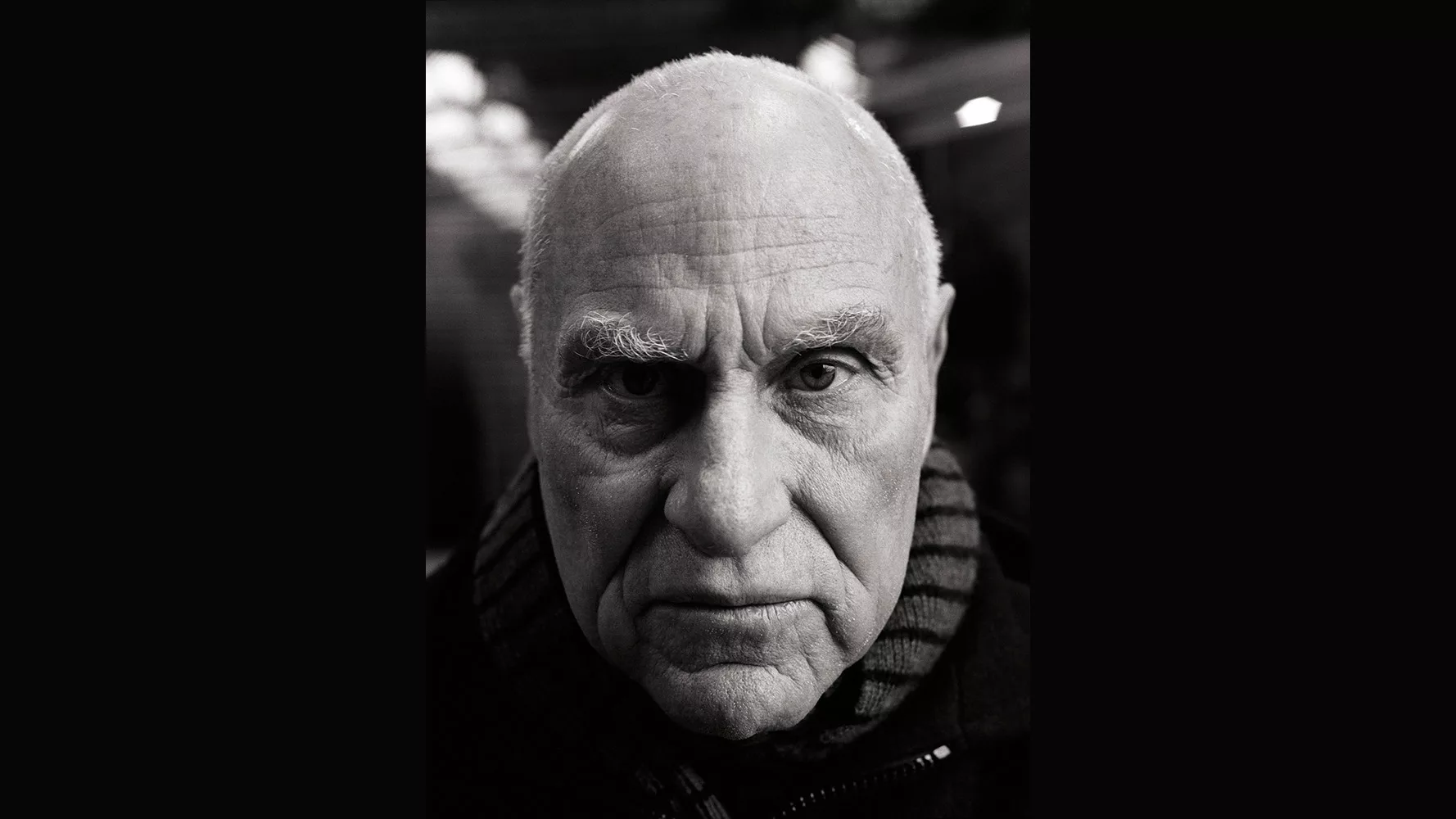
Richard Serra pictured in Siegen, Germany, in 2005. Photo by Oliver Mark, Wikimedia Commons
Richard Serra, the influential artist known for his monumental and minimal weathering steel sculptures, died yesterday in his Orient, New York home at the age of 85. According to his lawyer, Serra had been battling pneumonia. Over the course of his six-decade artistic career, the artist installed over 100 of his site-specific sculptures in both urban and rural settings, from Tokyo to Missouri, to the heart of Manhattan. So massive they had to be fabricated in industrial steel mills and installed with heavy machinery, Serra’s free-standing sculptures pushed the boundaries of his preferred material and of sculpture itself, creating intimate environments that entirely immerse, sometimes even enclosing, the viewer.
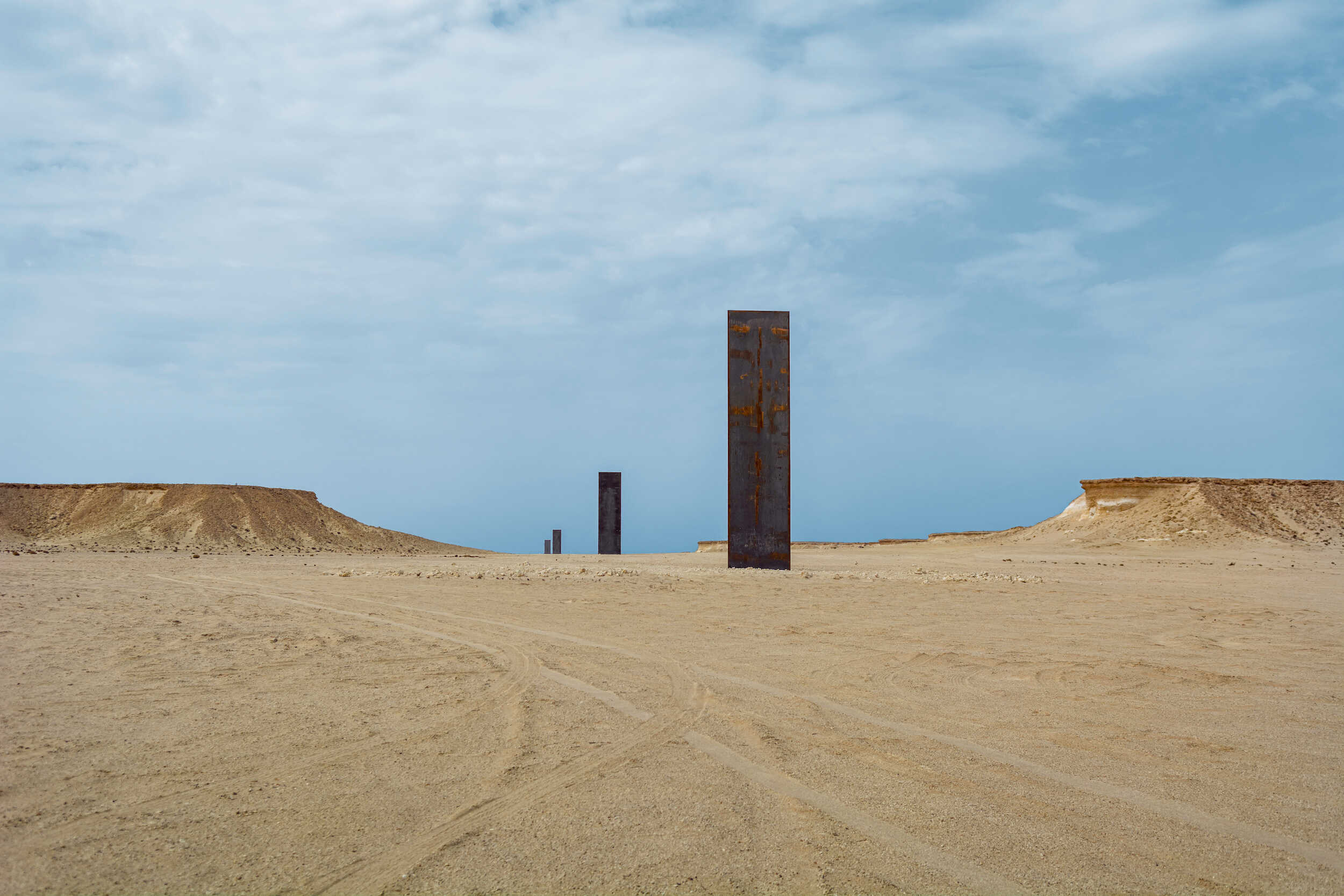
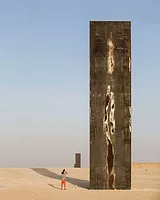
East-West/West-East (2014), Brouq Nature Reserve, Qatar. Photo by Davor Flam, Shutterstock
Originally trained as a painter, receiving his M.F.A. from Yale University in 1964, Serra’s pivot to sculpture was long in the cards. Born in San Francisco to a Russian mother and Spanish father, Serra grew up watching boats materialize in the Bay Area shipyard where his father worked as a pipefitter. He began working in steel mills at the age of 16 and continued well into his 20s to finance his education. “I had no sense at that time that I would ever apply that knowledge,” he said in a 1976 interview published in Art in America, but this exposure gave him “a certain deference and respect for the potential of steel.”
After leaving Yale, Serra traveled in Europe, where he met composer Philip Glass, who would become a lifelong friend and collaborator, and worked in the studio of Romanian sculptor and painter Constantin Brancusi. A visit to see Diego Velázquez's painting Las Meninas at the Prado Museum in Madrid prompted Serra to abandon the idea of painting entirely, believing he would never surpass that display of skill. Upon returning to the United States in 1966, he settled in New York, and began his sculpture career in earnest, first experimenting with rubber, neon, and lead in process-based gallery works before returning to the material which had pervaded his early life and would come to define his career.
“Sculpture up to that point had been really the handmaiden of painting,” Serra told television journalist Charlie Rose in a 2007 interview. “When I came to sculpture, I really wanted to use the tectonics … and the building processes of the industrial revolution—how steel had been used in bridges, how it had been used in silos—to move the procedures of manufacturing into the art world. This hadn't been done before.” In 1967, Serra penned his Verblist, a collection of 84 infinitives (to twist, to dapple, to crumple, to shave, to tear) that would form the basis of his practice and his approach to material and space.
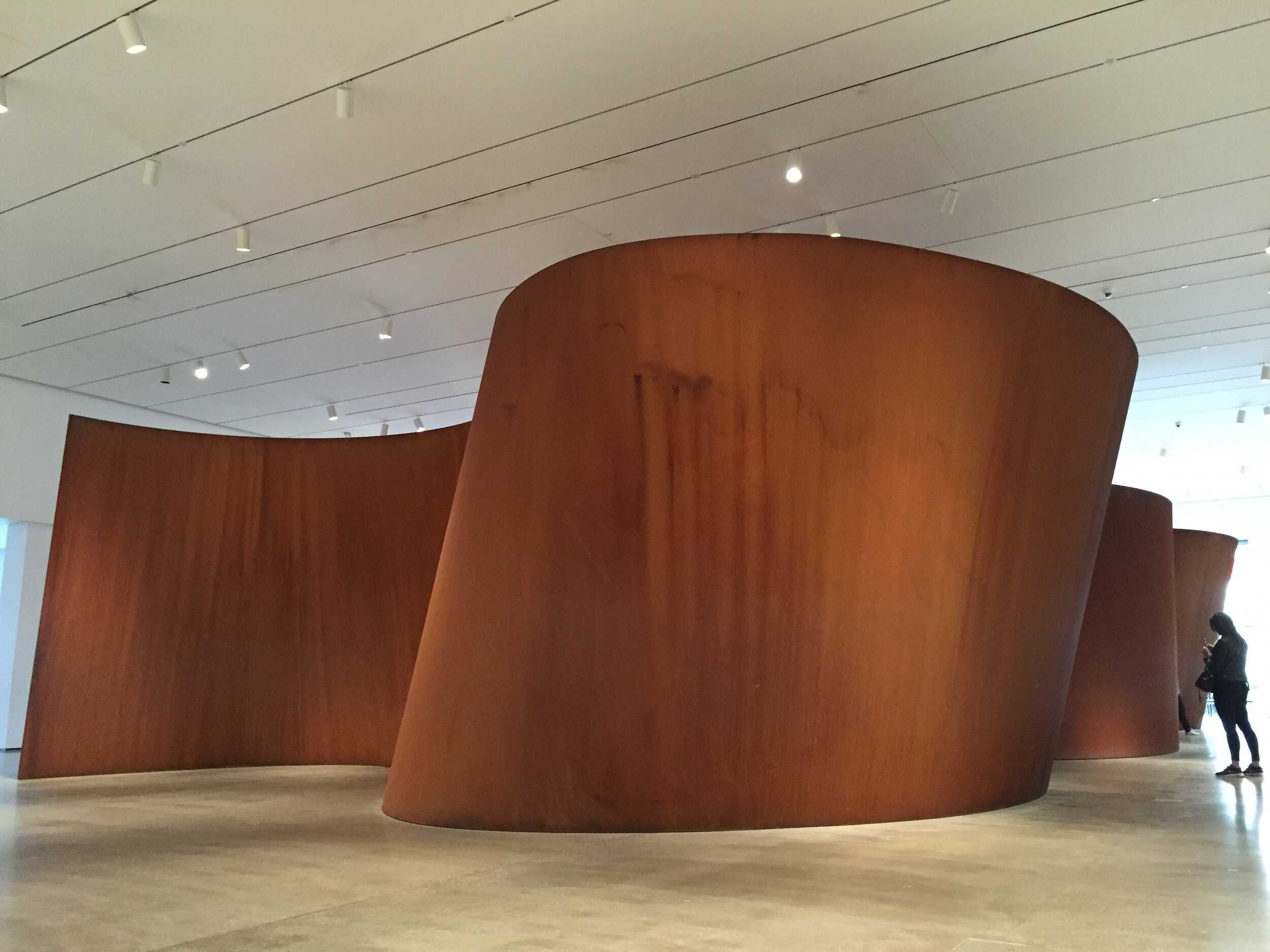
Band (2006) at The Broad, Los Angeles. Photo by photocritical, Shutterstock
His controversial Tilted Arc, commissioned by the U.S. General Services and installed in Lower Manhattan’s Foley Square in 1981, consisted of a 73-ton curved weathering steel wall, spanning 120 feet and standing 12-feet-high; it bisected the square, and blocked the views and paths of those who frequented the bustling civil plaza, including the many workers employed in the federal buildings flanking it. “Tilted Arc … brutally dominated the plaza and confirmed the worst suspicions of the buildings’ federal employees as to the unlovable nuttiness of modern artists,” wrote the author Janet Malcom in a 1984 piece for The New Yorker. After much pushback (over 1,300 government employees signed a petition for the sculptures removal) and a widely publicized federal trial, the sculpture was disassembled in 1988 and put in storage, never to be seen again, according to Serra’s wishes: “To remove the work is to destroy the work," he said at the time.
Significant works held by museums include Sight Point (1972–75) at the Stedelijk Museum in Amsterdam; Berlin Block (For Charlie Chaplin) (1977) at the Neue Nationalgalerie in Berlin; several sculptures at the Frank Gehry–designed Guggenheim Museum Bilbao comprising the Matter of Time installation (1994–2005); 2004’s Santa Fe Depot at the Museum of Contemporary Art San Diego (the future ownership of this piece is in question following the pending sale of the building); and Equal (2015) at the Museum of Modern Art in New York.
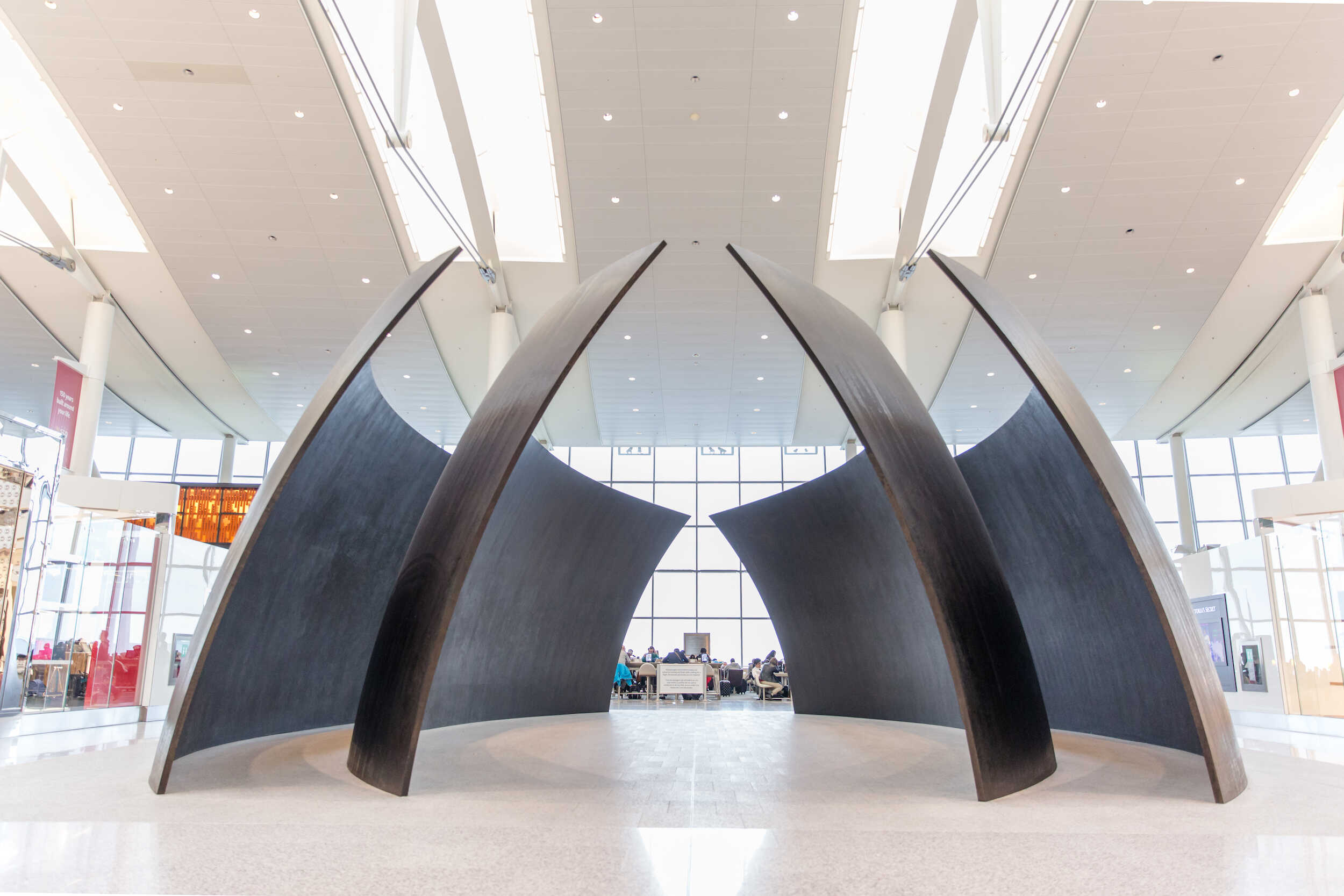
Tilted Spheres (2004), Pearson International Airport, Toronto. Photo by Shawn Goldberg, Shutterstock
As a personality, Serra was known for his quick temper and combative nature. “His aura was of rough, small-town America rather than of bohemia,” wrote Malcom in the previously quoted New Yorker article, describing a heated exchange she witnessed between the artist and Ingrid Sischy, then-editor of Artforum. In a 2021 interview, the co-owner of The Odeon restaurant, the notorious TriBeCa artist mecca of the 1980s, recalled a time where Serra swept the glassware off a table during an argument; Philip Glass had to plead his case to allow him to return.
Looking for quick answers on architecture and design topics?
Try Ask RECORD, our new smart AI search tool.
Ask RECORD →
However, “his intensity was balanced by a great generosity,” says Craig Dykers, founding partner of Snøhetta, who worked with Serra on the 2016 expansion of the San Francisco Museum of Modern Art. Many people expected their collaboration to be fraught, Dykers told RECORD, but “he came to our studio, worked with our model shop, and helped guide our understanding of how art meant for the public can be accessed within a museum.” Serra’s Sequence (2006), composed of two 13-foot-high torqued steel ellipses, was installed in the lobby of the Snøhetta-designed wing at SFMOMA from its opening until 2019.
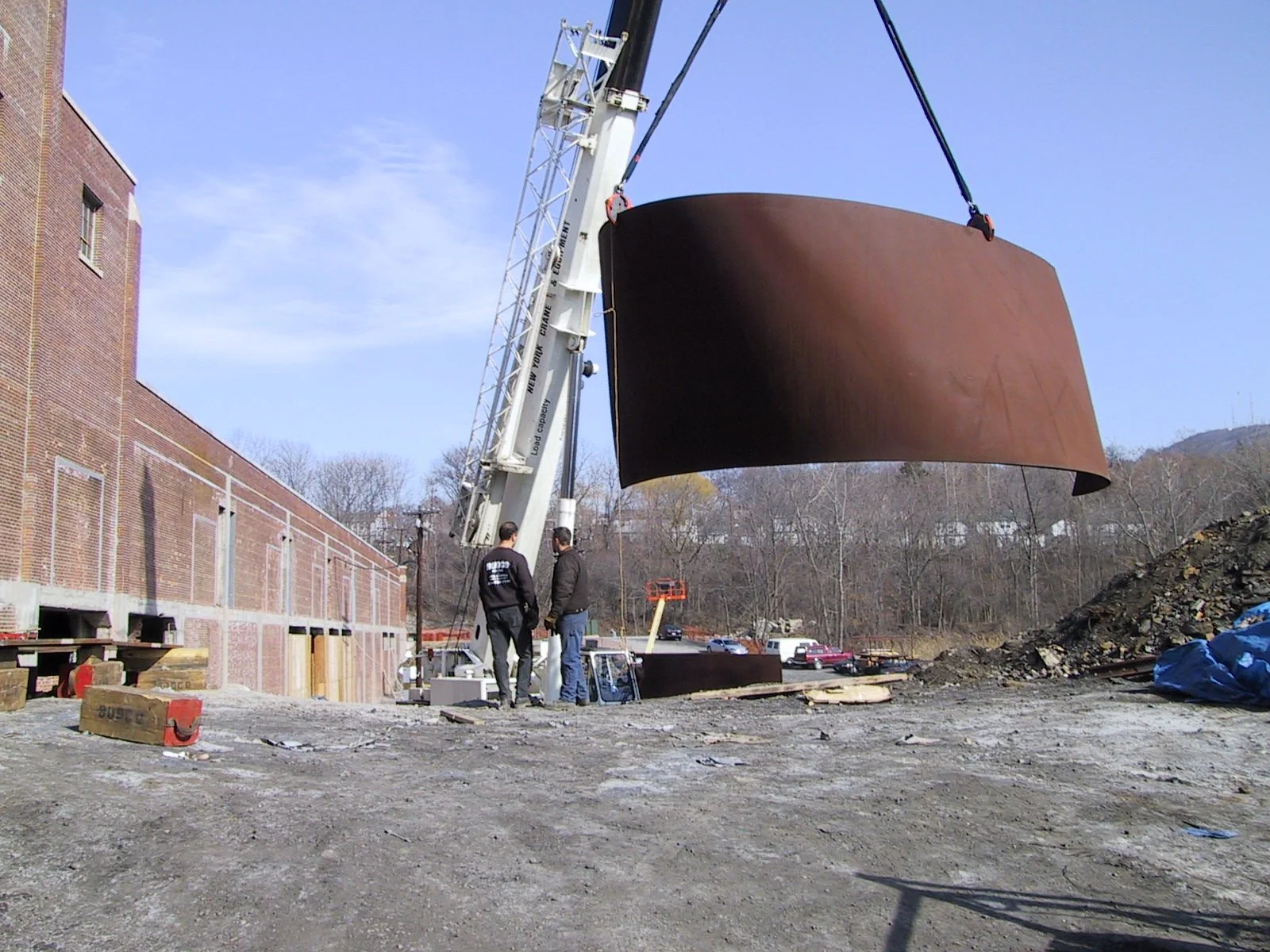
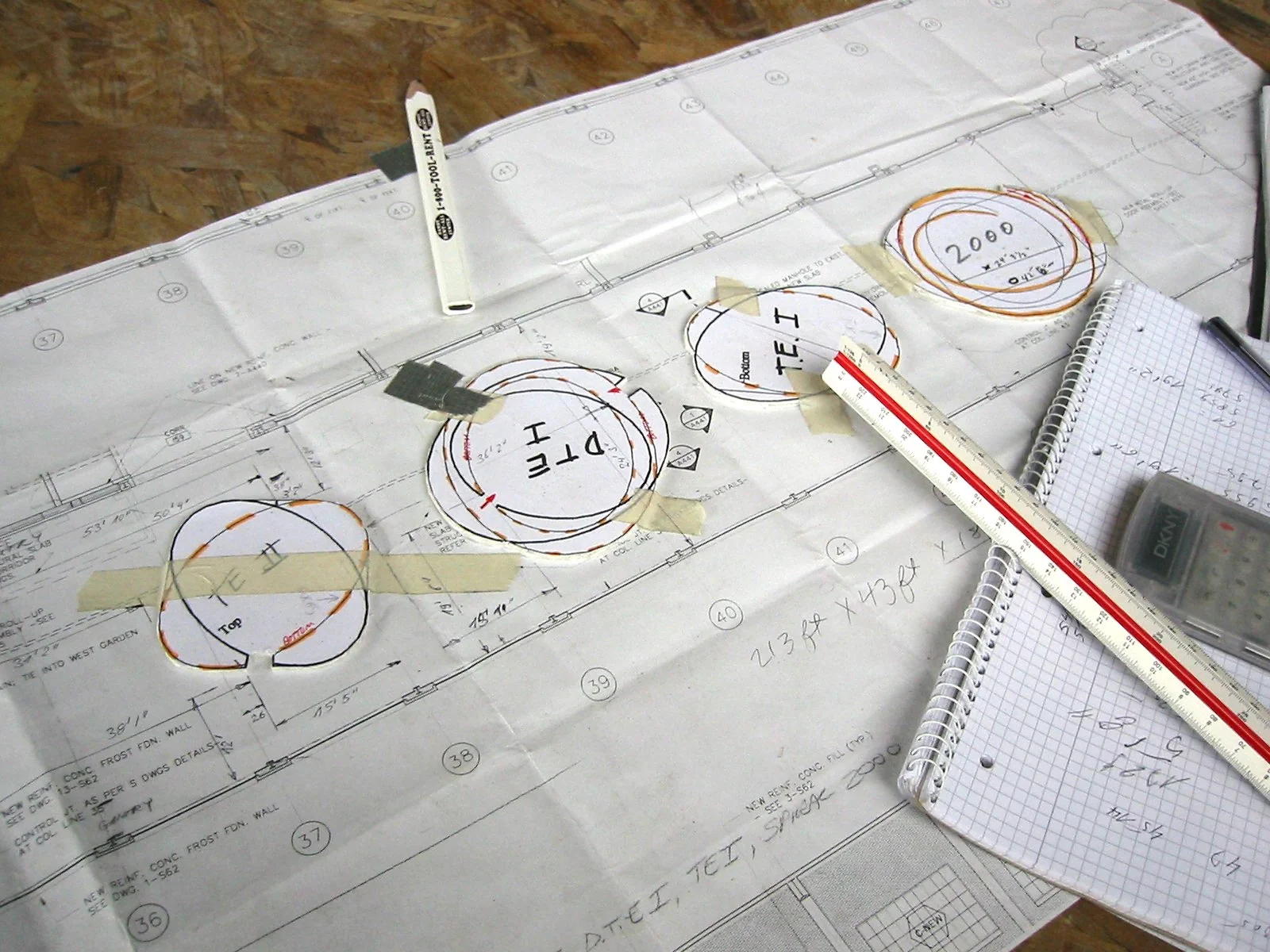
“Richard projected a raw intensity,” says Lyn Rice, principal of Rice+Lipka Architects. “There was an immediacy to him that was intimidating.” Rice worked with Serra in 2003, when his firm converted a 292,000-square-foot Nabisco box-printing factory in Beacon, New York, into what is now Dia Beacon, where the sculptor’s Torqued Ellipses is permanently displayed. “At the same time, he had an openness—he sought out each of us on the design and curatorial team to get our opinions on placement,” he said. “Richard calibrated the space around the ellipses with a care that binds the architecture and works together in a unified experience.”
1
2
One of Serra's sculptures being installed at Dia Beacon (1) and the sculptor's placement sketches for the works (2). Photos courtesy Rice+Lipka Architects
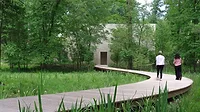
Thomas Phifer, founder and director of New York–based Thomas Phifer and Partners, also spoke fondly of their collaboration. In 2022, Phifer designed the bespoke concrete “pavilion” to house Serra’s Four Rounds, Equal Weight, Unequal Measure (2017) at the Glenstone Museum in Potomac, Maryland. “He wanted the pavilion to be made of concrete, expressing the true nature of the material,” Phifer told RECORD. “Its weight, presence, and sense of permanence was to reveal how the formwork was constructed, never any admixtures or patching, no mockups, and absolutely nothing precious. For him the room and the work became one.” Phifer’s unadorned, cast-in-place concrete structure sits at the end of a winding boardwalk, enclosing Serra’s four cylindrical steel forms, each weighing 82 tons but ranging in height, diameter, and volume.
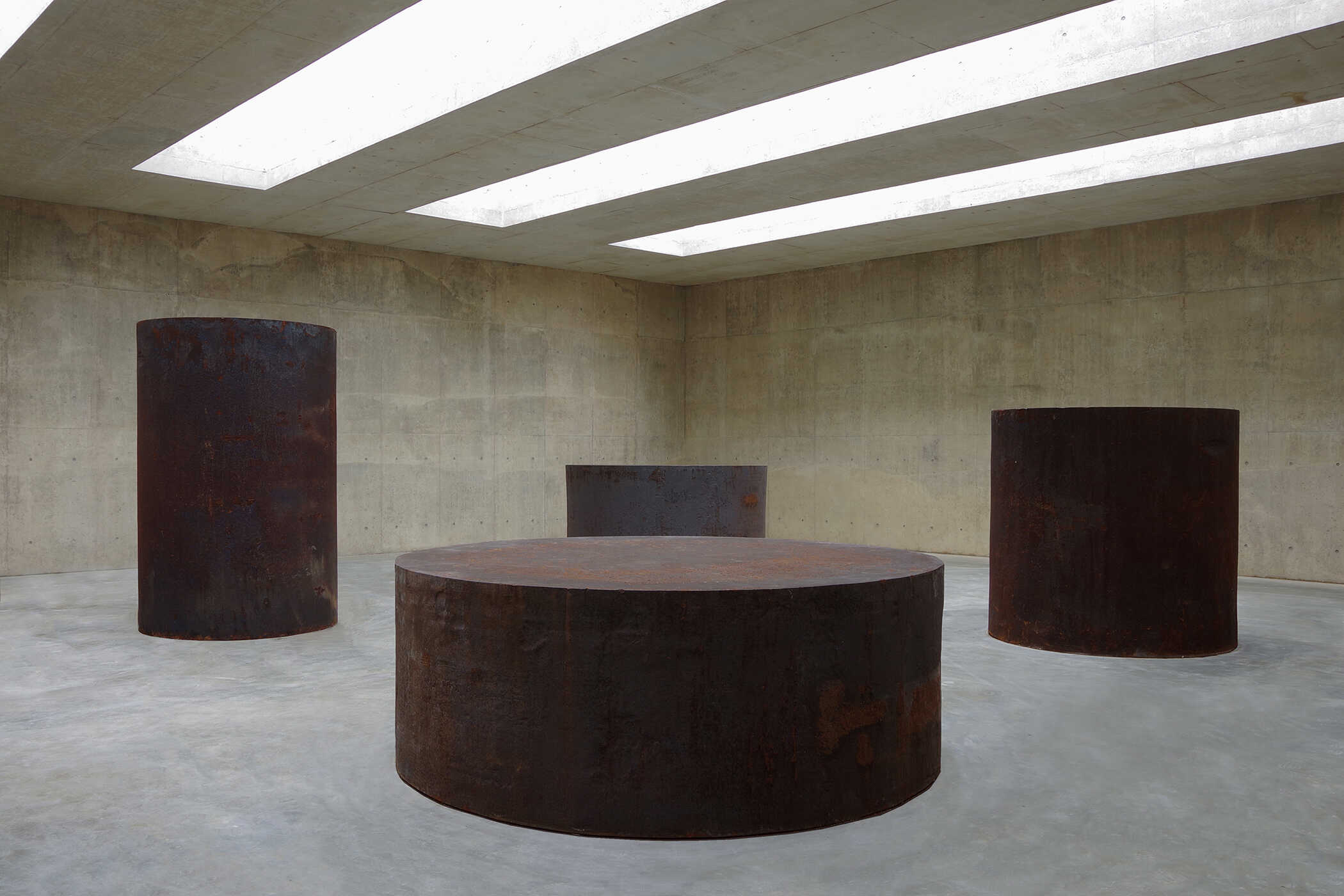
Four Rounds: Equal Weight, Unequal Measure (2017) at Glenstone Museum, Maryland.
Photo © Richard Serra/Artists Rights Society (ARS), New York, courtesy Glenstone Museum
“He was a great inspiration to all of us and the world has lost a great human and artist,” said Dykers. “In an interview once, he said—to paraphrase—that architects consume traditional sculpture to domesticate it. I found that to be a useful reminder that art should not be about pluralism. If architecture accepts art in its development, then it must respect this freedom rather than tame it. May the wonderful world of Richard Serra live on.”
Serra is survived by his wife, the art historian Clara Weyergraf.
Looking for a reprint of this article?
From high-res PDFs to custom plaques, order your copy today!