Architectural Record
search
cart
facebook twitter linkedin youtube
  • Sign In
  • Subscribe
  • Sign Out
  • My Account
Architectural Record
  • NEWS
    • Latest News
    • Awards
    • Interviews
    • Obituaries
    • Podcasts
      • Design:Ed Podcast
      • Sponsored Podcasts
  • OPINION
    • Book Reviews / Excerpts
    • Exhibition Reviews
    • Forum
  • EXCLUSIVES
    • Videos
    • Design Vanguard
    • Top 300 Firms
    • Sponsored Content
    • Sponsored eBooks
    • From the Archives
  • CONTINUING ED
    • Editorial Continuing Ed
    • CE Center
    • CE Academies
  • PROJECTS
    • Buildings By Type
    • Reuse & Renovation
    • Museums & Arts Centers
    • Colleges & Universities
    • Multifamily Housing
    • Interiors
    • Lighting
    • Kitchen & Bath
  • HOUSES
    • Record Houses
    • House of the Month
    • Featured Houses
  • PRODUCTS
    • Products by Category
    • Record Products of the Year
    • Latest Products
  • EVENTS
    • Dates & Events
    • Record on the Road
    • Innovation Conference
    • Sustainability in Practice
    • Women In Architecture
    • Webinars
    • Ad Excellence Awards
    • Submit an Event
  • CONNECT
    • Ask RECORD AI
    • Newsletters
    • Contact
    • Advertise
    • Editorial Calendar
    • Store
    • Customer Service
  • SUBMIT
    • Submission Guidelines
    • RECORD Competitions
  • MAGAZINE
    • Subscribe
    • My Account
    • Digital Edition
    • Current Issue
    • Firm Pass
    • Historic Archive
Architecture News

GSA and HUD Seek to Offload Marcel Breuer–designed Weaver Federal Building

By Matt Hickman
Robert C. Weaver Federal Building
The Robert C. Weaver Federal Building is one of two National Register of Historic Places–listed buildings in Washington, D.C., designed by Marcel Breuer. The landmark Brutalist complex has served as HUD headquarters since its opening in 1968. Photo by the U.S. Dept. of Housing and Urban Development/Wikimedia Commons/Public domain
April 23, 2025

Described as everything from “bold and beautiful” to “10 floors of basement” over its nearly six decades in existence, Marcel Breuer’s Robert C. Weaver Federal Building in Washington, D.C. has officially landed on the U.S. General Services Administration (GSA)’s real estate chopping block.

On April 17, the National Register of Historic Places–listed structure, a preeminent example of D.C. Brutalism and one of two Breuer-designed buildings in the nation’s capital, was added to the GSA’s list of federal assets identified for “accelerated disposition.” Roughly 30—and growing—properties are currently specified on the list, which was published by the GSA after an inventory of 440 “non-core” federal properties was made public and then quickly removed from view after outcry over the presence of myriad architecturally important buildings. Many of the assets that appear on the current list, including federal buildings in Utah, Oregon, and Florida, had been previously earmarked for sale by the GSA under the Biden administration. The Weaver Building is one of two properties in Washington to appear on the list so far, joined by a New Deal–era building at 301 7th Street SW that recently underwent an extensive renovation and was poised to become the new FEMA headquarters in 2027. (It too was slated for disposition under Biden.) That building is located opposite the Weaver Building, which is home to the Department of Housing and Urban Development (HUD). In 2000, HUD headquarters was named in honor of Weaver, the department’s first secretary and the first African American Cabinet member.

News of the Weaver Building’s inclusion on the offloading priority list was jointly announced by the GSA and HUD as a key step in the latter’s planned relocation to new headquarters. The landmark property’s addition to the accelerated disposition list will “allow the GSA to more effectively right size the federal real estate portfolio to reduce the burden on the American taxpayer while also delivering space that enables HUD to achieve its mission,” explained the agency, which noted that the building is at half its total occupancy and faces over $500 million in deferred maintenance and modernization needs, costing American taxpayers “more than $56 million in yearly rent and operations expenditures.” (Not mentioned are the Trump administration’s sweeping layoffs proposed for HUD, which targets employees involved with disaster relief, housing discrimination, and rental assistance.)

While the timeline and final location for the HUD relocation scheme are still “under evaluation,” the GSA notes that any future new headquarters will remain within the Washington, D.C. metro area.

Although derided by critics and HUD employees over the years followings its celebrated debut in 1968, there’s no denying the Weaver Building’s “exceptional architectural significance,” to quote the GSA. The curvilinear 700,000-square-foot structure—its 10 floors supported by tapered, load-bearing concrete pilotis—was the first completed federal office building built under President John F. Kennedy’s “Guiding Principles for Federal Architecture” (1962). The building, the GSA writes in a profile, “stands out as one of the most successful modern-era buildings in GSA’s inventory.” Upon its completion, it was also the first federal building to utilize precast concrete as the primary structural and exterior finish material, as well as the first fully modular design for a federal office building. Breuer’s other D.C. office building, the Hubert M. Humphrey Building, was inaugurated in 1977.

The Weaver Building is featured in the National Building Museum’s ongoing Capital Brutalism exhibition, in which six Brutalist D.C. structures—many, like the Weaver Building, are much-maligned and haven’t aged well—are dramatically reimagined by leading architecture firms. The exhibition is a particularly salient one as modern federal architecture—particularly Brutalism—finds itself in the crosshairs of the Trump administration’s classical architecture–leaning culture wars. For the Weaver Building, Brooks + Scarpa “proposes a radical transformation,” writes Clifford Pearson in his review of the show, “converting about 45 percent of the space to affordable housing, updating offices to a new work culture, adding retail and public uses to the ground level, and creating a set of cascading terraces, planted rooftops, and glazed atria in the area between the building’s two wings.”

If the Weaver Building is ultimately offloaded by the GSA and HUD relocates to a more “right-sized” headquarters, here’s hoping that this landmark work of architecture’s future is as promising as the one Brooks + Scarpa has imagined for it. 

Looking for quick answers on architecture and design topics?
Try Ask RECORD, our new smart AI search tool.
Ask RECORD →

KEYWORDS: Brutalism Washington D.C.

Share This Story

Looking for a reprint of this article?
From high-res PDFs to custom plaques, order your copy today!


Matt hickman
Matt Hickman is senior news/digital editor at Architectural Record. Previously, he served as Senior Editor at The Architect’s Newspaper and has over a decade of experience as a freelance writer and editor specializing in historic preservation, public space, and the intersection of the natural world and built environment. A native of the Pacific Northwest, Matt holds an MFA in creative nonfiction writing from The New School.

Post a comment to this article

Report Abusive Comment

Subscription Center
  • Create an Account
  • Start a Subscription
  • Manage My Account
  • Sign Up for Newsletters
  • Visit Customer Service
  • Update Preferences

More Videos

Sponsored Content

Sponsored Content is a special paid section where industry companies provide high quality, objective, non-commercial content around topics of interest to the Architectural Record audience. All Sponsored Content is supplied by the advertising company and any opinions expressed in this article are those of the author and not necessarily reflect the views of Architectural Record or its parent company, BNP Media. Interested in participating in our Sponsored Content section? Contact your local rep!

close
  • TAMLYN XtremeTrim Exterior Trim
    Sponsored byTamlyn

    Designing Cleaner Panel Facades: Why Exterior Trim Details Matter

  • Building with Vapor Barriers
    Sponsored byReef Industries, Inc.

    Vapor Barriers Help Control Moisture in Tighter Building Designs

  • Duct Interior with Prodeq System
    Sponsored byHenry, a Carlisle Company

    Designing Resilient Water Containment Systems

DESIGN:ED Podcast
Listen to Architectural Record’s DESIGN:ED Podcast

Events

June 18, 2026

Rebooting the Aging Office Building

Credits: 1 AIA LU/HSW; 1 AIBD P-CE; 0.1 ICC CEU; 1 PDH

Explore façade retrofit strategies and award-winning design concepts that can transform aging office buildings into healthier, higher-performing workplaces for today’s hybrid workforce.

June 23, 2026

Enhancing Fire Resistance with Advanced PVC Solutions

Credits: 1 AIA LU/HSW; 1 AIBD P-CE; 0.1 ICC CEU; 1 IIBEC CEH

Evaluate advanced PVC solutions that improve fire resistance, support WUI compliance, and enhance resilience in residential and commercial building design.

View All Submit An Event

Products

2026 Architect's Square Foot Costbook

2026 Architect's Square Foot Costbook

See More Products

Popular Stories

SanDiegoAirport

Top 300 Architecture Firms of 2026

Coronado Bridge

The Architect’s Guide to San Diego

Lorcan O' Herilhy

California Architect Lorcan O’Herlihy Has Died, Age 66

CCA, Studio Gang

The Winners of the AIA’s 2026 Architecture Award Range from Collegiate Rowing Hubs to Housing for the Homeless

Dusk House

Design Vanguard 2026: ONO

Rebooting the Aging Office Building - Free Webinar - June 18, 2026

Related Articles

  • U.S. Federal Building by Morphosis

    See More
  • 200-Foot-High Living Wall Proposed for Portland Federal Building

    See More
  • Jacob K. Javits Federal Building Plaza

    See More

Related Products

See More Products
  • WC_-SCA.png

    Building Great Schools for a Great City

  • facade.jpg

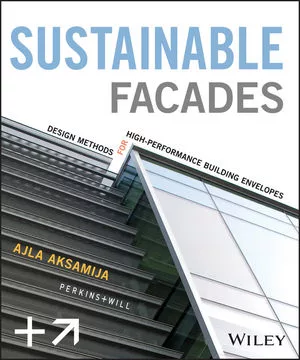
    Sustainable Facades: Design Methods for High-Performance Building Envelopes

See More Products
×

The latest news and information

#1 Source for Architectural Design, News and Products

SUBSCRIBE
  • RESOURCES
    • Advertise
    • Contact Us
    • Submit
    • Store
  • ACCOUNT CENTER
    • Create an Account
    • Start a Subscription
    • Manage My Account
    • Sign Up for Newsletters
    • Visit Customer Service
    • Update Preferences
  • PRIVACY
    • PRIVACY POLICY
    • TERMS & CONDITIONS
    • DO NOT SELL MY PERSONAL INFORMATION
    • PRIVACY REQUEST
    • ACCESSIBILITY
  • SERVICES
    • Marketing Services
    • Reprints
    • Market Research
    • List Rental
    • Survey/Respondent Access
  • STAY CONNECTED
    • Linkedin
    • Facebook
    • Instagram
    • YouTube
    • X (Twitter)

Copyright ©2026. All Rights Reserved BNP Media, Inc. and BNP Media II, LLC.

Design, CMS, Hosting & Web Development :: ePublishing