Arts & Culture 2025
Asif Khan Adapts a Soviet Cineplex as an Arts Hub in Almaty
October 1, 2025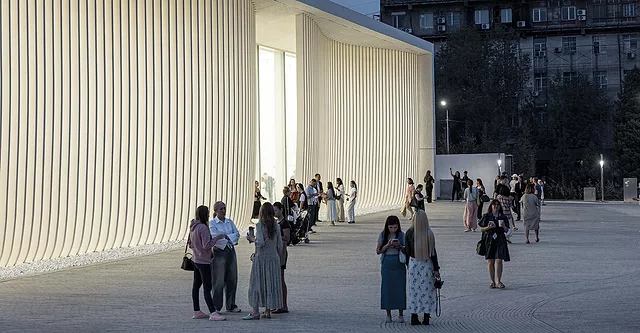
Arts & Culture 2025
Asif Khan Adapts a Soviet Cineplex as an Arts Hub in Almaty
October 1, 2025Tselinny Center of Contemporary Culture.

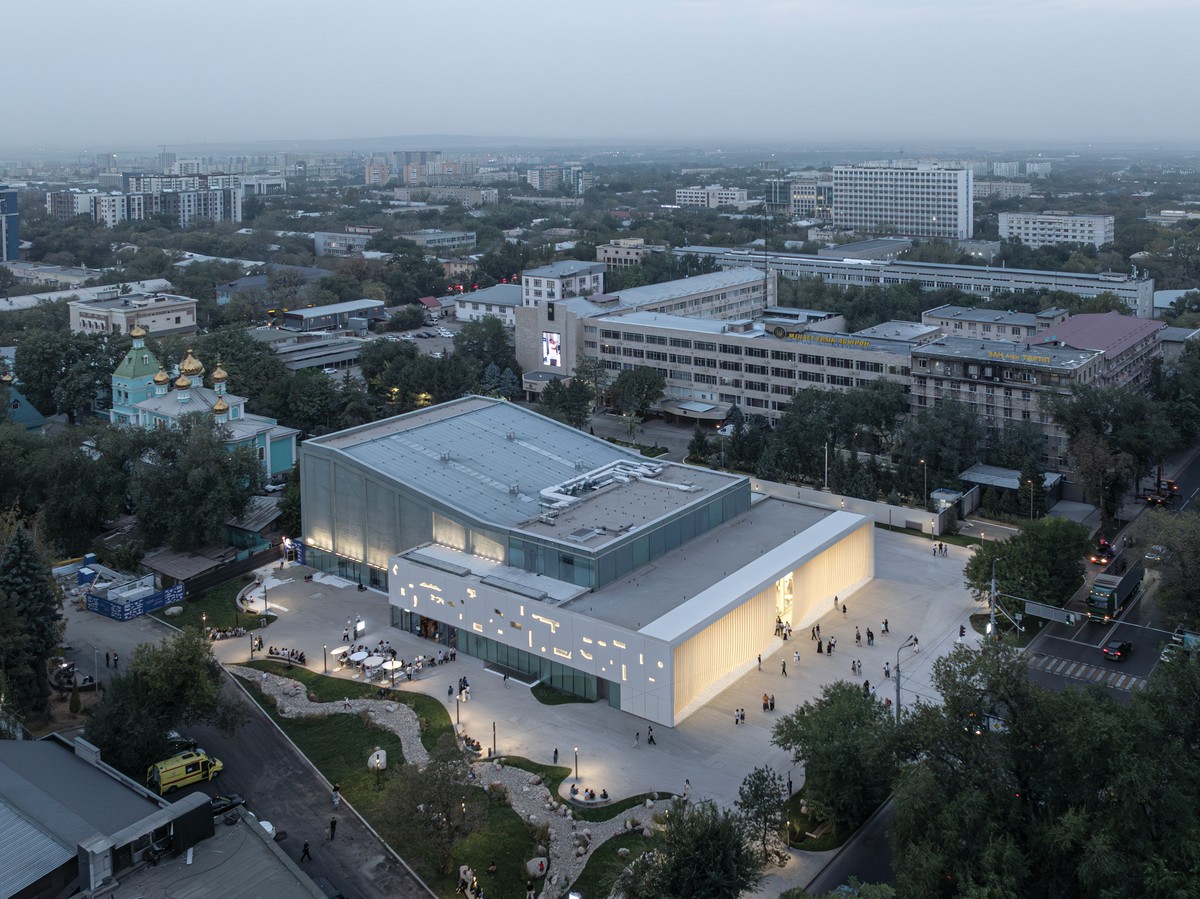
The year is 1964, the place Almaty, capital of the Soviet republic of Kazakhstan. To celebrate 10 years of Nikita Khrushchev’s policy of tselina—a campaign to develop the “virgin” territory of the Kazakh Steppe into agricultural land—Moscow has rolled out one of its standard-plan panoramic movie theaters, a vehicle for Politburo propaganda. Located at the western head of Kabanbay Batyr Street (Almaty’s entertainment boulevard, nicknamed “Broadway”) and dimensioned to hide the neighboring Cathedral of St. Nicholas, the building consists of a 60-foot-high concrete-and-steel auditorium, around which wraps, on the entrance front, the long rectangle of a glass-fronted foyer. In a traditionally yurt-dwelling nation, where urbanization is relatively recent, this transparent box, brilliantly lit up at night, distills all the glamour of modernity and is crowned with a giant neon sign proclaiming its name: Tselinny.
1
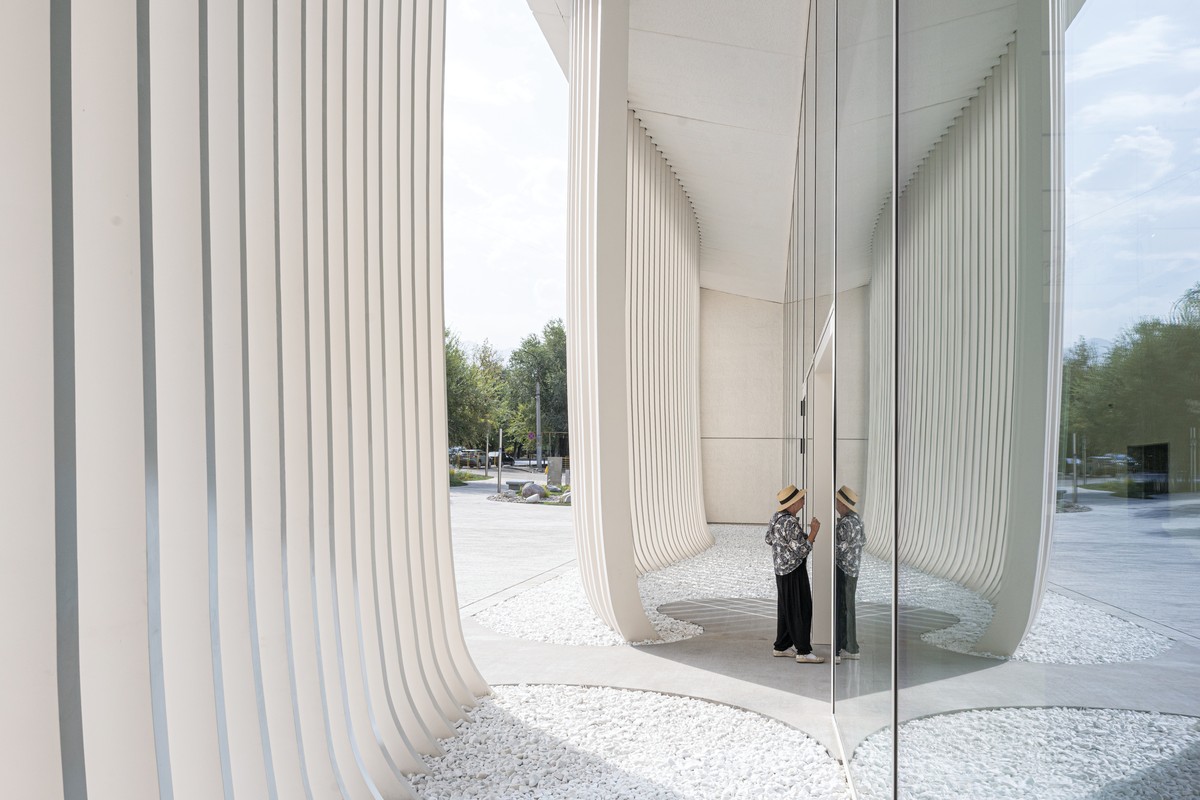
The undulant louvered wall (1) sits in front of glazing (2), creating an interstice that leads to the new foyer (3). Photos © Laurian Ghinițoiu, click to enlarge.
2
3
Fast-forward 53 years. An environmental disaster, tselina has enduringly scarred the formerly nomadic Kazakhs in a now-independent republic. In the new capital of Astana, a Kisho Kurokawa–planned metropolis thrown up by a country rich in oil and gas, Kazakhstani architect Zaure Aitayeva is finalizing preparations for Expo 2017. During the event, she makes a fateful encounter—with London-based architect Asif Khan, designer of the British pavilion. The pair will soon marry and, in 2018, begin collaborating on what Khan describes as his most important project to date, the conversion of Almaty’s modernist movie theater into an independent arts center.
Founded by Almaty-born magnate Kairat Boranbayev, the Tselinny Center of Contemporary Culture finally came home to roost last month, after seven years of nomadism piloted by its dynamic director, curator Jamilya Nurkaliyeva. The country’s first private cultural institution, it aims to boost a promising but fragile local arts scene and inaugurated its 60,000-square-foot permanent home with Barsakelmes, a flamboyant folk-rock opera that celebrates the power of ancient Kazakh mythology to help heal post-colonial trauma. That same week, another local tycoon, Nurlan Smagulov, opened his Almaty Museum of Arts, a brand-new Chapman Taylor–designed building that houses a national and international collection of post–World War II works.
Questions of memory and identity are central to the Tselinny project. Though a product of Soviet imperialism, the movie theater was etched into the minds of many Almatyites, since it was the kind of place one went on a first date—and, indeed, recounts Khan, Boranbayev took his wife there when they were first courting. Preserving the building and keeping its name are a way, he says, for citizens to take possession of their colonial past, although the exercise proved more difficult than anticipated. On the one hand, the cinema had been insensitively converted into a multiplex in the early 2000s, leaving it in a mutilated state; on the other, engineers were skeptical that any of the original fabric could be adapted to today’s stringent seismic regulations, in a city twice destroyed by earthquakes. In the end, a hybrid solution prevailed: the reinforced main auditorium houses a multifunction arts hall, while a new foyer replaces the Soviets’ glass-fronted box.
4
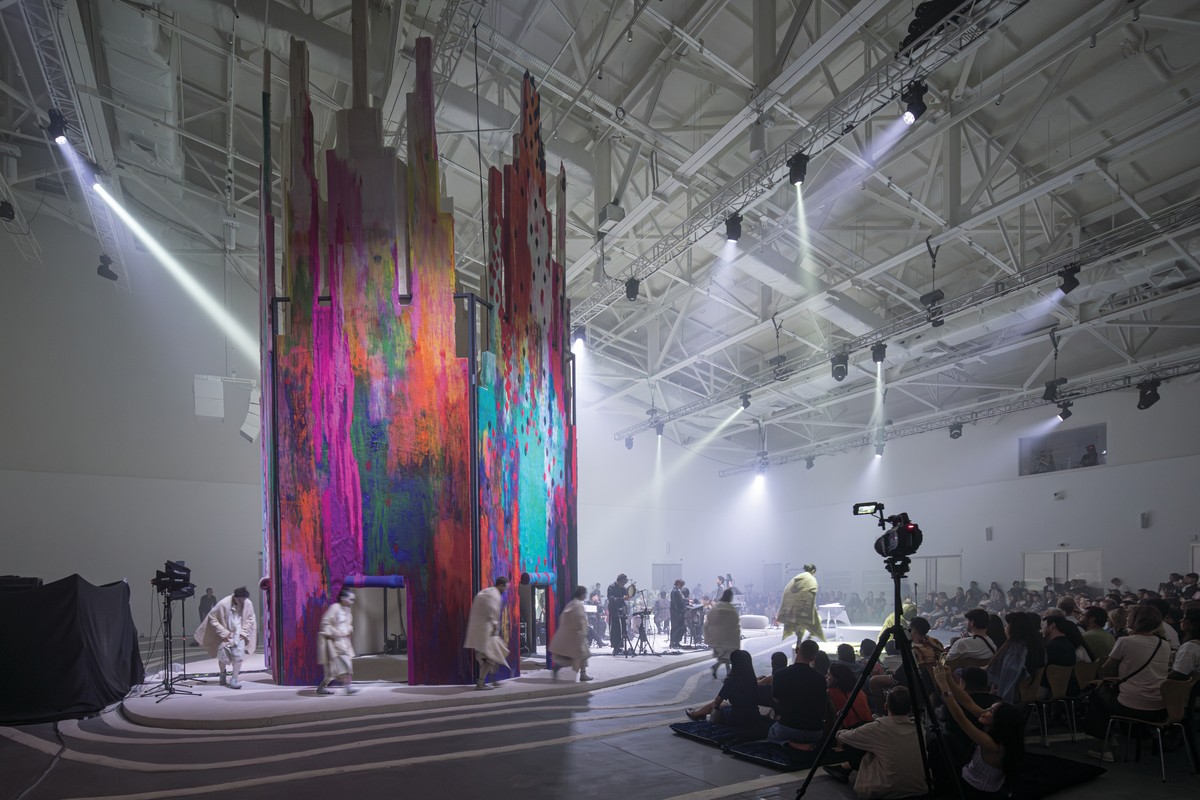
The rear of the building (4) houses a multiuse hall (5). Photos © Laurian Ghinițoiu
5
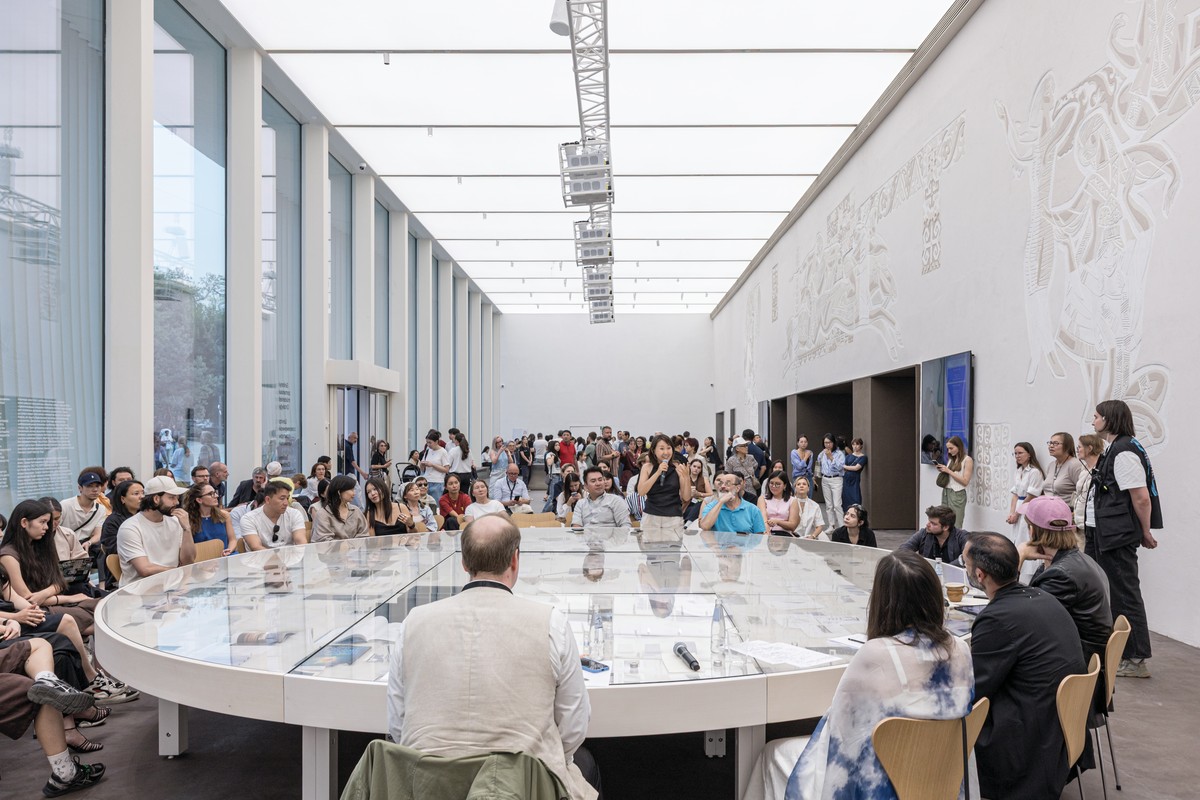
Replicating the original’s dimensions—although wrapping farther round on the northern side to accommodate new technical spaces—the replacement foyer as well as its lateral wings house a cafeteria to the south, a small exhibition gallery to the north, and forthcoming upstairs spaces that will include a learning center and a rooftop restaurant. With its exposed metal ceiling structure, the soaring main hall has the quasi-industrial feel common to many contemporary arts spaces and is intended to accommodate all Tselinny’s principal activities, from installations, film screenings, and happenings to more conventional exhibitions of painting, photography, and sculpture. Below, an enlarged basement contains restrooms and a coat check.
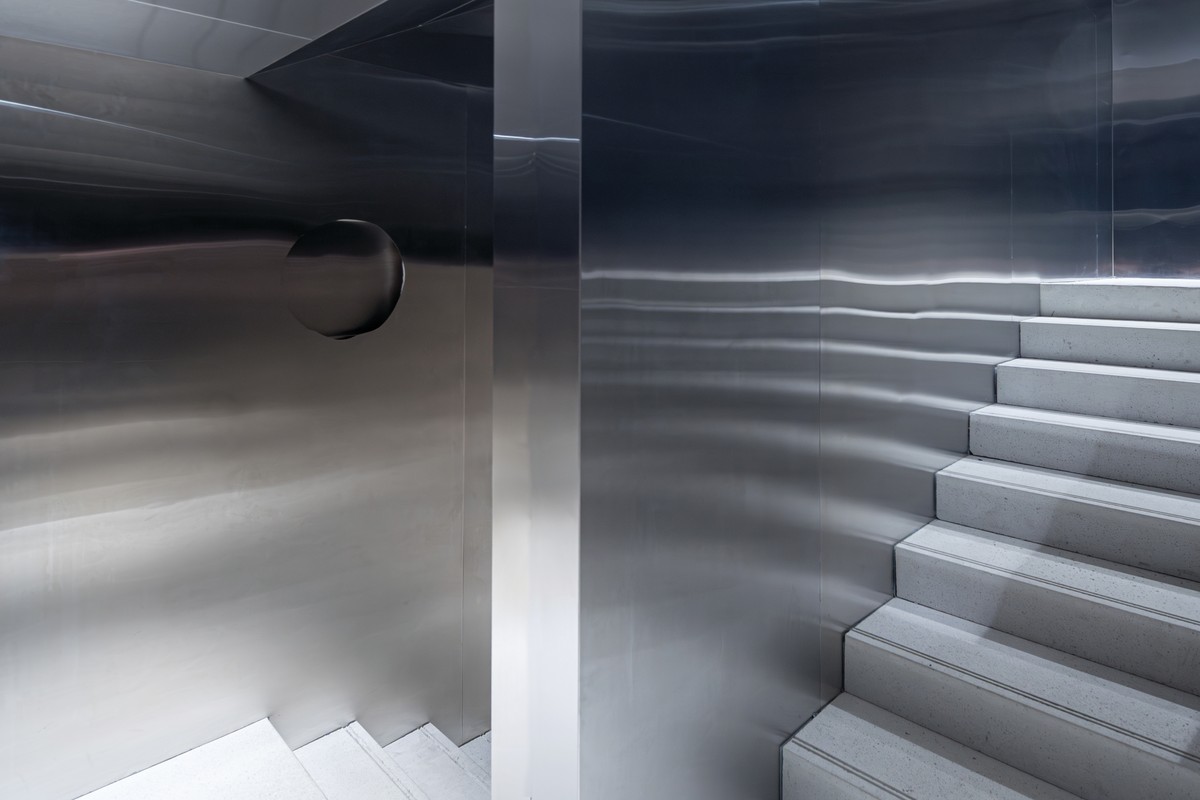
Other interiors are lined with metal panels. Photo © Laurian Ghinițoiu
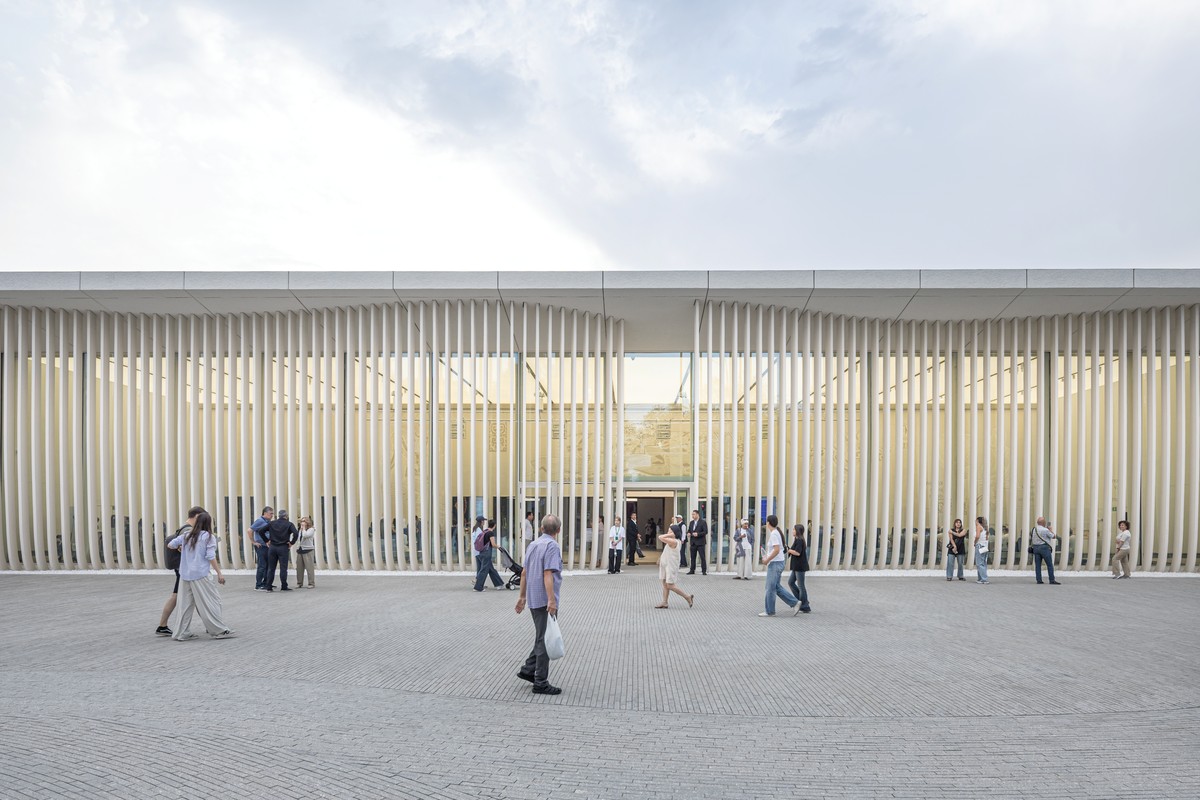
In contrast to the blank canvas of the reconditioned auditorium, the foyer and its wings concentrate all the symbolic charge of the Tselinny project. Where steps separated the movie theater from the ground, the cultural center is entered at grade, a gesture of accessibility both literal and metaphorical. Given the visual clout of the Soviet facade, pressure was on to design a main elevation of equal impact. As Khan recalls, inspiration came from a trip to the steppe, when he and Aitayeva watched clouds descend along the vast horizon toward the ground. “My instinct was to try to recreate the feeling I’d had that day, of Tengri [the traditional Kazakh sky god] meeting Umay [the earth mother],” he explains. After the initial idea—a 45-degree-tilted, sky-reflecting glass facade—proved too technically challenging, the architects adopted a more classic response: in front of full-length glazing, an undulant screen of vertical steel fins forms what they hope will be interpreted as a gently billowing cloud. “Walking through the cloud is a purifying process,” says Khan. “You enter in a different state of mind.”
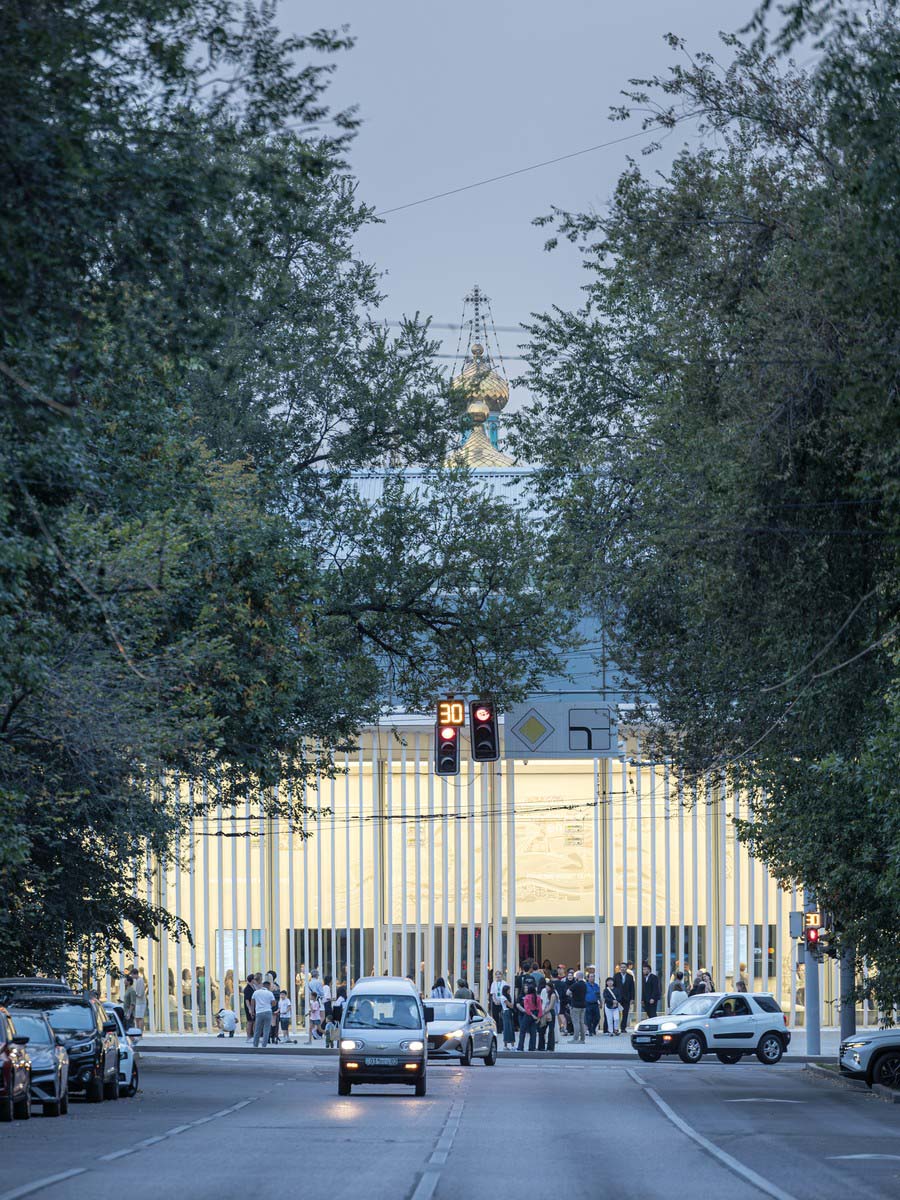
At dusk, the foyer’s preserved sgraffito is visible from the street. Photo © Laurian Ghinițoiu
Purifying or not, the fins, which read as a continuous mass when viewed obliquely, are spaced widely enough to recreate the original transparency when seen from Kabanbay Batyr Street, allowing a glimpse of another noted feature of the movie theater: a sgraffito mural by artist Evgeniy Sidorkin (1930–82). Believed lost, the damaged artwork, which depicts figures from Kazakh folklore, resurfaced during demolition and was carefully removed for incorporation into the new foyer. Restored with Charter of Venice truthfulness, it brings much welcome character to the blankly monumental space, which is dominated by the blanched expanse of a luminous ceiling. Sidorkin’s ghost also haunts the lateral facades, where concrete cladding panels feature molded hollows that, as well as recalling ancient petroglyphs in southern Kazakhstan, derive their forms from a copy of his mural that adorned the building’s exterior after the multiplex revamp.
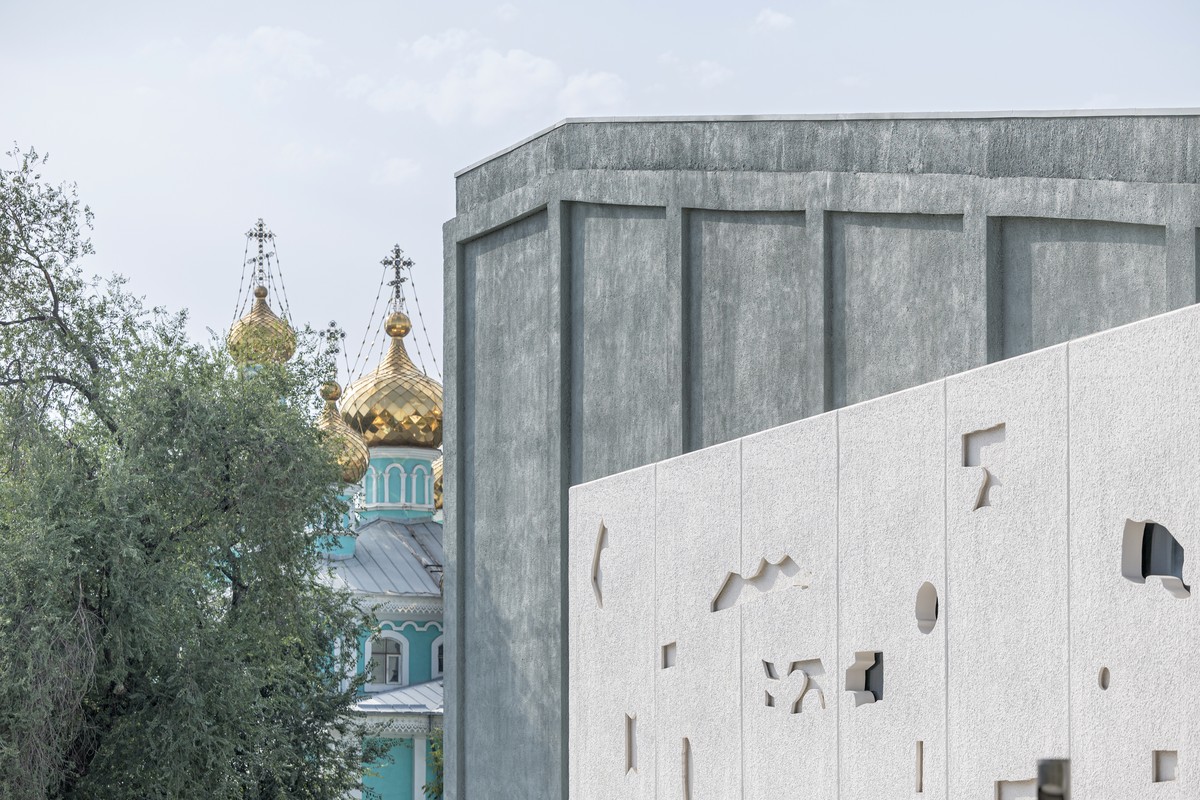
Petroglyph-like niches on the facade create shadows. Photo © Laurian Ghinițoiu
Unlike the Almaty Museum of Arts, whose architecture, programmatic approach, and Jura limestone are pure European imports, Tselinny tried hard to remain rooted in the local context. Entirely built by Kazakhstani contractors, whom Khan and Aitayeva pushed beyond their customary process, the renovation project also called on NAAW, a young Almaty architecture firm, to fit out the cafeteria and the forthcoming restaurant. In a city not noted for its contemporary design, might this auspicious new institution prove as beneficial to construction culture as it aims to be to the arts?
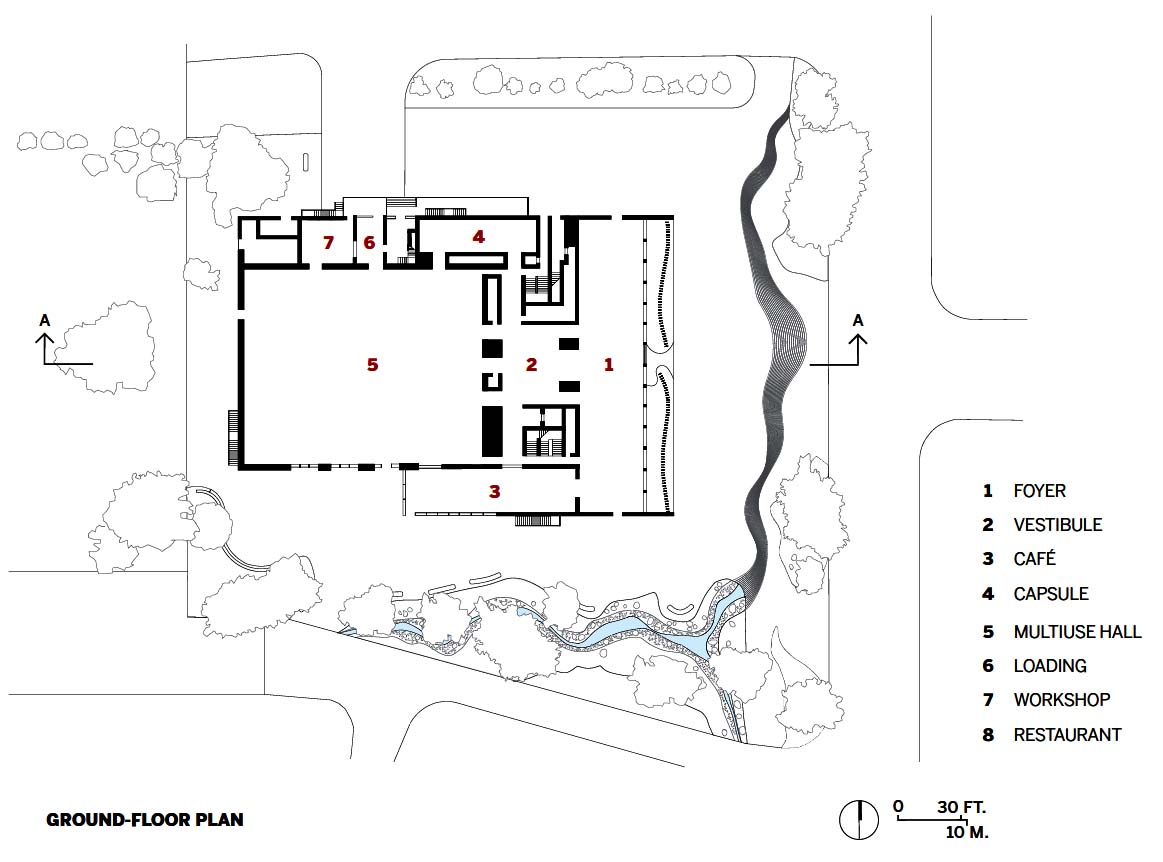
Image courtesy Asif Khan Studio, click to enlarge.
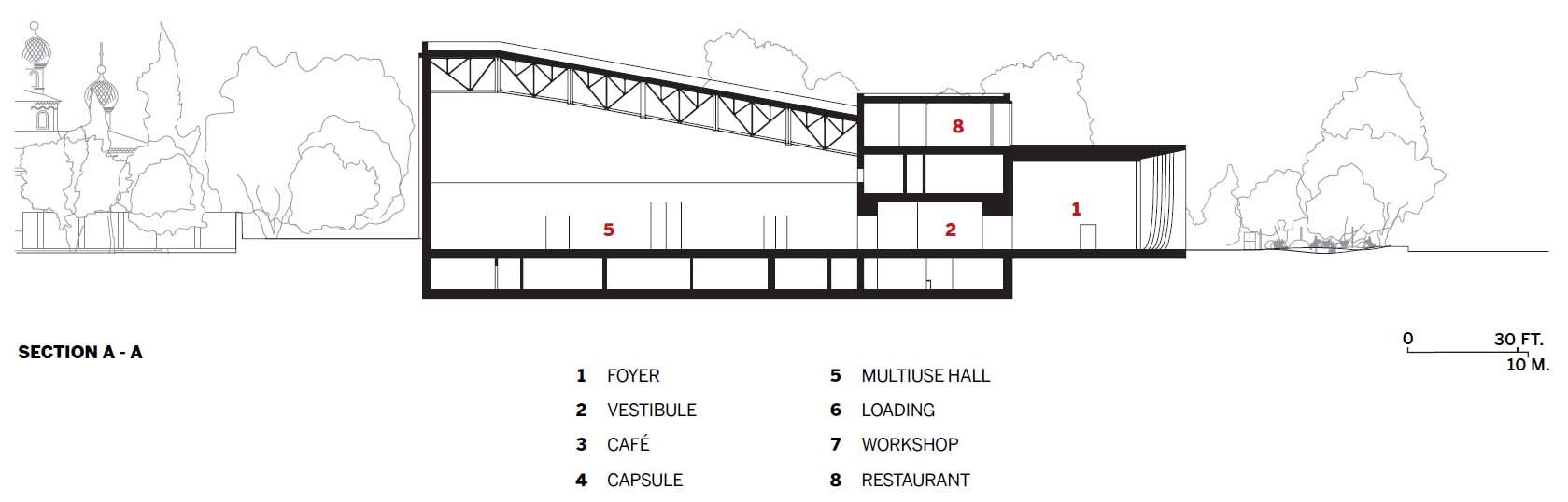
Image courtesy Asif Khan Studio, click to enlarge.
Credits
Architect:
Asif Khan Studio — Asif Khan, Zaure Aitayeva, Peter Vaughan
Architect of Record:
SPNeft
Interior Designer:
Asif Khan Studio (center); NAAW (café)
Client:
Tselinny Center of Contemporary Culture
Size:
61,030 square feet
Cost:
Withheld
Completion Date:
September 2025
Looking for a reprint of this article?
From high-res PDFs to custom plaques, order your copy today!
Looking for quick answers on architecture and design topics?
Try Ask RECORD, our new smart AI search tool.
Ask RECORD →

_JEFF-SVITAK-INC_KAYA_09.webp?height=300&t=1784169659&width=300 "Kaya San Diego lobby")