RECORD Interviews
The Matter of Mr. Adjaye: The Architect Talks to RECORD
Architects & Firms
We are currently in an age—or perhaps its denouement—when having a conversation with someone who has been “canceled” implies an endorsement of that person or whatever bad behavior led to their ostracism. This conversation is not that. Nor is it an effort to brush aside or minimize the severity of the accusations. It is, instead, an acknowledgement of an unprecedented convergence of achievements to which one cannot turn a blind eye. David Adjaye—shunned since July 2023 when a Financial Times article exposed claims of sexual misconduct from several female employees against the architect—has three major museums opening within two weeks of each other. RECORD editor in chief Josephine Minutillo spoke with Adjaye about this exceptional creative and professional moment.
The Princeton University Art Museum opened October 31, the Museum of West African Art in Nigeria opens November 11, and the Studio Museum in Harlem opens November 15.
It’s crazy. Even six months ago, the timing of the openings was not clear. It took my breath away, and it’s taken my team’s breath away. We’re all spinning from what this means.
The Princeton museum in New Jersey is the only one I’ve visited at this point, and it is extraordinary. The minute you walk in, you think it’s a building from another era—Louis Kahn immediately comes to mind. It just feels like a throwback in the best of ways. How was that even possible?
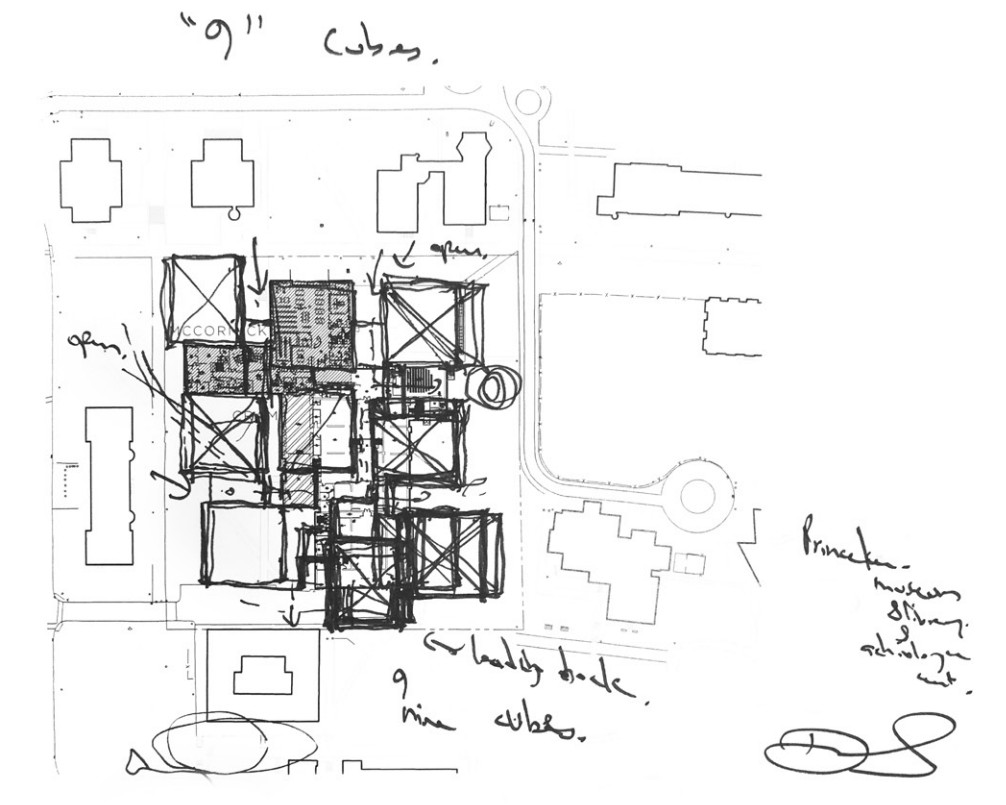
Princeton University Art Museum. Image © Adjaye Associates, click to enlarge.
Kahn is somebody I studied very much as a young architect and who’s deeply inspirational. He thought about construction to find form. I wanted to have the building be about the materiality and the idea of labor and construction processes. How do we make the building feel as though it’s been crafted? I think that has to do with an era that feels like it’s gone because we’re in such an industrialized world, and everything’s about the assembly of parts. I can work in that genre, but I find myself increasingly wanting to resist the dominant sense of everything just being bits and parts.
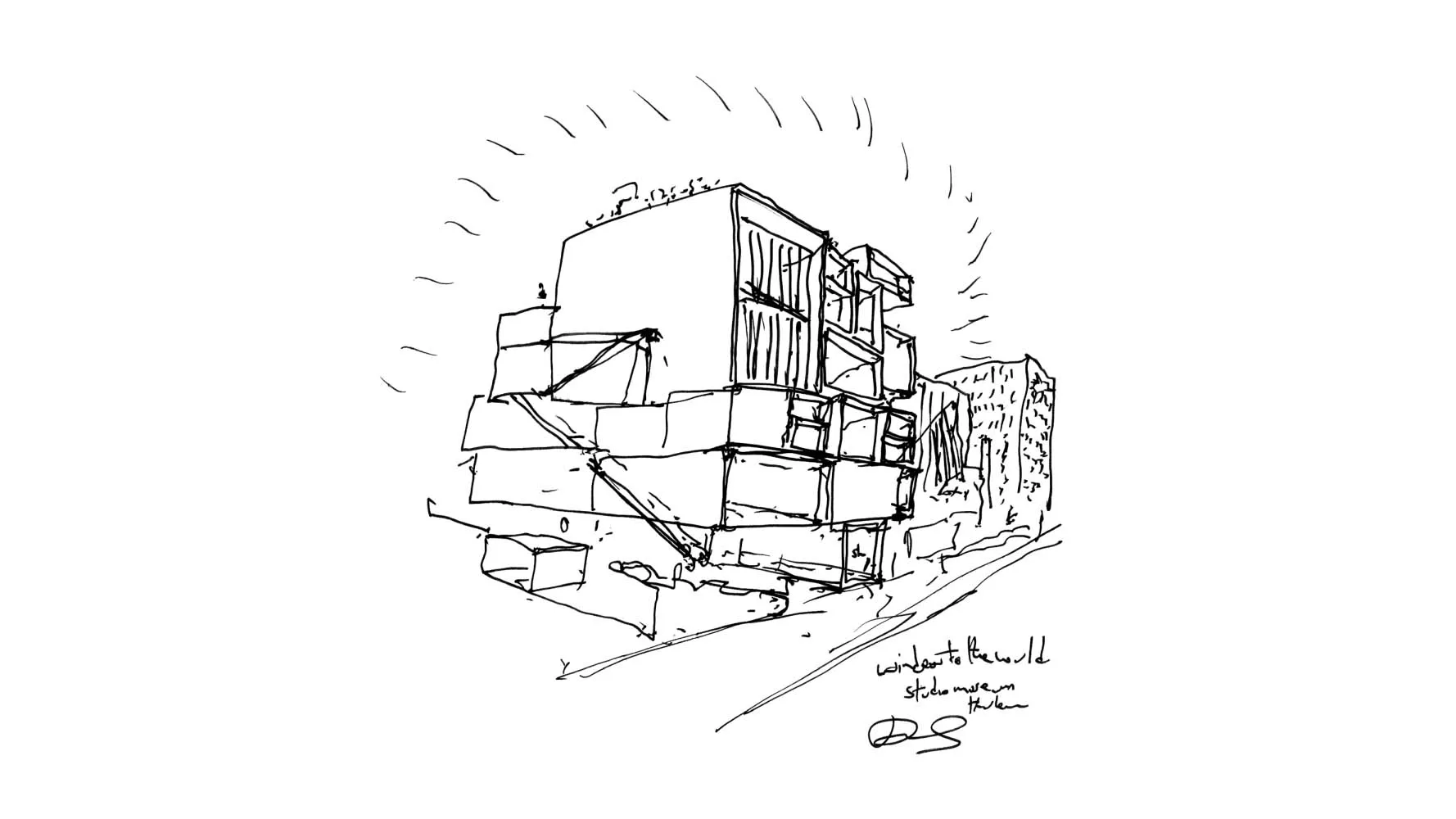
The other two museums look and feel very different. Studio Museum has a very tight urban site in New York and the Museum of West African Art in Benin City is made of rammed earth.
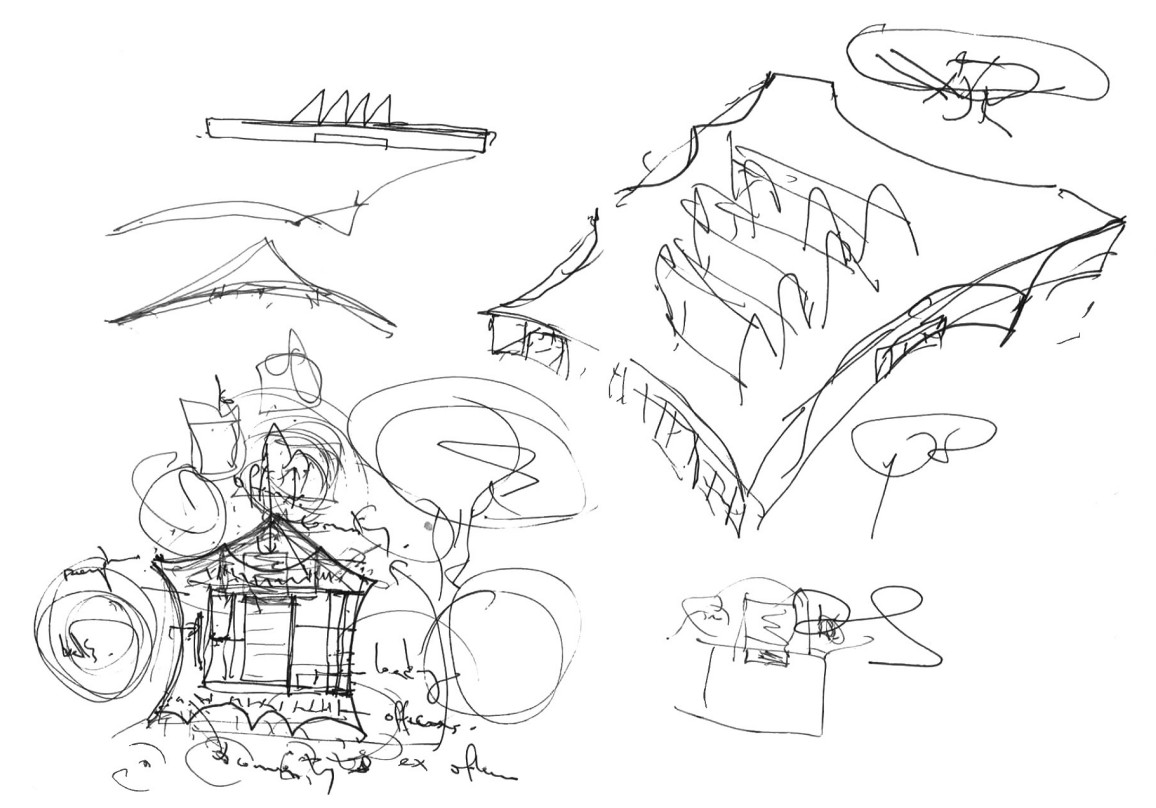
Museum of West African Art. Image © Adjaye Associates
Architecture should have more weight to it than just being a series of signatures that become recognizable. I wanted the projects to deeply engage the person who’s interested in the museum’s story, beyond the author. That’s what we tried to do at the Smithsonian [National Museum of African American History and Culture]. Princeton, I hope, is that—encouraging a kind of view about the campus, about how the hierarchy of knowledge works, about equity, the generosity of students, about how museums work as campuses, and as destinations.
You mentioned the idea of authorship. The hand of the architect is very clear, but your name has been missing from the conversation for the past two years.
This is really hard for me in this moment, because Black culture is used to being canceled and not being centered. I hate to bring it to that, but how is it possible to not acknowledge that I made the buildings? These are architectural works, so the archive will be there, but there’s this sense that by saying my company name and not my name, I’ve been canceled, I’m invisible. I’ve had to work very hard to have my voice in the conversation. Some people maybe have said I’ve worked too hard, but I’ve had to do so, because it’s the only way I’ve been able to gain a practice, which I now am very grateful I have. But I’m also sensitive to the world that we live in and the institutions and their concerns.
I’m not really that concerned about the frivolous celebration of the personality. I had to have a public voice. It was a way to stabilize and get strength as an architect and to get known. So I played that game. But I’m not that interested in people feeling like they need to look at me. I’m interested in them talking about the buildings and what the buildings can do for these communities.
You are in the unique position of an architect being canceled just as you hit the prime of your career. And before this happened, you represented something quite unique as well. Leaders of civic and cultural institutions were committed to diversifying their hires. You were not just one member of a design team competing for a commission, but the lead designer. How do you feel about now not having those opportunities in the U.S.?
I hope that this is not the last of David Adjaye working in the U.S. I’m grateful for the clients that have stayed. And I hope that they’ve got buildings that they’re really proud of. We are rebuilding the office, and I think we’re a better company as a result. I have a lot to say in architecture and I hope that I’m given that opportunity.
As part of its opening exhibition, Princeton prominently displays a work by Kehinde Wiley. Similar allegations were leveled against him. Do you think that you’re being held to a different standard?
It is really hard for me to answer that question. In light of the cold facts of what this thing was, it feels as though people are making it out to be that something more has happened than allegations. And we live in a world where this is now a thing.
Looking for quick answers on architecture and design topics?
Try Ask RECORD, our new smart AI search tool.
Ask RECORD →
It’s been over two years since the allegations against you. Have there been any criminal charges, civil lawsuits, or settlements?
Nothing. That’s what started the whole thing for me. I refused to pay people off. I believed in my innocence, and I was told I would be punished for it.
Are there new projects, whether in the U.K. or elsewhere?
We have been working a lot in the Middle East and Asia. We have a very large project, probably what will become the largest museum in India, the Kiran Nadar Museum in Delhi. It’s a 2 million-square-foot building that will open in 2028. We’re trying to do something there that learns very much from what we’ve done in Princeton, which, if we get it right, will be very exciting—and, for me as an architect, very deeply fulfilling. Kiran has been a great patron, and she has been cautious but very supportive of the office and myself in getting us to do this project.
The Thabo Mbeki Presidential Centre in Johannesburg is starting on-site at the end of the year. We have a very exciting project in Rwanda that we will announce toward the end of the year.
A few years back, you made Africa your primary residence to work on the National Cathedral of Ghana. Where does that stand?
We finished the construction drawings, we went on-site in Accra, we started digging. Then Covid happened. Then the government changed. And we thought, “Okay, that’s it. It’s over.” It’s a horrible thing. We dug this huge hole. There’s been a lot of gossip, but there is nothing untoward that’s been done. The communities are, from what I’ve been told, really wanting this building to happen. There are a lot of positive aspects that the new administration sees in the project, and the question is whether they will do it. We should know by the end of the year. We have been told to work with them as they go through the process. So, as far as we’re concerned, we’re still under contract.
And what about the New York office?
We did reduce staff in the U.K. and in the U.S., where reaction to the allegations was biggest, but it’s actually brought things to a place where I’m more comfortable and happy. We have 25 people in the U.S. I had made three worlds, with three practices. And, in a way, 2023 accelerated a blueprint that was being set up. There’s new leadership, with CEOs who run the different studios. They report to me and we have a council, but they run things so that I am no longer the person that people are calling or discussing the day-to-day operations with.
In the New York office we have the national monument in Barbados, which is just finishing this year. And we’re working on a series of waterfront projects that are slated to go on-site. I’m very excited about what we’re doing in Barbados, and I’m very, very grateful for our clients.
Looking for a reprint of this article?
From high-res PDFs to custom plaques, order your copy today!