Architectural Record
search
cart
facebook twitter linkedin youtube
  • Sign In
  • Subscribe
  • Sign Out
  • My Account
Architectural Record
  • NEWS
    • Latest News
    • Awards
    • Interviews
    • Obituaries
    • Podcasts
      • Design:Ed Podcast
      • Sponsored Podcasts
  • OPINION
    • Book Reviews / Excerpts
    • Exhibition Reviews
    • Forum
  • EXCLUSIVES
    • Videos
    • Design Vanguard
    • Top 300 Firms
    • Sponsored Content
    • Sponsored eBooks
    • From the Archives
  • CONTINUING ED
    • Editorial Continuing Ed
    • CE Center
    • CE Academies
  • PROJECTS
    • Buildings By Type
    • Reuse & Renovation
    • Museums & Arts Centers
    • Colleges & Universities
    • Multifamily Housing
    • Interiors
    • Lighting
    • Kitchen & Bath
  • HOUSES
    • Record Houses
    • House of the Month
    • Featured Houses
  • PRODUCTS
    • Products by Category
    • Record Products of the Year
    • Latest Products
  • EVENTS
    • Dates & Events
    • Record on the Road
    • Innovation Conference
    • Sustainability in Practice
    • Women In Architecture
    • Webinars
    • Ad Excellence Awards
    • Submit an Event
  • CONNECT
    • Ask RECORD AI
    • Newsletters
    • Contact
    • Advertise
    • Editorial Calendar
    • Store
    • Customer Service
  • SUBMIT
    • Submission Guidelines
    • RECORD Competitions
  • MAGAZINE
    • Subscribe
    • My Account
    • Digital Edition
    • Current Issue
    • Firm Pass
    • Historic Archive
ExclusivesFrom the ArchivesBuildings by TypeSpiritual Projects

From the RECORD Archives: ‘A Major Synagogue by Belluschi’
By RECORD Editors
Temple B’rith Kodesh
© Architectural Record, November 1963
December 17, 2025
✕
Image in modal.

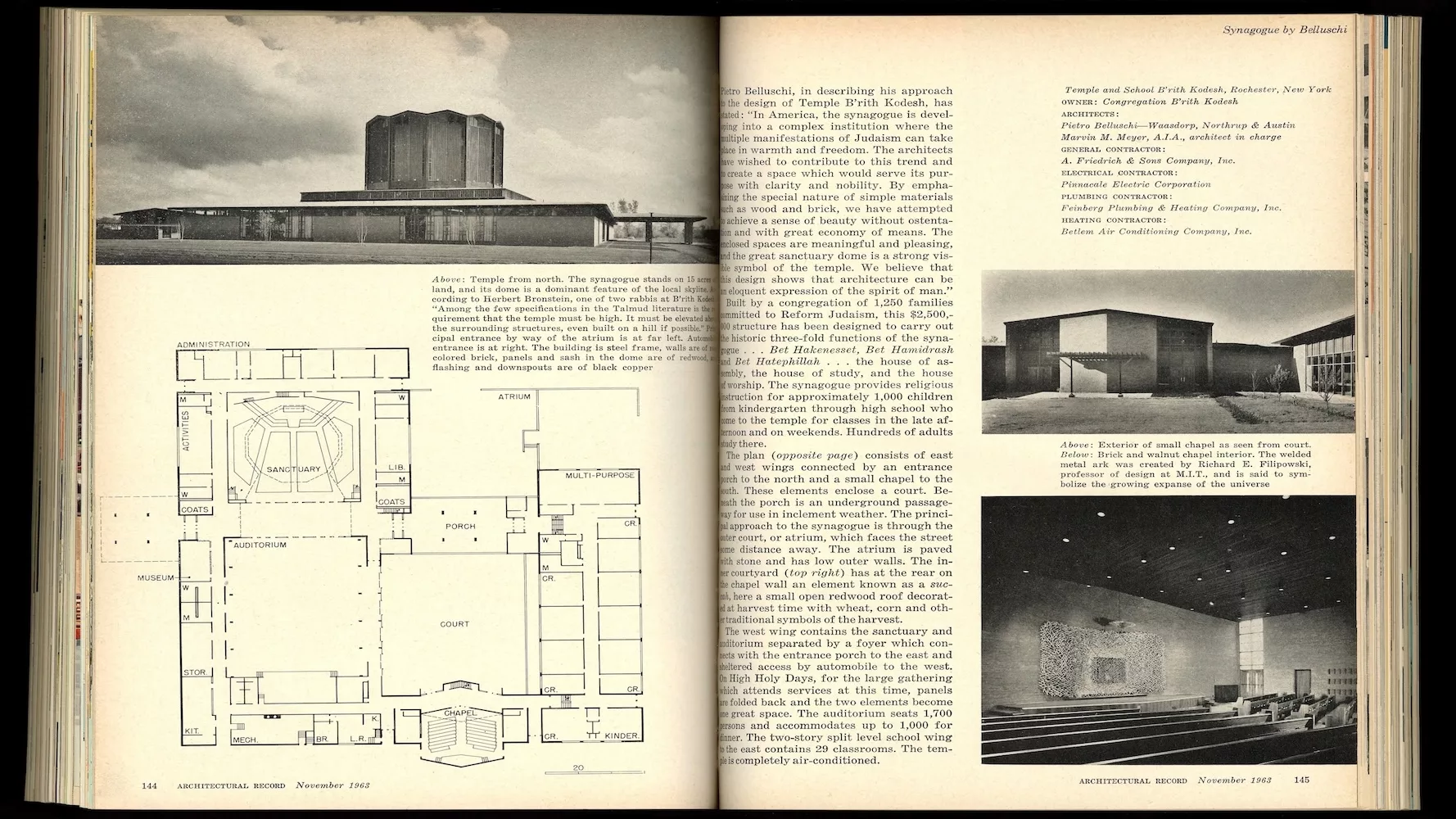
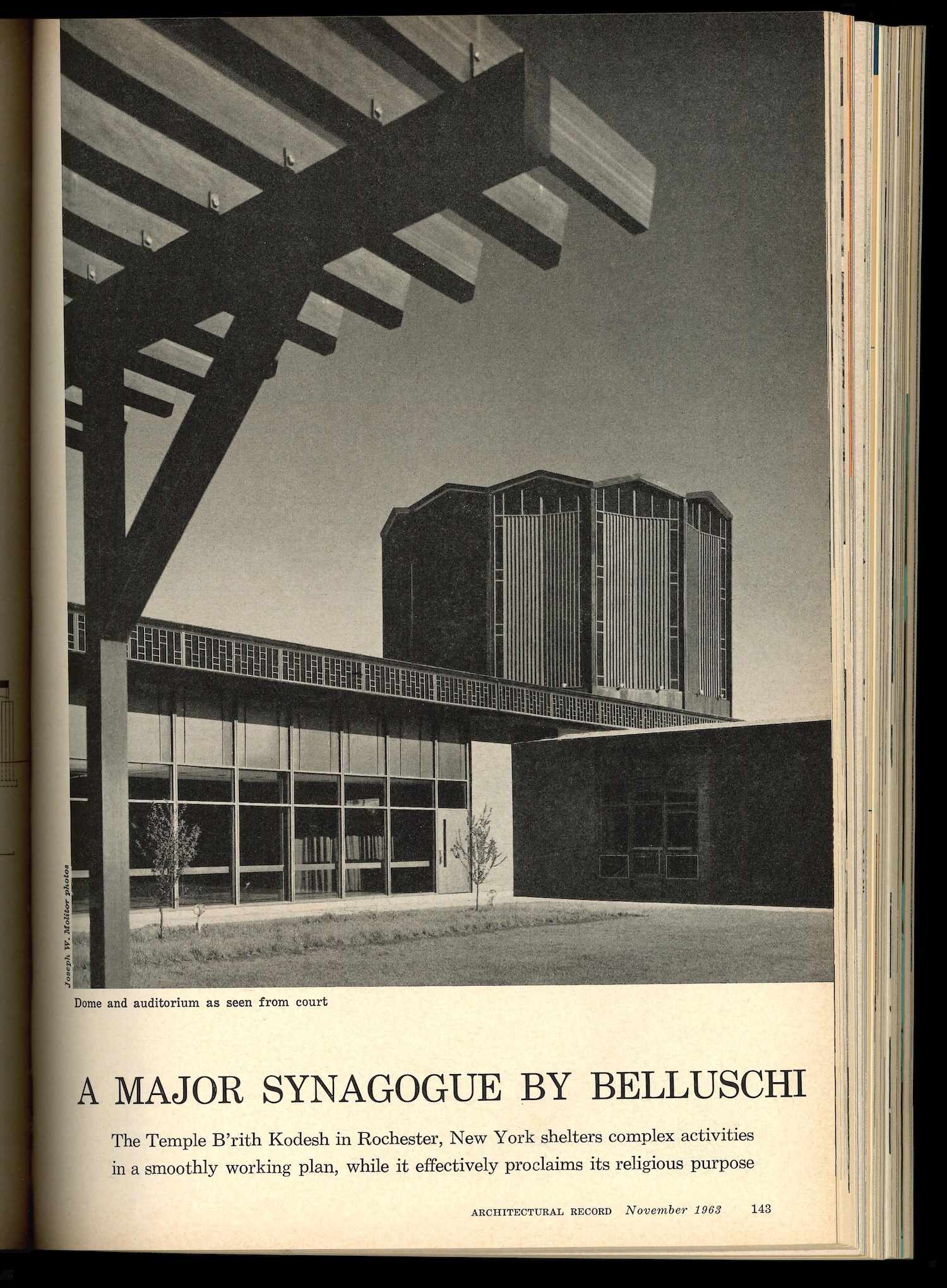
Envisioned by Pietro Belluschi, Temple B’rith Kodesh in Rochester, New York, was published in RECORD in November, 1963, a year after it opened its doors. In describing his rather soulful approach to the synagogue’s design, the Italian-born architect once said, “architecture can be an eloquent expression of the spirit of man.” Belluschi was well-versed in religious buildings, having realized several churches and synagogues throughout his career, including the monumental Cathedral of St. Mary of the Assumption in San Francisco, finished in 1971. A longtime resident of Portland, Oregon, Belluschi was a key figure, alongside John Yeon and Paul Hayden Kirk, of the Northwest Regional movement. The style—which first rose to prominence in the 1930s and 1940s—blended midcentury modern with vernacular architecture and emphasized the use of local materials. When Belluschi moved to the East Coast in 1951 to take the helm of MIT’s school of architecture, he brought this approach to a new context. Temple B’rith Kodesh, with its geometric atrium composed of glass and unpainted wooden panels, is a shining example.
Temple B’rith Kodesh, RECORD November 1963

© Architectural Record, November 1963

“A Major Synagogue by Belluschi”
No author
Architectural Record, November 1963
 

The Temple B’rith Kodesh in Rochester, New York shelters complex activities in a smoothly working plan, while it effectively proclaims its religious purpose

Pietro Belluschi, in describing his approach to the design of Temple B’rith Kodesh, has stated: “In America, the synagogue is developing into a complex institution where the multiple manifestations of Judaism can take place in warmth and freedom. The architects have wished to contribute to this trend and to create a space which would serve its purpose with clarity and nobility. By emphasizing the special nature of simple materials such as wood and brick, we have attempted to achieve a sense of beauty without ostentation and with great economy of means. The enclosed spaces are meaningful and pleasing, and the great sanctuary dome is a strong visible symbol of the temple. We believe that this design shows that architecture can be an eloquent expression of the spirit of man.”
Temple B’rith Kodesh, RECORD November 1963

© Architectural Record, November 1963

Built by a congregation of 1,250 families committed to Reform Judaism, this $2.5 million structure has been designed to carry out the historic three-fold functions of the synagogue . . . Bet Hakenesset, Bet Hamidrash, and Bet Hatephillah . . . the house of assembly, the house of study, and the house of worship. The synagogue provides religious instruction for approximately 1,000 children from kindergarten through high school who come to the temple for classes in the late afternoon and on weekends. Hundreds of adults study there.

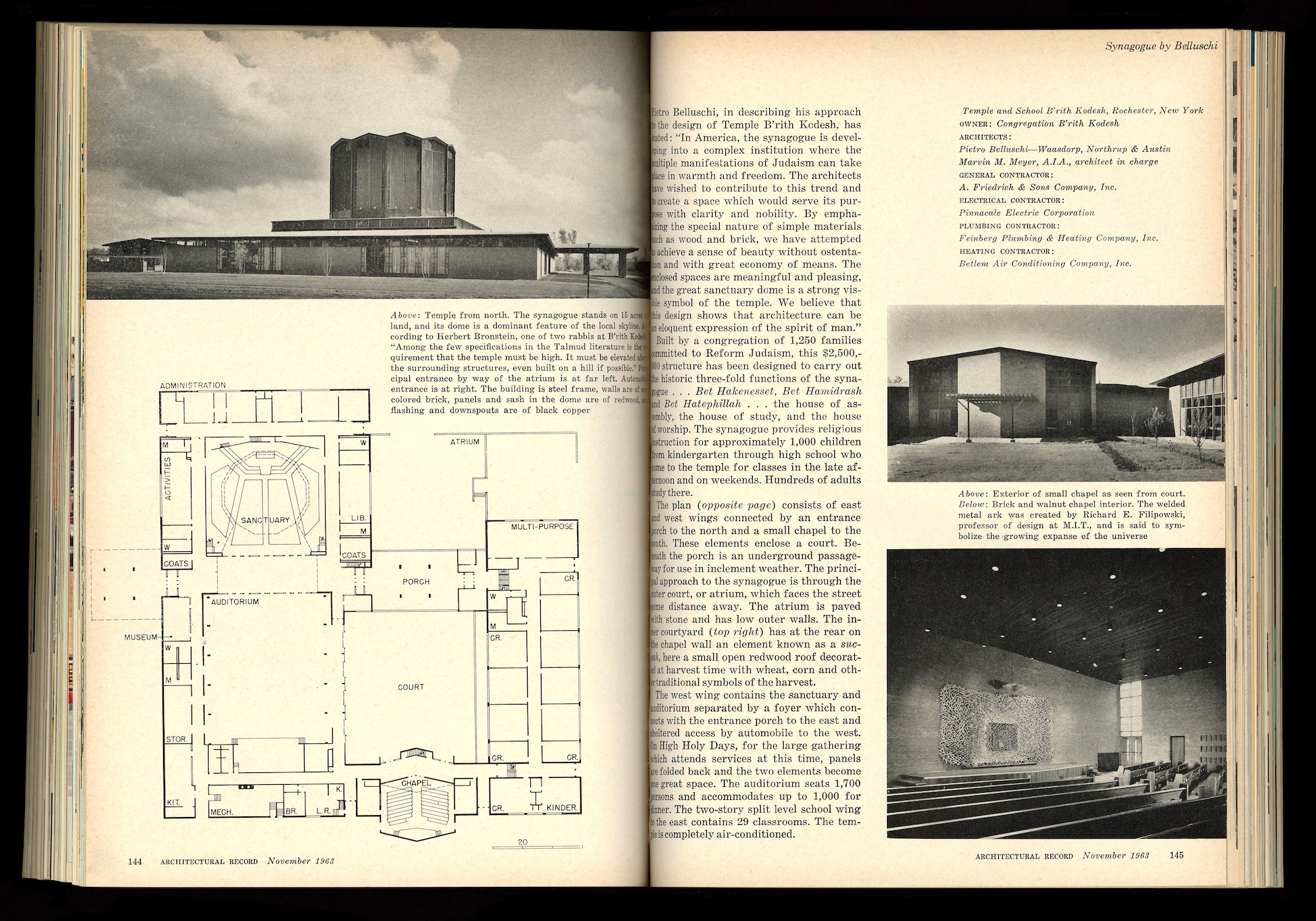
The plan consists of east and west wings connected by an entrance porch to the north and a small chapel to the south. These elements enclose a court. Beneath the porch is an underground passageway for use in inclement weather. The principal approach to the synagogue is through the outer court, or atrium, which faces the street some distance away. The atrium is paved with stone and has low outer walls. The inner courtyard has at the rear on the chapel wall an element known as a suchcah, here a small open redwood roof decorated at harvest time with wheat, corn and other traditional symbols of the harvest.
Temple B’rith Kodesh, RECORD November 1963

© Architectural Record, November 1963

The west wing contains the sanctuary and auditorium separated by a foyer which connects with the entrance porch to the east and sheltered access by automobile to the west. On High Holy Days, for the large gathering which attends services at this time, panels are folded back and the two elements become one great space. The auditorium seats 1,700 persons and accommodates up to 1,000 for dinner. The two-story split level school wing to the east contains 29 classrooms. The temple is completely air-conditioned.

The synagogue stands on 15 acres of land, and its dome is a dominant feature of the local skyline. According to Herbert Bronstein, one of two rabbis at B’rith Kodesh: “Among the few specifications in the Talmud literature is the requirement that the temple must be high. It must be elevated above the surrounding structures, even built on a hill if possible.” Principal entrance by way of the atrium is at far left. Automobile entrance is at right. The building is steel frame, walls are out of rose colored brick, panels and sash in the dome are of redwood, and flashing and downspouts are of copper.

KEYWORDS: New York Synagogue

Share This Story

Looking for a reprint of this article?
From high-res PDFs to custom plaques, order your copy today!

Post a comment to this article

Report Abusive Comment

Subscription Center
  • Create an Account
  • Start a Subscription
  • Manage My Account
  • Sign Up for Newsletters
  • Visit Customer Service
  • Update Preferences

More Videos

Sponsored Content

Sponsored Content is a special paid section where industry companies provide high quality, objective, non-commercial content around topics of interest to the Architectural Record audience. All Sponsored Content is supplied by the advertising company and any opinions expressed in this article are those of the author and not necessarily reflect the views of Architectural Record or its parent company, BNP Media. Interested in participating in our Sponsored Content section? Contact your local rep!

close
  • TAMLYN XtremeTrim Exterior Trim
    Sponsored byTamlyn

    Designing Cleaner Panel Facades: Why Exterior Trim Details Matter

  • Building with Vapor Barriers
    Sponsored byReef Industries, Inc.

    Vapor Barriers Help Control Moisture in Tighter Building Designs

  • Duct Interior with Prodeq System
    Sponsored byHenry, a Carlisle Company

    Designing Resilient Water Containment Systems

DESIGN:ED Podcast
Listen to Architectural Record’s DESIGN:ED Podcast

Events

June 16, 2026

Focus on the Façade: Exploring Steel, Timber & Fire-Rated Curtain Walls and Channel Glass Systems

Credits: 1 AIA LU/HSW; 1 AIBD P-CE; 0.1 ICC CEU

Explore modern façade and glazing systems that enhance daylighting, fire safety, and thermal performance while expanding architectural design possibilities.

June 18, 2026

Rebooting the Aging Office Building

Credits: 1 AIA LU/HSW; 1 AIBD P-CE; 0.1 ICC CEU; 1 PDH

Explore façade retrofit strategies and award-winning design concepts that can transform aging office buildings into healthier, higher-performing workplaces for today’s hybrid workforce.

View All Submit An Event

Products

2026 Architect's Square Foot Costbook

2026 Architect's Square Foot Costbook

See More Products

Popular Stories

SanDiegoAirport

Top 300 Architecture Firms of 2026

Coronado Bridge

The Architect’s Guide to San Diego

Dusk House

Design Vanguard 2026: ONO

West Village Penthouse

Design Vanguard 2026: Brent Buck Architects

Hikma Community Complex

Design Vanguard 2026: Mariam Issoufou Architects

Focus on the Facade - Free Webinar - June 16, 2026

Related Articles

  • tuskegee chapel by paul rudolph

    From the RECORD Archives: ‘A Chapel for Tuskegee by Rudolph’

    See More
  • Bergisel Ski Jump

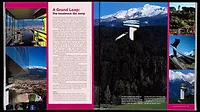
    From the RECORD Archives: ‘A Grand Leap: The Innsbruck Ski Jump’

    See More
  • From the Archives, 1967, National Center for Atmospheric Research

    From the RECORD Archives: ‘A Building Designed for Scenic Effect’

    See More

Related Products

See More Products
  • drawingfrommodel.jpg

    Drawing from the Model: Fundamentals of Digital Drawing, 3D Modeling, and Visual Programming in Architectural Design

See More Products
×

The latest news and information

#1 Source for Architectural Design, News and Products

SUBSCRIBE
  • RESOURCES
    • Advertise
    • Contact Us
    • Submit
    • Store
  • ACCOUNT CENTER
    • Create an Account
    • Start a Subscription
    • Manage My Account
    • Sign Up for Newsletters
    • Visit Customer Service
    • Update Preferences
  • PRIVACY
    • PRIVACY POLICY
    • TERMS & CONDITIONS
    • DO NOT SELL MY PERSONAL INFORMATION
    • PRIVACY REQUEST
    • ACCESSIBILITY
  • SERVICES
    • Marketing Services
    • Reprints
    • Market Research
    • List Rental
    • Survey/Respondent Access
  • STAY CONNECTED
    • Linkedin
    • Facebook
    • Instagram
    • YouTube
    • X (Twitter)

Copyright ©2026. All Rights Reserved BNP Media, Inc. and BNP Media II, LLC.

Design, CMS, Hosting & Web Development :: ePublishing