


Designing for the Future: Resilient Decking for Evolving Architecture

In the field of architecture, every material choice is a statement—a commitment to aesthetics, functionality, and longevity. As client expectations evolve and environmental challenges intensify, the demand for resilient building products has never been greater. Architects are tasked with creating spaces that not only inspire but also endure. This means specifying materials that can withstand extreme weather, mitigate safety risks, and contribute to a more sustainable future. Outdoor living spaces, particularly decks, are at the forefront of this movement. They are the transitional zones between the built environment and nature, and their performance is critical to a project's long-term success.
The challenge lies in finding materials that deliver on all fronts. Traditional wood decking, while beautiful, requires regular maintenance and is often vulnerable to moisture, pests, and fire. This creates a cycle of repair and replacement that is both costly for the client and taxing on natural resources. The solution is found in advanced materials science, which offers innovative products that provide the beauty of natural wood without its inherent weaknesses.
This article will explore the key pillars of resilient decking design: fire resistance, moisture management, heat mitigation, and sustainability. We will examine how specifying advanced products helps architects solve complex design challenges, meet stringent building codes, and deliver exceptional value to their clients.
Building Defensible Spaces: The Critical Role of Fire Resistance
Across the country, homeowners are increasingly becoming more concerned about using fire-resistant materials on their homes. And, for architects designing in or near Wildland-Urban Interface (WUI) zones, fire resistance is not just a feature—it's a mandate. As wildfires become more frequent and intense, building codes are adapting to require materials that actively help reduce a structure's vulnerability. Decks are a susceptible part of a building's exterior, acting as a potential fuel source for the flames. Specifying decking materials with fire-resistant properties is a fundamental step in creating a defensible space.
Understanding fire resistance classifications is key to making informed specifications. The most important metrics for decking include:
- Flame Spread Rating: This measures how quickly flames spread across a material's surface. Materials are rated Class A, B, C, or D, with Class A being the highest level of resistance. A Class A rating signifies that a material burns at a slower rate, potentially giving occupants more time to evacuate and first responders more time to act.
- Ignition Resistance: This designation indicates that a material resists catching fire when exposed to embers or direct flame, a critical factor in reducing risk during a wildfire.
- WUI Compliance: Materials that meet the stringent requirements for use in WUI zones are deemed WUI-compliant. This often involves testing materials to different types of fire exposures, from direct flames to ignition from embers.
See how Class A, B, and C Flame Spread-rated deck boards held up after being exposed to an open flame in TimberTech’s demonstration. Video © TimberTech
TimberTech Advanced PVC decking has emerged as a leader in this category. Unlike wood or traditional wood-plastic composites, select PVC decking collections, such as TimberTech Vintage and Landmark Collections, have achieved an Ignition Resistant designation and a Class A Flame Spread Rating—the best possible for traditional decking materials. This level of performance provides architects with a reliable option to meet or exceed local fire codes. The solution extends beyond just the deck boards; non-combustible aluminum framing systems can create a fire-resistant substructure, further hardening the building envelope, which is just one part of full home hardening.


Non-combustible TimberTech Aluminum Framing and TimberTech Impression Rail Express as well as Ignition-Resistant TimberTech Vintage Collection Decking are the perfect selections for fire-prone areas, such as at this home in Northern California. Photos © TimberTech, click to enlarge.
Conquering the Elements: Superior Moisture and Fade Resistance
Water is the enemy of longevity in building materials. For decks, constant exposure to rain, humidity, snow, and poolside splashes can lead to rot, mildew, and structural decay in traditional wood. Even standard composite decking, which contains wood flour in its core, can be susceptible to moisture damage if the protective cap is breached or if it lacks four-sided capping. This vulnerability compromises not only the deck's appearance but also its durability and lifespan.
Architects need to specify materials that are inherently resistant to moisture throughout the board. This is where fully synthetic PVC decking offers a distinct advantage. Composed entirely of polymer, these boards contain no organic material that can absorb water, rot, or feed mold and mildew. This makes them an ideal choice for most climates, but especially for projects in humid regions, coastal areas, or for poolside applications and docks.
The protective cap on these advanced decking products plays another crucial role: color retention. One of the primary frustrations with both wood and lower-quality composites is their tendency to fade and stain over time. UV exposure can turn a rich-hued deck into a washed-out gray surface, while spills can leave unsightly stains. TimberTech Advanced PVC decking utilizes proprietary color-blending technology and a robust polymer cap to ensure the board-to-board variation and vibrant wood-grain patterns are locked in. For architects, this means the design intent specified on day one will still look good for decades, with fade and stain warranties often extending up to 50 years. This long-term aesthetic integrity protects the client's investment and the architect's vision.

TimberTech Advanced PVC Decking from the Vintage Collection shown in Dark Hickory (left), English Walnut (middle) & Mahogany (right). Photo © TimberTech
Enhancing Comfort Through Heat Mitigation Technology
A common concern with composite decking has historically been heat retention. This can be a significant drawback, especially for projects with south-facing decks, rooftops, or poolside areas. Forward-thinking manufacturers have addressed this challenge directly with innovative heat mitigation solutions. Technology like Cool Touch®, found in select TimberTech Advanced PVC decking colors, is engineered to reflect more solar radiation, allowing the boards to absorb less heat. This can result in a surface that stays up to 30°F cooler* than traditional composite decking.
By specifying decking with this technology, architects can significantly improve the usability and comfort of an outdoor space so clients can enjoy their decks more throughout the day. This technology empowers architects to deliver a high-performance deck that is not only durable but can also be more comfortable to live with.
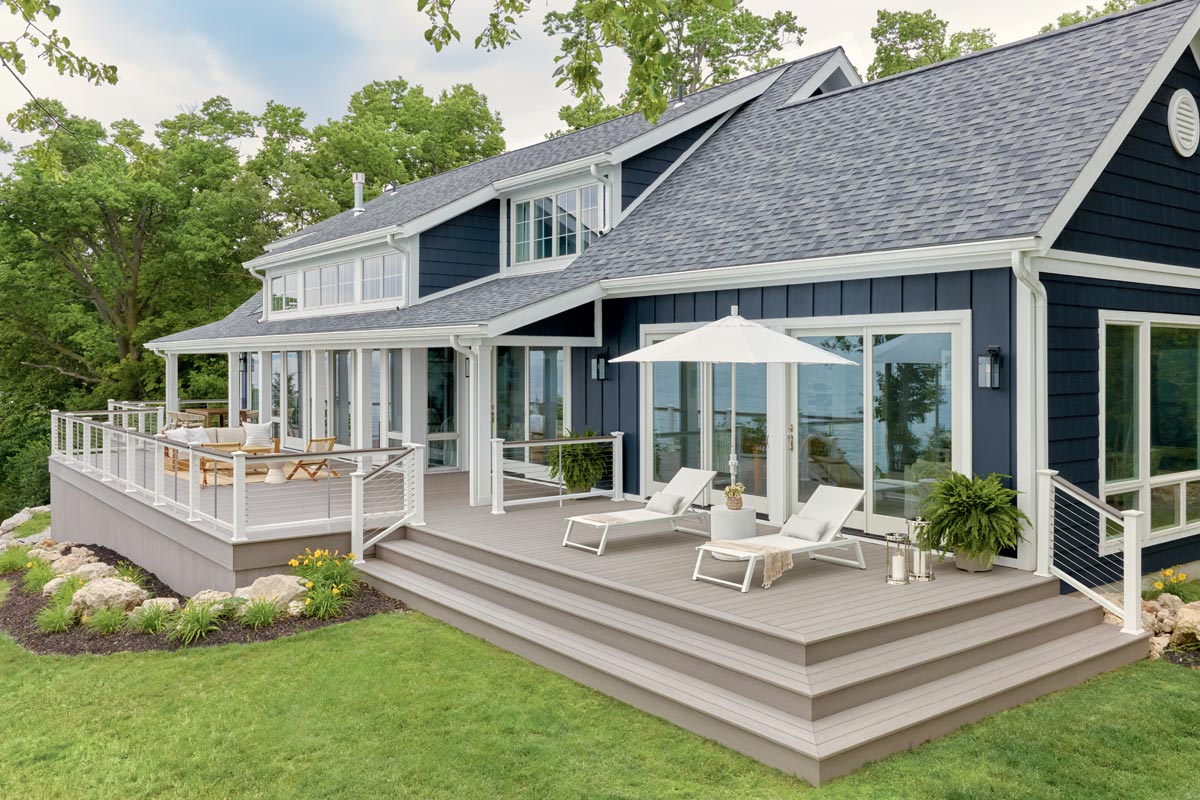
TimberTech Advanced PVC Decking from the Vintage Collection shown in Coastline, one of the many colors offering Cool Touch™ Technology. Photo © TimberTech
Sustainability as a Design Principle
Modern architecture is increasingly defined by its commitment to sustainability—and TimberTech’s efforts set a clear standard. The company leads the industry in sustainable, large-scale recycling, transforming hundreds of millions of pounds of plastic waste and wood scrap into durable, low-maintenance decking that's more sustainable than wood over its lifecycle. TimberTech actively recycles what most others can’t, continuously innovating to repurpose hard-to-recycle plastics and diverting roughly 500 million pounds of potentially landfill-bound waste every year, with the ambitious goal of reaching one billion pounds annually.
Their manufacturing process extends beyond recycled content: TimberTech reuses approximately 99% of its internal production scrap, helping minimize waste and reduce its environmental footprint. The company also conserves millions of gallons of water annually, thanks to closed-loop filtration systems in its facilities. Since 2019, TimberTech has repurposed about 2.6 billion pounds of waste and scrap into its products and conserved the equivalent of over four million trees by offering viable alternatives to traditional wood.
With decks made of up to 65% to 85% recycled materials—including reclaimed wood fibers and post-consumer plastics like bags and jugs—TimberTech actively lowers the carbon footprint of its products. Their lifecycle assessments highlight an up to 89% reduction in carbon footprint compared to ipe decking, and their products are designed for durability, reducing the need for frequent replacements. Programs such as their FULL-CIRCLE PVC Recycling™ make it easier for industry partners to recycle post-construction scrap, including end-of-life vinyl siding, supporting a circular economy in outdoor living.
As a Gold member of the US Green Building Council, TimberTech supports the future of green building and sustainable high-performance structures. Their partnerships—including innovative initiatives with organizations like ThredUP—ensure even post-industrial plastics are transformed into long-lasting, high-performance decking. For architects and their clients alike, specifying TimberTech means supporting advanced, authentic products that contribute to a sustainable future through conservation, recycling, and durable design.
Sustainable decking goes beyond simply using recycled content. It involves a holistic approach that considers the entire product lifecycle. Key indicators of a truly sustainable building product include:
- High Recycled Content: Leading manufacturers are transforming the waste stream into high-performance building materials. TimberTech, for example, uses up to 85% recycled material in some of its decking, diverting hundreds of millions of pounds of waste from landfills annually. This includes hard-to-recycle plastics that other manufacturers often cannot process.
- Life Cycle Assessment (LCA): A comprehensive LCA evaluates a product's environmental footprint from raw material extraction to end-of-life disposal. Products with a lower carbon footprint over their lifecycle are a more responsible choice.
- Reduced Maintenance: Traditional wood decks require regular staining and sealing with chemical-laden products. Resilient decking eliminates this need, reducing the introduction of these chemicals into the environment and saving water over the life of the deck.
- Longevity: The most sustainable product is one that doesn't need to be replaced frequently. By designing with durable materials that are warrantied for 50 years or even a lifetime, architects reduce the consumption of raw materials and the energy required for manufacturing and installation in the future.
By prioritizing these factors, architects can specify materials that align with their firm's sustainability goals and their clients' values. It's a choice that delivers environmental benefits without sacrificing performance, aesthetics, or durability.
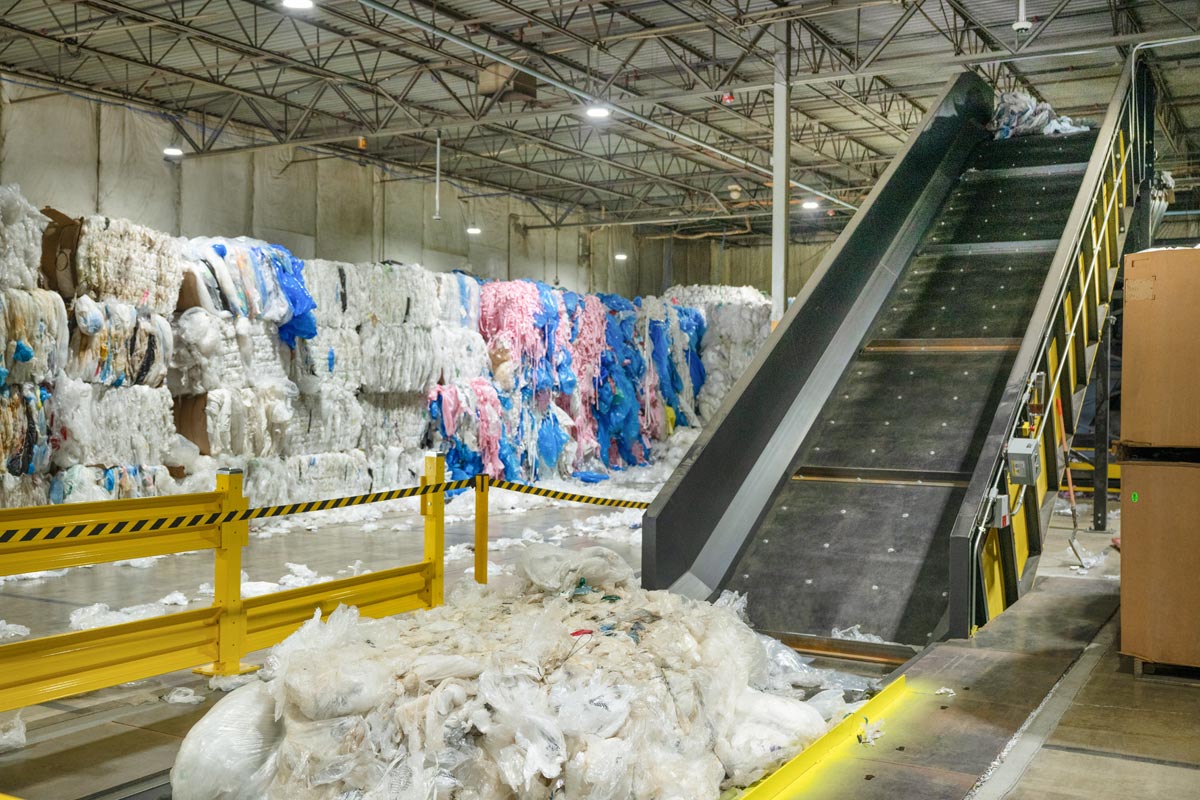
Recycled content preparing to be transformed into deck boards at TimberTech’s state-of-the-art recycling facility in Wilmington, Ohio. Photo © TimberTech
A Synthesis of Beauty and Performance
The evolution of decking materials offers a compelling case study in resilient design. Architects no longer need to choose between the timeless appeal of wood and the practical demands of durability, safety, and sustainability. TimberTech Advanced PVC Decking provides a solution that marries authentic, nature-inspired aesthetics with performance that wood cannot match.
Through technologies that deliver top-rated fire resistance, moisture immunity, cooler surfaces, and a manufacturing process rooted in recycling, these materials address the most pressing challenges in modern building. They empower architects to design beautiful, enduring outdoor spaces that are resilient, more comfortable, and better for the planet. For the discerning architect, specifying these advanced products is not just a material choice—it's a commitment to designing a better, more resilient future.
Learn more about TimberTech decking at TimberTech.com.
*Although TimberTech Advanced PVC decking is cooler to the touch than many other deck board products, all decking products will get hot in the sun. Additionally, the darker the decking color, the hotter it will feel. For hotter climates, consider choosing a lighter color.
Looking for a reprint of this article?
From high-res PDFs to custom plaques, order your copy today!