Shigeru Ban Conceives Simple Solutions for Post-Disaster Zones in New Zealand, Japan

Government-funded, temporary housing by Shigeru Ban is now under construction on a baseball diamond in Onagawa, Japan'a coastal town that was decimated by the Tohoku earthquake and tsunami on March 11.
Onagawa had an urgent need for temporary housing. But its rugged terrain was not well suited for the standard single-story dwellings issued by the government. To solve the problem, Ban proposed erecting 2- and 3-story buildings that take up less flat area and could be built quickly from shipping containers and steel frames. The units contain bed and bathrooms, with kitchen and dining areas occupying open spaces in between the containers, each one enclosed with window walls.
The Ban housing development will house 188 families when it's completed on October 15. Though not designed for permanent occupancy, the units are intended to be reused during future disasters.

Government-funded, temporary housing by Shigeru Ban is now under construction on a baseball diamond in Onagawa, Japan'a coastal town that was decimated by the Tohoku earthquake and tsunami on March 11.
Onagawa had an urgent need for temporary housing. But its rugged terrain was not well suited for the standard single-story dwellings issued by the government. To solve the problem, Ban proposed erecting 2- and 3-story buildings that take up less flat area and could be built quickly from shipping containers and steel frames. The units contain bed and bathrooms, with kitchen and dining areas occupying open spaces in between the containers, each one enclosed with window walls.
The Ban housing development will house 188 families when it's completed on October 15. Though not designed for permanent occupancy, the units are intended to be reused during future disasters.

Government-funded, temporary housing by Shigeru Ban is now under construction on a baseball diamond in Onagawa, Japan'a coastal town that was decimated by the Tohoku earthquake and tsunami on March 11.
Onagawa had an urgent need for temporary housing. But its rugged terrain was not well suited for the standard single-story dwellings issued by the government. To solve the problem, Ban proposed erecting 2- and 3-story buildings that take up less flat area and could be built quickly from shipping containers and steel frames. The units contain bed and bathrooms, with kitchen and dining areas occupying open spaces in between the containers, each one enclosed with window walls.
The Ban housing development will house 188 families when it's completed on October 15. Though not designed for permanent occupancy, the units are intended to be reused during future disasters.
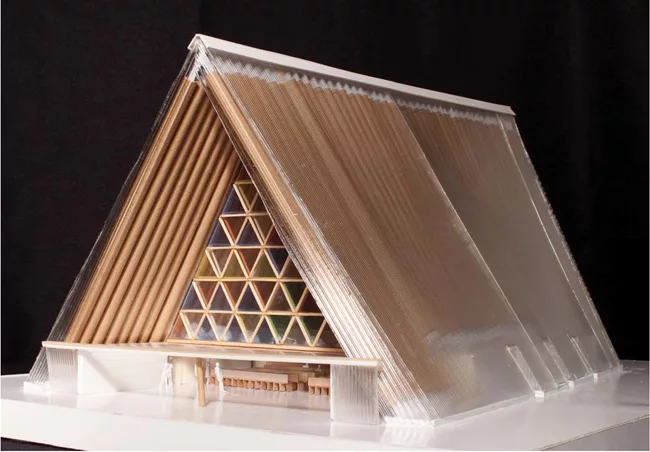
An earthquake in February 2011 in Christchurch, New Zealand, left the city's main Anglican cathedral'a Gothic-style, stone edifice completed in 1904'in a sorry state. Its condition went from bad to worse when a second jolt in February shattered its magnificent rose window. In need of an immediate venue, church authorities invited Shigeru Ban to build them a temporary facility.
Similar to his work in quake-ravaged Kobe, Japan, Ban chose to use paper tubes to build the cathedral. The 9700-square-foot building's A-frame sanctuary will seat 700 worshippers. Topping the sanctuary will be a massive, pitched roof made of paper tubes and covered with polycarbonate sheets that will allow daylight into the building. Filled with earthquake rubble, shipping containers will form the building's base.
Construction is expected to finish by February 2012, in time for the quake's first anniversary.
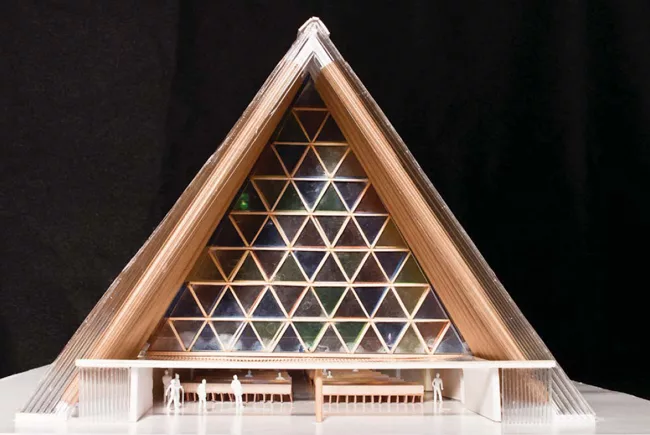
An earthquake in February 2011 in Christchurch, New Zealand, left the city's main Anglican cathedral'a Gothic-style, stone edifice completed in 1904'in a sorry state. Its condition went from bad to worse when a second jolt in February shattered its magnificent rose window. In need of an immediate venue, church authorities invited Shigeru Ban to build them a temporary facility.
Similar to his work in quake-ravaged Kobe, Japan, Ban chose to use paper tubes to build the cathedral. The 9700-square-foot building's A-frame sanctuary will seat 700 worshippers. Topping the sanctuary will be a massive, pitched roof made of paper tubes and covered with polycarbonate sheets that will allow daylight into the building. Filled with earthquake rubble, shipping containers will form the building's base.
Construction is expected to finish by February 2012, in time for the quake's first anniversary.

An earthquake in February 2011 in Christchurch, New Zealand, left the city's main Anglican cathedral'a Gothic-style, stone edifice completed in 1904'in a sorry state. Its condition went from bad to worse when a second jolt in February shattered its magnificent rose window. In need of an immediate venue, church authorities invited Shigeru Ban to build them a temporary facility.
Similar to his work in quake-ravaged Kobe, Japan, Ban chose to use paper tubes to build the cathedral. The 9700-square-foot building's A-frame sanctuary will seat 700 worshippers. Topping the sanctuary will be a massive, pitched roof made of paper tubes and covered with polycarbonate sheets that will allow daylight into the building. Filled with earthquake rubble, shipping containers will form the building's base.
Construction is expected to finish by February 2012, in time for the quake's first anniversary.

An earthquake in February 2011 in Christchurch, New Zealand, left the city's main Anglican cathedral'a Gothic-style, stone edifice completed in 1904'in a sorry state. Its condition went from bad to worse when a second jolt in February shattered its magnificent rose window. In need of an immediate venue, church authorities invited Shigeru Ban to build them a temporary facility.
Similar to his work in quake-ravaged Kobe, Japan, Ban chose to use paper tubes to build the cathedral. The 9700-square-foot building's A-frame sanctuary will seat 700 worshippers. Topping the sanctuary will be a massive, pitched roof made of paper tubes and covered with polycarbonate sheets that will allow daylight into the building. Filled with earthquake rubble, shipping containers will form the building's base.
Construction is expected to finish by February 2012, in time for the quake's first anniversary.

An earthquake in February 2011 in Christchurch, New Zealand, left the city's main Anglican cathedral'a Gothic-style, stone edifice completed in 1904'in a sorry state. Its condition went from bad to worse when a second jolt in February shattered its magnificent rose window. In need of an immediate venue, church authorities invited Shigeru Ban to build them a temporary facility.
Similar to his work in quake-ravaged Kobe, Japan, Ban chose to use paper tubes to build the cathedral. The 9700-square-foot building's A-frame sanctuary will seat 700 worshippers. Topping the sanctuary will be a massive, pitched roof made of paper tubes and covered with polycarbonate sheets that will allow daylight into the building. Filled with earthquake rubble, shipping containers will form the building's base.
Construction is expected to finish by February 2012, in time for the quake's first anniversary.

An earthquake in February 2011 in Christchurch, New Zealand, left the city's main Anglican cathedral'a Gothic-style, stone edifice completed in 1904'in a sorry state. Its condition went from bad to worse when a second jolt in February shattered its magnificent rose window. In need of an immediate venue, church authorities invited Shigeru Ban to build them a temporary facility.
Similar to his work in quake-ravaged Kobe, Japan, Ban chose to use paper tubes to build the cathedral. The 9700-square-foot building's A-frame sanctuary will seat 700 worshippers. Topping the sanctuary will be a massive, pitched roof made of paper tubes and covered with polycarbonate sheets that will allow daylight into the building. Filled with earthquake rubble, shipping containers will form the building's base.
Construction is expected to finish by February 2012, in time for the quake's first anniversary.

An earthquake in February 2011 in Christchurch, New Zealand, left the city's main Anglican cathedral'a Gothic-style, stone edifice completed in 1904'in a sorry state. Its condition went from bad to worse when a second jolt in February shattered its magnificent rose window. In need of an immediate venue, church authorities invited Shigeru Ban to build them a temporary facility.
Similar to his work in quake-ravaged Kobe, Japan, Ban chose to use paper tubes to build the cathedral. The 9700-square-foot building's A-frame sanctuary will seat 700 worshippers. Topping the sanctuary will be a massive, pitched roof made of paper tubes and covered with polycarbonate sheets that will allow daylight into the building. Filled with earthquake rubble, shipping containers will form the building's base.
Construction is expected to finish by February 2012, in time for the quake's first anniversary.

An earthquake in February 2011 in Christchurch, New Zealand, left the city's main Anglican cathedral'a Gothic-style, stone edifice completed in 1904'in a sorry state. Its condition went from bad to worse when a second jolt in February shattered its magnificent rose window. In need of an immediate venue, church authorities invited Shigeru Ban to build them a temporary facility.
Similar to his work in quake-ravaged Kobe, Japan, Ban chose to use paper tubes to build the cathedral. The 9700-square-foot building's A-frame sanctuary will seat 700 worshippers. Topping the sanctuary will be a massive, pitched roof made of paper tubes and covered with polycarbonate sheets that will allow daylight into the building. Filled with earthquake rubble, shipping containers will form the building's base.
Construction is expected to finish by February 2012, in time for the quake's first anniversary.

An earthquake in February 2011 in Christchurch, New Zealand, left the city's main Anglican cathedral'a Gothic-style, stone edifice completed in 1904'in a sorry state. Its condition went from bad to worse when a second jolt in February shattered its magnificent rose window. In need of an immediate venue, church authorities invited Shigeru Ban to build them a temporary facility.
Similar to his work in quake-ravaged Kobe, Japan, Ban chose to use paper tubes to build the cathedral. The 9700-square-foot building's A-frame sanctuary will seat 700 worshippers. Topping the sanctuary will be a massive, pitched roof made of paper tubes and covered with polycarbonate sheets that will allow daylight into the building. Filled with earthquake rubble, shipping containers will form the building's base.
Construction is expected to finish by February 2012, in time for the quake's first anniversary.

An earthquake in February 2011 in Christchurch, New Zealand, left the city's main Anglican cathedral'a Gothic-style, stone edifice completed in 1904'in a sorry state. Its condition went from bad to worse when a second jolt in February shattered its magnificent rose window. In need of an immediate venue, church authorities invited Shigeru Ban to build them a temporary facility.
Similar to his work in quake-ravaged Kobe, Japan, Ban chose to use paper tubes to build the cathedral. The 9700-square-foot building's A-frame sanctuary will seat 700 worshippers. Topping the sanctuary will be a massive, pitched roof made of paper tubes and covered with polycarbonate sheets that will allow daylight into the building. Filled with earthquake rubble, shipping containers will form the building's base.
Construction is expected to finish by February 2012, in time for the quake's first anniversary.

An earthquake in February 2011 in Christchurch, New Zealand, left the city's main Anglican cathedral'a Gothic-style, stone edifice completed in 1904'in a sorry state. Its condition went from bad to worse when a second jolt in February shattered its magnificent rose window. In need of an immediate venue, church authorities invited Shigeru Ban to build them a temporary facility.
Similar to his work in quake-ravaged Kobe, Japan, Ban chose to use paper tubes to build the cathedral. The 9700-square-foot building's A-frame sanctuary will seat 700 worshippers. Topping the sanctuary will be a massive, pitched roof made of paper tubes and covered with polycarbonate sheets that will allow daylight into the building. Filled with earthquake rubble, shipping containers will form the building's base.
Construction is expected to finish by February 2012, in time for the quake's first anniversary.

An earthquake in February 2011 in Christchurch, New Zealand, left the city's main Anglican cathedral'a Gothic-style, stone edifice completed in 1904'in a sorry state. Its condition went from bad to worse when a second jolt in February shattered its magnificent rose window. In need of an immediate venue, church authorities invited Shigeru Ban to build them a temporary facility.
Similar to his work in quake-ravaged Kobe, Japan, Ban chose to use paper tubes to build the cathedral. The 9700-square-foot building's A-frame sanctuary will seat 700 worshippers. Topping the sanctuary will be a massive, pitched roof made of paper tubes and covered with polycarbonate sheets that will allow daylight into the building. Filled with earthquake rubble, shipping containers will form the building's base.
Construction is expected to finish by February 2012, in time for the quake's first anniversary.

An earthquake in February 2011 in Christchurch, New Zealand, left the city's main Anglican cathedral'a Gothic-style, stone edifice completed in 1904'in a sorry state. Its condition went from bad to worse when a second jolt in February shattered its magnificent rose window. In need of an immediate venue, church authorities invited Shigeru Ban to build them a temporary facility.
Similar to his work in quake-ravaged Kobe, Japan, Ban chose to use paper tubes to build the cathedral. The 9700-square-foot building's A-frame sanctuary will seat 700 worshippers. Topping the sanctuary will be a massive, pitched roof made of paper tubes and covered with polycarbonate sheets that will allow daylight into the building. Filled with earthquake rubble, shipping containers will form the building's base.
Construction is expected to finish by February 2012, in time for the quake's first anniversary.

An earthquake in February 2011 in Christchurch, New Zealand, left the city's main Anglican cathedral'a Gothic-style, stone edifice completed in 1904'in a sorry state. Its condition went from bad to worse when a second jolt in February shattered its magnificent rose window. In need of an immediate venue, church authorities invited Shigeru Ban to build them a temporary facility.
Similar to his work in quake-ravaged Kobe, Japan, Ban chose to use paper tubes to build the cathedral. The 9700-square-foot building's A-frame sanctuary will seat 700 worshippers. Topping the sanctuary will be a massive, pitched roof made of paper tubes and covered with polycarbonate sheets that will allow daylight into the building. Filled with earthquake rubble, shipping containers will form the building's base.
Construction is expected to finish by February 2012, in time for the quake's first anniversary.

An earthquake in February 2011 in Christchurch, New Zealand, left the city's main Anglican cathedral'a Gothic-style, stone edifice completed in 1904'in a sorry state. Its condition went from bad to worse when a second jolt in February shattered its magnificent rose window. In need of an immediate venue, church authorities invited Shigeru Ban to build them a temporary facility.
Similar to his work in quake-ravaged Kobe, Japan, Ban chose to use paper tubes to build the cathedral. The 9700-square-foot building's A-frame sanctuary will seat 700 worshippers. Topping the sanctuary will be a massive, pitched roof made of paper tubes and covered with polycarbonate sheets that will allow daylight into the building. Filled with earthquake rubble, shipping containers will form the building's base.
Construction is expected to finish by February 2012, in time for the quake's first anniversary.
| Photo courtesy Shigeru Ban Architects |
Temporary housing by Shigeru Ban is now under construction in Onagawa—a coastal town in Japan that was decimated by the March 11 earthquake and tsunami. |
On the surface, the city of Christchurch, New Zealand, and the town of Onagawa, Japan, do not have much in common. But one does not have to scratch deeply to find likenesses. Since earthquakes heavily damaged both communities earlier this year, both are now the beneficiaries of Shigeru Ban’s relief efforts. Quick to help out whenever disaster strikes, Ban is currently designing a temporary building for the Christchurch’s Anglican Church, and his temporary housing for Onagawa is now under construction.
New Zealand Cathedral
Located within Christchurch’s declared red zone that had to be evacuated after the February quake, the city’s main Anglican cathedral—a Gothic-style, stone edifice completed in 1904—was in a sorry state. But its condition went from bad to worse when a second jolt in February shattered its magnificent rose window.
In need of an immediate, alternate venue, the church authorities invited Ban to build them a facility on an empty lot near to, but outside of, the red zone in the center of the city’s downtown. Having built a temporary church out of paper tubes in Kobe, Japan, after that city suffered its own earthquake in 1995, Ban was eager to do another. “Since we have never designed a pure triangle shape with such big and long paper tubes, we are excited about the challenge of this new design,” says Ban.
As in Kobe, paper tubes are the material of choice for the Christchurch cathedral. Much larger in scale compared to his Kobe project, the 9700-square-foot building’s A-frame sanctuary will seat 700 worshippers. Topping the sanctuary will be a massive, pitched roof made of paper tubes and covered with polycarbonate sheets that will allow daylight into the building. Steadily increasing in height, the roof will soar to 21 meters above the altar.
Filled with earthquake rubble, shipping containers will form the building’s base. Construction is expected to finish in time for earthquake’s first anniversary in February 2012.
Japan Housing
Meanwhile, back in Japan, Ban’s government-funded, temporary housing is under construction on a baseball diamond in Onagawa, a town of 10,000 residents. Like many coastal communities in Miyagi Prefecture, Onagawa was decimated on March 11 by the earthquake and tsunami that left 3,800 of its 4,500 homes partially, if not completely, damaged. Accordingly, Onagawa had an urgent need for temporary housing. But its rugged terrain did not have enough flat land to accommodate the standard government-issued, single-story housing for all its homeless.
To solve the problem, Ban proposed erecting 2- and 3-story buildings that take up less flat area and were, therefore, better suited to the hilly landscape. In addition to providing homes to the needy, they could be built quickly from shipping containers and steel frames. The containers would hold private bed and bathrooms while kitchen and dining areas will occupy open spaces in between the containers, each one enclosed with window walls. The retailer MUJI will donate furniture and cooking equipment.
When it finishes on October 15, Ban’s Container Temporary Housing in Onagawa will house 188 families. They are currently bedding down in a gymnasium serving as Onagawa’s emergency shelter where Ban installed 250 sets of paper tube partitions as an immediate intervention after the earthquake.
Though not designed for permanent occupancy, Ban’s housing is intended to be reused during future disasters. “Usually government temporary housing is wasted,” laments Ban. “But I don’t want to keep doing this every time we have an earthquake.”
Looking for a reprint of this article?
From high-res PDFs to custom plaques, order your copy today!
