Architectural Record
search
cart
facebook twitter linkedin youtube
  • Sign In
  • Subscribe
  • Sign Out
  • My Account
Architectural Record
  • NEWS
    • Latest News
    • Awards
    • Interviews
    • Obituaries
    • Podcasts
      • Design:Ed Podcast
      • Sponsored Podcasts
  • OPINION
    • Book Reviews / Excerpts
    • Exhibition Reviews
    • Forum
  • EXCLUSIVES
    • Videos
    • Design Vanguard
    • Top 300 Firms
    • Sponsored Content
    • Sponsored eBooks
    • From the Archives
  • CONTINUING ED
    • Editorial Continuing Ed
    • CE Center
    • CE Academies
  • PROJECTS
    • Buildings By Type
    • Reuse & Renovation
    • Museums & Arts Centers
    • Colleges & Universities
    • Multifamily Housing
    • Interiors
    • Lighting
    • Kitchen & Bath
  • HOUSES
    • Record Houses
    • House of the Month
    • Featured Houses
  • PRODUCTS
    • Products by Category
    • Record Products of the Year
    • Latest Products
  • EVENTS
    • Dates & Events
    • Record on the Road
    • Innovation Conference
    • Sustainability in Practice
    • Women In Architecture
    • Webinars
    • Ad Excellence Awards
    • Submit an Event
  • CONNECT
    • Ask RECORD AI
    • Newsletters
    • Contact
    • Advertise
    • Editorial Calendar
    • Store
    • Customer Service
  • SUBMIT
    • Submission Guidelines
    • RECORD Competitions
  • MAGAZINE
    • Subscribe
    • My Account
    • Digital Edition
    • Current Issue
    • Firm Pass
    • Historic Archive
Architecture News

Exhibition Celebrates 200th Anniversary of Manhattan Street Grid
By Carl Yost
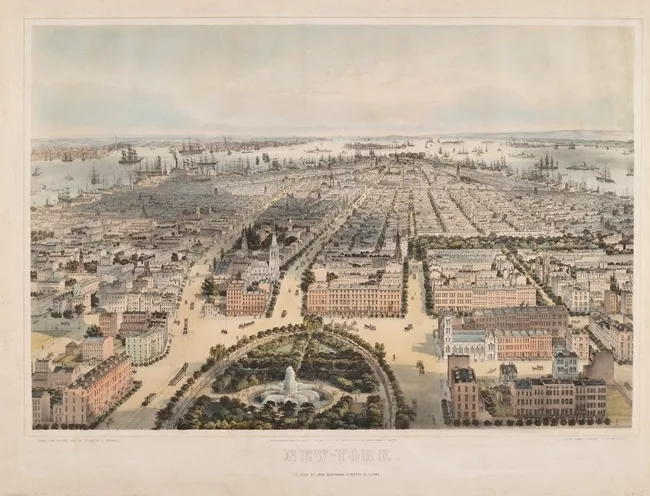
Union Square, looking south, 1849, published by John Bachmann.
The Greatest Grid
Museum of the City of New York
On View December 5, 2011, to April 15, 2012
Union Square, looking south, 1849, published by John Bachmann.
Image courtesy Museum of the City of New York/J. Clarence Davies Collection
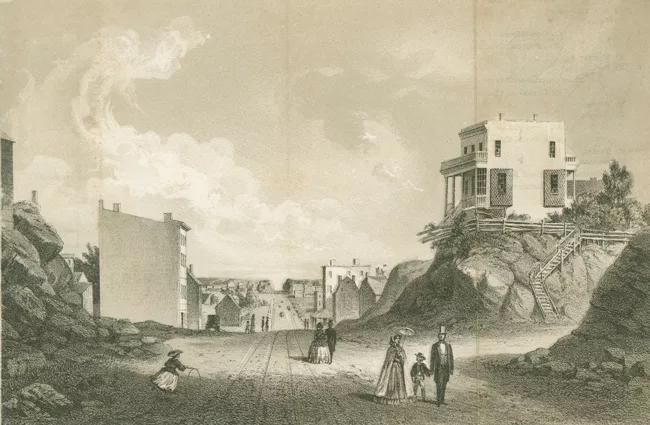
View of Second Avenue looking up from 42nd Street, 1861, by Egbert L. Viele.
The Greatest Grid
Museum of the City of New York
On View December 5, 2011, to April 15, 2012
View of Second Avenue looking up from 42nd Street, 1861, by Egbert L. Viele.
Image courtesy Museum of the City of New York
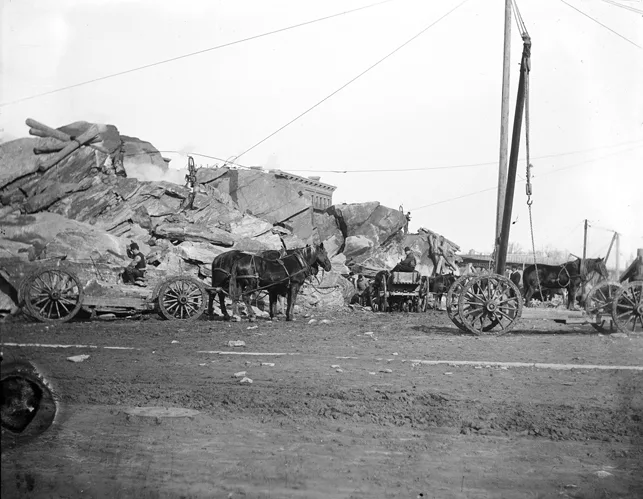
Rocks on 81st Street and 9th Avenue, 1886, by Robert L. Bracklow.
The Greatest Grid
Museum of the City of New York
On View December 5, 2011, to April 15, 2012
Rocks on 81st Street and 9th Avenue, 1886, by Robert L. Bracklow.
Photo courtesy Museum of the City of New York
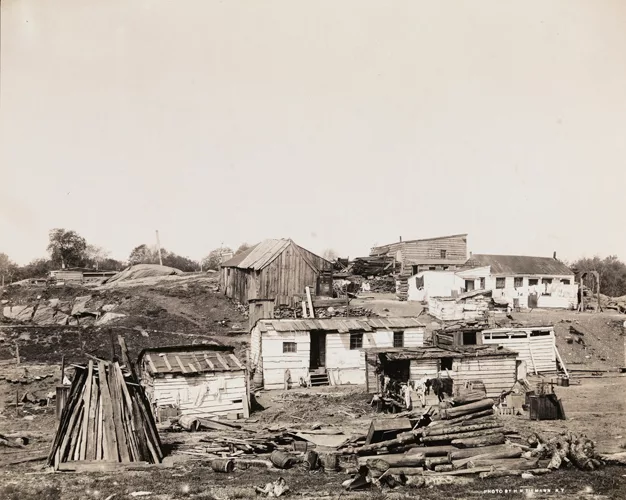
Shacks on Fifth Avenue and 101st Street, 1894.
The Greatest Grid
Museum of the City of New York
On View December 5, 2011, to April 15, 2012
Shacks on Fifth Avenue and 101st Street, 1894.
Photo courtesy Museum of the City of New York
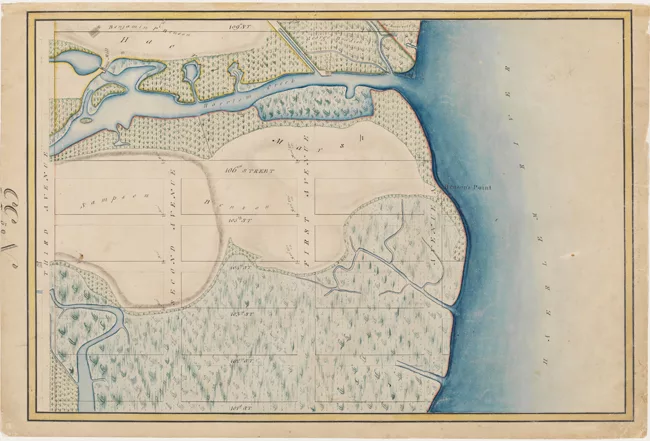
Randel Farm Map No. 55, showing 101st Street to 109th Street, from Third Avenue to the East River, 1820.
The Greatest Grid
Museum of the City of New York
On View December 5, 2011, to April 15, 2012
Randel Farm Map No. 55, showing 101st Street to 109th Street, from Third Avenue to the East River, 1820.
Image courtesy City of New York, Office of the Manhattan Borough President
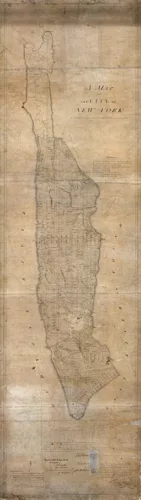
<em>The Commissioners' Plan of 1811</em>, by John Randel, Jr.
The Greatest Grid
Museum of the City of New York
On View December 5, 2011, to April 15, 2012
The Commissioners' Plan of 1811, by John Randel, Jr.
Image courtesy of New York City Municipal Archives
Union Square, looking south, 1849, published by John Bachmann.
View of Second Avenue looking up from 42nd Street, 1861, by Egbert L. Viele.
Rocks on 81st Street and 9th Avenue, 1886, by Robert L. Bracklow.
Shacks on Fifth Avenue and 101st Street, 1894.
Randel Farm Map No. 55, showing 101st Street to 109th Street, from Third Avenue to the East River, 1820.
<em>The Commissioners' Plan of 1811</em>, by John Randel, Jr.
December 22, 2011

Union Square, looking south, 1849, published by John Bachmann. Click on the slide show button to view additional images.

NYC: The Death and Life of A Great American City Roche Retrospective Opens at MCNY

Manhattan’s defining street grid turned 200 earlier this year, and the Museum of the City of New York is marking the occasion with “The Greatest Grid: The Master Plan of Manhattan, 1811-2011,” the first comprehensive exhibition dedicated to the grid’s planning and implementation. Though ostensibly a celebration of New York, the show is more importantly a celebration of long-range urban planning.

The grid has been at once lauded as an expression of democratic equality—because no block is sited more prominently than another—and maligned for promoting efficiency above aesthetic values or the landscape. It enabled Manhattan to become the first plug-in city, absorbing wave after wave of urban design innovations: picturesque Central Park, City Beautiful monuments like Grand Central, thrusting skyscrapers, and Corbusian superblocks. The exhibition, which runs through April 15, illustrates these adaptations with dozens of historic photographs that show the gradual filling-in of the urban landscape; it also includes the original maps, surveyors’ instruments, and a variety of historic documents.

Manhattan’s grid dates to 1807, when, anticipating the nascent metropolis’ future growth, the New York state legislature appointed three commissioners—Gouvernour Morris, Simeon DeWitt, and John Rutherfurd—to lay out every street and avenue from present-day Houston Street to 155th. The commissioners and their team, led by chief surveyor John Randel, Jr., explicitly rejected the axial boulevards of cities like Paris or Washington, D.C., instead choosing an orthogonal grid for its efficiency. “Strait-sided and right-angled houses are the most cheap to build and the most convenient to live in,” they remarked at the time.  

They didn’t invent the plan out of thin air. Many similar grids had already emerged throughout the young country: Philadelphia’s perpendicular streets date to 1682; those of Savannah, Georgia, to 1733; Albany, New York, 1794. In 1785, the Continental Congress divvied up the territory that would become Ohio into a checkerboard of square-mile lots, which were sold to repay Revolutionary War debt. Long before, orthogonal street patterns even appeared in Roman military encampments in Europe and the Middle East, and in Spanish settlements in the New World. An imposition of rational form on an unpredictable landscape, the grid is uniquely suited to colonization.

On March 22, 1811, the New York commissioners issued three copies of their final scheme, rendered in ink on paper, nine feet in length. All three survive today; one is presented in the exhibition. Also on view are 10 of the 92 rarely displayed “Randel Farm Maps,” drawn by Randel between 1818 and 1820 for the city’s Common Council, showing the proposed grid superimposed over every existing building and property line.

As the surveyors traipsed across the island and the new avenues began creeping northward, many landowners fiercely resisted the city’s efforts to break up their land, until they realized how lucrative the streets made their property. By showing how once-controversial investments in the civic realm increased the value of private property, the exhibition carries a strong political subtext: public good not only trumps private profit; it makes that profit possible.

But a street grid is insufficient to guarantee a city’s success. Philadelphia was quickly surpassed by its neighbor to the north, and New York itself would never have thrived without its harbor or its proximity to the Erie Canal. And what about Phoenix? Its automobile-scaled grid not only enabled it to become ground zero for the housing crisis, but also created a precarious balancing act with the surrounding desert ecology. The grid is a good start, but it will take more than an efficient plan to ensure our cities can meet the environmental and economic challenges of the 21st century.

Share This Story

Looking for a reprint of this article?
From high-res PDFs to custom plaques, order your copy today!

Post a comment to this article

Report Abusive Comment

Subscription Center
  • Create an Account
  • Start a Subscription
  • Manage My Account
  • Sign Up for Newsletters
  • Visit Customer Service
  • Update Preferences

More Videos

Sponsored Content

Sponsored Content is a special paid section where industry companies provide high quality, objective, non-commercial content around topics of interest to the Architectural Record audience. All Sponsored Content is supplied by the advertising company and any opinions expressed in this article are those of the author and not necessarily reflect the views of Architectural Record or its parent company, BNP Media. Interested in participating in our Sponsored Content section? Contact your local rep!

close
  • cold storage facility
    Sponsored byCarlisle SynTec Systems

    How Architects Can Design More Continuous Cold Storage Envelopes

  • TAMLYN XtremeTrim Exterior Trim
    Sponsored byTamlyn

    Designing Cleaner Panel Facades: Why Exterior Trim Details Matter

  • Building with Vapor Barriers
    Sponsored byReef Industries, Inc.

    Vapor Barriers Help Control Moisture in Tighter Building Designs

DESIGN:ED Podcast
Listen to Architectural Record’s DESIGN:ED Podcast

Events

June 25, 2026

Designing Glass Railing Systems that Enhance Aesthetics and Meet Code

Credits: 1 AIA LU/HSW; 1 AIBD P-CE; 0.1 ICC CEU

Upon course completion, participants will possess a deeper understanding of glass railings to help ensure that safety, aesthetic, and performance objectives are achieved.

June 30, 2026

Generator Selection and Sizing for Outage-Ready Homes

Credits: 1 AIA LU/HSW; 1 AIBD P-CE; 0.1 ICC CEU

Explore how propane-powered systems and whole-home generators can improve energy resilience, reduce electrical loads, and lower long-term residential costs.

View All Submit An Event

Products

2026 Architect's Square Foot Costbook

2026 Architect's Square Foot Costbook

See More Products

Popular Stories

Lorcan O' Herilhy

California Architect Lorcan O’Herlihy Has Died, Age 66

Obama Presidential Center, Chicago

The Obama Presidential Center Opens on Chicago’s South Side

Spoonbill Ranch

Johnsen Schmaling Architects Integrates Spoonbill Ranch into a Pristine Landscape

Image of Bruce Springsteen Center for American Music

The CookFox-designed Bruce Springsteen Center for American Music Opens in New Jersey

Kìwekì Point, Ottawa, Canada

Perched High Above the Ottawa River, Kìwekì Point Showcases Sweeping Views of the Canadian Capital Region

Designing Glass Railing Systems that Enhance Aesthetics and Meet Code - Free Webinar - June 25, 2026

Related Articles

  • Yale School of Architecture Centennial

    Exhibition Celebrates Yale School of Architecture Centennial

    See More
  • *Douglas_House_8-15-15-0005-dc1.jpg

    Modernist House Celebrates 50th Anniversary with Completion of Multiyear Renovation

    See More

Related Products

See More Products
  • Architectural Record - January 2026

    Architectural Record January 2026 Issue

  • 1444336282.gif

    The Handbook of Interior Design

See More Products

Events

View AllSubmit An Event
  • August 13, 2025

    Alternative Technologies for Energy Resilience and Grid Relief

    NOW ON DEMANDCredits: 1 AIA LU/HSW; 1 AIBD P-CE; 0.1 ICC CEU; 0.1 IACET CEUThis webinar explores the performance, financial benefits, and environmental motivations for incorporating propane-powered technologies.
View AllSubmit An Event
×

The latest news and information

#1 Source for Architectural Design, News and Products

SUBSCRIBE
  • RESOURCES
    • Advertise
    • Contact Us
    • Submit
    • Store
  • ACCOUNT CENTER
    • Create an Account
    • Start a Subscription
    • Manage My Account
    • Sign Up for Newsletters
    • Visit Customer Service
    • Update Preferences
  • PRIVACY
    • PRIVACY POLICY
    • TERMS & CONDITIONS
    • DO NOT SELL MY PERSONAL INFORMATION
    • PRIVACY REQUEST
    • ACCESSIBILITY
  • SERVICES
    • Marketing Services
    • Reprints
    • Market Research
    • List Rental
    • Survey/Respondent Access
  • STAY CONNECTED
    • Linkedin
    • Facebook
    • Instagram
    • YouTube
    • X (Twitter)

Copyright ©2026. All Rights Reserved BNP Media, Inc. and BNP Media II, LLC.

Design, CMS, Hosting & Web Development :: ePublishing