Architectural Record
search
cart
facebook twitter linkedin youtube
  • Sign In
  • Subscribe
  • Sign Out
  • My Account
Architectural Record
  • NEWS
    • Latest News
    • Awards
    • Interviews
    • Obituaries
    • Podcasts
      • Design:Ed Podcast
      • Sponsored Podcasts
  • OPINION
    • Book Reviews / Excerpts
    • Exhibition Reviews
    • Forum
  • EXCLUSIVES
    • Videos
    • Design Vanguard
    • Top 300 Firms
    • Sponsored Content
    • Sponsored eBooks
    • From the Archives
  • CONTINUING ED
    • Editorial Continuing Ed
    • CE Center
    • CE Academies
  • PROJECTS
    • Buildings By Type
    • Reuse & Renovation
    • Museums & Arts Centers
    • Colleges & Universities
    • Multifamily Housing
    • Interiors
    • Lighting
    • Kitchen & Bath
  • HOUSES
    • Record Houses
    • House of the Month
    • Featured Houses
  • PRODUCTS
    • Products by Category
    • Record Products of the Year
    • Latest Products
  • EVENTS
    • Dates & Events
    • Record on the Road
    • Innovation Conference
    • Sustainability in Practice
    • Women In Architecture
    • Webinars
    • Ad Excellence Awards
    • Submit an Event
  • CONNECT
    • Ask RECORD AI
    • Newsletters
    • Contact
    • Advertise
    • Editorial Calendar
    • Store
    • Customer Service
  • SUBMIT
    • Submission Guidelines
    • RECORD Competitions
  • MAGAZINE
    • Subscribe
    • My Account
    • Digital Edition
    • Current Issue
    • Firm Pass
    • Historic Archive
Architecture News

Newsmaker: Curtis Fentress
By David Hill
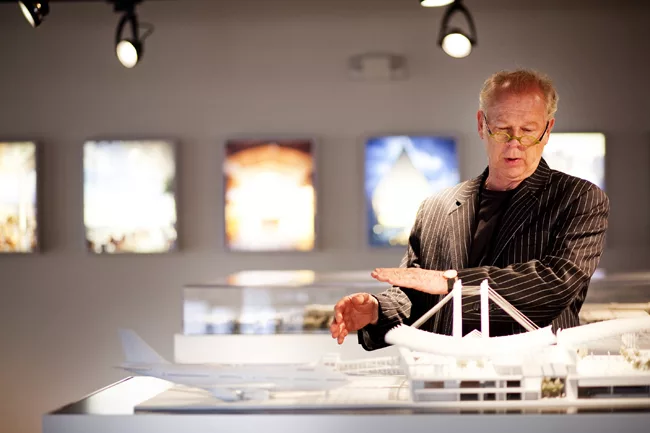
Curtis Fentress with a model of his 2001 design for the Incheon International Airport in Seoul.
Newsmaker: Curtis Fentress
Curtis Fentress with a model of his 2001 design for the Incheon International Airport in Seoul.
Photo © Chris Humphreys Photography, Inc.
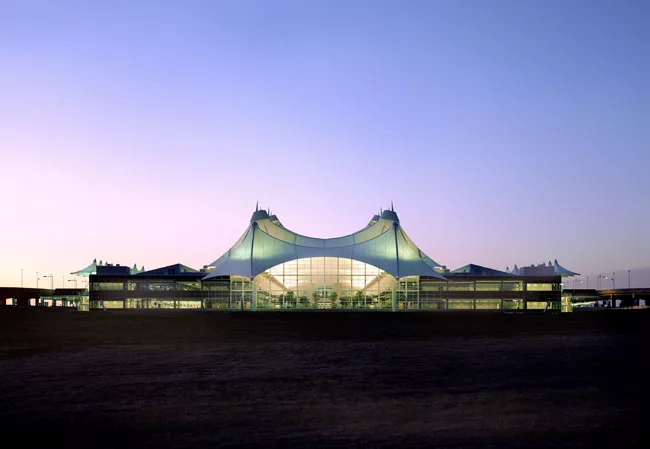
Exterior of the Denver International Airport Passenger Terminal (1995), designed by Fentress Architects.
Newsmaker: Curtis Fentress
Exterior of the Denver International Airport Passenger Terminal (1995), designed by Fentress Architects.
Photo © Timothy Hursley
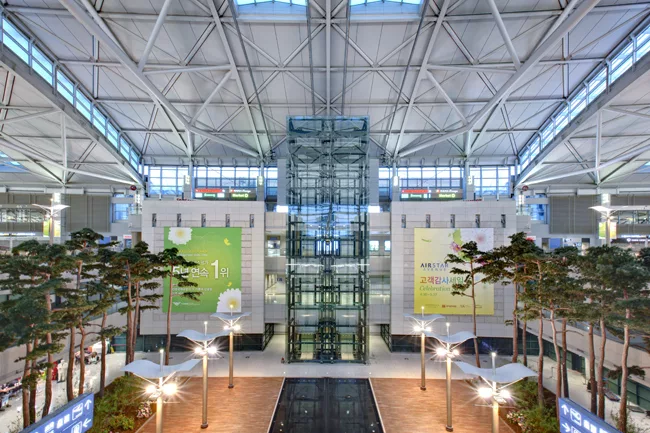
Incheon International Airport Passenger Terminal, Seoul, designed by Fentress Architects.
Newsmaker: Curtis Fentress
Incheon International Airport Passenger Terminal, Seoul, designed by Fentress Architects.
Photo © Paul Dingman
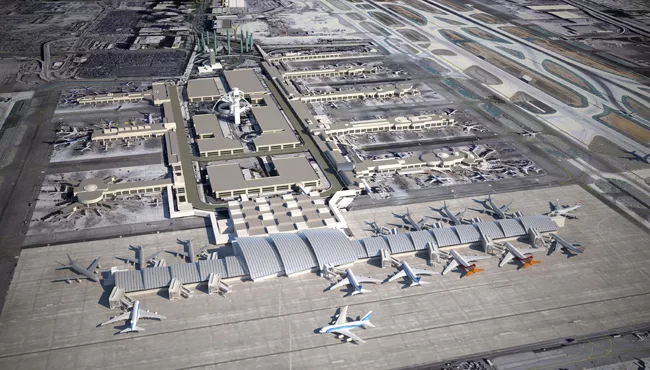
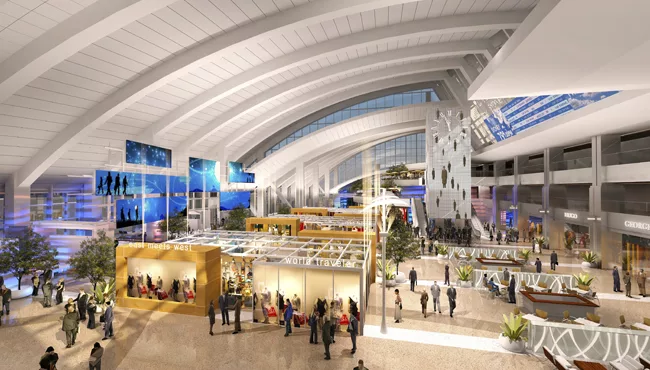
Rendering of Fentress Architects' design for Los Angeles International Airport's expansion.
Newsmaker: Curtis Fentress

Rendering of Fentress Architects' design for Los Angeles International Airport's expansion.
Image courtesy Fentress Architects
Rendering of Fentress Architects' design for Los Angeles International Airport's expansion.
Newsmaker: Curtis Fentress
Rendering of Fentress Architects' design for Los Angeles International Airport's expansion.
Image courtesy Fentress Architects
Rendering of Fentress Architects' design for Los Angeles International Airport's expansion.
Newsmaker: Curtis Fentress
Rendering of Fentress Architects' design for Los Angeles International Airport's expansion.
Image courtesy Fentress Architects
Curtis Fentress with a model of his 2001 design for the Incheon International Airport in Seoul.
Exterior of the Denver International Airport Passenger Terminal (1995), designed by Fentress Architects.
Incheon International Airport Passenger Terminal, Seoul, designed by Fentress Architects.
Rendering of Fentress Architects' design for Los Angeles International Airport's expansion.
July 26, 2012

Architects & Firms

Fentress Architects

Curtis Fentress with a model of his 2001 design for the Incheon International Airport in Seoul.

Curtis Fentress had just three weeks to come up with a design for Denver International Airport. Completed in 1995, the airport—with its distinctive peaked white-fabric roof—helped put Fentress and his Denver-based firm in the architectural spotlight. Since then, the 64-year-old North Carolina native has built a reputation as a forward-thinking designer of airports and other civic buildings. His airports, including South Korea’s Incheon International, are consistently top-rated in passenger surveys. Currently under construction is a $1.4 billion expansion of Los Angeles International Airport, the first major addition to LAX since 1984. With two-story jetways, it will accommodate nine double-decker Airbus A380 airliners at one time. Fentress spoke to Architectural Record about this project and the changing nature of air travel. The firm’s airports are the focus of an exhibition at the Denver Art Museum. "Now Boarding: Fentress Airports + The Architecture of Flight" runs through Oct. 7, 2012.

DH: What makes a good airport?

CF: A terrific passenger experience. An airport should have a pleasant, streamlined flow for the passenger to get into the building and go through it with great ease. You shouldn’t have to stand in a lot of lines. The building should be elegant and filled with daylight, with lots of conveniences, whether it’s food or retail. Certainly you want dramatic and interesting spaces, and architecture that relates to the place.

DH: Air travel was once considered glamorous. Can good design help bring that back?

CF: I think it can help. In 1959, we had about 60 million passengers flying commercially in the United States. Today, one airport might have that many people flying through in a year. Air travel has gotten quite complex in terms of the number of people flying. But if you take the time with the design, you can make spaces that are open, airy, and pleasant, with opportunities to look outside and see the planes. We used to have observation areas at airports where you could do that. There are very few of those places anymore. Our expansion project at Seattle-Tacoma International Airport tries to bring that back. You can pull a rocking chair up to the glass and watch the planes.

DH: Airports are increasingly becoming “airport cities,” with office parks, hotels, housing developments, and shopping centers. How will that change the airport experience?

CF: Going to the airport and catching a plane is still the main objective, but we’re starting to see more hotels that are closer to airports. Dallas has one, and Houston has a couple. It’s convenient to have a hotel at the airport for meetings, or maybe to spend the night and catch your flight the next day, or if your flight is delayed and you need a place to stay. We are beginning to see this concept of the airport city, and as it catches on, I think you’ll see more growth at airports. I’m not sure we’ll see full-fledged shopping centers right away, but it’s a matter of time. We’re adding more retail to our projects, but there is a limit to how much one can carry. At some airports, though, like Singapore, you can get measured for a custom suit, and a few days after you’ve arrived at your destination, your new suit will arrive.

DH: Give us a preview of your addition to Los Angeles International Airport.

CF: It looks like a series of giant waves coming in on a beach. The centerpiece will be about 90,000 square feet of retail space, and 50,000 square feet of first-class and business-class lounges that overlook the space. The retail will be high-end tablecloth restaurants as well as fast food, and there will be duty-free shopping and all sorts of fine apparel and merchandise.

DH: What was the biggest design challenge?

CF: The biggest challenge has been the timetable. It’s all happened in about three years, which is very, very fast for an airport. That was one of the requirements, to do this as quickly as possible.

DH: You’ve urged architects to “restrain the ego,” and you’ve said, “A building is not the autobiography of an architect.” Why not?

CF: I guess if you’re Frank Lloyd Wright, that’s what architecture is about. But for me, architecture is more about the people who use the building. I think that’s an important thing, thinking about how people use the building and what they need and being more pragmatic about the design. I suppose we do impose a personality, because we believe that a building should be designed for a specific place and embody the spirit and culture of that place. But I don’t think a modernist design necessarily fits anywhere in the world. Architecture is not a one-size-fits-all kind of thing.

Share This Story

Looking for a reprint of this article?
From high-res PDFs to custom plaques, order your copy today!

David Hill, a journalist based in Denver, writes frequently about architecture, design, and urban planning.

Post a comment to this article

Report Abusive Comment

Subscription Center
  • Create an Account
  • Start a Subscription
  • Manage My Account
  • Sign Up for Newsletters
  • Visit Customer Service
  • Update Preferences

More Videos

Sponsored Content

Sponsored Content is a special paid section where industry companies provide high quality, objective, non-commercial content around topics of interest to the Architectural Record audience. All Sponsored Content is supplied by the advertising company and any opinions expressed in this article are those of the author and not necessarily reflect the views of Architectural Record or its parent company, BNP Media. Interested in participating in our Sponsored Content section? Contact your local rep!

close
  • TAMLYN XtremeTrim Exterior Trim
    Sponsored byTamlyn

    Designing Cleaner Panel Facades: Why Exterior Trim Details Matter

  • Building with Vapor Barriers
    Sponsored byReef Industries, Inc.

    Vapor Barriers Help Control Moisture in Tighter Building Designs

  • Duct Interior with Prodeq System
    Sponsored byHenry, a Carlisle Company

    Designing Resilient Water Containment Systems

DESIGN:ED Podcast
Listen to Architectural Record’s DESIGN:ED Podcast

Events

June 10, 2026

Rethinking Stormwater – The Power of Porous Paving

Credits: 1 AIA LU/HSW; 1 AIBD P-CE; 0.1 ICC CEU

Learn how porous paving systems support stormwater management, reduce heat island effects, and enhance sustainable site design performance.

June 11, 2026

Very Early Warning Fire Detection for Mission-Critical Facilities

Credits: 1 AIA LU/HSW; 1 AIBD P-CE; 0.1 ICC CEU

Examine advanced fire detection strategies that support uptime and enhance safety in data centers and other mission-critical facilities.

View All Submit An Event

Products

2026 Architect's Square Foot Costbook

2026 Architect's Square Foot Costbook

See More Products

Popular Stories

Practice Matters illustration

What’s in a (Firm’s) Name? Thinking About Succession and Legacy

Practice Matters illustration

By the Numbers: Counting America's Architects

House on a Hill

Design Vanguard 2026: Forma

Crane Cove, ONO

Design Vanguard 2026 Winners

House A on a Hill

Design Vanguard 2026: Santiago Valdivieso

Broader Sustainability of CMU - Free Webinar - May 21, 2026

Related Articles

  • Curtis Fentress Receives AIA Jefferson Award

    See More
  • Record Reveals: Curtis Fentress on Denver

    See More
  • Dubai Expo

    Fentress Architects to Design U.S. Pavilion at 2020 World Expo in Dubai

    See More
×

The latest news and information

#1 Source for Architectural Design, News and Products

SUBSCRIBE
  • RESOURCES
    • Advertise
    • Contact Us
    • Submit
    • Store
  • ACCOUNT CENTER
    • Create an Account
    • Start a Subscription
    • Manage My Account
    • Sign Up for Newsletters
    • Visit Customer Service
    • Update Preferences
  • PRIVACY
    • PRIVACY POLICY
    • TERMS & CONDITIONS
    • DO NOT SELL MY PERSONAL INFORMATION
    • PRIVACY REQUEST
    • ACCESSIBILITY
  • SERVICES
    • Marketing Services
    • Reprints
    • Market Research
    • List Rental
    • Survey/Respondent Access
  • STAY CONNECTED
    • Linkedin
    • Facebook
    • Instagram
    • YouTube
    • X (Twitter)

Copyright ©2026. All Rights Reserved BNP Media, Inc. and BNP Media II, LLC.

Design, CMS, Hosting & Web Development :: ePublishing